


Lithuania EPR
What is Lithuania EPR Packaging
Extended Producer Responsibility (EPR) for packaging in Lithuania requires producers/importers to finance and ensure the proper management of packaging and packaging waste (collection, recycling, recovery targets), as well as maintain records and submit reports via the national system GPAIS. Even if obligations are fulfilled collectively through a Producer Responsibility Organization (PRO), registration and reporting in GPAIS remain mandatory.Does this apply to e-commerce & online sales
Yes. If you:- Place packaged goods on the Lithuanian market for the first time (including distance selling), or
- Import packaged goods or empty packaging into Lithuania,
- Shipping packaging (boxes, envelopes, filler, tape) used to deliver orders to Lithuanian customers.
- Product packaging (primary, secondary packaging) if you import or first place goods on the Lithuanian market.
Who is the “producer” under Lithuanian EPR
In Lithuania, the obligated party is typically the company that:- Manufactures and/or packages goods in Lithuania (even via subcontractors),
- Imports packaged goods into Lithuania (where Lithuanian VAT/import procedures apply),
- Manufactures or imports empty packaging.
Who must register for EPR packaging in Lithuania
Companies qualifying as producers/importers must:- Register in the Producers and Importers Register via GPAIS, and
- Maintain packaging records and submit reports through GPAIS.
Lithuania EPR Registration Threshold
Important nuance:- Registration and record-keeping obligations generally apply regardless of volume.
- Financial obligations (taxes or PRO fees) may depend on annual quantities.
- If less than 0.5 tonnes of packaging per year is placed on the market, environmental tax may not apply in certain cases.
- Companies placing ≤5 tonnes of filled disposable packaging may benefit from simplified accounting rules.
Detailed EPR Guidance for each Jurisdiction
We support 36 jurisdictions

EPR and PPWR for Lithuania
Lithuania's packaging EPR runs through GPAIS, the national digital reporting system, and registration there is mandatory no matter how a company fulfils its actual recovery obligations — individually or through a PRO like Žaliasis taškas (Green Dot Lithuania). That "no matter what" structure creates a quirk worth knowing upfront: companies that join Žaliasis taškas face two separate annual deadlines rather than one — the GPAIS report is due by 19 February, while the PRO's own reporting deadline lands earlier, by 30 January. Joining a PRO doesn't consolidate reporting; it adds a second track alongside GPAIS, not instead of it.
PPWR arrives on 12 August 2026 as a further layer, and Lithuania's own guidance has quietly been anticipating it: existing material on authorised representatives already notes that "with increasing EU-wide harmonisation, appointing an authorised representative may become more common for cross-border e-commerce sellers." PPWR is that harmonisation. From August 2026, Article 45(3) makes AR appointment mandatory — not optional or situational — for any producer without a Lithuanian presence, EU-established or not.
A December 2025 Commission proposal would suspend that requirement for EU-established producers until 2035, but it hasn't been adopted, so the obligation stands as written for now.
The structural friction to plan for is that PPWR's EU-wide conformity documentation doesn't replace GPAIS. A company can be fully PPWR-compliant at the EU level and still owe Lithuania's own national reporting separately — GPAIS was built before PPWR existed and there's no indication it's being retired in favour of it.
PPWR Labels for Lithuania
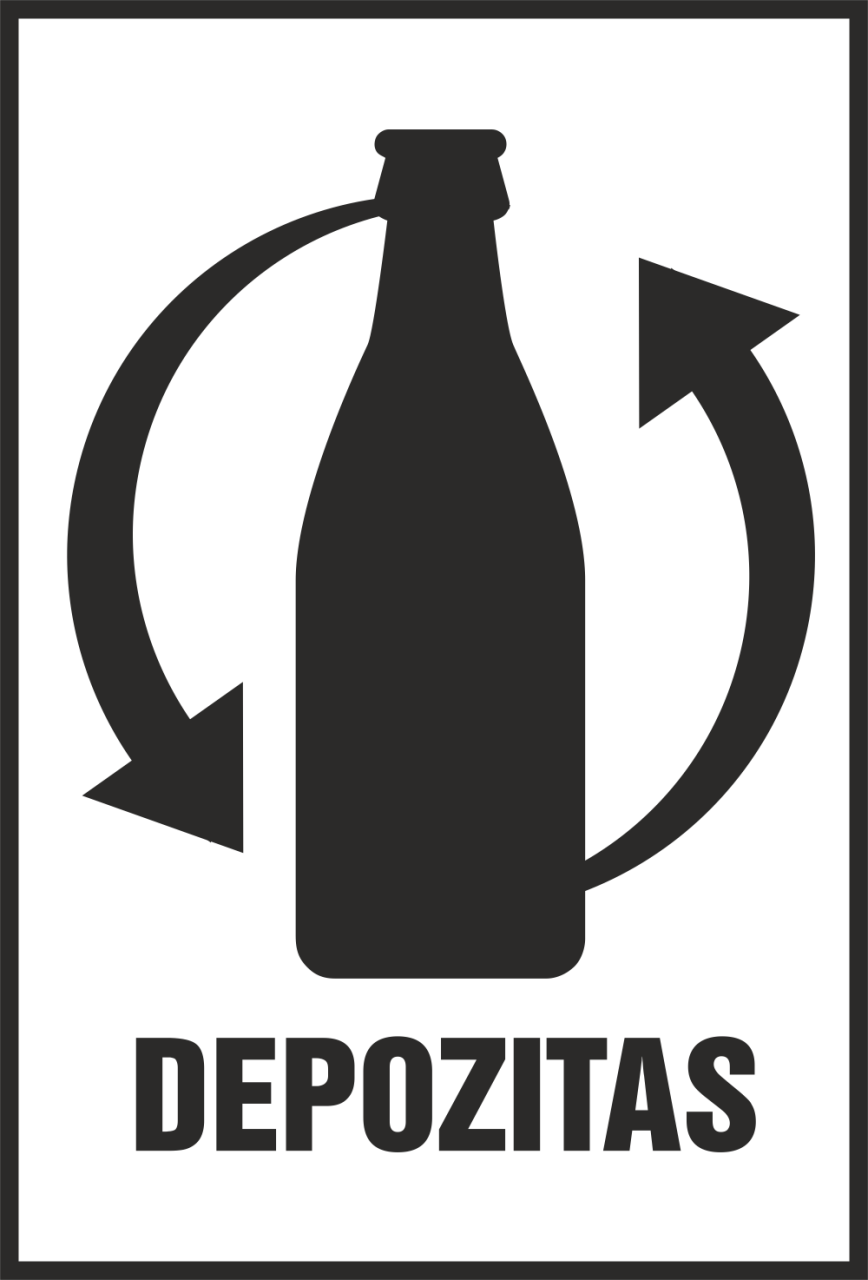
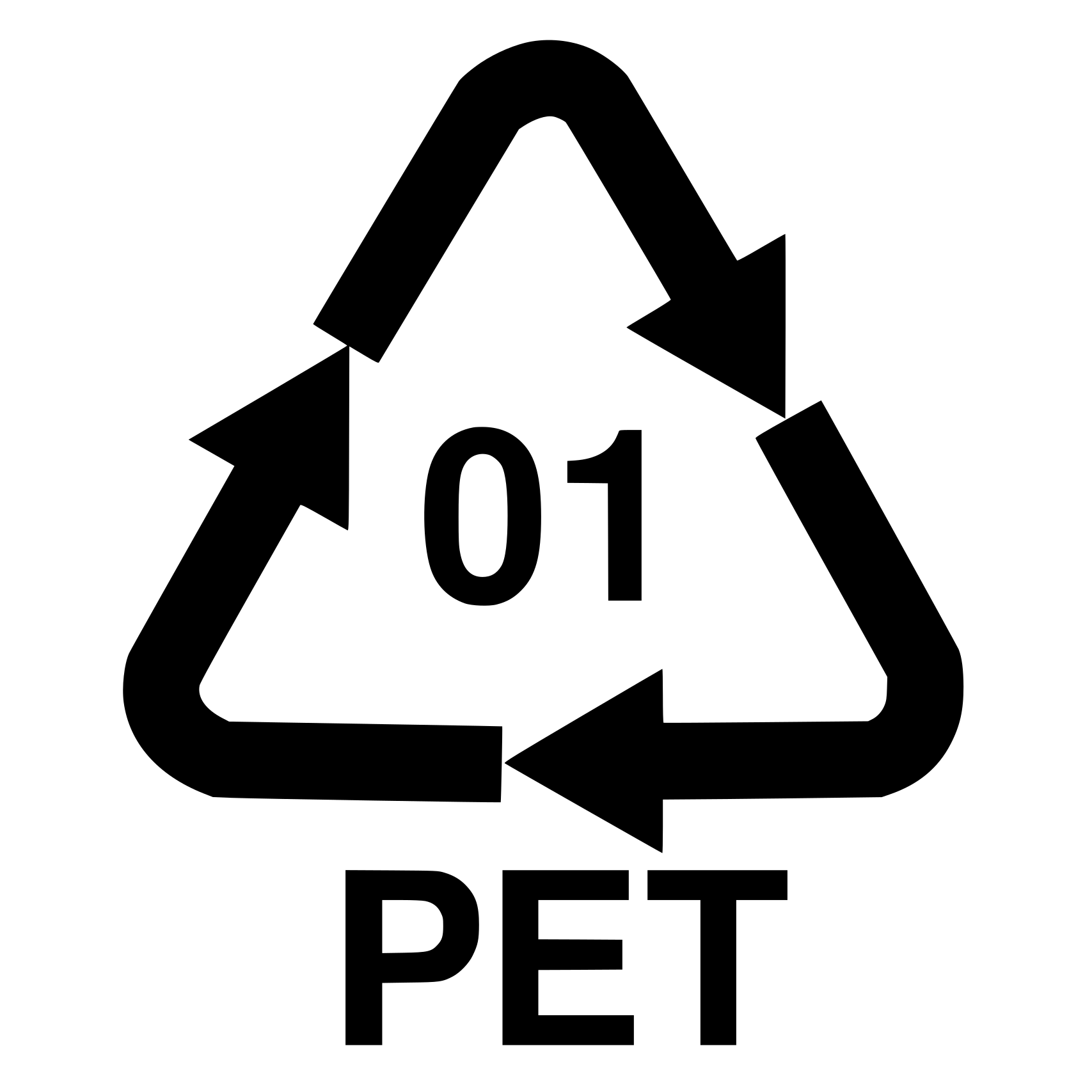
Lithuanian beverage containers carry the mandatory Depozitas symbol — a bottle icon with a circular arrow, tied to the national deposit system (USAD) and its 10-cent refund — alongside standard material codes like PET 1 for polyethene terephthalate bottles. Lithuania's own FAQ is direct about what the Green Dot means here: displaying it "only indicates participation in a recovery scheme," not that the packaging is actually recyclable.
That distinction matters once the PPWR bars using a national symbol to indicate EPR-fee contribution from 12 February 2027. Where the Green Dot functions as a genuine compliance marker tied to PRO membership, that use case shifts toward a QR code instead. Lithuania's guidance doesn't describe the Green Dot as a strict legal requirement for producers generally, so the disruption here likely sits closer to Germany's experience — a branding and licensing question for Žaliasis taškas — than to Cyprus's, where displaying it has been closer to compulsory.
From 12 August 2028, the harmonised EU sorting pictogram becomes mandatory, adding a genuinely new layer. The Depozitas mark isn't a sorting instruction, so it continues independently, the same pattern seen with deposit symbols across the EU.
France's Triman dispute, referred to the CJEU in July 2025, remains the case setting the ceiling for how much room national labelling conventions get once the PPWR pictogram exists everywhere — Lithuania has no equivalent mandatory scheme at stake.
PPWR Product Rules for Lithuania
The PFAS restriction has applied since 12 August 2026: food-contact packaging on the Lithuanian market can't exceed 25 ppb for any single measured PFAS substance, 250 ppb summed, or 50 ppm total including polymeric PFAS. A food-contact coating that crosses that line doesn't get corrected later — it stops moving, treated with the same weight as a CE-marking failure.
Recyclability lands on 1 January 2030, requiring packaging to sit in Design for Recycling Performance Grade A, B, or C, with Grade C losing market access from 2035. Recycled content thresholds for contact-sensitive plastic packaging arrive the same year, rising again by 2040. Packaging minimisation follows on the same date, capping empty space in grouped, transport, and e-commerce packaging at 50%. Reuse and refill targets for beverage, grouped, and transport packaging phase in from 2030 too.
Lithuania already has a financial mechanism that penalises missed recovery targets directly — the environmental pollution tax, declared via form FR0524 — which means PPWR's recyclability grading isn't landing in a vacuum; it's adding a second dimension to a system that already taxes non-compliant packaging by weight.
Companies already reporting fully through GPAIS have a genuine advantage here. GPAIS already requires detailed breakdowns by material, packaging type, and — for composite packaging — declared composition percentages, which is closer to what PPWR's technical file needs than looser, aggregate-only reporting systems elsewhere in the EU. The documentation gap to close is narrower than in markets starting from flatter reporting.
Packaging Covered (and Excluded)
Covered packaging includes:- Sales packaging (primary packaging)
- Grouped/secondary packaging
- Transport packaging
- Single-use and reusable packaging
- All material types: plastic, paper/cardboard, glass, metal, composite packaging, etc.
- Deposit system packaging
- Packaging used for “own needs”
- Certain reusable packaging streams
Producer Responsibility Organization (PRO)
Obligations can be fulfilled:- Individually (self-compliance), or
- Collectively via a licensed organization (PRO).
EPR Registration in Lithuania (GPAIS Process)
Typical steps:- Create/login to a GPAIS account.
- Register in the Producers/Importers Register.
- Configure packaging accounting by:
- Material type
- Packaging type
- Single-use vs reusable
- Deposit vs non-deposit
- Choose compliance model (individual or collective) and sign a PRO agreement if applicable.
Authorized Representative
Foreign companies selling into Lithuania may need:- Registration as a foreign entity in GPAIS, and/or
- Appointment of a local representative (depending on structure).
What Data Must Be Reported
Typically required:- Packaging weight by material (plastic, paper, glass, metal, composite, etc.)
- Packaging type (primary, secondary, transport)
- Single-use vs reusable
- Deposit vs non-deposit
- Volume placed on the Lithuanian market
- Own-use packaging (if applicable)
First Reporting Period
Reporting starts from the date when the company first:- Places packaged goods on the Lithuanian market, or
- Imports packaging/packaged goods into Lithuania.
EPR Reporting Deadlines
Key deadline:- Annual packaging report via GPAIS must be submitted by February 19 (within 50 calendar days after year-end).
- Annual packaging report via Žaliasis taškas must be submitted by January 30 (within 30 calendar days after year-end).
- Environmental pollution tax declaration (form FR0524) may be required based on packaging volumes.
Labels & Marketing Claims
In Lithuania, beverage containers must carry a mandatory deposit symbol, and all packaging must display standard EU material identification codes. Single-use plastic products also require mandatory EU plastic warning labels.An example of what a label looks like on packaging for Lithuania
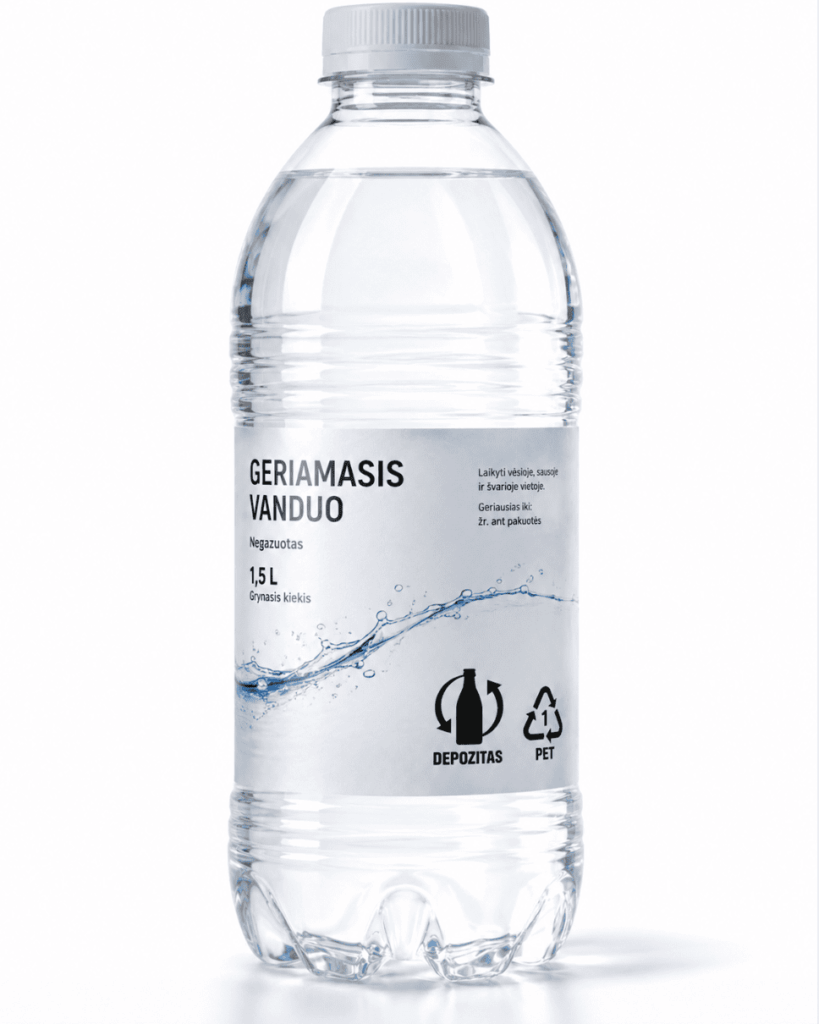 This water bottle shows two mandatory labels used in Lithuania. The "Depozitas" symbol — a bottle icon with a circular arrow — indicates the bottle is part of Lithuania's deposit return system (USAD) and can be returned to a collection point for a 10 cent refund. The PET 1 material code — a Möbius loop triangle with the number "1" — indicates the bottle is made of polyethylene terephthalate and should be recycled accordingly.
📎 Download the Depozitas symbol:
- PNG – best for digital use.

EPR Eco Fees & Eco-Modulation
Financial mechanisms include:- PRO service fees (based on material type, recyclability, volume, etc.)
- Environmental pollution tax if obligations or recovery targets are not properly fulfilled.
Risks, Penalties & Common Mistakes
Common mistakes by e-commerce sellers:- Ignoring shipping packaging as “placed on the market”
- Incorrect material classification (especially composite packaging)
- Not separating reusable and deposit streams
- Late or inaccurate GPAIS reporting
- €900–€1700 for legal entities (depending on severity)
- Additional fines for responsible managers
What E-commerce Sellers Should Do Now
- Determine who is the obligated party in your supply chain.
- Create a packaging BOM (including shipping materials).
- Track packaging weight by material.
- Decide on individual compliance or PRO membership.
- Register and configure GPAIS properly.
- Set internal controls for the February 19 reporting deadline.
Get a 20 min free consultation for EPR
Find all your answers and become part of Lappa
FAQ
Do I need to register if volumes are small?- Usually yes, if you qualify as a producer/importer. Financial liability may depend on volumes, but registration is typically required.
- Not customs import, but EPR liability usually depends on who first places packaging on the Lithuanian market.
- No. Registration and reporting in GPAIS remain mandatory.
- No. It only indicates participation in a recovery scheme.
Packaging EPR law in Lithuania: None enacted
Lithuania is not among the countries with enacted textile EPR legislation.Want to be first to know when new EPR will issued?
Only important news!