

Centralized EPR & PPWR Compliance Software
Lappa centralizes every EPR and PPWR obligation your business carries, replacing scattered spreadsheets with one clear system. Log in once, and see every deadline, filing, and certificate, in every market you sell.
- 40+ countriesFull regulatory coverage
- 99.9 %Platform reliability
- 24/7 supportRegulatory experts on call
Packaging Rules Change Faster Than Ever
EPR and PPWR rules differ by country, category, and deadline. A single missed filing can trigger fines or blocked shipments.
Lappa is packaging compliance software built to catch what manual tracking usually misses. It flags upcoming filings on its own, keeps your product records current, and has everything ready well before a due date arrives.
What we automate for Your team
- Automated deadline tracking across every jurisdiction you operate in
- A centralized packaging data platform for material weights, recyclability, and product codes
- One compliance management software layer, with reporting templates matched to each country’s required format
- Real-time alerts sent to the right team member before a deadline arrives
- Environmental compliance software covering packaging, batteries, electronics, and textiles in one place
- Audit-ready document storage for every registration and certificate

Lappa registration services include
Automated Deadline Calendar
Multi Country EPR Tracker
Packaging Data Platform
PPWR Compliance Checks
EPR Data Management Dashboard
Document and Certificate Vault
Reporting Template Library
Producer Responsibility Fee Calculator
The Lappa process for EPR & PPWR registration
Connect your product and packaging data
Drop in a spreadsheet, or connect your ERP directly — either way, most teams have their full catalog loaded within a day.
Map your obligations
From there we identify the countries and the product categories that would require your business to register.
Register and file with confidence
From here, our team takes over the paperwork itself: filling out the forms, submitting them to the right office, and filing away every certificate somewhere you can actually find it again later.
Stay ahead of renewals
After that, a shared calendar and automatic alerts do the remembering, so deadlines, fees, and renewals stop depending on any one person's inbox.
Building blocks of EPR & PPWR registration


Obligation analysis and determination


EPR data management and reporting setup


Multi country EPR coordination and filing


PPWR compliance monitoring and renewal tracking
Centralized EPR and PPWR compliance software for every market
Expanding into new markets used to mean starting from scratch. As a multi country EPR program grows, so does its complexity. We keep every market on one shared platform from day one, covering the EU, the UK, the US, and more.
Our packaging compliance software adapts automatically as PPWR rules extend to new countries. It also works as environmental compliance software, covering electronics and batteries alongside packaging, and as sustainability compliance software for brands tracking targets of recycling.
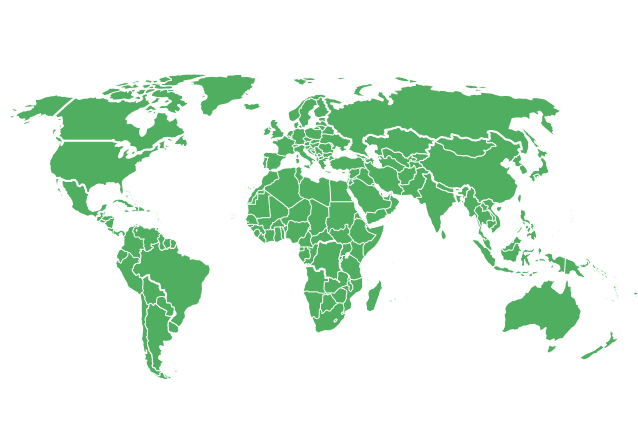
Lappa for global EPR & PPWR
A centralized EPR and PPWR compliance software platform from Lappa. It's compliance management software that finally replaces the folder of PDFs.

Compliance Management Software Layer

Environmental Compliance Software Coverage

Sustainability Compliance Software Tracking
Why choose Lappa as your packaging compliance software
- A single screen covering every EPR and PPWR requirement across more than 40 countries
- Deadlines tracked automatically, so nothing quietly falls through the cracks
- A native packaging data platform holding materials, weights, and product codes in one record
- Sustainability compliance software that reaches beyond packaging into batteries, electronics, and textiles
- Clear, predictable pricing, with no surprise fees tucked into any single country
Doing it manually, country by country
- A different spreadsheet and calendar for every single country
- Paying a local consultant in every market you enter
- Hand-keyed data that's slow and easy to get wrong
- No single place to see deadlines, fees, or certificates together
Seamless integration for your business






Learn more about the rules behind packaging compliance

PPWR Design and Labeling Rules Explained
PPWR introduces new requirements for recyclability, minimum recycled content, and mandatory labeling. These apply to packaging sold in the EU. This guide breaks down what changes, and when it applies to your product lines.
read more
EPR Deadlines by Country and Category
Registration and reporting deadlines vary widely by country and packaging category. Some require monthly filings, others annual renewals. This guide separates what applies to importers, producers, and marketplaces, so nothing gets missed.
read more
How Growing Brands Consolidate EPR and PPWR Filings
See how multi-brand portfolios and fast-growing sellers bring five or more countries onto one shared workflow instead of managing each market separately.
read more
What our customers say about us

Elena Voss
Head of Sustainability, cosmetics brand
Before Lappa, our small sustainability team was drowning in spreadsheets. We track packaging EPR alone across fourteen European countries. Every one of them had a different reporting calendar. Every one used a different portal and data format. At one point we missed an Italian filing entirely, and between the penalty and the cleanup afterward, it ate up several weeks of our time. Once we moved everything onto Lappa, that changed completely. The platform mapped our obligations automatically. It matched our product data to each country's template. Alerts started arriving well ahead of every deadline. Our team now spends a few hours a month on this, not a few days a week. We have not missed a single filing since we switched. Last year we expanded into three new countries without hiring anyone new to manage it. Renewals across all fourteen countries now happen automatically, without anyone chasing paperwork. For a lean team, that difference is enormous.

Marcus Feld
Compliance Manager, electronics importer
We import consumer electronics into the EU. EPR registration as an importer felt like an impossible maze at first. Every country wanted different documentation. Several required an authorized representative we did not know how to appoint. Lappa's team walked us through obligations in eight countries at once. They handled the representative appointments where we needed them. Our certificates were issued faster than we expected. The dashboard now shows every country's status at a glance, including renewal dates and outstanding fees. What used to take our operations lead a full week each quarter now takes an afternoon. We have also avoided two customs delays our old process would likely have caused. Our registrations are always current before shipments leave the warehouse now. Every renewal happens on schedule, without a single chased email. That certainty alone has been worth the switch.

Priya Shah
VP Operations, e-commerce aggregator
Our company acquires small e-commerce brands. Each one arrived with its own patchwork of vendors, or none at all. Consolidating that mess across a dozen countries looked like a multi-year project at first. Instead, onboarding took about six weeks for our first five brands. The team imported product catalogs directly and mapped obligations automatically. We now see every acquired brand's EPR and PPWR status on one screen. Our finance team relies on that view during due diligence for new acquisitions. Since consolidating onto Lappa, external vendor spend is down roughly forty percent across the portfolio. New acquisitions now go live in existing markets within days, not months. The regulatory groundwork is already in place before we even close the deal. It has become a genuine advantage in how fast we integrate a new brand. Leadership now treats this readiness as a standard line item on every acquisition checklist.
Tomas Novak
Packaging Director, beverage company
PPWR hit our category hard. Beverage packaging faces some of the strictest new recyclability and labeling requirements. We needed to know which SKUs required redesign, and by when. That question spanned a dozen markets at once. Lappa's team mapped our full packaging portfolio against the incoming PPWR rules. They flagged exactly which formats needed changes first. That early visibility gave our design team almost a full year of runway. It replaced what would have been a scramble near the deadline. We rebuilt our filing calendar around the platform's alerts. Every redesign milestone now has a clear owner and date attached. Two years in, we have hit every PPWR deadline on time. Our packaging redesign costs came in well under the budget we originally feared. One system tying regulation to real product decisions changed how our whole department plans. Our board now treats PPWR readiness as a routine update, not a recurring crisis.
Anna Byrne
Finance Lead, direct-to-consumer apparel brand
Textile EPR schemes started appearing in country after country. Our finance team had no reliable way to forecast the fees involved. We were setting aside rough estimates that were frequently wrong, in either direction. That made budgeting painful every quarter. Lappa's fee calculator and reporting dashboard changed that. It gave us accurate, country-by-country projections tied directly to our actual sales data, instead of guesswork. Our quarterly provisions are now accurate within a few percentage points. Our CFO genuinely appreciates that precision. We also caught an overpayment in one country within our first month on the platform. That alone covered a meaningful chunk of the annual subscription. Eighteen months later, these costs are a predictable line item. They are no longer a recurring source of anxiety for the finance team. Board reporting on this risk now takes minutes instead of a full afternoon of spreadsheet work.
Frequently asked questions about these requirements
Packaging obligations generally apply to any material used to contain, protect, handle, or present a product. Most frameworks separate packaging into three categories:
- Primary packaging, which touches the product directly, such as a bottle or a box
- Secondary packaging, which groups items together, such as a multipack wrapper
- Tertiary packaging, used for transport and bulk handling, such as pallets and crates
PPWR adds further detail on top of these categories. It sets recyclability targets and minimum recycled content thresholds by material type, and it introduces separate rules for plastic, paper, glass, metal, and wood. Businesses selling any of these packaging types across EU borders typically carry some reporting obligation. This applies even if they never touch the physical product themselves, which is common for brands using contract manufacturers or private-label suppliers. Reporting obligations are usually tied to whoever first places the packaging on a given market, not to whoever designed it. A brand importing finished, packaged goods can still be the responsible party for that packaging's EPR fees. Marketplaces and fulfillment partners sometimes carry a secondary obligation too, depending on the country and the seller's own registration status. Private-label sellers in particular tend to underestimate this: putting your own brand on someone else's manufactured product usually makes you the producer of record for its packaging, regardless of who actually designed or filled it. That same recyclability data also works as software for sustainability compliance reporting once a brand wants to show progress toward its own targets, and as software for managing environmental compliance obligations once batteries or electronics enter the mix.