


Portugal EPR
What is Portugal EPR Packaging
Extended Producer Responsibility (EPR) in Portugal is a waste management policy that requires producers to take responsibility for the environmental impact of the packaging they place on the Portuguese market. This system is primarily governed by Decree-Law No. 152-D/2017, which transposes EU directives into national law. As of August 12, 2026, the new EU Packaging and Packaging Waste Regulation (PPWR) will apply directly, harmonizing many of these rules across the EU. The main regulatory authority in Portugal is the Portuguese Environment Agency (Agência Portuguesa do Ambiente - APA).
Does this apply to e-commerce & online sales
Yes. EPR compliance for online sellers under the Decree-Law 152-D/2017, distance sellers, including foreign e-commerce companies and online marketplaces, are considered producers if they sell packaged products directly to Portuguese consumers (B2C). EPR compliance for online sellers These sellers are responsible for the packaging of the products themselves and any additional shipping packaging (e.g., mailer bags, boxes) used for delivery to the customer in Portugal.
Who is the “producer” under Portugal EPR?
In Portugal, a "producer" is defined as any entity that first places packaged products on the national market for professional or domestic use. This includes:
-
Manufacturers based in Portugal.
-
Importers who bring packaged goods into Portugal from other countries.
-
Distance sellers (foreign companies) selling directly to Portuguese end-users.
-
Service providers who package goods at the point of sale (e.g., retailers).
Who must register for EPR packaging in Portugal
All producers must EPR register with the Portuguese Environment Agency (APA) through the SILiamb (Integrated Environmental Licensing Information System) platform. Additionally, producers must fulfill their waste management obligations either by setting up an individual system (rare) or by joining a licensed Producer Responsibility Organization (PRO).
Portugal EPR Packaging Registration Threshold
EPR packaging thresholds in Portugal operates a zero threshold policy for registration. There is no minimum turnover or volume required to trigger the obligation to register; companies must comply from the first gram of packaging placed on the market. While there are no exemptions for registration, some PROs may offer simplified flat-fee structures for very small volumes (e.g., under 1 tonne per year).
Detailed EPR Guidance for each Jurisdiction
We support 36 jurisdictions

EPR and PPWR for Portugal
Portugal's packaging waste management runs through the SILiAmb system, which has been operating since 1997 as the national producer responsibility organization. Any manufacturer placing packaged goods on the Portuguese market must register and contribute financially to SILiAmb based on the weight and material of packaging they use. It's a straightforward model: your packaging gets tracked, fees get calculated, and the money funds collection and recycling infrastructure across the country.
When PPWR takes effect on August 12, 2026, the bones of the system don't change, but the rules tighten significantly. You'll still register with SILiAmb—that part stays—but now you're also required to have a legal representative designated if your company sits outside the EU. This is a notable shift because many Portuguese importers who source from the UK or overseas now need to formalize their representation. The registration deadline for authorized representatives was set for August 12, 2026, so if you haven't already sorted this, it's urgent.
What also changes is how SILiAmb itself reports compliance. Under PPWR, producer responsibility organizations must now publicly disclose collection and recycling data, making the entire system more transparent. Instead of fees disappearing into an opaque system, companies can now see—in principle—where their money goes and what actual recycling rates they're funding. This matters for your sustainability reporting and your brand positioning.
You'll find detailed guidance on how your registration interacts with the broader PPWR framework in Lappa's centralized compliance resource: Centralized EPR PPWR Compliance. Your financial obligations to SILiAmb don't disappear, but the compliance surface has expanded to include authorized representative documentation, public reporting requirements, and design standards that kick in during 2028–2030.
PPWR Labels for Portugal
Portugal has national packaging labeling rules that predate PPWR, but they're getting absorbed into a harmonized approach starting August 12, 2028. Currently, manufacturers placing packaged goods in Portugal must include certain information—weight, material composition in some cases, and recycling symbols—but there's been latitude in how that information appears. PPWR standardizes this.
From August 2028 onward, all packaging must carry the new EU pictogram for sorting—a black container with an X through it—plus text explaining which bin your packaging belongs in. This is not optional variation by country; it's a single, mandatory design that appears across the EU. If you're selling a beverage bottle in Portugal, it carries the same sorting symbol as it would in Germany or the Netherlands. The goal is obvious: consumers see the same instruction everywhere, confusion drops, and recycling rates climb.
Portugal has also been working on rules around PFAS disclosure on packaging—specifically, packaging that contacts food. Under PPWR, the concentration limit for PFAS in food-contact materials is 260 ppb. If your packaging hits that threshold, you're required to label it or declare it. Lappa's labeling section walks through the specific requirements and compliance deadlines: PPWR Labelling Many Portuguese food producers have already begun auditing their suppliers because China-sourced printing inks and coatings frequently contain PFAS at elevated levels.
PPWR Product Rules for Portugal
Four major rules activate on January 1, 2030, and they apply to every product placed on the Portuguese market, not just domestic manufacturers. The first is the PFAS rule: no packaging can exceed 260 ppb of per- and polyfluoroalkyl substances unless it's explicitly exempted. For food contact, you're tightest; for non-food durable goods, the limit is slightly higher at 250 ppb depending on the category. Portuguese suppliers sourcing pre-made packaging from Asia need to request test certificates now because audits are happening fast.
The second rule is design for recycling. By 2030, all rigid plastics must be designed so they can actually be sorted and processed by existing equipment. This means no multi-layer laminates that can't be separated, no opaque black plastics that sorting cameras can't detect, and no mixed materials in a single component. If you make a plastic bottle with a metal cap, the cap and bottle need to separate easily. If you're printing ink onto a clear plastic container, the ink can't be so dense it blocks optical readers. Portuguese packaging designers are quietly scrambling with suppliers to simplify designs.
The third rule mandates minimum recycled content. Plastic packaging must contain 30% recycled plastic by 2030; paper and cardboard must reach 90% recycled fibre; glass must be 40% recycled; and aluminium must be 50% recycled. For Portugal's domestic market, this is meaningful because it shifts demand toward secondary material suppliers. Lappa has a registration resource that helps track your recycled-content certificates and compliance records: PPWR Registration .
The fourth rule covers packaging minimization. Manufacturers must show they're reducing the amount of material per unit of product—no unnecessary bulky packaging designed just to look impressive on a shelf. Regulators in Portugal are looking at this through the lens of density: how much material per functional unit? A 500ml juice bottle should weigh what it weighs, not 50% more. SILiAmb will begin auditing this systematically once 2030 arrives.
Packaging Covered (and Excluded)
The EPR system covers all types of packaging materials:
-
Primary (Sales) packaging: The immediate wrap for the consumer.
-
Secondary (Grouped) packaging: Used to group products at the point of sale.
-
Tertiary (Transport) packaging: Used for shipping (e.g., pallets, plastic film).
Materials include glass, plastic, paper, cardboard, metal, wood, and composites. Exclusions are limited to specific packaging for hazardous waste or medical products that fall under separate specialized regulations.
Producer Responsibility Organization (PRO)
Producers typically transfer their responsibility to one of the licensed collective systems (PROs) in Portugal. The main organizations are:
-
Sociedade Ponto Verde (SPV)
-
Novo Verde
-
Electrão
These entities manage the collection and recycling network and report data to the APA on behalf of their members.
EPR Registration in Portugal
The registration process involves:
-
Creating an account on the SILiamb portal managed by the APA.
-
Choosing and signing a contract with a licensed PRO (e.g., SPV or Novo Verde).
-
Obtaining a unique Producer Registration Number.
-
Registering the specific quantities and materials in the SILiamb database.
Authorized Representative
For foreign companies (non-residents) selling directly to Portuguese consumers, the appointment of an Authorized Representative (AR) in Portugal is mandatory. The AR must be a legal or natural person based in Portugal who acts as the primary contact for the APA and ensures that registration, reporting, and fee payments are handled correctly.
What Data Must Be Reported
Producers are required to EPR report:
-
The total weight (in kilograms) of packaging placed on the market.
-
A breakdown by material type (e.g., PET, HDPE, Cardboard).
-
The category of packaging (household vs. non-household).
-
Recyclability data, as required for the calculation of eco-modulated fees.
First Reporting Period & EPR Reporting Deadlines
Reporting is typically done annually.
-
Annual Declaration: Data for the previous calendar year must be submitted to the PRO and the APA (via SILiamb) by March 31st each year.
-
New Members: Must report initial data upon registration to establish their first fee payment.
Labels & Marketing Claims
From 1 January 2025, Portugal requires packaging to carry sorting instructions indicating the correct recycling bin for disposal. Producers can either print the label directly on the packaging or provide disposal instructions through alternative means such as a website or point-of-sale signage.
An example of what a label looks like on packaging for Portugal
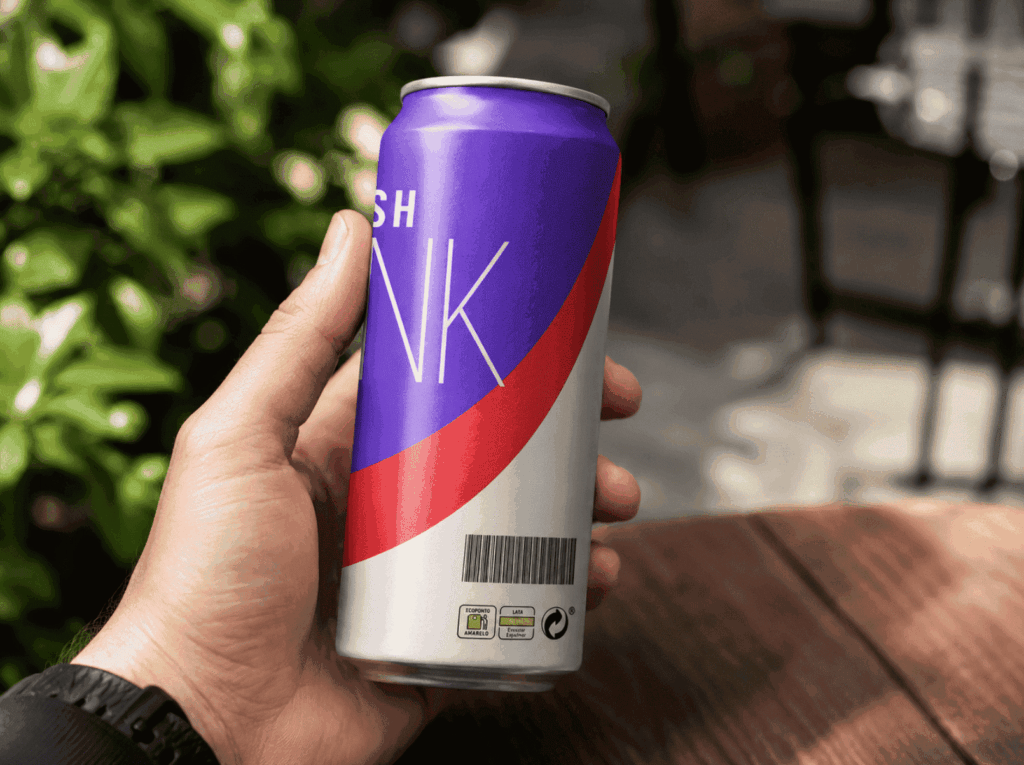
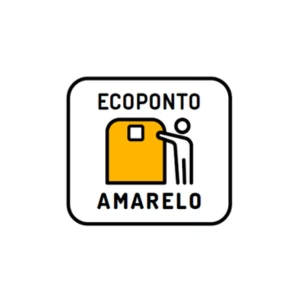
This aluminium can shows two labels used in Portugal. The "Ecoponto Amarelo" label — a yellow bin icon with the word "Lata" ("can" in Portuguese) — indicates that the can should be placed in the yellow recycling container. Next to it is the Ponto Verde (Green Dot) symbol, confirming that the producer is a member of the Sociedade Ponto Verde system and financially contributes to packaging waste collection and recycling in Portugal.
📎 Download the Ecoponto Amarelo label:
- PNG – best for digital use.
📎 Download the Ponto Verde symbol:


EPR Eco Fees & Eco-Modulation
Fees are calculated based on the weight of the packaging. Starting in 2026, Portugal is moving toward a full eco-modulation system. Fees will be adjusted based on the "Recyclability Assessment Methodology" (RAM):
-
Green-rated: Lower fees for highly recyclable materials.
-
Red-rated: Significant surcharges for packaging that is difficult to recycle or contains hazardous substances.
You can estimate potential packaging compliance costs with Lappa’s EPR fee calculator based on country, material type and packaging volume.For registration, reporting and ongoing compliance service costs, see Lappa’s EPR pricing page.
Risks, Penalties & Common Mistakes
Non-compliance can lead to:
-
Fines: Ranging from €250 to €44,891, depending on the size of the company and the nature of the violation.
-
Market Bans: Authorities can prevent the sale of products if the producer is not registered in SILiamb.
-
Common Mistakes: Failing to appoint an Authorized Representative and under-reporting transport packaging like pallets and stretch film.
What E-Commerce Sellers Should Do Now
-
Appoint a local Authorized Representative in Portugal to handle compliance.
-
Register your company on the SILiamb portal.
-
Join a licensed PRO like Sociedade Ponto Verde or Novo Verde.
-
Review your packaging design now to ensure it qualifies for lower eco-modulated fees in 2026.
Make your first declaration within 24 hours
Easy to use EPR Software
FAQ
Is registration mandatory for small sellers?
- Yes, Portugal has a zero threshold; registration is required from the first item sold.
What is the SILiamb portal?
- It is the official electronic system of the APA where all environmental data and registrations are managed.
Is the Green Dot mandatory in Portugal?
- It is not a legal requirement, but it is a widely recognized symbol managed by Sociedade Ponto Verde.
Do I need to report B2B packaging?
- Yes, both household and commercial/industrial packaging must be licensed and reported.
When does the new Deposit Return System (SDR) start?
- It becomes mandatory for beverage containers by August 2026.
What is Portugal EPR EEE
Portugal's Extended Producer Responsibility (EPR) framework for Electrical and Electronic Equipment (EEE) is established under Decreto-Lei n.º 152-D/2017, of 11 December 2017 (the Unified Specific Waste Streams Regime, or Regime Unificado de Fluxos Específicos de Resíduos). This law consolidated 13 previously separate legal texts into a single regulatory instrument, effective from 1 January 2018. It covers multiple waste streams under one framework, including WEEE, batteries, packaging, used oils, tyres, and end-of-life vehicles.
For EEE specifically, Decreto-Lei n.º 152-D/2017 transposes the EU WEEE Directive 2012/19/EU into Portuguese national law. This directive requires EU member states to ensure that producers of electrical and electronic equipment finance the collection, treatment, recovery, and environmentally sound disposal of waste arising from their products. All member states must implement national laws transposing the directive's requirements for EEE producers and waste operators.
In Portugal, WEEE is referred to as REEE (Resíduos de Equipamentos Elétricos e Eletrónicos). The regulation covers a broad range of product categories including household appliances, IT equipment, consumer electronics, lighting, tools, toys, medical devices, and monitoring instruments. The overarching regulatory and enforcement authority is the Agência Portuguesa do Ambiente (APA, I.P.) — the Portuguese Environment Agency.
Portugal has been tightening how it oversees this category. Authorities and Producer Responsibility Organisations are paying closer attention to electronics, especially when sold cross-border, because they are expensive to recycle and contain valuable and sometimes hazardous materials. In practice, that means more checks, more structured reporting, and real consequences if companies simply ignore their obligations.
Does This Apply to E-Commerce & Online Sales
Yes. Portugal's EPR rules for EEE apply fully to e-commerce and online sales, including cross-border distance selling. The key principle is that the obligation attaches to whoever first places EEE on the Portuguese market — regardless of where that entity is established.
All member states must enforce compliance for online sellers and foreign producers that sell directly to EU consumers. Under the Portuguese implementation, a company based outside Portugal that sells EEE directly to Portuguese consumers via an online store or marketplace is considered a producer and must meet full registration and reporting obligations.
Online marketplaces are also in the spotlight. Platforms like Amazon are already enforcing EPR compliance by requiring sellers to provide valid registration numbers. If sellers do not comply, they risk being blocked. In some cases, the marketplaces themselves may be forced to take over producer responsibility — a legal liability that is pushing them to clean up their vendor lists.
Importantly, being compliant in your home country does not automatically mean you are compliant in Portugal. Each EU member state has its own national implementation of the WEEE Directive, and registration in one country does not satisfy obligations in another.
Who is the "Producer" Under Portugal EPR?
Under Decreto-Lei n.º 152-D/2017, the concept of "producer" is interpreted broadly. The following entities qualify as producers for the purposes of EEE EPR obligations:
- Manufacturers — companies that manufacture EEE under their own brand name and place it on the Portuguese market.
- Brand owners / private label operators — companies that resell EEE under their own brand, even if the product was manufactured by a third party. If you buy generic or unbranded products and add your logo, you become the producer under EPR rules.
- Importers — companies established in Portugal that import EEE from other countries and place it on the Portuguese market for the first time.
- Distance sellers — companies established outside Portugal that sell EEE directly to end users in Portugal, whether B2C or B2B. These entities bear full producer responsibility for the equipment they place on the Portuguese market.
- Distributors acting as de facto producers — where no other producer within the supply chain has registered, distributors may take on producer responsibility.
If you sell at a distance to Portugal without being established in Portugal, you must appoint an authorized representative established in Portugal to fulfil producer obligations.
Who Must Register for EPR EEE in Portugal
Any entity meeting the definition of "producer" above must register before placing EEE on the Portuguese market. There is no de minimis volume threshold — the obligation applies from the first unit sold or supplied. Distance sellers, even if located outside Portugal, are also responsible.
The following economic operators are required to register in APA's electronic waste registration system: producers of products (manufacturers, brand owners, resellers under own brand, importers), and e-commerce sellers established outside Portugal but placing products on the Portuguese market (who must appoint an authorized representative in Portugal).
Registration is carried out through SIRER (Sistema Integrado de Registo Eletrónico de Resíduos), the national integrated electronic waste registry, operated under the broader SILiAmb environmental licensing portal managed by APA. SIRER is basically the central record of who is producing what, how much enters the market, and how that waste will be handled.
Once registered, companies must:
- Join a licensed Producer Responsibility Organisation (PRO) or operate an approved individual management system.
- Pay the applicable eco-contributions based on the weight and category of EEE placed on the market.
- Report annual data on quantities placed on the Portuguese market via SIRER.
- Ensure their SIRER producer registration number appears on invoices and transport documents.
The APA highlights an expanded obligation to include the producer registration number (SIRER) on invoices, transport, and equivalent documents, effective from 1 January 2025.
Portugal EPR EEE Registration Threshold
Portugal applies a zero-threshold policy for EEE EPR. There are no lower quantity minimums or thresholds to exempt anyone introducing products from their obligations. Even sending a single parcel or a solitary product item obliges compliance.
This means that any company — regardless of size, annual turnover, or volume of EEE sold — is subject to full registration and reporting obligations from the moment it first places EEE on the Portuguese market. There are no SME exemptions, no grace periods for low-volume sellers, and no turnover-based thresholds equivalent to those found in some other EU member states.
This is a critical point for foreign e-commerce sellers. A company making its first sale of a covered electronic product to a Portuguese customer is, from that moment, a "producer" under Portuguese law and must be registered.
Detailed EPR Guidance for each Jurisdiction
We support 36 jurisdictions
EEE Categories Covered (and Excluded)
Portugal originally applied the ten-category framework established under the original WEEE Directive, and has subsequently aligned with the broader open-scope approach of WEEE Directive 2012/19/EU. The current categories cover virtually all EEE that depends on electric current or electromagnetic fields to operate.
Covered categories include:
- Large household appliances — washing machines, refrigerators, dishwashers, air conditioning units, electric cookers, large cooling equipment.
- Small household appliances — vacuum cleaners, toasters, irons, clocks, hair dryers, shavers, coffee machines, electric toothbrushes.
- IT and telecommunications equipment — laptops, desktops, tablets, printers, servers, telephones, mobile phones, routers, networking hardware.
- Consumer electronics — televisions, hi-fi systems, cameras, video cameras, headphones, speakers, gaming consoles, e-readers.
- Lighting equipment — fluorescent lamps, LED lamps, energy-saving bulbs, high-intensity discharge lamps, luminaires.
- Electrical and electronic tools — drills, saws, sewing machines, electric garden tools (excluding large-scale stationary industrial machinery).
- Toys, leisure, and sports equipment — electric train sets, games consoles, sports equipment with electrical components, slot machines.
- Medical devices — radiotherapy equipment, cardiac monitors, dialysis machines, pulmonary ventilators, diagnostic imaging equipment (excluding implanted or infected products).
- Monitoring and control instruments — smoke detectors, thermostats, heating regulators, measuring, weighing, and adjusting instruments.
- Automatic dispensers — vending machines for hot drinks, cold bottles, money dispensers (ATMs).
- Photovoltaic panels — covered under the expanded open-scope framework post-2018.
Exclusions under Portuguese law include:
- Equipment that is part of large-scale fixed industrial installations not designed for use by private households.
- Large-scale fixed infrastructure (e.g., permanently installed oil pipelines, building integrated structures).
- Military equipment and equipment designed for use in space.
- Equipment specifically designed for research and development purposes made available only on a business-to-business basis.
- Implantable medical devices.
- Equipment that is part of other types of equipment falling outside the scope of the regulation (e.g., components embedded in vehicles not separately placed on the market).
If your product needs electricity at any point in its life, you should assume it is WEEE and register and report accordingly.
Producer Responsibility Organization (PRO)
Portugal has three licensed PROs authorised by APA to manage the integrated WEEE collection and recycling system on behalf of registered producers. Producers joining an integrated management system transfer their operational and financial obligations to one of these entities.
The three currently licensed WEEE PROs in Portugal are:
- Electrão – Associação de Gestão de Resíduos (formerly Amb3E) — the first organisation to manage WEEE in Portugal, founded in April 2005 by 60 major EEE producers. It manages three waste streams: battery waste, packaging waste, and WEEE, and operates a collection network of more than 7,000 points distributed across shopping malls, stores, fire stations, and schools.
- ERP Portugal – Associação Gestora de Resíduos — established on 13 May 2005, originating within the European Recycling Platform. It manages WEEE as well as waste batteries and accumulators, and currently serves approximately 700 member companies.
- WEEECYCLE — a third WEEE management entity licensed by the Portuguese authorities, providing an additional option for producers seeking PRO membership.
Each PRO manages the collection logistics, treatment contracting, and reporting to APA on behalf of its producer members. Producers pay eco-contributions to their chosen PRO based on the weight and category of EEE they place on the market. These fees cover the costs of the collection, transport, sorting, and treatment of WEEE generated in Portugal.
Producers may alternatively operate an individual management system, subject to prior APA authorisation and the provision of a financial guarantee covering estimated future waste management costs.
EPR Registration in Portugal
The registration process for foreign companies follows a structured sequence:
- Appoint an Authorized Representative in Portugal. Foreign companies not established in Portugal must designate a local representative before initiating registration. The representative acts on behalf of the producer in all dealings with APA and the PROs.
- Register in SIRER via SILiAmb. Registration is completed through APA's online environmental licensing portal, SILiAmb. The registration captures company identity, the relevant waste streams (WEEE, batteries, packaging, etc.), the compliance system chosen (individual or integrated/PRO), and expected volumes of EEE placed on the Portuguese market.
- Join a licensed PRO or establish an individual system. The company must become a member of one of the three licensed WEEE PROs (Electrão, ERP Portugal, or WEEECYCLE) or obtain APA approval to operate an individual management system with a financial guarantee.
- Declare expected quantities for the current year. Upon registration, companies are typically required to declare estimated volumes by EEE category that they expect to place on the Portuguese market during the registration year.
- Receive your SIRER registration number. Once APA processes the registration, a unique producer registration number is issued. This number must appear on invoices, transport documents, and equivalent commercial documents. ComplyMarket
- Submit annual reports. Registered producers must submit annual data declarations through SIRER, detailing actual quantities placed on the Portuguese market in the previous calendar year.
Authorized Representative
Foreign companies selling EEE into Portugal without a physical establishment in the country are legally required to appoint an Authorized Representative (AR) domiciled in Portugal. The concept of ARs has been well established in the WEEE sector, where producers appoint representatives to register, report, and manage compliance in EU member states where they have no physical presence.
Under Portuguese law and the underlying WEEE Directive framework, the AR assumes full legal responsibility for fulfilling the producer's EPR obligations in Portugal. This includes:
- Completing and maintaining the SIRER registration on behalf of the foreign producer.
- Joining the chosen PRO and managing the membership relationship.
- Declaring volumes placed on the Portuguese market to both the PRO and APA.
- Submitting annual reports through SIRER by the applicable deadlines.
- Ensuring that the producer's SIRER registration number is correctly communicated for use on invoices and commercial documents.
- Acting as the point of contact for APA in the event of compliance inquiries, audits, or enforcement proceedings.
As of December 2025, the EU Commission has proposed suspending the obligation to appoint EPR authorized representatives for companies based in the EU until 2035. However, producers from third countries (outside the EU) remain excluded from this proposal. The AR requirement therefore remains fully in force for all non-EU companies selling EEE into Portugal, and EU-based sellers should monitor developments regarding the proposed simplification.
What Data Must Be Reported
Registered producers must submit annual data declarations through SIRER detailing their activities in the previous calendar year. The data requirements for WEEE include:
- Total weight of EEE placed on the Portuguese market, broken down by the applicable EEE categories.
- Brand name(s) under which the EEE is placed on the market.
- Type of compliance system used — whether individual or integrated (PRO membership details).
- Weight of WEEE collected through take-back and collection point systems during the reporting period (where the producer has direct collection obligations).
- Weight of WEEE treated, recycled, and recovered, cross-referenced against the applicable EU minimum recovery targets.
- Details on distributors or retailers supplied in Portugal and the quantities distributed to each, where relevant and applicable under the legislation.
Registered companies must report data annually through APA's SIRER system. Required data includes the type and quantity of products placed on the market in Portugal, the type and quantity of waste generated and recovered, the chosen waste management system (individual or integrated), and details on distributors supplied.
Records supporting the declared data — including purchase orders, sales invoices, import declarations, and weight calculations — must be retained for a minimum of three years and made available to APA on request.
First Reporting Period & EPR Reporting Deadlines
A company's registration obligation begins before or at the point it first places EEE on the Portuguese market. There is no grace period — the producer must be registered and affiliated with a PRO prior to commencing sales.
Key annual deadlines are:
- 15 March — Annual data declaration submitted to the PRO (Electrão, ERP Portugal, or WEEECYCLE). This is where producers inform their PRO of the actual quantities of EEE placed on the Portuguese market in the previous calendar year. The PRO uses this data to calculate eco-contributions and fulfil its own reporting obligations to APA.
- 15 April — Annual data reported to APA through SIRER. If you work with an Authorized Representative, they normally submit this on your behalf. In 2025, this deadline was exceptionally extended to 31 May, mainly because new rules for industrial and commercial packaging created a heavier workload for companies and the system itself.
Producers should treat the 15 March PRO declaration and 15 April SIRER submission as the core annual compliance calendar. Companies joining the system mid-year are typically required to register before sales commence and submit a pro-rated declaration for the partial year upon the first annual reporting cycle.
Labels & Marketing Claims
Portugal requires EEE products sold to consumers to carry specific labelling in accordance with the WEEE Directive and national implementing legislation.
Crossed-out Wheeled Bin Symbol
All EEE placed on the Portuguese market must display the crossed-out wheeled bin symbol (the WEEE symbol), indicating that the product must not be disposed of with general household waste. The symbol adopted by the European Council to represent WEEE comprises a crossed-out wheelie bin with or without a single black line underneath the symbol. The black line indicates that goods were placed on the market after 2005. This marking must appear on the product itself or, where this is not physically practicable due to size or function, on the packaging and in the accompanying documentation.
RoHS / Hazardous Substance Markings
Products sold in Portugal, as throughout the EU, must also comply with the RoHS Directive 2011/65/EU (Restriction of Hazardous Substances in Electrical and Electronic Equipment). This restricts the use of certain hazardous materials (including lead, mercury, cadmium, hexavalent chromium, polybrominated biphenyls, and polybrominated diphenyl ethers) in EEE and requires the CE marking to be affixed as part of the product conformity declaration process.
CE Marking
CE marking is mandatory for EEE placed on the EU market, indicating conformity with applicable EU product safety, health, and environmental requirements. While not exclusively a WEEE/EPR requirement, it is a prerequisite for legal market access in Portugal.
Producer Registration Number on Commercial Documents
From 1 January 2025, producers must include their SIRER producer registration number on invoices, transport documents, and equivalent commercial documents. This applies to all sales into Portugal and is an APA-mandated transparency measure intended to facilitate enforcement and market surveillance.
Sustainability and Environmental Marketing Claims
Companies making environmental or sustainability claims in Portugal — such as "recyclable," "eco-friendly," or "carbon neutral" — must ensure these claims are substantiated, accurate, and not misleading to consumers, in line with EU and Portuguese consumer protection law. Unsubstantiated green claims are subject to increasing scrutiny from Portuguese consumer authorities.
EPR Eco Fees & Eco-Modulation
Portugal's WEEE eco-contribution system operates on a weight-based fee model. Producers pay contributions to their chosen PRO calculated primarily on the weight (in kilograms) of EEE placed on the Portuguese market, broken down by EEE category. Each category carries a different rate that reflects the relative costs of collection, sorting, treatment, and recycling of that type of equipment.
At the core, it is a cost-per-kilogram model, where each category of EEE — such as large household appliances, IT equipment, or lighting — is associated with a specific rate that reflects the disposal and recycling expenses inherent to that category. Eldris
Fee rates are set and periodically revised by each licensed PRO in Portugal (Electrão, ERP Portugal, WEEECYCLE) and are not publicly standardised in the same way as in some other EU countries such as France. Producers should request current fee schedules directly from their chosen PRO upon membership application.
Factors that typically influence the level of contribution include:
- Product category — categories with higher treatment complexity (e.g., cooling and freezing equipment containing refrigerants, or CRT televisions) generally carry higher rates than simpler categories.
- Weight per unit — heavier equipment generates proportionally higher contributions.
- Hazardous content — products containing hazardous substances requiring specialised treatment (e.g., fluorescent lamps containing mercury) attract higher rates.
- Recyclability and design for disassembly — some PROs and the broader EU WEEE framework encourage eco-modulation, whereby products designed to be easier to disassemble, reuse, or recycle may benefit from reduced contribution rates.
Portugal has not yet implemented the formalised eco-modulation system seen in France, where specific design criteria (repairability index, use of recycled content, ease of disassembly) generate measurable upward or downward fee adjustments. However, as the EU moves toward broader eco-design and digital product passport requirements, eco-modulation is expected to become more formalised in the Portuguese system in coming years.
Producers should also note that fixed registration/membership fees may apply in addition to weight-based eco-contributions, depending on the PRO chosen.
Risks, Penalties & Common Mistakes
Penalties
The Portuguese government has tightened inspections on producer WEEE compliance. The Ministry has reiterated that existing environmental legislation allows for fines for the most serious cases of non-compliance of up to €5 million, as well as additional penalties such as revocation of operational licences.
Under Decreto-Lei n.º 152-D/2017, infringements are categorised by severity:
- Very serious infringements — placing EEE on the market without registering with APA, operating without PRO membership or an approved individual system, illegal WEEE management operations, and failing to meet collection and recovery targets. Fines can reach up to €44,890 for legal entities under the administrative penalty framework, with the most serious environmental violations potentially attracting much higher fines under the general environmental liability regime.
- Serious infringements — failing to accept consumer returns of WEEE, non-compliance with labelling requirements, failure to submit annual declarations, and failure to maintain required records.
- Ancillary sanctions — suspension of activities, withdrawal of licences or permits, public disclosure of the violation.
Common Compliance Mistakes
- Assuming that EPR registration in another EU country (e.g., Germany or France) covers Portugal — it does not.
- Failing to appoint a Portuguese Authorized Representative before commencing sales.
- Omitting the SIRER registration number from invoices and commercial documents issued from 1 January 2025.
- Misclassifying EEE categories, resulting in under-reporting of volumes and underpayment of contributions.
- Missing the 15 March PRO declaration deadline or the 15 April SIRER submission deadline.
- Relying on marketplace operators to handle compliance without verifying that obligations have actually been transferred and fulfilled.
- Failing to retain supporting documentation (sales records, weight data, import declarations) for the minimum three-year retention period.
- Not registering until after sales have already commenced — under Portuguese law, registration must precede market placement.
What E-Commerce Sellers Should Do Now
Foreign e-commerce companies selling EEE to Portuguese consumers should take the following steps:
- Determine whether your products are in scope. Review your product catalogue against the EEE categories covered under Decreto-Lei n.º 152-D/2017. If any product requires electricity to function, assume it is covered.
- Appoint a Portuguese Authorized Representative. Identify and contract a compliance service provider or law firm established in Portugal who can act as your AR with APA.
- Register in SIRER through SILiAmb. Complete the producer registration via APA's online portal, declaring your waste streams and anticipated volumes.
- Join a licensed WEEE PRO. Contact Electrão, ERP Portugal, or WEEECYCLE and complete the membership process. Request current fee schedules to budget for eco-contributions.
- Update your invoices and commercial documents. Ensure your SIRER registration number appears on all invoices and transport documents for products sold or dispatched to Portugal, as required from 1 January 2025.
- Label your products correctly. Confirm that the crossed-out wheeled bin symbol is correctly affixed to all EEE and that CE marking requirements are met.
- Implement a data collection process. Record the weight by category of all EEE dispatched to Portuguese customers. This data forms the basis of your annual PRO declaration and SIRER submission.
- Calendar your annual deadlines. Mark 15 March (PRO declaration) and 15 April (SIRER submission) as mandatory annual compliance milestones.
- Retain supporting records. Keep purchase orders, sales data, weight certificates, and import documentation for a minimum of three years.
- Monitor regulatory developments. APA and the Portuguese Ministry of Environment periodically update guidance and enforcement priorities. Stay informed through your AR or compliance partner.
Register online
Start your EPR Reporting within 24 hours
FAQ
Is EPR EEE registration mandatory for foreign companies selling electronics to Portuguese consumers?
- Yes. Any company that places EEE on the Portuguese market — including foreign companies selling via e-commerce or direct channels — is legally required to register with APA through SIRER before commencing sales. There are no exemptions based on the seller's country of establishment.
Is there a minimum threshold below which foreign sellers are exempt from Portugal's WEEE obligations?
- No. Portugal applies a zero-threshold approach. There are no lower quantity minimums or thresholds to exempt anyone from their obligations. Even a single parcel or product item obliges compliance. Regardless of annual turnover or volume, every producer must register.
Do foreign companies need to appoint a local representative in Portugal?
- Yes. If you sell at a distance to Portugal without being established in Portugal, you must appoint an authorized representative established in Portugal to fulfil producer obligations. The AR handles registration, PRO membership, reporting, and acts as the legal point of contact with APA.
What labelling is required on EEE products sold in Portugal?
- All products must carry the crossed-out wheeled bin WEEE symbol. CE marking is required for market access throughout the EU. From 1 January 2025, the SIRER producer registration number must also appear on invoices and transport documents. Products must comply with RoHS restrictions on hazardous substances.
Are online marketplaces responsible for WEEE compliance on behalf of their sellers in Portugal?
- Generally, the individual seller (producer) remains responsible for their own WEEE compliance. However, platforms like Amazon are already enforcing EPR compliance by requiring sellers to provide valid registration numbers, and in some cases marketplaces themselves may be forced to take on producer responsibility where sellers have failed to comply. Sellers should not assume that marketplace membership substitutes for their own registration and reporting obligations with APA.
What is Portugal EPR Batteries
Portugal's battery EPR framework is governed by Regulation (EU) 2023/1542 — the EU Battery Regulation — which applies directly in all EU Member States from 18 August 2025. At national level, Portugal implements battery EPR through Decree-Law No. 152-D/2017 of 11 December, which established the legal framework for waste streams including batteries, packaging, WEEE, oils, tyres, and vehicles. This decree has been updated through subsequent amendments to align with the EU Battery Regulation. The environmental licensing and reporting system in Portugal is the SILiAmb — the Sistema Integrado de Licenciamento do Ambiente — managed by the Portuguese Environment Agency (Agência Portuguesa do Ambiente — APA). SILiAmb serves as Portugal's central platform for environmental registration and reporting across multiple waste streams, including batteries. As of May 2026, Portugal does not yet have an official public producer register for batteries under the new EU Battery Regulation framework. Zalando has confirmed this by pausing its technical setup for Portugal battery EPR verification — alongside the Netherlands — specifically because no official public battery producer registry exists yet. The legal obligation to register and comply with battery EPR exists independently of whether a public register is operational. From 1 January 2026, Portugal introduced eco-modulation criteria for its EPR system, incentivising environmentally responsible practices through differentiated financial contributions based on product environmental characteristics.Does This Apply to E-Commerce & Online Sales
Yes. The EU Battery Regulation and Portuguese Decree-Law No. 152-D/2017 apply to all producers placing batteries on the Portuguese market, regardless of sales channel. The law explicitly captures distance sellers and e-commerce operators who sell battery-containing products directly to Portuguese consumers as producers. Foreign companies without a Portuguese establishment must appoint an authorised representative in Portugal to fulfil EPR obligations. The existence of no public battery producer register does not exempt companies from the underlying legal obligations — it only means that marketplace verification mechanisms are not yet fully operational.Who is the "Producer" under Portugal EPR?
Under Regulation (EU) 2023/1542 and Portuguese Decree-Law No. 152-D/2017, a producer is any person who, in the course of commercial activity, makes batteries available on the Portuguese market for the first time. The definition covers:- Manufacturers established in Portugal who produce and sell batteries domestically under their own brand.
- Importers bringing batteries into Portugal from non-EU countries for the first time under their own name.
- Companies introducing batteries from another EU Member State into Portugal for the first time.
- Private label owners whose brand name appears on batteries manufactured by third parties.
- Distance sellers and online retailers established outside Portugal who sell batteries or battery-containing products directly to Portuguese consumers.
- Economic operators who prepare batteries for re-use or repurposing — treated as producers for the second life of the battery.
Who Must Register for EPR Batteries in Portugal
All producers placing batteries on the Portuguese market must register through the SILiAmb system and join an approved collective management scheme (PRO) for batteries. The competent authority is the Portuguese Environment Agency (APA). The established PRO for portable batteries in Portugal is Ecopilas (ecopilas.pt), which manages collection, recycling, and reporting obligations on behalf of its members. Producers join Ecopilas or another approved collective scheme, declare volumes, and pay contributions based on battery category and weight. As the public battery producer register under the new EU Battery Regulation is still being established, producers should contact APA and Ecopilas directly to confirm the current registration procedure and any updated requirements.Portugal EPR Battery Registration Threshold
Regulation (EU) 2023/1542 does not establish a minimum volume or turnover threshold below which producers are exempt from EPR obligations. All producers placing batteries on the Portuguese market must register and comply regardless of size or volume. The only exemption in the Regulation concerns batteries used in military or space equipment, which are outside the scope entirely.Detailed EPR Guidance for each Jurisdiction
We support 36 jurisdictions
Batteries Covered (and Excluded)
Regulation (EU) 2023/1542 defines five battery categories, all within scope for EPR in Portugal: Portable batteries Batteries under 5 kg not designed for industrial or vehicle use. Includes batteries in consumer electronics, power tools, household devices, and toys. Light Means of Transport (LMT) batteries Batteries used in e-bikes, e-scooters, e-mopeds, and similar light electric vehicles. Automotive (SLI) batteries Starting, lighting, and ignition batteries used in vehicles. Industrial batteries Batteries used in industrial applications and stationary energy storage systems. Those above 2 kWh have additional requirements including battery passports from 2027. Electric vehicle (EV) batteries Batteries used in electric cars and heavy electric vehicles. Key exclusions:- Batteries designed for military or space equipment — outside scope entirely
- Batteries in nuclear installations — excluded
- Second-life batteries where the operator performing re-use or repurposing becomes the new producer
Producer Responsibility Organization (PRO)
The established collective scheme for portable batteries in Portugal is Ecopilas (ecopilas.pt), approved by APA. Ecopilas manages nationwide battery collection infrastructure, recycling operations, and annual reporting to APA on behalf of its members. Producers join Ecopilas by signing a membership agreement and declaring battery volumes placed on the Portuguese market. For automotive and industrial batteries, additional collective schemes or individual compliance arrangements may apply. Producers in these categories should confirm the applicable scheme directly with APA. From 1 January 2026, Portugal's EPR system introduced eco-modulation criteria, differentiating financial contributions based on the environmental impact and characteristics of products. Producers whose batteries meet improved environmental criteria may benefit from reduced contributions.EPR Registration in Portugal
The registration process for battery producers in Portugal is as follows:- Determine whether your business qualifies as a producer under the EU Battery Regulation and Portuguese Decree-Law No. 152-D/2017.
- If established outside Portugal, appoint an authorised representative established in Portugal before initiating registration.
- Register through the SILiAmb system (silamb.apambiente.pt), managed by APA, for battery producer registration.
- Join Ecopilas (ecopilas.pt) or another approved collective scheme for battery collection and recycling.
- Declare battery volumes placed on the Portuguese market by category and weight.
- Pay applicable contributions to the collective scheme.
- Submit annual declarations through SILiAmb as required by APA.
- Monitor APA announcements for the launch of the official public battery producer register under the new EU Battery Regulation framework.
Authorized Representative
Under Regulation (EU) 2023/1542 (Article 57) and Portuguese Decree-Law No. 152-D/2017, producers established outside Portugal must appoint an authorised representative — a legal or natural person established in Portugal — to fulfil EPR obligations on their behalf. The authorised representative handles SILiAmb registration, collective scheme membership, annual declarations, fee payment, and communication with APA. The representative must be appointed in writing. Important development: In December 2025, the European Commission proposed suspending the authorised representative requirement for EU-established companies until 2035. This proposal has not been formally adopted as of May 2026. For non-EU producers, the requirement is not affected and continues to apply.What Data Must Be Reported
Producers registered in Portugal must declare and report the following data annually through SILiAmb:- Total weight (kilograms) of batteries placed on the Portuguese market during the reporting year, broken down by battery category (portable, LMT, SLI/automotive, industrial, EV)
- Battery chemistry type where relevant to contribution calculations and eco-modulation criteria
- Brand names under which batteries were placed on the market
- Collection and recycling performance data, reported by the collective scheme to APA on behalf of members
- For EV and LMT batteries: number of batteries made available and amounts of waste batteries collected and delivered to treatment facilities
First Reporting Period & EPR Reporting Deadlines
Battery EPR has been mandatory in Portugal for many years under Decree-Law No. 152-D/2017. The new EU Battery Regulation obligations took full effect from 18 August 2025. Key dates:- 18 August 2025: EU Battery Regulation EPR obligations fully in force.
- 1 January 2026: Eco-modulation criteria introduced into Portugal's EPR system.
- Annual (31 March): Annual battery declaration deadline — confirm exact deadline with APA or Ecopilas as this may vary.
- 18 February 2027: Battery passports mandatory for industrial batteries (>2 kWh) and EV batteries.
- 18 August 2027: Due diligence obligations in force (delayed under Omnibus IV).
Labels & Marketing Claims
Crossed-out wheeled bin symbol From 18 August 2025, all batteries must display the separate collection symbol covering at least 3% of the area of the largest side of the battery, up to a maximum of 5 × 5 cm. Chemical symbols Batteries containing more than 0.002% cadmium must be marked Cd. Batteries containing more than 0.004% lead must be marked Pb. Capacity marking Portable and rechargeable batteries must display capacity information. QR code From 18 August 2026, all batteries must carry a QR code. For LMT, industrial (>2 kWh), and EV batteries, this links to the Digital Battery Passport from 18 February 2027. CE marking Mandatory from 18 August 2024. Language requirements Consumer-facing information on batteries sold in Portugal must be provided in Portuguese where required under Portuguese consumer protection law. Environmental claims The Empowering Consumers for the Green Transition Directive (2024/825/EU) must be transposed by March 2026, after which unsubstantiated green claims will be prohibited across the EU including Portugal.EPR Eco Fees & Eco-Modulation
Portugal introduced eco-modulation criteria from 1 January 2026, differentiating EPR financial contributions based on environmental impact and product characteristics. Producers whose batteries meet improved environmental sustainability criteria may benefit from reduced contributions, while those with poorer environmental performance may face higher fees. Ecopilas sets contribution rates for portable batteries based on weight and category. Specific fee schedules and eco-modulation criteria should be confirmed directly with Ecopilas and APA. General fee levels are available on the Ecopilas website. Under Regulation (EU) 2023/1542, eco-modulation aligned with battery environmental performance (durability, recyclability, recycled content, chemistry) is required across all Member States. Portugal's eco-modulation framework from January 2026 represents an early implementation of this principle.Risks, Penalties & Common Mistakes
- Assuming no obligation exists because there is no public register. The legal obligation under the EU Battery Regulation and Decree-Law No. 152-D/2017 applies regardless of whether Portugal's public battery producer register is operational. Producers must register and comply through SILiAmb and Ecopilas.
- Failing to appoint an authorised representative. Non-EU and non-Portuguese producers must appoint a Portuguese-established representative before registering. Without one, registration cannot be properly completed.
- Assuming one EU registration covers Portugal. Battery EPR registration is national. Registration in another EU member state — including neighbouring Spain — does not fulfil Portuguese obligations.
- Missing the eco-modulation criteria from January 2026. Portugal's eco-modulation system may affect contribution levels. Producers should review their battery portfolio against the applicable criteria to ensure they are paying the correct rates.
- Missing labelling requirements. The crossed-out wheeled bin symbol and CE marking are mandatory from August 2025.
- Missing the QR code deadline of August 2026.
What E-Commerce Sellers Should Do Now
- Confirm whether your products contain batteries and whether they are being sold to Portuguese consumers.
- If established outside Portugal, appoint an authorised representative established in Portugal.
- Register through SILiAmb (silamb.apambiente.pt) and join Ecopilas (ecopilas.pt) as a battery producer member.
- Declare battery volumes by category and weight and pay applicable contributions to Ecopilas.
- Monitor APA announcements for the launch of the official public battery producer register and update your registration accordingly.
- Review your battery portfolio against Portugal's eco-modulation criteria (effective January 2026) to confirm the correct contribution rates.
- Verify that all batteries carry the crossed-out wheeled bin symbol, CE marking, capacity information, and Portuguese-language consumer instructions as required.
- Plan for the QR code requirement by August 2026 and the Digital Battery Passport for industrial and EV batteries by February 2027.
Register online
Start your EPR Reporting within 24 hours
FAQ
Is battery EPR mandatory in Portugal?- Yes. Battery EPR has been mandatory in Portugal for many years under Decree-Law No. 152-D/2017. From 18 August 2025, the EU Battery Regulation (2023/1542) fully applies. All producers placing batteries on the Portuguese market must register through SILiAmb, join Ecopilas or another approved collective scheme, and comply with collection, reporting, and contribution obligations.
- Yes. Distance sellers and e-commerce operators are captured as producers under the EU Battery Regulation and Portuguese legislation. Non-Portuguese companies must appoint an authorised representative established in Portugal. The absence of an official public battery producer register does not exempt companies from compliance — it only means that marketplace verification is not yet fully operational.
- Zalando paused its Portugal battery EPR number verification because there is no official public battery producer registry yet under the new EU Battery Regulation framework. This is the same situation as the Netherlands. The legal obligation to register and comply through SILiAmb and Ecopilas exists independently of marketplace enforcement.
- Portugal introduced eco-modulation criteria from 1 January 2026, differentiating EPR financial contributions based on the environmental impact and characteristics of products. Producers whose batteries meet improved environmental criteria may benefit from reduced contributions.
- No. The EU Battery Regulation does not establish a minimum volume or turnover exemption for EPR registration. All producers placing batteries on the Portuguese market must register and comply regardless of size.
Packaging EPR law in Portugal: None enacted
Portugal is not among the countries with enacted textile EPR legislation.Want to be first to know when new EPR will issued?
Only important news!