


Bulgaria EPR
- the Waste Management Act (WMA / ZUO)
- the Ordinance on Packaging and Packaging Waste
- Register in the public register maintained by the Executive Environment Agency (ExEA)
- Ensure collection and recycling of packaging waste
- Achieve national recycling and recovery targets
- Maintain records and submit reports
- Pay eco-fees (via a collective scheme) or product fees (if not participating in a scheme)
Does this apply to e-commerce & online sales
Yes. Bulgarian legislation applies regardless of the sales channel. If you place packaged goods on the Bulgarian market, including via distance selling (cross-border e-commerce), you may qualify as the obligated producer. The key factor is who first makes the packaged goods available on the Bulgarian market, not where the seller is located. Foreign online sellers shipping directly to Bulgarian customers may therefore fall within scope.Who is the “Producer” in Bulgaria
Under Bulgarian law, the obligated person is typically the entity that first places packaged goods on the Bulgarian market, including:- Manufacturers of packaged goods in Bulgaria
- Importers of packaged goods into Bulgaria
- Companies introducing packaged goods from another EU Member State
- Brand owners placing goods under their own name
- Distance sellers supplying directly into Bulgaria
Who Must Register for Packaging EPR in Bulgaria
All entities placing packaged goods on the Bulgarian market must:- Register in the Public Register of obligated persons maintained by ExEA
- Choose a compliance method (collective or individual)
Bulgaria EPR Packaging — Registration Threshold
Bulgaria does not provide a general de minimis exemption threshold. There is no broad exemption based on low weight or turnover. If you place any amount of packaging on the Bulgarian market, EPR obligations generally apply from the first kilogram.External expertise for all your EPR needs
Start EPR reporting within 24 hours

EPR and PPWR for Bulgaria
Bulgaria's packaging EPR runs through the Waste Management Act and the Ordinance on Packaging and Packaging Waste, with the Executive Environment Agency keeping the public register. There's no de minimis threshold — obligations start from the first kilogram — and most companies fulfil them through a licensed Recovery Organisation like Bulecopack or Ecopack rather than reporting individually.
PPWR doesn't replace any of that. From 12 August 2026, it sits alongside the national system as a separate EU-wide layer: technical documentation, an EU declaration of conformity, and an authorised representative requirement under Article 45. That last point matters more in Bulgaria than in some Western EU markets, because Bulgarian packaging law has never had a formal authorised representative regime of its own — foreign sellers typically just work through a local compliance provider informally. PPWR introduces a binding, EU-wide version of that requirement regardless of what Bulgarian practice has looked like until now.
The bigger structural gap is the deposit-return system. Bulgaria doesn't currently operate one — a 2022 EUR-Lex summary and Bulgaria's own Ministry of Environment and Water confirm deposit schemes here have stayed at the discussion stage for years. PPWR changes that from a policy option into a binding deadline: every member state needs a functioning deposit-return system for single-use plastic and metal beverage containers by 2029, hitting 90% separate collection. Bulgaria's Economic and Social Council has already flagged this as urgent, given the country's circular economy rate sits at roughly 5%, well under the EU average of 12%. For a market with no deposit infrastructure today, that's less a compliance tweak and more a build-from-scratch project on a fixed clock.
PPWR Labels for Bulgaria
Bulgarian packaging labelling is already closer to EU-standard than in some neighbouring markets. The mandatory combined mark pairs the Möbius loop recycling symbol with a material identification code under EU Decision 97/129/EC, and members of a Recovery Organisation typically add that organisation's own trademark alongside it. It's a material-coding system, not a consumer sorting instruction — it tells you what the packaging is made of, not where to put it.
PPWR adds a genuinely new layer on top. From 12 August 2028, most packaging placed on the EU market needs a harmonised sorting pictogram, giving consumers the same visual sorting cues whether they're in Sofia or Stockholm. Because Bulgaria's existing combined mark is a material-identification label rather than a sorting label, there's less direct overlap here than in countries like France, where a national sorting label already competes with the same territory PPWR's pictogram is about to occupy.
That said, the transition period isn't friction-free. Businesses selling into Bulgaria will likely run the combined mark and the harmonised pictogram side by side from 2028 onward, since one identifies material composition and the other guides sorting — different legal bases, same package, more artwork to manage. See the PPWR labelling requirements for the harmonised EU rules, implementation dates and packaging-label changes.
The clearest case study for how contentious national labelling can get under PPWR is France, where the Commission referred the mandatory Triman/Info-Tri requirement to the CJEU in July 2025 over free-movement-of-goods concerns. Bulgaria isn't part of that dispute, but the ruling will shape how much latitude any member state's existing label — including Bulgaria's combined mark — gets to keep once the harmonised pictogram exists.
PPWR Product Rules for Bulgaria
The PFAS restriction has applied since 12 August 2026: food-contact packaging placed on the Bulgarian market can't carry PFAS above 25 ppb for any individual measured substance, 250 ppb summed, or 50 ppm total including polymeric PFAS. This isn't a slow-moving obligation — a food-contact coating or liner that exceeds the limit doesn't clear customs, and Bulgarian market surveillance treats a breach with the same seriousness as a CE-marking failure.
Recyclability requirements land on 1 January 2030, when packaging needs to sit in Design for Recycling Performance Grade A, B, or C, with Grade C losing EU market access from 2035. Recycled content thresholds for plastic contact-sensitive packaging apply from the same date, rising again by 2040. This is a heavier lift for suppliers into Bulgaria than into some Western EU markets — Bulgaria's recovery organisations don't yet run the kind of eco-modulation or Design-for-Recycling advisory programmes that exist in, say, Belgium, so businesses may need to source recyclability data and technical evidence more independently.
Packaging minimisation follows on the same 2030 timeline, capping empty space in grouped, transport, and e-commerce packaging at 50% and banning oversized-packaging tricks. Reuse and refill targets for beverage, grouped, and transport packaging phase in from 2030 as well, layering on top of the separate 2029 deposit-return deadline already discussed above.
For suppliers and design teams, the practical challenge in Bulgaria is less about any single rule and more about starting point: Bulgarian recovery organisations already collect material-type and weight declarations, but the recyclability and recycled-content evidence PPWR's technical file requires is largely new documentation that needs building well ahead of the 2030 deadlines, not assembled once enforcement starts. The PPWR packaging data sheet explains which product, material and compliance information businesses should start collecting.
Packaging Covered
Covered The system applies to:- Primary packaging
- Secondary packaging
- Transport packaging
- Household packaging
- Commercial / industrial packaging
- Plastic
- Paper & cardboard
- Glass
- Metals
- Wood
- Composite materials
Producer Responsibility Organizations (Recovery Organizations)
In Bulgaria, PROs are called Recovery Organisations for Packaging Waste. They must:- Be licensed under national law
- Meet financial and operational requirements
- Achieve national recycling targets
- Submit annual compliance reports
EPR Registration in Bulgaria — Step-by-Step
The compliance process typically involves:- Determining producer status
- Registering in the Public Register (ExEA)
- Signing a contract with a licensed Recovery Organisation
- Tracking packaging quantities
- Submitting annual declarations
- Paying eco-fees
Authorized Representative
Bulgarian packaging legislation focuses on the entity that places goods on the market. While the law does not establish a separate mandatory authorized representative regime specifically for packaging, foreign companies typically require:- Local administrative support
- Access to Bulgarian reporting systems
- A qualified electronic signature (KEP)
What Data Must Be Reported
Producers must report:- Total packaging placed on the Bulgarian market (kg / tonnes)
- Breakdown by material type
- Household vs. commercial packaging
- Reusable packaging (if applicable)
First Reporting Period
Obligations apply from the moment packaging is first placed on the Bulgarian market. The first reporting period typically covers the calendar year in which activities begin. Annual reporting covers the previous calendar year.EPR Reporting Deadlines
| Obligation | Typical Deadline |
| Registration | Before placing packaging on market |
| Annual packaging declaration | Q1 of following year (often by 31 March) |
| Scheme reporting to MOEW | Annually |
EPR Eco-Fees & Product Fees
If using a Recovery Organisation:- You can calculate an indicative EPR fee before registration based on:
- Material type
- Weight placed on the market
- Scheme tariff structure
Labels & Marketing Claims in Bulgaria
Mandatory label for EPR products in Bulgaria
If your product is placed on the Bulgarian market, it must comply with the Waste Management Act and the Ordinance on Packaging and Packaging Waste.
Companies placing packaged goods on the market must:
-
Register with the Bulgarian environmental authority (ExEA)
-
Finance the collection and recycling of packaging waste through an EPR system
-
Label packaging with the appropriate material identification code
These requirements apply to producers, importers, and online sellers placing packaged products on the Bulgarian market.
Failure to comply may result in penalties.
An example of what a label looks like on packaging for Bulgaria
Packaging placed on the Bulgarian market typically includes:
-
Möbius loop recycling symbol
-
Material identification code according to EU Decision 97/129/EC
-
Optional sorting or disposal instructions
Combined recycling mark — Mandatory in Bulgaria
Bulgarian legislation requires packaging to be clearly marked with a material identification code to support proper sorting and recycling.
The Combined mark typically includes:
-
The recycling symbol
-
The alphanumeric material code
-
Optional additional marks for separate collection
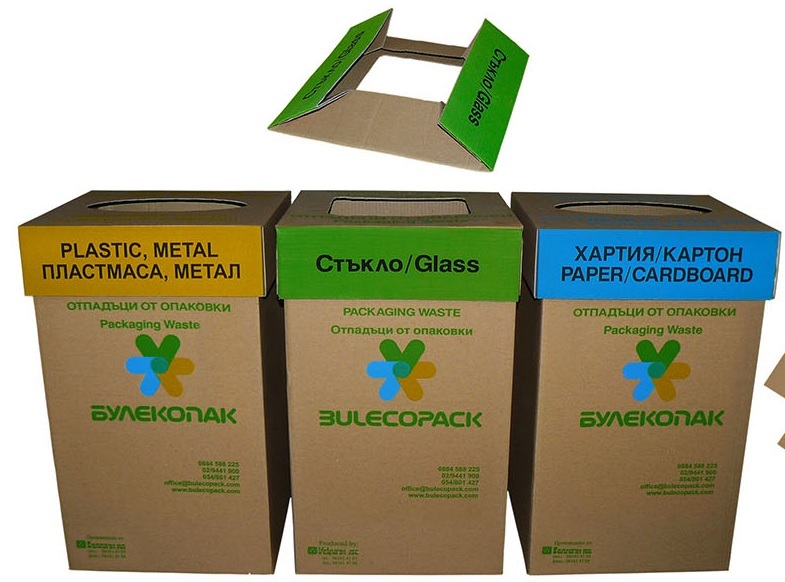
Members of Bulgarian recovery organizations (such as Bulecopack or Ecopack) may also display the organization’s trademark on packaging.
📎 Download the Combined Mark from Lappa
- PNG – best for digital use - Figurative logo
- PNG – best for digital use.- Bulecopack combined in Bulgarian
- PNG – best for digital use.- Bulecopack combined in Bulgarian



Recycling & Recovery Targets
Bulgaria must meet EU Packaging Directive recycling targets. Current EU targets applicable include:- 65% recycling of all packaging waste
- Material-specific targets for plastic, paper, glass, metal, wood
Risks, Penalties & Common Mistakes
Potential consequences of non-compliance include:- Administrative fines
- Financial penalties
- Product fee liabilities
- Orders to suspend activities
- Assuming EU compliance in another country covers Bulgaria
- Failing to register before first sale
- Underestimating packaging weights
- Not joining a licensed Recovery Organisation
- Missing annual reporting deadlines
- Failing to maintain documentation
What E-commerce Sellers Should Do Now
- Confirm who qualifies as the legal producer
- Register before placing goods on the Bulgarian market
- Join a licensed Recovery Organisation
- Implement a packaging weight tracking system
- Prepare for annual reporting in Q1
- Monitor EU PPWR implementation developments
Get a 20 min free consultation for EPR
Find all your answers and become part of Lappa
FAQ
Is Bulgaria’s system mandatory- Yes. Packaging EPR is mandatory under national law.
- Not legally mandatory, but practically essential unless choosing individual compliance.
- Yes, if they place packaged goods directly on the Bulgarian market.
- No general exemption threshold applies. Obligations typically apply from the first kilogram placed on the market.
What is Bulgaria EPR EEE
Bulgaria's EEE EPR framework is governed by the Waste Management Act (WMA) and the Ordinance on End-of-Life Electrical and Electronic Equipment (Наредба за излязло от употреба електрическо и електронно оборудване), which transpose the EU WEEE Directive (Directive 2012/19/EU) into Bulgarian national law. The competent authority for EEE EPR oversight is the Ministry of Environment and Water (MOEW) supported by the Executive Environment Agency (ExEA), which maintains the producer register, conducts annual audits of collective organisations, and enforces compliance. Under the Bulgarian system, producers of household EEE must establish — individually or through a licensed collective organisation — a separate collection system for WEEE generated in households. Bulgaria has historically faced challenges with underreporting and free-riders in EPR schemes. Since 2017, enforcement has been strengthened, with inspections prioritised for entities that failed to fulfil obligations in previous years. Independent annual audits of PRO organisations are required. Producers that fail to meet their obligations are subject to a product tax (product fee) that significantly exceeds regular EPR contributions, alongside administrative fines.Does This Apply to E-Commerce & Online Sales
Yes. Under the Bulgarian Waste Management Act, distributors — including foreign companies — that distribute EEE to end users in Bulgaria bear EPR obligations. This includes foreign companies selling directly to Bulgarian consumers via e-commerce or other distance selling methods. Bulgarian law requires that retail outlets with a commercial area of 400 m² or more accept for free very small WEEE (where no external dimension exceeds 25 cm) without a new purchase requirement. E-commerce sellers must also finance the collection, treatment, and recycling of WEEE from the Bulgarian market — typically through membership in a licensed collective organisation.Who is the "Producer" under Bulgaria EPR?
Under the Bulgarian Waste Management Act and the Ordinance on End-of-Life EEE, a producer is any person who, in the course of commercial activity, places EEE on the Bulgarian market for the first time. This covers:- Manufacturers established in Bulgaria who produce and sell EEE domestically under their own brand.
- Importers bringing EEE into Bulgaria from non-EU countries for the first time under their own name.
- Companies introducing EEE from another EU Member State into Bulgaria for the first time.
- Private label owners whose brand name appears on EEE manufactured by third parties.
- Distance sellers and online retailers established outside Bulgaria who sell EEE directly to Bulgarian consumers.
- Economic operators who prepare EEE for re-use — treated as producers for the second life of the product where applicable.
Who Must Register for EPR EEE in Bulgaria
All producers placing EEE on the Bulgarian market must register with the competent authority and join a licensed collective organisation for WEEE management — or establish an individual approved take-back system. The registration authority is the Ministry of Environment and Water (MOEW), which licenses collective organisations and maintains the producer register. The Executive Environment Agency (ExEA) oversees compliance and enforcement. Producers of household EEE must establish or join a system for separate collection of WEEE generated in households. The collective organisation manages take-back infrastructure, recycling, and annual reporting to MOEW and ExEA on behalf of its members. Non-compliant producers face product taxes in addition to standard EPR obligations, and the collective organisation's licence may be revoked if targets are consistently missed.Bulgaria EPR EEE Registration Threshold
Bulgaria does not publish a de minimis exemption for EEE EPR registration. The Waste Management Act applies to all producers placing EEE on the Bulgarian market regardless of volume or turnover. The only significant exclusions from scope are products specifically designed and installed as part of fixed installations, military or space equipment, and certain implanted medical devices — consistent with the WEEE Directive's exclusions.Detailed EPR Guidance for each Jurisdiction
We support 36 jurisdictions
EEE Categories Covered (and Excluded)
Bulgaria applies the open scope approach of the revised WEEE Directive — since 2018, all EEE falls within scope unless specifically excluded. The main categories include: Large household appliances Refrigerators, washing machines, dishwashers, cookers, electric heaters, air conditioners, and similar large appliances. Small household appliances Vacuum cleaners, toasters, coffee machines, irons, electric clocks, hair dryers, and similar small devices. IT and telecommunications equipment Computers, laptops, tablets, smartphones, printers, routers, and related devices. Consumer electronics Televisions, radios, audio and video equipment, cameras, and musical instruments with electrical components. Lighting equipment Fluorescent lamps, LED lamps, high-intensity discharge lamps, and luminaires (excluding filament bulbs). Electrical and electronic tools Drills, saws, sewing machines, and similar power tools (excluding large stationary industrial tools). Toys, leisure and sports equipment Electric toy trains, video game consoles, sports equipment with electrical components. Medical devices Medical equipment placed on the market (excluding implanted and infected devices). Monitoring and control instruments Smoke detectors, thermostats, measuring instruments, and laboratory equipment. Automatic dispensers Vending machines and cash dispensers. Other EEE (open scope) All remaining EEE within voltage parameters not captured in the above categories. Key exclusions:- EEE specifically designed and installed as part of another type of equipment that can only function as part of that equipment
- Large-scale fixed installations and large-scale stationary industrial tools
- Military or space equipment
- Implanted and infected medical devices
Producer Responsibility Organization (PRO)
Bulgaria operates a multi-PRO system for WEEE. Multiple licensed collective organisations manage EEE take-back, recycling, and reporting on behalf of their members. The organisations are licensed by the Minister of Environment and Water and subject to independent annual audits. Key features of the Bulgarian PRO system:- Independent annual audits of collective organisations are mandatory
- If a PRO fails to meet its annual collection and recycling targets, the minister issues an order requiring it to cover the shortfall and may enforce bank guarantees or reclassify members to product tax payer status
- PROs must submit annual compliance reports to MOEW and ExEA
- A bank guarantee is required from each PRO against non-compliance — if targets are missed, the guarantee is called and the product tax applies
EPR Registration in Bulgaria
The registration process for EEE producers in Bulgaria is as follows:- Determine whether your EEE falls within scope of the Ordinance on End-of-Life Electrical and Electronic Equipment.
- If established outside Bulgaria, appoint an authorised representative established in Bulgaria before registering.
- Register with the Ministry of Environment and Water (MOEW) as a producer placing EEE on the Bulgarian market.
- Select and join a licensed collective organisation for WEEE management — or apply for approval to operate an individual take-back system.
- Conclude a contract with the collective organisation and declare volumes of EEE placed on the Bulgarian market by category.
- Pay EPR contributions to the collective organisation based on EEE weight and category.
- Comply with take-back obligations — including retailer take-back requirements where applicable.
- Submit annual declarations of EEE placed on the market and WEEE collected and processed, through the collective organisation to MOEW and ExEA.
- Maintain records for audit by ExEA.
Authorized Representative
Foreign companies distributing EEE to end users in Bulgaria must appoint an authorised representative established in Bulgaria to fulfil EPR obligations on their behalf. The AR is responsible for MOEW registration, collective organisation membership, annual declarations, and communication with ExEA. Important development: In December 2025, the European Commission proposed suspending the authorised representative requirement for EU-established companies until 2035 under Proposal COM(2025) 983. This proposal has not been formally adopted as of May 2026. For non-EU producers, the requirement is not affected and continues to apply.What Data Must Be Reported
Producers must declare and report the following data annually through their collective organisation to MOEW and ExEA:- Total weight (kilograms or tonnes) of EEE placed on the Bulgarian market during the reporting year, broken down by EEE category and by household (B2C) versus non-household (B2B) equipment
- Weight of WEEE collected and recycled during the reporting year
- Collection and recycling performance data versus annual national targets
First Reporting Period & EPR Reporting Deadlines
Bulgaria's WEEE EPR has been in place since the country transposed the original WEEE Directive. Key recurring deadlines:- Annual: EEE placed-on-market declarations and WEEE collected and processed data submitted to MOEW/ExEA through the collective organisation
- Annual audits: Independent audits of collective organisations conducted and results reviewed by MOEW
- Within 1 month: Update registration if declared information changes
Labels & Marketing Claims
Crossed-out wheeled bin symbol All EEE placed on the Bulgarian market must carry the crossed-out wheeled bin symbol, indicating that the product must not be disposed of with household waste. The marking must be visible, legible, and indelible. For very small products, the symbol may appear on packaging or documentation. CE marking Mandatory for applicable EEE categories under EU product safety legislation. RoHS compliance EEE must comply with Directive 2011/65/EU (RoHS) restricting hazardous substances. RoHS compliance documentation is maintained separately from WEEE registration. Language requirements Consumer-facing information on EEE sold in Bulgaria must be provided in Bulgarian where required under Bulgarian consumer protection law. Environmental claims The Empowering Consumers for the Green Transition Directive (2024/825/EU) must be transposed by March 2026, after which unsubstantiated green claims will be prohibited across the EU including Bulgaria.EPR Eco Fees & Eco-Modulation
Bulgaria's EEE EPR contribution structure uses a dual-track approach: PRO contribution (standard route): Producers joining a licensed collective organisation pay contributions per kilogram of EEE placed on the market by category. Contribution rates are set by the collective organisation and are substantially below the product tax rate. Product tax (sanction/default route): Producers not affiliated with a PRO — or whose PRO fails to meet targets — pay a product tax calculated per kilogram of EEE placed on the market. The product tax significantly exceeds normal EPR contribution levels and functions as a financial penalty. Eco-modulation — adjusting fees based on product environmental performance — is referenced in EU policy but has not been implemented as a formal framework in Bulgaria's national WEEE system as of May 2026.Risks, Penalties & Common Mistakes
- Failing to register and join a collective organisation. Fines of BGN 10,000 to BGN 50,000 (approximately €5,000 to €25,000) apply to any infringement of EEE EPR obligations under Bulgarian waste legislation.
- Not appointing an authorised representative. Foreign companies distributing EEE to Bulgarian end users must appoint a Bulgarian-established AR before registering. Operating without an AR is a compliance breach.
- Assuming one EU registration covers Bulgaria. EEE EPR registration is national. Membership in a WEEE PRO in another EU member state does not fulfil Bulgarian obligations.
- Failing to update registration within one month of changes. Any change to declared information must be reported to the competent authority within one month.
- Missing take-back obligations. EEE producers must ensure take-back infrastructure is in place for household WEEE. Retail outlets over 400m² must accept small WEEE items free of charge without a new purchase.
- Underreporting EEE volumes. Bulgaria has intensified enforcement against underreporting since 2017. ExEA audits prioritise companies with prior non-compliance. Underreporting triggers product tax liability and potential licence revocation for the PRO.
- Missing the crossed-out wheeled bin symbol. All EEE must carry the mandatory symbol. Missing or non-compliant marking is an independently actionable offence.
What E-Commerce Sellers Should Do Now
- Confirm whether your products qualify as EEE under the Bulgarian Waste Management Act and Ordinance on End-of-Life EEE.
- If established outside Bulgaria, appoint an authorised representative established in Bulgaria.
- Register with the Ministry of Environment and Water (MOEW) as a producer of EEE.
- Join a licensed collective organisation for WEEE management in Bulgaria and conclude a contract.
- Declare EEE volumes placed on the Bulgarian market by category and weight, and pay applicable contributions to the collective organisation.
- Set up annual reporting of EEE placed on market and WEEE collected through the collective organisation to MOEW and ExEA.
- Ensure all EEE products carry the crossed-out wheeled bin symbol, comply with RoHS hazardous substance restrictions, and include Bulgarian-language consumer information.
- Confirm take-back arrangements for WEEE generated by Bulgarian household consumers.
Register online
Start your EPR Reporting within 24 hours
FAQ
Is EEE EPR mandatory in Bulgaria?- Yes. Bulgaria's WEEE EPR has been mandatory since the country transposed the WEEE Directive. All producers placing EEE on the Bulgarian market must register with MOEW, join a licensed collective organisation, and comply with take-back, reporting, and contribution obligations. Non-compliant producers face fines of BGN 10,000 to BGN 50,000 and may be required to pay the product tax, which significantly exceeds standard EPR fees.
- Yes. Foreign companies distributing EEE to Bulgarian end users — including via e-commerce — are treated as producers and must fulfil Bulgarian WEEE EPR obligations. They must appoint an authorised representative established in Bulgaria before registering. Enforcement by ExEA has intensified since 2017, with priority inspections targeting non-compliant producers.
- The product tax is a per-kilogram fee payable to the state by producers who are not affiliated with a licensed collective organisation, or whose PRO fails to meet its annual collection and recycling targets. The product tax amount significantly exceeds standard PRO contribution levels and is designed as a financial incentive for joining a collective system. It is calculated based on total expenses related to collection and treatment of EEE waste.
- No published de minimis threshold exists for EEE EPR in Bulgaria. The Waste Management Act applies to all producers placing EEE on the Bulgarian market regardless of volume or turnover. All producers must register and comply.
- Producers must establish or join systems for separate collection of household WEEE. Retail outlets with a commercial area of 400 m² or more selling EEE must accept small WEEE items (where no external dimension exceeds 25 cm) free of charge, without requiring a new purchase. This take-back obligation is managed through the collective organisation.
What is Bulgaria EPR Batteries
Bulgaria's battery EPR framework is governed by Regulation (EU) 2023/1542 — the EU Battery Regulation — which applies directly in all EU Member States without requiring national transposition. The Regulation has applied in stages since 18 February 2024, with EPR and waste management obligations fully in force from 18 August 2025.
At national level, the Regulation is supplemented by Bulgaria's Waste Management Act (Закон за управление на отпадъците) and subordinate ordinances governing the product fee system, registration of producers, and the operation of collective organisations. The competent authority for battery producer registration and oversight is the Ministry of Environment and Water (Министерство на околната среда и водите — МОСВ), which maintains the national Register of Persons Placing Batteries and Accumulators on the Market (Регистър на лицата, които пускат на пазара батерии и акумулатори).
The EU Battery Regulation replaced the previous Batteries Directive 2006/66/EC in full from 18 August 2025. It covers all battery types regardless of chemistry or form, whether sold separately or incorporated into products or vehicles.
Does This Apply to E-Commerce & Online Sales
Yes. The EU Battery Regulation explicitly captures distance sellers and e-commerce operators as producers. A foreign brand selling batteries or battery-containing products directly to Bulgarian consumers via an online store — with no physical establishment in Bulgaria — is treated as a producer and must comply with Bulgarian battery EPR obligations.
Under Bulgarian EPR law, foreign companies distributing products to end users in Bulgaria bear responsibility for the collection and treatment of waste from those products. This applies specifically to distance selling into Bulgaria, including cross-border online sales. Non-compliant foreign companies are subject to the same enforcement mechanisms as domestic producers, including fines and the product tax system.
Online marketplace operators are required under the EU Battery Regulation to verify that sellers on their platforms are EPR-registered in each country where they sell batteries.
Who is the "Producer" under Bulgaria EPR?
Under Regulation (EU) 2023/1542 and the Bulgarian Waste Management Act, a producer is any person who places batteries or accumulators on the Bulgarian market for the first time. This includes:
- Manufacturers established in Bulgaria who produce and sell batteries domestically under their own brand.
- Importers bringing batteries into Bulgaria from non-EU countries for the first time under their own name.
- Companies introducing batteries from another EU Member State into Bulgaria (лица, които въвеждат батерии и акумулатори от друга държава – членка на ЕО).
- Private label owners whose brand name appears on batteries manufactured by third parties.
- Distance sellers and online retailers established outside Bulgaria who sell batteries or battery-containing products directly to Bulgarian consumers.
- Economic operators who prepare batteries for re-use or repurposing — treated as producers for the second life of the battery.
Who Must Register for EPR Batteries in Bulgaria
All producers placing batteries on the Bulgarian market must register in the national Register of Persons Placing Batteries and Accumulators on the Market, maintained by the Ministry of Environment and Water (МОСВ). Registration is a prerequisite for placing batteries on the market.
Producers may fulfil their EPR obligations in one of two ways:
Option 1 — Join a collective organisation (PRO): By contracting with an approved collective organisation such as Ecobattery AD (Екобатери АД), producers are exempt from paying the product tax. The PRO issues a certificate confirming membership, which serves as proof of compliance with EPR obligations when presented to enforcement authorities. Members pay a contribution to the PRO based on the weight of batteries placed on the market.
Option 2 — Pay the product tax directly: Producers who do not join a PRO must pay a product tax (продуктова такса) to the PUDOOS (Executive Environment Agency fund — ПУДООС, part of МОСВ). The product tax rate significantly exceeds PRO contribution levels and functions as a financial incentive to join a collective system.
Bulgaria EPR Battery Registration Threshold
Regulation (EU) 2023/1542 does not establish a minimum volume or turnover threshold below which producers are exempt from EPR obligations. All producers placing batteries on the Bulgarian market must register and comply, regardless of size or volume.
The only exemption in the Regulation concerns batteries used in military or space equipment, which are outside scope entirely.
For due diligence obligations, companies with annual net turnover below €150 million (as adopted under the Omnibus IV package, July 2025) may be exempt — but this does not affect EPR registration and reporting obligations.
Detailed EPR Guidance for each Jurisdiction
We support 36 jurisdictions
Batteries Covered (and Excluded)
Regulation (EU) 2023/1542 defines five battery categories, all within scope for EPR in Bulgaria:
Portable batteries Batteries under 5 kg not designed for industrial or vehicle use. Includes batteries in consumer electronics, power tools, household devices, and toys. The most commonly encountered category for e-commerce sellers.
Light Means of Transport (LMT) batteries Batteries used in e-bikes, e-scooters, e-mopeds, and similar light electric vehicles.
Automotive (SLI) batteries Starting, lighting, and ignition batteries used in vehicles.
Industrial batteries Batteries used in industrial applications and stationary energy storage systems. Those above 2 kWh have additional requirements including battery passports from 2027.
Electric vehicle (EV) batteries Batteries used in electric cars and heavy electric vehicles. Subject to carbon footprint declarations, battery passports from 2027, and detailed collection obligations.
Key exclusions:
- Batteries designed for military or space equipment — outside scope entirely
- Batteries in nuclear installations — excluded
- Second-life batteries where the operator performing re-use or repurposing becomes the new producer
Producer Responsibility Organization (PRO)
The main approved collective organisation for batteries in Bulgaria is Ecobattery AD (Екобатери АД), established in 2009. Ecobattery manages collection, recycling, and reporting obligations on behalf of its members — importers, producers, and companies introducing batteries from other EU Member States.
Upon signing a contract with Ecobattery and completing the required declaration, members receive a certificate confirming their membership in the organisation. This certificate exempts them from paying the product tax at import and serves as proof of compliance when presented to customs or enforcement authorities.
The Bulgarian system requires independent annual audits of PRO organisations. On the basis of audit results, the Minister of Environment and Water issues annual orders confirming compliance by each PRO and its members. PROs must provide a bank guarantee of BGN 1 million (Bulgarian Lev) against non-compliance — if targets are missed, the guarantee is called and the full product tax is applied.
A list of approved collective organisations for batteries is published on the МОСВ website alongside the producer register.
EPR Registration in Bulgaria
The registration process for battery producers in Bulgaria is as follows:
- Determine whether your business qualifies as a producer under the EU Battery Regulation and Bulgarian Waste Management Act — i.e. whether you are placing batteries on the Bulgarian market for the first time.
- If established outside Bulgaria, appoint an authorized representative established in Bulgaria before registering.
- Register in the national producer register maintained by МОСВ (Ministry of Environment and Water).
- Contract with an approved PRO — in practice, Ecobattery AD — and complete the required declaration (справка-декларация) of batteries placed on the market.
- Receive the membership certificate from Ecobattery confirming exemption from the product tax.
- Submit annual declarations of batteries placed on the Bulgarian market to Ecobattery for reporting to МОСВ.
- Alternatively, if not joining a PRO, pay the product tax to ПУДООС (МОСВ) directly.
Authorized Representative
Under Regulation (EU) 2023/1542 (Article 57), producers established outside the Member State where they sell batteries must appoint an authorized representative — a legal or natural person established in Bulgaria — to fulfill EPR obligations on their behalf. This requirement applies to all foreign producers selling into Bulgaria.
The authorized representative handles registration with МОСВ, contracts with the PRO, annual reporting, and contact with Bulgarian enforcement authorities. The representative must be appointed in writing.
Important development: In December 2025, the European Commission proposed suspending the authorized representative requirement for EU-established companies until 2035. This proposal has not been formally adopted as of April 2026. For non-EU producers, the requirement is not affected and continues to apply.
What Data Must Be Reported
Producers registered in Bulgaria must declare and report the following data annually, either directly to МОСВ or through their PRO:
- Total weight (kilograms) of batteries placed on the Bulgarian market during the reporting year, broken down by battery category (portable, LMT, SLI/automotive, industrial, EV)
- Battery chemistry type where relevant to compliance and product tax calculations
- Brand names under which batteries were placed on the market
- Collection and recycling performance data, as required by the Waste Management Act and reported by the PRO on behalf of members
- For EV and LMT batteries: number of batteries made available and amounts of waste batteries collected and delivered to treatment facilities
First Reporting Period & EPR Reporting Deadlines
Battery EPR has been in place in Bulgaria for many years under the former Batteries Directive. The new EU Battery Regulation obligations took full effect from 18 August 2025. Key dates:
- 18 February 2024: EU Battery Regulation begins applying. CE marking and substance restrictions in force.
- 18 August 2025: EPR registration, waste management, and labelling obligations fully in force under the new Regulation.
- 18 February 2027: Battery passports mandatory for industrial batteries (>2 kWh) and EV batteries. Portable batteries must be removable and replaceable by end users.
- 18 August 2027: Due diligence obligations in force (delayed from 2025 under Omnibus IV).
Annual declaration and reporting deadlines are set by МОСВ and administered through the PRO system. Producers should confirm submission schedules with their PRO or directly with МОСВ at the time of registration.
Labels & Marketing Claims
Crossed-out wheeled bin symbol From 18 August 2025, all batteries must display the separate collection symbol. The symbol must cover at least 3% of the area of the largest side of the battery, up to a maximum of 5 × 5 cm.
Chemical symbols Batteries containing more than 0.002% cadmium must be marked Cd. Batteries containing more than 0.004% lead must be marked Pb.
Capacity marking Portable and rechargeable batteries must display capacity information.
QR code From 18 August 2026, all batteries must carry a QR code linking to product information. For LMT, industrial (>2 kWh), and EV batteries, the QR code links to the Digital Battery Passport from 18 February 2027.
CE marking Mandatory for all batteries from 18 August 2024.
Language requirements Consumer-facing information on batteries sold in Bulgaria must be provided in Bulgarian. Labels and instructions that are only in other languages may be treated as non-compliant under Bulgarian consumer protection law.
Environmental claims All environmental and sustainability claims must comply with Bulgarian consumer protection law and the Unfair Commercial Practices Directive. The Empowering Consumers for the Green Transition Directive (2024/825/EU) must be transposed by March 2026, after which unsubstantiated green claims will be prohibited across the EU including Bulgaria.
EPR Eco Fees & Eco-Modulation
Bulgaria operates a dual-track financial system for battery EPR:
PRO contribution (preferred route): Producers joining Ecobattery or another approved PRO pay a contribution per kilogram of batteries placed on the market. The contribution rate is set by the PRO and is substantially lower than the product tax. Exact rates are agreed upon contracting with Ecobattery.
Product tax (sanction/default route): Producers not affiliated with a PRO must pay a product tax (продуктова такса) per kilogram of batteries to ПУДООС. The product tax is designed to be significantly higher than PRO contribution rates, functioning as a financial penalty for non-participation. If a PRO fails to meet its recycling targets, the full product tax applies to both the PRO and its members for the non-compliant quantities.
Under Regulation (EU) 2023/1542, eco-modulation — adjusting contributions based on battery environmental performance — is required across all Member States. Bulgaria's specific eco-modulation framework under the new Regulation has not been published as of April 2026.
Risks, Penalties & Common Mistakes
- Operating without registration in the МОСВ producer register. Placing batteries on the Bulgarian market without registration is a compliance breach subject to enforcement by МОСВ and the Executive Environment Agency (ИзпАОС).
- Failing to join a PRO or pay the product tax. Companies that neither join Ecobattery nor pay the product tax have no valid compliance arrangement. Fines of BGN 10,000 to BGN 50,000 (approximately €5,000 to €25,000) apply to infringements under Bulgarian EPR law.
- Failing to appoint an authorized representative. Non-EU and non-Bulgarian producers must appoint a Bulgarian-established representative before registering. Without one, registration cannot be completed.
- Assuming one EU registration covers Bulgaria. Battery EPR registration is national. Registration in another EU member state does not fulfil Bulgarian obligations.
- Importing without a PRO certificate. Members of Ecobattery must present their membership certificate to customs authorities upon import to be exempted from the product tax at the border. Operating without this documentation results in the product tax being collected at import.
- Missing labelling requirements. The crossed-out wheeled bin symbol and CE marking are mandatory from August 2025. Labels must include Bulgarian-language consumer information.
- Missing the QR code deadline of August 2026. Companies should begin QR code implementation well in advance of this deadline.
What E-Commerce Sellers Should Do Now
- Confirm whether your products contain batteries — including batteries incorporated into devices — and whether they are being sold to Bulgarian consumers.
- If established outside Bulgaria, identify and appoint an authorized representative established in Bulgaria.
- Register in the national producer register with МОСВ (Ministry of Environment and Water).
- Contract with Ecobattery AD (ecobatterybg.com) and complete the required declaration to receive your membership certificate and exemption from the product tax.
- Ensure the membership certificate is available at import to avoid product tax being charged at Bulgarian customs.
- Submit annual declarations of battery volumes placed on the Bulgarian market through your PRO.
- Verify that all batteries carry the crossed-out wheeled bin symbol, CE marking, capacity information, and Bulgarian-language consumer instructions as required.
- Plan for the QR code requirement by August 2026 and the Digital Battery Passport for industrial and EV batteries by February 2027.
Register online
Start your EPR Reporting within 24 hours
FAQ
Is battery EPR mandatory in Bulgaria?
- Yes. Battery EPR has been mandatory in Bulgaria under the former Batteries Directive and continues under the new EU Battery Regulation (2023/1542), fully in force from 18 August 2025. All producers placing batteries on the Bulgarian market must register with МОСВ and either join an approved PRO or pay the product tax directly.
Do foreign brands selling online into Bulgaria need to register?
- Yes. Distance sellers and e-commerce operators selling batteries or battery-containing products to Bulgarian consumers are captured as producers under the EU Battery Regulation and Bulgarian Waste Management Act. Non-Bulgarian companies must appoint an authorized representative established in Bulgaria before registering.
What is the product tax and when does it apply?
- The product tax (продуктова такса) is a per-kilogram fee payable to ПУДООС (part of МОСВ) by producers who do not join an approved PRO. It is set at a rate significantly higher than PRO contributions to incentivise collective system participation. It is also applied at the point of import if the importer cannot present a valid PRO membership certificate.
Is there a minimum volume threshold below which registration is not required?
- No. The EU Battery Regulation does not establish a minimum volume or turnover exemption for EPR registration. All producers placing batteries on the Bulgarian market must register and comply regardless of size.
What languages must battery labels be in for the Bulgarian market?
- Consumer-facing information on batteries sold in Bulgaria must be provided in Bulgarian. Labels and instructions available only in other languages may be treated as non-compliant under Bulgarian consumer protection and product safety law.
Textile EPR law in Chile: None enacted
Chile is not among the countries with enacted textile EPR legislation.
Want to be first to know when new EPR will issued?
Only important news!