


Latvia EPR
What is Latvia EPR Packaging
Latvia operates a mandatory Extended Producer Responsibility (EPR) system for packaging under:
-
Packaging Law of Latvia
-
Natural Resources Tax Law
-
EU Packaging and Packaging Waste Directive
The Latvian packaging EPR system requires producers placing packaging on the Latvian market to finance the collection and recycling of packaging waste.
Any entity that places packaging or packaged goods on the Latvian market must:
-
Register packaging activities
-
Declare packaging quantities
-
Ensure recycling targets are met
-
Pay Natural Resources Tax or participate in an approved recycling scheme
The system is supervised by the State Environmental Service of Latvia.
The system is mandatory.
Does this apply to e-commerce & online sales
Yes.
Latvia applies EPR rules regardless of the sales channel.
If you sell packaged goods to customers in Latvia — including through cross-border e-commerce — you may qualify as the obligated producer.
Distance sellers shipping directly to Latvian consumers can fall within scope if they are considered the entity placing packaging on the Latvian market.
Online marketplaces do not automatically assume producer responsibility.
Who is the “producer” under Latvia EPR?
Under Latvian legislation, obligated entities may include:
-
Manufacturers of packaging
-
Manufacturers of packaged goods
-
Importers of empty packaging
-
Importers of packaged goods
-
Entities introducing packaged goods from another EU Member State
-
Distance sellers supplying directly into Latvia
In practice, responsibility lies with the entity that first places packaging or packaged goods on the Latvian market.
Who must register for EPR packaging in Latvia
Entities placing packaging or packaged goods on the Latvian market must:
-
Register with the State Environmental Service of Latvia
-
Determine packaging materials used
-
Submit packaging data reports
-
Ensure recycling obligations are fulfilled
Companies can meet obligations either by:
• paying Natural Resources Tax
• participating in a recognised recycling organisation.
Both Latvian and foreign companies placing goods on the Latvian market may be required to register.
Registration should occur before starting commercial activity.
Latvia EPR Packaging Registration Threshold
Latvia does not provide a general exemption from registration.
However:
• small quantities may qualify for simplified reporting procedures
• companies may reduce tax obligations by joining a recognised recycling organisation
There is no full de minimis exemption removing EPR obligations entirely.
Make your first declaration within 24 hours
Easy to use EPR Software

EPR and PPWR for Latvia
Latvia's packaging EPR runs through the Packaging Law together with the Natural Resources Tax Law, overseen by the State Environmental Service (VVD). What makes the system distinctive is the choice it gives producers: pay the Natural Resources Tax directly per kilogram, or join a recognised PRO — Latvijas Zaļais Punkts and Zaļā Josta are the two names that come up — and get an exemption from that tax instead. There's no full de minimis exemption, though small volumes can qualify for simplified reporting.
PPWR adds a separate EU-wide layer from 12 August 2026, and the authorised representative piece lands with more weight in Latvia than in most member states. Latvian packaging law never established a formal AR regime — foreign companies without Latvian tax registration have generally just needed to designate a locally operating entity informally, a pattern that repeats across Latvia's battery and textile EPR schemes too. PPWR's Article 45(3) requirement, which applies to any producer without a local presence, not only non-EU ones, is a genuinely new formal obligation here rather than a tightening of something that already existed.
Worth noting briefly: a December 2025 Commission proposal would suspend that AR requirement for EU-established producers until 2035, but it hasn't been adopted — negotiations stalled mid-2026 — so the obligation currently stands as written.
The dual tax-or-PRO structure is also worth flagging for a different reason: companies that chose the direct-tax route specifically to avoid PRO paperwork now find PPWR's own documentation requirements arriving regardless of which route they picked. PPWR doesn't recognise a "pay the tax and skip the reporting" option the way Latvia's national system does.
PPWR Labels for Latvia
Latvian packaging labelling centres on the mandatory deposit symbol for beverage containers, standard EU material identification codes like PAP 20 for corrugated cardboard and PAP 21 for solid board, and the SUP warning labels required on relevant single-use plastic items. There's no general national sorting logo comparable to France's Triman, and membership in a PRO like Latvijas Zaļais Punkts doesn't carry a legal requirement to display a Green Dot-style symbol on packaging.
That absence of a mandatory EPR-fee symbol means Latvia faces little disruption from PPWR's ban on using national symbols to indicate fee contribution, which takes effect 12 February 2027. There's no licence to unwind, no compliance-critical logo losing its legal footing — Latvia doesn't have that mechanism built into its packaging system the way Belgium or Cyprus do.
The change that does land is the harmonised EU sorting pictogram, mandatory from 12 August 2028. It arrives as a new layer on top of the existing material codes rather than displacing anything, since none of Latvia's current marks serve a sorting function that would conflict with it. The deposit symbol continues independently too, the same way Austria's Pfand or Denmark's Pant mark does elsewhere.
France's Triman dispute, referred to the CJEU in July 2025, remains the case setting precedent for how much room national labelling schemes retain once PPWR's pictogram exists EU-wide — Latvia has no comparable scheme at risk, but the ruling still shapes what any member state can require.
PPWR Product Rules for Latvia
The PFAS restriction has applied since 12 August 2026: food-contact packaging on the Latvian market can't exceed 25 ppb for any single measured PFAS substance, 250 ppb summed, or 50 ppm total including polymeric PFAS. A food-contact coating that crosses that line doesn't get flagged for later correction — it stops moving, treated with the same seriousness as a CE-marking failure.
Recyclability lands on 1 January 2030, requiring packaging to sit in Design for Recycling Performance Grade A, B, or C, with Grade C losing market access from 2035. Recycled content thresholds for contact-sensitive plastic packaging arrive the same year, rising again by 2040. Packaging minimisation follows on the same date, capping empty space in grouped, transport, and e-commerce packaging at 50%. Reuse and refill targets for beverage, grouped, and transport packaging phase in from 2030 too.
Latvia's eco-modulation is still described in general EU terms rather than a published, standardised local framework — fees are largely applied by weight and material rather than graded by recyclability performance in the detailed way some Western EU PROs operate. That puts PPWR's Design for Recycling grading in a position of arriving ahead of, rather than building on, an established national fee-incentive structure.
The practical divide runs along Latvia's own dual compliance route: companies already working with Latvijas Zaļais Punkts or Zaļā Josta have some material-tracking infrastructure to extend toward PPWR's technical file, while companies that chose the direct Natural Resources Tax route — precisely to avoid PRO-level reporting — are starting closer to zero.
Packaging Covered (and Excluded)
Covered
All packaging types may fall within the Latvian EPR system, including:
-
Primary packaging
-
Secondary packaging
-
Tertiary (transport) packaging
Materials commonly reported include:
• plastic
• paper and cardboard
• glass
• metal
• wood
• composite materials
Both household packaging and commercial packaging may fall within scope.
Exclusions
Items not classified as packaging under EU definitions are excluded.
Reusable packaging may follow specific reporting rules.
Packaging exported outside Latvia may follow different accounting treatment.
Producer Responsibility Organization (PRO)
Latvia allows producers to fulfil obligations either by paying Natural Resources Tax or by participating in a Producer Responsibility Organization (PRO).
Examples of recognised organisations include:
• Latvijas Zaļais Punkts
• Zaļā Josta
These organisations manage packaging collection, recycling infrastructure, and reporting obligations for producers.
EPR Registration in Latvia
The compliance process generally involves:
-
Registering packaging activities with the State Environmental Service of Latvia
-
Setting up packaging reporting procedures
-
Submitting periodic declarations
-
Ensuring recycling targets are met
Foreign companies often appoint a compliance service provider to manage reporting. Businesses that need support with these steps can manage their Latvia EPR registration and compliance documentation through Lappa.
Authorized Representative
Latvian packaging legislation does not formally establish a dedicated authorised representative regime.
However, foreign companies commonly:
-
Appoint a local administrative representative
-
Use a fiscal representative for VAT alignment
-
Work with an EPR compliance service provider
Local support is typically recommended for companies without a Latvian establishment.
What Data Must Be Reported
Producers must report:
-
Breakdown by packaging material
-
Packaging category where applicable
-
Imports vs domestic supply
Data must be supported by accounting or customs documentation.
First Reporting Period
Obligations apply from the moment packaging is first placed on the Latvian market.
The first reporting period begins with the first transaction involving packaging supplied to Latvia.
Reporting periods generally follow the calendar year (1 January – 31 December).
EPR Reporting Deadlines
Reporting deadlines depend on the compliance method and reporting frequency.
Packaging reports are generally submitted:
-
Quarterly
-
Annually (for small volumes)
Compliance reporting is monitored by the State Environmental Service of Latvia.
Labels & marketing claims
In Latvia, beverage containers must carry a mandatory deposit symbol, and all packaging must display standard EU material identification codes. Single-use plastic products also require mandatory EU plastic warning labels.
An example of what a label looks like on packaging for Latvia
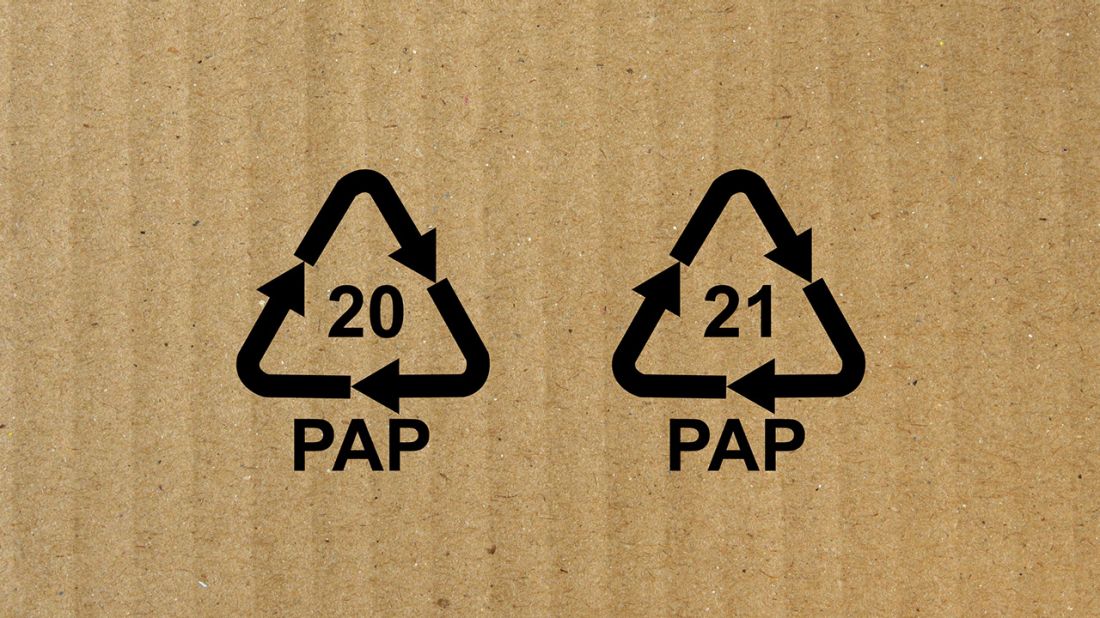
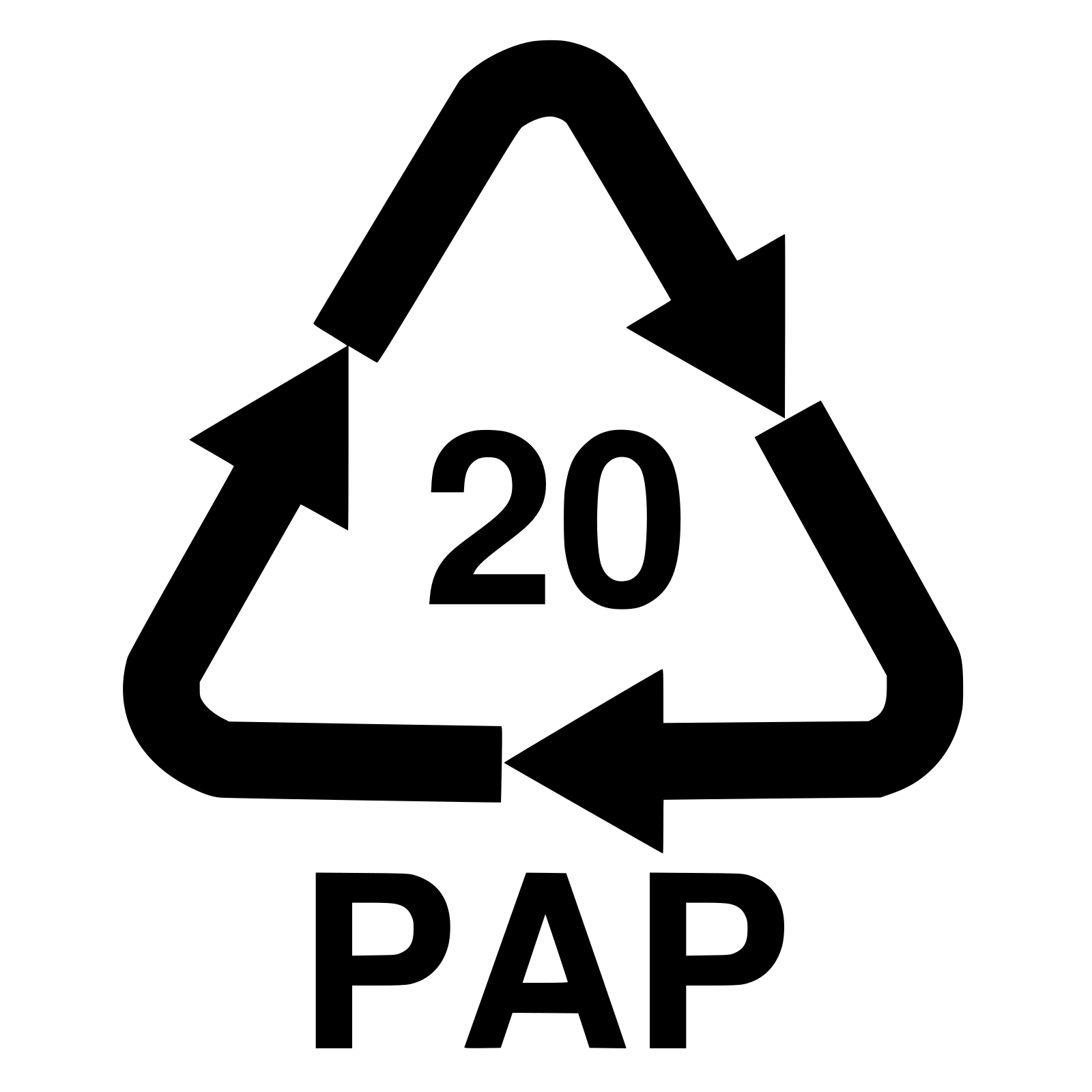
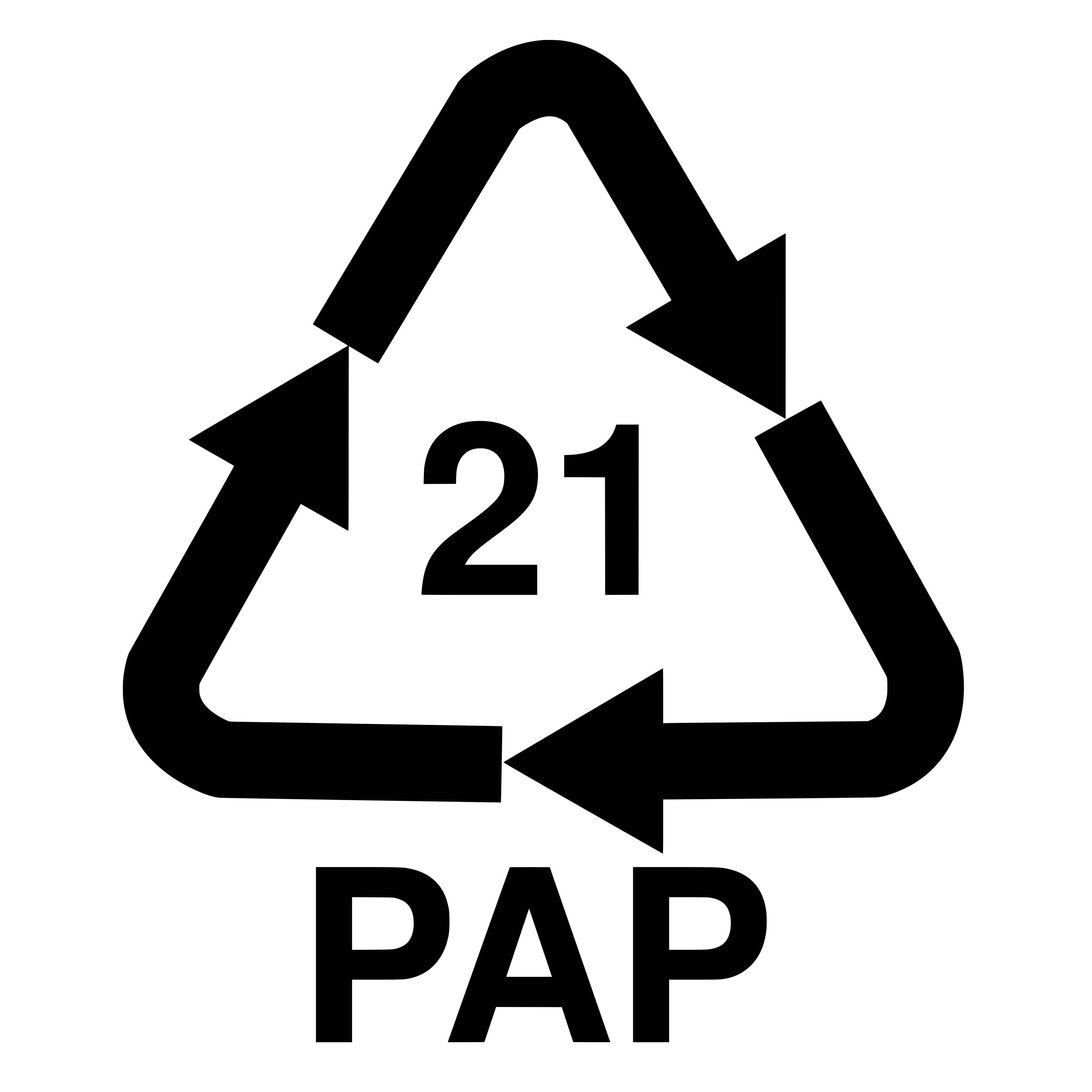
This image shows two standard EU material identification codes used on paper and cardboard packaging in Latvia. PAP 20 is the code for corrugated cardboard, commonly used on shipping and transport boxes. PAP 21 is the code for solid board, used on food boxes and retail packaging. Both codes indicate that the packaging should be sorted into the paper and cardboard collection stream.
📎 Download the PAP 20 symbol:

📎 Download the PAP 21 symbol:

EPR Eco Fees & Eco-Modulation
Environmental costs depend on:
-
Packaging weight
-
Recyclability
Companies participating in recycling systems typically pay environmental compliance fees.
Across EU packaging systems, eco-modulation increasingly applies, meaning:
• more recyclable packaging may have lower costs
• difficult-to-recycle packaging may involve higher fees.
Risks, Penalties & Common Mistakes
Non-compliance may result in:
-
Administrative fines
-
Backdated environmental tax payments
-
Interest and penalties
-
Regulatory enforcement actions
Common mistakes include:
• not registering before first sale
• misclassifying packaging materials
• under-reporting packaging volumes
• assuming cross-border e-commerce is exempt.
What E-Commerce Sellers Should Do Now
-
Determine if they qualify as importer or first placer
-
Register packaging activities before selling
-
Identify and classify packaging materials
-
Set up packaging volume tracking
-
Join a recycling organisation or prepare environmental tax reporting
-
Monitor regulatory updates
Register online
Start your EPR Reporting within 24 hours
FAQ
- Is Latvia’s packaging EPR mandatory?
Yes. Packaging EPR obligations are mandatory under Latvian environmental legislation.
- Do foreign online sellers need to comply?
Yes, if they place packaged goods on the Latvian market.
- Is there a de minimis threshold?
There is no full exemption, although simplified procedures may apply for small volumes.
- Can companies join a recycling organisation instead of paying environmental tax?
Yes. Many producers join organisations such as Latvijas Zaļais Punkts or Zaļā Josta to manage compliance.
What is Latvia EPR Batteries
Latvia's battery EPR framework is governed by Regulation (EU) 2023/1542 — the EU Battery Regulation — which applies directly in all EU Member States from 18 August 2025. At national level, battery EPR in Latvia is implemented through the Natural Resources Tax Law (Dabas resursu nodokļa likums — NRT Act), which has governed environmental product responsibility in Latvia since 1995 and was updated to incorporate the new EU Battery Regulation requirements. The central digital platform for producer registration and reporting in Latvia is TULPE — the electronic environmental information system administered by the State Environmental Service (Valsts vides dienests — VVD), which has been part of the Ministry of Smart Management and Regional Development since July 2024. All producers placing batteries on the Latvian market must register and report through TULPE. Latvia was included in Zalando's second wave of battery EPR verification — scheduled by 31 March 2026. Battery-containing product listings on Zalando remain suspended for Latvian market sellers without a valid EPR registration number until compliance is confirmed.Does This Apply to E-Commerce & Online Sales
Yes. The EU Battery Regulation and Latvian NRT Act apply to all companies placing batteries on the Latvian market regardless of sales channel. Online retailers — including foreign brands selling directly to Latvian consumers via e-commerce — are explicitly included among the obligated entities. The obligation attaches to the act of placing the battery on the Latvian market for the first time, not to the physical location of the seller. A foreign brand shipping battery-containing products directly to Latvian consumers falls within scope in the same way as a Latvian-based importer.Who is the "Producer" under Latvia EPR?
Under Regulation (EU) 2023/1542 and the Latvian NRT Act, the obligated party is the taxpayer who places batteries — whether standalone or incorporated into products — on the Latvian market for the first time. This covers:- Manufacturers established in Latvia who produce and sell batteries domestically under their own brand.
- Importers bringing batteries into Latvia from non-EU countries for the first time under their own name.
- Companies introducing batteries from another EU Member State into Latvia for the first time.
- Private label owners whose brand name appears on batteries manufactured by third parties.
- Distance sellers and online retailers established outside Latvia who sell batteries or battery-containing products directly to Latvian consumers.
- Economic operators who prepare batteries for re-use or repurposing — treated as producers for the second life of the battery.
Who Must Register for EPR Batteries in Latvia
All producers placing batteries on the Latvian market must comply with the NRT Act. There are two compliance routes: Route 1 — Join an approved PRO: Contract with an approved Producer Responsibility Organisation, which submits an application through the TULPE system including a waste management plan, and receives SES approval. The producer is then exempt from paying the Natural Resource Tax directly. Contributions to the PRO are substantially lower than the NRT rate. Route 2 — Pay the Natural Resource Tax directly: Register as an NRT taxpayer and pay the applicable rate per kilogram of batteries placed on the market. No PRO membership required, but the full NRT rate applies. Registration and reporting for both routes are handled through the TULPE digital system administered by the State Environmental Service (VVD).Latvia EPR Battery Registration Threshold
Regulation (EU) 2023/1542 does not establish a minimum volume or turnover threshold below which producers are exempt from EPR obligations. The Latvian NRT Act applies from the first kilogram of batteries placed on the market. The only exemption in the Regulation concerns batteries used in military or space equipment, which are outside the scope entirely.Detailed EPR Guidance for each Jurisdiction
We support 36 jurisdictions
Batteries Covered (and Excluded)
Regulation (EU) 2023/1542 defines five battery categories, all within scope for EPR in Latvia: Portable batteries Batteries under 5 kg not designed for industrial or vehicle use. Includes batteries in consumer electronics, power tools, household devices, and toys. Light Means of Transport (LMT) batteries Batteries used in e-bikes, e-scooters, e-mopeds, and similar light electric vehicles. Automotive (SLI) batteries Starting, lighting, and ignition batteries used in vehicles. Industrial batteries Batteries used in industrial applications and stationary energy storage systems. Those above 2 kWh have additional requirements including battery passports from 2027. Electric vehicle (EV) batteries Batteries used in electric cars and heavy electric vehicles. Key exclusions:- Batteries designed for military or space equipment — outside scope entirely
- Batteries in nuclear installations — excluded
- Second-life batteries where the operator performing re-use or repurposing becomes the new producer
Producer Responsibility Organization (PRO)
Latvia operates a PRO-based system for battery EPR. The main approved PRO for batteries and other regulated products in Latvia is Latvijas Zaļais punkts (LZP) — the Latvian Green Dot. LZP concludes contracts with producers, manages the waste management plan, and files with SES through TULPE on behalf of members. PRO membership provides an exemption from the Natural Resource Tax. LZP's administrative costs add approximately €0.13 per kilogram to the cost of regulated products — substantially below the direct NRT rate of €0.50 per kilogram for batteries. PROs must be approved by SES and operate under a waste management plan submitted through TULPE. SES supervises and audits PRO operations and compliance.EPR Registration in Latvia
The registration process for battery producers in Latvia is as follows: Via a PRO (most common route):- Contact Latvijas Zaļais punkts (LZP) or another approved PRO and conclude a contract for battery waste management.
- The PRO submits an application to SES through the TULPE system including the waste management plan.
- SES evaluates and approves the application, establishing the NRT exemption for the producer.
- Report quantities of batteries placed on the Latvian market to the PRO on the agreed schedule.
- The PRO manages collection, recycling, and reporting to SES.
- Register as an NRT taxpayer with the Latvian State Revenue Service.
- Declare the weight of batteries placed on the market in the applicable reporting period.
- Pay the NRT at the rate of €0.50 per kilogram.
Authorized Representative
Latvia's system does not require foreign companies to appoint a formally designated authorised representative in all cases. Under the NRT Act, foreign producers can fulfil their EPR obligations directly — either by registering as NRT taxpayers or by contracting with an approved PRO — if they are registered as taxpayers with the Latvian tax authorities. If a foreign company is not registered as a taxpayer in Latvia, it must designate a person or entity operating commercially in Latvia to act on its behalf. This authorisation must be provided in writing. This is a more flexible arrangement than most EU member states, where a formal authorised representative appointment is mandatory for all foreign producers regardless of tax registration status. Important development: In December 2025, the European Commission proposed suspending the authorised representative requirement for EU-established companies until 2035. This proposal has not been formally adopted as of May 2026.What Data Must Be Reported
Producers must report the following data through the PRO or directly via TULPE:- Total weight (kilograms) of batteries placed on the Latvian market, broken down by the five EU Battery Regulation categories (portable, LMT, SLI/automotive, industrial, EV)
- Battery chemistry type where relevant to reporting requirements
- Brand names under which batteries were placed on the market
- Changes to approved waste management plans must be submitted to SES by the 15th day of the second month of each quarter
- For EV and LMT batteries: number of batteries made available and amounts of waste batteries collected and delivered to treatment facilities
First Reporting Period & EPR Reporting Deadlines
The EU Battery Regulation obligations took full effect in Latvia from 18 August 2025. Key dates:- 18 August 2025: EU Battery Regulation EPR obligations fully in force.
- 31 March 2026: Zalando's Latvian battery EPR verification scheduled to activate.
- Quarterly: Waste management plan changes must be submitted to SES by the 15th day of the second month of each quarter.
- Annual (1 February): Annual summary report for the preceding calendar year — confirm current deadline with SES or PRO as this date may be updated.
- 18 February 2027: Battery passports mandatory for industrial batteries (>2 kWh) and EV batteries.
- 18 August 2027: Due diligence obligations in force (delayed under Omnibus IV).
Labels & Marketing Claims
Crossed-out wheeled bin symbol From 18 August 2025, all batteries must display the separate collection symbol covering at least 3% of the area of the largest side of the battery, up to a maximum of 5 × 5 cm. Chemical symbols Batteries containing more than 0.002% cadmium must be marked Cd. Batteries containing more than 0.004% lead must be marked Pb. Capacity marking Portable and rechargeable batteries must display capacity information. QR code From 18 August 2026, all batteries must carry a QR code. For LMT, industrial (>2 kWh), and EV batteries, this links to the Digital Battery Passport from 18 February 2027. CE marking Mandatory from 18 August 2024. Language requirements Consumer-facing information on batteries sold in Latvia must be provided in Latvian where required under Latvian consumer protection law. Environmental claims The Empowering Consumers for the Green Transition Directive (2024/825/EU) must be transposed by March 2026, after which unsubstantiated green claims will be prohibited across the EU including Latvia.EPR Eco Fees & Eco-Modulation
Latvia's battery EPR fee structure is weight-based with two rates:- €0.50 per kilogram — Natural Resource Tax rate, payable directly to the state if no PRO contract is in place
- Approximately €0.13 per kilogram — PRO administrative rate via Latvijas Zaļais punkts — the cost added to the product price for LZP members, substantially below the direct NRT rate
Risks, Penalties & Common Mistakes
- Failing to comply from 18 August 2025. The EU Battery Regulation obligation has been in force since that date. Companies placing batteries on the Latvian market without either paying the NRT or joining a PRO are in breach of the NRT Act.
- Paying the higher NRT rate when PRO membership is available. The NRT rate of €0.50/kg is significantly higher than PRO-route costs. Most producers find PRO membership substantially more cost-effective.
- Missing the annual registration fee. An annual fee of €42.69 is required for data maintenance in the TULPE register. Missing this payment may affect registration status.
- Missing quarterly plan update deadlines. Changes to the waste management plan must reach SES by the 15th of the second month of each quarter. Late submissions are a compliance breach.
- Assuming one EU registration covers Latvia. Battery EPR registration is national. Registration in another EU member state does not fulfil Latvian obligations.
- Missing labelling requirements. The crossed-out wheeled bin symbol and CE marking are mandatory from August 2025.
- Missing the QR code deadline of August 2026.
What E-Commerce Sellers Should Do Now
- Confirm whether your products contain batteries and whether they are being sold to Latvian consumers.
- Contact Latvijas Zaļais punkts (LZP) to conclude a PRO contract and obtain the NRT exemption — the most cost-effective compliance route.
- If not joining a PRO, register as an NRT taxpayer and pay €0.50 per kilogram of batteries placed on the Latvian market.
- Pay the annual €42.69 TULPE register data maintenance fee.
- Set up weight-based reporting records by battery category.
- Ensure all batteries carry the crossed-out wheeled bin symbol, CE marking, capacity information, and Latvian-language consumer instructions.
- Monitor Zalando's Latvian battery EPR verification rollout (by 31 March 2026) and ensure your TULPE registration details are ready.
- Plan for the QR code requirement by August 2026 and the Digital Battery Passport for industrial and EV batteries by February 2027.
Register online
Start your EPR Reporting within 24 hours
FAQ
Is battery EPR mandatory in Latvia?- Yes. Battery EPR obligations apply in Latvia from 18 August 2025 under the EU Battery Regulation (2023/1542) and the Latvian Natural Resources Tax Act. All companies placing batteries on the Latvian market must either pay the Natural Resource Tax directly at €0.50/kg or join an approved PRO such as Latvijas Zaļais punkts. Both routes involve registration and reporting through the TULPE system.
- Yes. Distance sellers and e-commerce operators are captured as producers under the EU Battery Regulation and Latvian NRT Act. Foreign companies that are registered as Latvian taxpayers can fulfil obligations directly. Those not registered as taxpayers must designate a person or entity operating commercially in Latvia to act on their behalf.
- The NRT direct rate is €0.50 per kilogram of batteries placed on the market. Joining an approved PRO such as LZP results in substantially lower costs — approximately €0.13/kg in administrative fees — while the PRO manages waste management obligations and NRT exemption. Most producers choose the PRO route.
- Not always. Latvia allows foreign producers to fulfil obligations directly if they are registered as taxpayers with Latvian tax authorities. If not tax-registered in Latvia, they must designate a Latvian-established commercial entity in writing. This is more flexible than most EU member states.
- No. The EU Battery Regulation does not establish a minimum volume or turnover exemption. All producers placing batteries on the Latvian market must comply regardless of size.
What is Latvia EPR Textile
Latvia introduced mandatory Extended Producer Responsibility for textiles on 1 July 2024. The scheme is grounded in the Natural Resources Tax Law (Dabas resursu nodokļa likums), which has been a central component of Latvian environmental legislation since 1995 and was significantly reformed in 2023–2024 to incorporate textiles as a regulated product category.
The legal basis for textile EPR is Law No. 62, 2023 — an amendment to the Waste Management Law — alongside Cabinet of Ministers Regulation No. 359 ("Regulations on the Establishment and Application of Producer Responsibility Organizations for Textile Products"), which governs PRO establishment and the exemption mechanism from the Natural Resource Tax.
The scheme applies to all companies placing textile products on the Latvian market for the first time, including Latvian producers, importers, and foreign brands selling via e-commerce. Compliance is administered and supervised by the State Environmental Service (SES) (Valsts vides dienests — VVD), which has been part of the Ministry of Smart Management and Regional Development since July 2024.
Does This Apply to E-Commerce & Online Sales
Yes. The Latvian textile EPR obligation applies to all companies placing textiles on the Latvian market regardless of sales channel. Online retailers — including foreign brands selling directly to Latvian consumers via e-commerce — are explicitly included among the obligated entities.
The obligation attaches to the act of placing the product on the Latvian market for the first time, not to where the seller is established. A foreign brand shipping textiles directly to Latvian consumers from abroad falls within scope in the same way as a Latvian-based importer.
Who is the "Producer" under Latvia EPR?
Under the Natural Resources Tax Law, the obligated party is the taxpayer who places textile products — defined as environmentally harmful goods — on the Latvian market. This covers:
- Latvian manufacturers producing and selling textiles domestically.
- Importers bringing textiles into Latvia for the first time under their own name.
- Private label owners whose brand name appears on products manufactured elsewhere.
- Foreign brands selling directly to Latvian consumers via e-commerce or distance selling.
- Online retailers, regardless of establishment location, placing textiles on the Latvian market.
Who Must Register for EPR Textiles in Latvia
All producers placing textile products on the Latvian market must comply with the Natural Resources Tax Law. There are two compliance routes:
Route 1 — Pay the Natural Resource Tax directly to the state. No registration with a PRO is required, but the full NRT rate applies.
Route 2 — Join an approved Producer Responsibility Organisation (PRO) and obtain an exemption from the NRT. To use this route, the PRO must submit an application through the SES information system TULPE, including a waste management plan, and receive approval from SES. The producer then contracts with the approved PRO.
Registration and reporting for both routes are handled through the TULPE digital system, the central environmental information platform administered by SES.
There is no requirement to appoint an authorized representative in Latvia. Foreign companies can register and fulfill their obligations directly without a Latvian-established representative.
Latvia EPR Textile Registration Threshold
No minimum volume or weight threshold for the textile EPR obligation has been published in the available legislation. The obligation applies to all companies placing textile products on the Latvian market from 1 July 2024, regardless of volume.
For reference, the packaging EPR threshold in Latvia is 300 kg per calendar year — but no equivalent published threshold for textiles has been confirmed in the sources available as of April 2026.
Detailed EPR Guidance for each Jurisdiction
We support 36 jurisdictions
Textiles Covered (and Excluded)
Latvia's textile EPR covers the following categories:
Clothing (Apparel) All clothing placed on the Latvian market, including consumer clothing and clothing accessories made of textile materials.
Footwear Footwear is within scope under the Latvian scheme.
Household Textiles Household textiles are covered, including bed linen, towels, curtains, and blankets.
Accessories Textile-based clothing accessories are included within the scope.
Exclusions and edge cases follow the general principles of the Natural Resources Tax Law. Second-hand textiles being resold and custom-made items from tailors are generally outside the scope of EPR obligations.
Producer Responsibility Organization (PRO)
Latvia operates a dual compliance system. Producers may either pay the Natural Resource Tax directly to the state, or join an approved PRO that manages collection and recycling obligations on their behalf and provides an exemption from the NRT.
The main approved PRO for textiles in Latvia is Latvijas Zaļais punkts (LZP) — the Latvian Green Dot. LZP concludes contracts with producers, manages the waste management plan, and files with SES on behalf of members.
By joining LZP, producers pay a significantly lower fee than the standard NRT rate. LZP has published that its administrative costs add approximately €0.13 per kilogram to the price of textile products — substantially below the €0.50/kg NRT rate.
PROs must be approved by SES and operate under a waste management plan submitted through the TULPE system. SES supervises and audits PRO operations and compliance.
EPR Registration in Latvia
The registration process depends on which compliance route the producer chooses:
Via a PRO (most common route):
- Contact an approved PRO — in practice, Latvijas Zaļais punkts (LZP) — and conclude a contract for textile waste management.
- The PRO submits an application to SES through the TULPE system, including the waste management plan.
- SES evaluates the application and, upon approval, concludes a contract establishing the EPR exemption from the NRT.
- The producer reports quantities of textiles placed on the Latvian market to the PRO on the agreed schedule.
- The PRO manages collection, processing, and recycling obligations and reports to SES.
Via direct NRT payment:
- Register as a taxpayer liable for the Natural Resource Tax with the relevant Latvian tax authority.
- Declare the weight of textiles placed on the market in the applicable reporting period.
- Pay the NRT at the rate of €0.50 per kilogram.
Authorized Representative
Latvia does not require foreign companies to appoint an authorized representative to fulfill textile EPR obligations. Foreign brands can register directly, contract with a PRO, and fulfill reporting obligations without a Latvian-established intermediary. This distinguishes Latvia from some other EU member states such as Hungary, where an authorized representative is compulsory for foreign e-commerce sellers.
What Data Must Be Reported
Producers must report the weight in kilograms of textile products placed on the Latvian market. Reporting is managed through the PRO system or directly via TULPE, depending on the compliance route chosen.
Any changes to the approved waste management plan must be submitted to SES by the 15th day of the second month of each quarter.
Annual summary reports are typically due by 1 February for the preceding calendar year, consistent with the general reporting structure for EPR in Latvia.
First Reporting Period & EPR Reporting Deadlines
The Latvian textile EPR scheme commenced on 1 July 2024. Obligations apply to textiles placed on the market from that date.
Key dates:
- 1 July 2024: Scheme commencement. NRT obligation or PRO membership required for all producers placing textiles on the Latvian market.
- Quarterly: Waste management plan changes must be submitted to SES by the 15th day of the second month of each quarter.
- 1 February (annual): Annual summary report for the preceding calendar year.
Labels & Marketing Claims
Latvia does not impose EPR-specific labelling requirements on textile products. There is no equivalent of the French Triman logo or sorting instruction obligation under the Latvian textile EPR scheme.
Fibre Composition Labelling All textile products sold in Latvia must carry fibre composition labels under EU Regulation (EU) No 1007/2011. Latvia is an EU member state and the regulation applies directly. Labels must be in Latvian or in the language accepted under Latvian consumer law.
Environmental Claims Environmental and sustainability claims on products and marketing materials are governed by Latvian consumer protection law and the Unfair Commercial Practices Directive. The Empowering Consumers for the Green Transition Directive (2024/825/EU) must be transposed by March 2026, after which unsubstantiated environmental claims will be prohibited across the EU including Latvia.
EPR Eco Fees & Eco-Modulation
Latvia's textile EPR fee structure is weight-based. The two rates are:
- €0.50 per kilogram — Natural Resource Tax rate, payable directly to the state if no PRO contract is in place.
- Approximately €0.13 per kilogram — PRO rate via Latvijas Zaļais punkts, which represents the administrative costs added to the product price for LZP members.
The Latvian scheme does not currently publish a formal eco-modulation framework equivalent to France's bonus/penalty system. Fees are applied uniformly based on weight of textiles placed on the market, without differentiation by material composition or recyclability under the current structure.
Risks, Penalties & Common Mistakes
- Failing to comply from 1 July 2024. The obligation has been in force since that date. Companies that have been placing textiles on the Latvian market since July 2024 without either paying the NRT or joining a PRO are in breach of the Natural Resource Tax Law.
- Paying the higher NRT rate when PRO membership is available. The NRT rate of €0.50/kg is significantly higher than PRO-route costs. Most producers find PRO membership substantially more cost-effective.
- Missing quarterly plan update deadlines. Changes to the waste management plan must reach SES by the 15th of the second month of each quarter. Late submissions are a compliance breach.
- Missing the annual report deadline of 1 February. Late reporting may attract penalties under the Natural Resource Tax Law.
- Non-compliant fibre composition labelling. EU Regulation 1007/2011 is directly applicable and currently enforceable. Labels must comply.
- Assuming e-commerce sellers are not captured. The Latvian scheme explicitly includes online retailers among the obligated parties.
What E-Commerce Sellers Should Do Now
- Confirm whether your business places textile products on the Latvian market, including via direct e-commerce shipping to Latvian consumers.
- Contact Latvijas Zaļais punkts (LZP) to conclude a PRO contract and obtain the NRT exemption — this is the standard route for most brands.
- If not joining a PRO, register for and pay the Natural Resource Tax at €0.50 per kilogram of textiles placed on the Latvian market.
- Set up weight-based reporting records for textiles placed on the Latvian market from 1 July 2024.
- Ensure all products carry compliant fibre composition labels in accordance with EU Regulation 1007/2011.
- Register and report through the TULPE system as required by your chosen compliance route.
- Track quarterly and annual reporting deadlines and submit on time to avoid penalties.
Register online
Start your EPR Reporting within 24 hours
FAQ
Is the Latvian textile EPR scheme mandatory?
- Yes. The scheme has been mandatory since 1 July 2024 under the Natural Resources Tax Law. All companies placing clothing, footwear, household textiles, and accessories on the Latvian market must either pay the Natural Resource Tax or join an approved PRO.
Do foreign brands selling online into Latvia need to comply?
- Yes. Online retailers are explicitly included among the obligated entities under the Latvian scheme. Foreign brands shipping textiles directly to Latvian consumers must comply in the same way as Latvian-based importers. Latvia does not require an authorized representative, so foreign companies can register and comply directly.
What is the difference between paying the NRT and joining a PRO?
- Paying the NRT directly costs €0.50 per kilogram of textiles placed on the market. Joining an approved PRO such as Latvijas Zaļais punkts results in substantially lower costs — approximately €0.13/kg in administrative fees — while the PRO manages the waste management obligations. Most producers choose the PRO route.
What products are covered?
- Clothing and textile-based accessories, footwear, household textiles (bed linen, towels, curtains, blankets) placed on the Latvian market for the first time. Second-hand textiles and custom-made tailored items are generally outside scope.
Is an authorized representative required for foreign companies?
- No. Latvia does not require foreign companies to appoint a Latvian-established authorized representative. Foreign brands can contract directly with a PRO and fulfill reporting obligations without a local intermediary.