


Slovakia EPR
What is EPR for packaging in Slovakia
EPR (Extended Producer Responsibility / rozšírená zodpovednosť výrobcu) is a system under which a business that places packaging (or packaged goods) on the Slovak market finances and organises the collection and recycling of packaging waste through an OZV (PRO) and/or individually, subject to authorisation. The legal framework is primarily the Waste Act No. 79/2015 and related secondary legislation.Does this apply to e-commerce and online sales
Yes. EPR compliance for online sellers into Slovakia (including distance online sales) and packaging or packaged goods are placed on the Slovak market, EPR obligations apply. Companies without a legal presence in Slovakia are usually required to appoint an authorised representative.Who is considered a “producer” in Slovakia
In packaging EPR practice, the “producer” is usually the entity that first places packaging or packaged goods on the Slovak market, for example:- a manufacturer of packaged goods,
- an importer of packaged goods into Slovakia,
- an online seller shipping goods to customers in Slovakia (if that seller is the one placing the goods on the market).
Who must register for packaging EPR in Slovakia
A “výrobca vyhradeného výrobku” (producer of a “reserved product”, which includes packaging) who plans to place such products on the Slovak market must EPR register.Registration threshold
In practice, EPR packaging thresholds in Slovakia applies a stricter approach than many other countries: the obligation arises before sales or market placement begin, not after reaching a certain volume threshold. Guidance for sellers explicitly points to the need to register before placing products on the Slovak market and to appoint a representative if there is no office in Slovakia.
External expertise for all your EPR needs
Start EPR reporting within 24 hours

EPR and PPWR for Slovakia
Slovakia's packaging compliance system is unusual in one key respect: registration is mandatory before you can sell anything. This isn't aspirational. If you ship a single packaged order to a Slovak buyer, you're already classified as a producer, and you need to register. The system runs through RVVV—the Register of Producers of Reserved Products—which is managed by the Ministry of Environment. Foreign companies appoint a Slovak-based authorized representative to handle the actual registration process, which makes sense because you're dealing with government, documentation, and ongoing reporting.
Once you're registered in RVVV, step two is joining an OZV—a producer responsibility organization. ENVI-PAK and NATUR-PACK are the big ones in Slovakia. You pay them based on the packaging weight and materials you're putting on the market, and they manage collection and recovery infrastructure. For some materials, like graphic paper, collective compliance through an OZV is literally the only pathway the ministry allows. There's no independent option.
PPWR takes effect on August 12, 2026, and it's direct application in Slovakia just like everywhere else. What changes is that alongside your RVVV registration and OZV membership, you now have design and labeling obligations that didn't exist before. Authorized representatives—which foreign producers now must have for PPWR anyway—remain in place. PPWR's also introducing traceability requirements: packaging now needs type identifiers, batch numbers, or serial numbers so it can be tracked through the system. This matters for recalls and for proving compliance. Get documentation from your supply chain now because by August 2026, every packaged product on the Slovak market needs to comply. Lappa's centralized compliance resource maps out how your existing RVVV and OZV obligations layer with PPWR: Centralized EPR PPWR Compliance. The system's tighter than in some EU countries, but if you're already registered and you understand the OZV structure, adding PPWR compliance is manageable.
PPWR Labels for Slovakia
Slovakia already has a deposit return scheme for single-use beverage packaging—it launched January 1, 2022, so retailers and distributors with sales areas over 300 square meters are collecting bottles and cans. That infrastructure's in place. What PPWR adds is harmonized labeling across all packaging, not just beverages, and it takes effect August 12, 2028.
Starting then, all packaging carries the EU's standardized sorting pictogram—black container with an X through it—plus text indicating which waste bin it belongs to. No exceptions. The same label appears on a shampoo bottle in Bratislava as it does on one in Barcelona. For Slovakia, which has been building its collection infrastructure deliberately over the past few years, this actually supports the effort—clear, consistent labeling means fewer misdirected items in the waste stream, which means higher-quality recycling.
PFAS disclosure is also part of the labeling equation. If your packaging contacts food and contains per- and polyfluoroalkyl substances above the regulatory threshold, you label it or declare it. Food-contact packaging has a 260 ppb limit. Slovak manufacturers and importers sourcing packaging from overseas suppliers need test certificates now. A lot of coating materials from non-EU suppliers contain PFAS—not always intentionally, but it's there. Lappa's labeling resource walks through the specific requirements and deadlines: PPWR Labelling Guide. Compliance isn't optional; after August 2028, non-conforming packaging doesn't place on the Slovak market.
PPWR Product Rules for Slovakia
Four major product rules activate January 1, 2030, and they're mandatory for anything sold in Slovakia, whether manufactured there or imported.
First is PFAS limits. All packaging maxes out at 260 ppb for food-contact materials. Non-food applications have category-specific limits, generally around 250 ppb for durables. For companies sourcing pre-made packaging from suppliers outside the EU, you need PFAS testing documentation in hand well before January 2030. This is the urgent rule right now.
Second: design for recycling. Rigid plastics have to be actually recyclable by existing equipment. No heavy black plastics that sorting cameras can't read. No permanent laminates that don't separate. No mixed materials fused into one piece. If you're gluing a cap to a bottle, that's a problem. Designers are rethinking packaging aesthetics because the priority shifted to sortability. Simple, functional design beats fancy if fancy prevents recycling.
Third: recycled content. Plastic packaging reaches 30% recycled plastic. Paper and cardboard hit 90% recycled fibre. Glass is 40% recycled. Aluminium is 50% recycled. Slovakia already has recycling targets in place—70% packaging waste recycling by 2030, 55% plastic specifically—so recycled content requirements actually align with the country's strategic direction. You'll need certificates from your material suppliers proving recycled-content percentages. Lappa's registration guide helps track compliance documentation: PPWR Registration Guide.
Fourth: packaging minimization. For e-commerce, empty space caps at 50% of total box volume. For all packaging, density rules apply: a 500ml bottle weighs what it needs to, no false bottoms, no oversized boxes designed to look impressive on a shelf. Regulators audit this against category benchmarks. Once 2030 hits, OZVs will start checking compliance systematically.
Packaging covered (and exclusions)
All packaging placed on the Slovak market is covered and must be reported by material type (paper/cardboard, plastic, glass, composites, metals, wood, other, etc.), as reflected in reporting requirements. Separately, Slovakia operates a deposit return system for certain single-use beverage packaging (plastic bottles and cans) under a specific law.Producer Responsibility Organization (PRO) in Slovakia
The PRO is called an OZV (Organizácia zodpovednosti výrobcov). Producers typically fulfil their obligations via a contract with an OZV (individual compliance requires separate authorisation).How EPR registration works in Slovakia
Typical process:- Register as a producer in the state producer register (via ISOH, the waste information system).
- Conclude a contract with an OZV for packaging.
- Set up internal processes for packaging data tracking and reporting (including eco-modulation requirements).
Authorised representative
If a producer does not have a registered office (seat) in Slovakia, it is usually necessary to appoint an authorised representative for packaging in Slovakia to fulfil EPR and registration obligations.Data that must be collected and reported
At a minimum: weights of packaging placed on the Slovak market, broken down by material. Often also required:- data on plastic carrier bags,
- breakdown by packaging streams/types,
- data on compliance with recovery/recycling targets (usually aggregated by the OZV),
- data for eco-modulation (material composition, “design for recycling”, etc.).
First reporting period
EPR reporting depends on when sales or market placement started and on the reporting regime of the chosen OZV. After the 2023 reforms, many producers are required to submit data to their OZV quarterly (and/or maintain an extended composition register).Reporting deadlines (EPR reporting deadlines)
In practice, there are two levels:- A)Reportingto your OZV (often quarterly): — submission usually within ~30 days after the end of the quarter (depending on the OZV’s terms and producer category).
- B)Annual“Ohlásenie” to ISOH / the Ministry (where applicable): — the ISOH packaging form sets a deadline by February of the following year and specifies the required data/conditions (registration in the register or submission via an OZV).
Labels & marketing claims
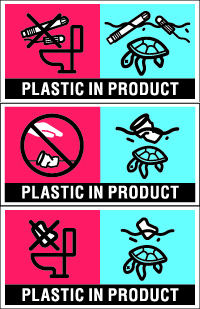
In Slovakia, packaging must carry specific labels depending on the type of product. There are three main labeling requirements: a material code showing what the packaging is made of, a deposit symbol for drink bottles and cans, and a plastic warning label for certain single-use products like wet wipes or beverage cups.An example of what a label looks like on packaging for Slovakia

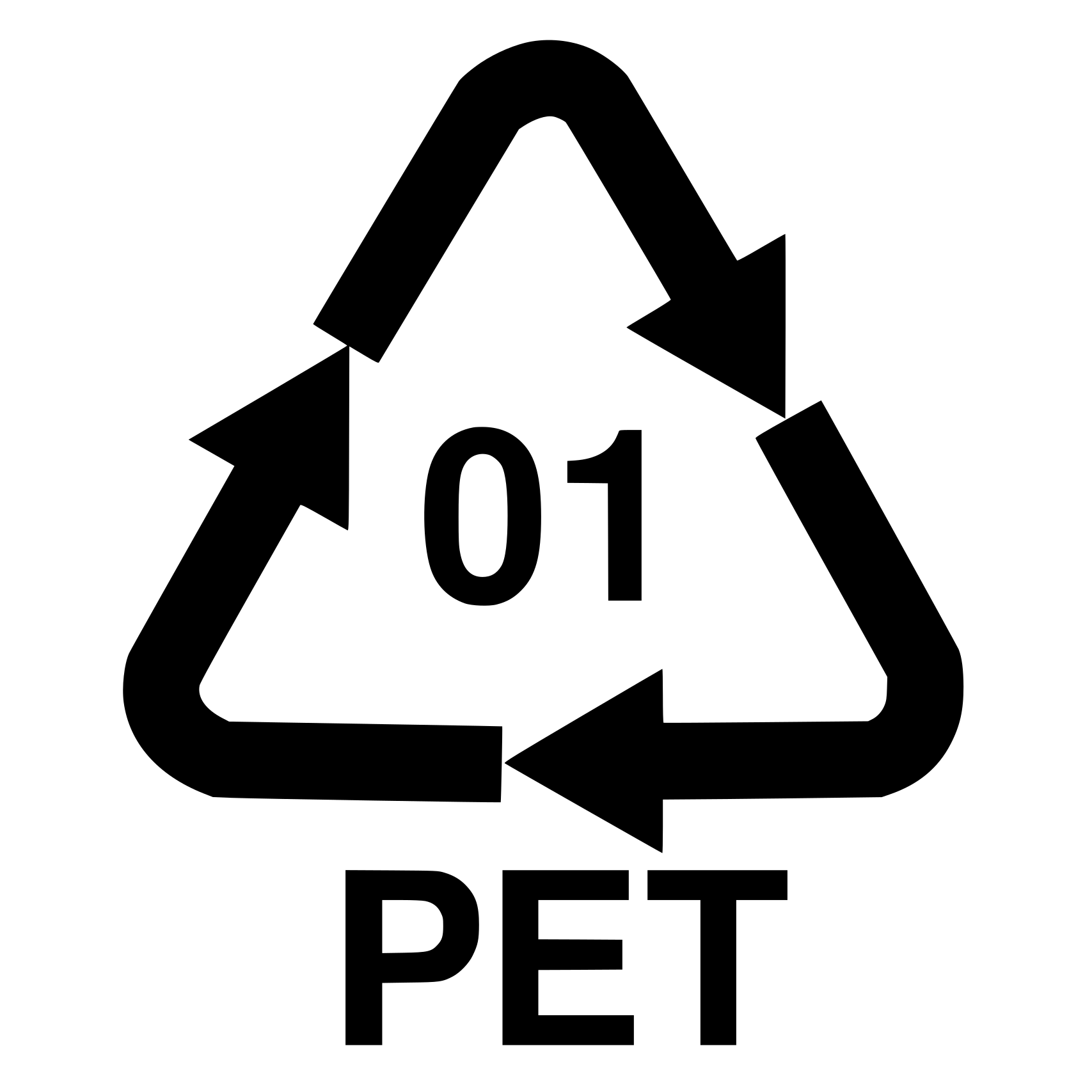
This water bottle shows three mandatory labels used in Slovakia. The Zálohované (Z) symbol — a letter Z with recycling arrows — indicates the bottle is part of Slovakia's deposit return system and can be returned to a collection point for a refund. The PET 1 recycling code indicates the bottle is made of polyethylene terephthalate and should be recycled accordingly. The "Produkt obsahuje plasty" label — a red and blue rectangular symbol — is mandatory under the EU Single-Use Plastics Directive, warning consumers that the product contains plastic and should not be flushed or littered.
📎 Download the Zálohované symbol: 📎 Download the PET 1 symbol: 📎 Download the Single-Use Plastics label: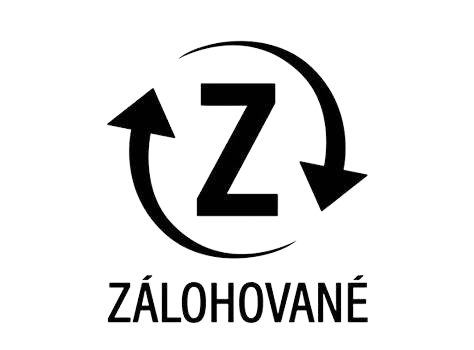

- PNG – best for digital use.
EPR eco-fees and eco-modulation
- Fees are usually paid via the OZV and depend on packaging material, weight and category.
- Since 2023, Slovakia has strengthened requirements for the eco-modulation register (more detailed material composition and packaging parameters).
- You can estimate potential packaging compliance costs with Lappa’s EPR fee calculator based on country, material type and packaging volume.
Risks, penalties and common mistakes
Risks:- Penalties for breaches of the Waste Act can be significant; the law provides for fines up to hundreds of thousands of euros, depending on the infringement.
- Inspections and sanctions are carried out, among others, by the Slovak Environmental Inspectorate (SIŽP).
- starting sales in Slovakia before registration and before signing a contract with an OZV,
- assuming that a marketplace automatically “covers” EPR (often it does not),
- incorrect weight calculations (not split by material / missing components / excluding transport packaging),
- lack of a process for eco-modulation data (material composition, composites, etc.).
What e-commerce sellers should do now (checklist)
- Define your role: importer / distance seller / local manufacturer.
- Prepare your data structure: SKU → packaging BOM → weights by material (including transport packaging).
- If you have no office in Slovakia, appoint an authorised representative.
- Register in the producer register (ISOH) and sign a contract with an OZV.
- Set up a compliance calendar: quarterly submissions to the OZV + annual forms/confirmations (depending on your scenario).
Register online
Start your EPR Reporting within 24 hours
FAQ
Do I need EPR if I only ship a few parcels per month?- In most cases, yes: the obligation is linked to placing packaging on the market, not to “large volumes”.
Can obligations be fulfilled without an OZV?
- In theory, yes, through individual compliance, but this requires authorisation from the ministry.
Where can I find the list of packaging OZVs?
- There is an official list, “Zoznam OZV pre obaly”, available in ISOH.
What is the key date I must not miss?
- Typically: quarterly deadlines to your OZV (internal compliance) plus submission of annual data/forms by February of the following year, where applicable.
What is Slovakia EPR Batteries
Slovakia's battery EPR framework is governed by Regulation (EU) 2023/1542 — the EU Battery Regulation — which applies directly in all EU Member States from 18 August 2025, supplemented by national legislation under Act No. 79/2015 Coll. on Waste (Zákon č. 79/2015 Z. z. o odpadoch). The Waste Act established EPR obligations for batteries and accumulators alongside WEEE, packaging, and other regulated product categories. The competent authority overseeing battery EPR in Slovakia is the Ministry of Environment of the Slovak Republic (Ministerstvo životného prostredia Slovenskej republiky — MŽP SR), which maintains the Register of Producers of Specified Products (Register výrobcov vyhradených výrobkov). All battery producers must register in this national registry before placing batteries on the Slovak market. Slovakia was included in Zalando's second wave of battery EPR verification, scheduled by 31 March 2026. Kaufland also requires Slovak battery registration numbers from sellers. Registration takes approximately 8–12 weeks, making early registration essential for sellers targeting the Slovak market.Does This Apply to E-Commerce & Online Sales
Yes. Act No. 79/2015 and the EU Battery Regulation explicitly capture distance sellers and e-commerce operators as producers. Any company placing batteries — standalone or incorporated into products — on the Slovak market for the first time is a producer regardless of sales channel or country of establishment. Foreign companies selling battery-containing products directly to Slovak consumers via e-commerce must register in the national producer register, appoint a Slovak-established authorised representative, and join an approved PRO. Registration must be completed before placing batteries on the Slovak market.Who is the "Producer" under Slovakia EPR?
Under Regulation (EU) 2023/1542 and Act No. 79/2015, a producer is any person who, in the course of commercial activity, places batteries — whether standalone or incorporated into products — on the Slovak market for the first time. This covers:- Manufacturers established in Slovakia who produce and sell batteries domestically under their own brand.
- Importers bringing batteries into Slovakia from non-EU countries for the first time under their own name.
- Companies introducing batteries from another EU Member State into Slovakia for the first time.
- Private label owners whose brand name appears on batteries manufactured by third parties.
- Distance sellers and online retailers established outside Slovakia who sell batteries or battery-containing products directly to Slovak consumers.
- Economic operators who prepare batteries for re-use or repurposing — treated as producers for the second life of the battery.
Who Must Register for EPR Batteries in Slovakia
All producers placing batteries on the Slovak market must register in the Register of Producers of Specified Products maintained by the Ministry of Environment (MŽP SR). Registration must be completed before placing batteries on the market. Producers must also join an approved Producer Responsibility Organisation (PRO) for batteries or apply for authorisation to fulfil obligations individually. The approved PROs operating in Slovakia for batteries and WEEE include SEWA — authorised until end of 2029 — and others authorised by MŽP SR. Registration typically takes 8–12 weeks. Companies should start the registration process well in advance of intended market entry or Zalando's March 2026 verification activation.Slovakia EPR Battery Registration Threshold
Act No. 79/2015 does not set a minimum volume or turnover threshold below which producers are exempt from battery EPR registration. All producers placing batteries on the Slovak market must register regardless of size or volume. The only exemption in the EU Battery Regulation concerns batteries used in military or space equipment, which are outside the scope entirely.Detailed EPR Guidance for each Jurisdiction
We support 36 jurisdictions
Batteries Covered (and Excluded)
Regulation (EU) 2023/1542 defines five battery categories, all within scope for EPR in Slovakia: Portable batteries Batteries under 5 kg not designed for industrial or vehicle use. Includes batteries in consumer electronics, power tools, household devices, and toys. Light Means of Transport (LMT) batteries Batteries used in e-bikes, e-scooters, e-mopeds, and similar light electric vehicles. Automotive (SLI) batteries Starting, lighting, and ignition batteries used in vehicles. Industrial batteries Batteries used in industrial applications and stationary energy storage systems. Those above 2 kWh have additional requirements including battery passports from 2027. Slovakia has set recycling efficiency targets of 65% by 2025 and 70% by 2030 for lithium batteries. Electric vehicle (EV) batteries Batteries used in electric cars and heavy electric vehicles. Key exclusions:- Batteries designed for military or space equipment — outside scope entirely
- Batteries in nuclear installations — excluded
- Second-life batteries where the operator performing re-use or repurposing becomes the new producer
Producer Responsibility Organization (PRO)
Slovakia operates an approved PRO system for batteries. The main approved PROs for batteries and accumulators include: SEWA (sewa.sk) — a member of the European Recycling Platform (ERP), providing one-stop compliance for WEEE, batteries, and packaging. SEWA holds authorisation as a Producer Responsibility Organisation for batteries valid until end of 2029. SEWA serves nearly 1,000 manufacturers and importers and offers access to ERP's pan-European EuropePlus solution for companies operating across multiple EU countries. NATUR-PACK — another approved PRO covering batteries alongside packaging and other categories. Additional approved PROs are listed in the Ministry of Environment's register. Producers should confirm current approvals directly with MŽP SR.EPR Registration in Slovakia
The registration process for battery producers in Slovakia is as follows:- Determine whether your business qualifies as a producer under the EU Battery Regulation and Act No. 79/2015.
- If established outside Slovakia, appoint an authorised representative holding a Slovak tax ID — this is mandatory for foreign companies and required before registration can be completed.
- Register in the Register of Producers of Specified Products with the Ministry of Environment (MŽP SR), submitting company details, battery categories, brand names, and authorised representative information.
- Join an approved PRO — SEWA or another authorised organisation — by signing a service agreement.
- Receive your Slovak battery EPR registration number upon completion of registration.
- Provide the registration number to Kaufland and Zalando, and any other marketplaces where you sell battery-containing products in Slovakia.
- Submit quarterly reports of battery volumes placed on the Slovak market through the PRO.
- Pay applicable contributions to the PRO based on battery category and weight.
- Retain records for a minimum of 5 years for audit purposes by MŽP SR.
Authorized Representative
Foreign companies without a Slovak legal establishment must appoint an authorised representative established in Slovakia before registering. The authorised representative must hold a Slovak tax ID and acts as the official liaison with MŽP SR. The representative is responsible for registration in the producer register, PRO membership, quarterly reporting, fee payment, and communication with the Ministry of Environment. Changes to identification or AR details must be updated within 30 days. Important development: In December 2025, the European Commission proposed suspending the authorised representative requirement for EU-established companies until 2035. This proposal has not been formally adopted as of May 2026. For non-EU producers, the requirement is not affected and continues to apply.What Data Must Be Reported
Producers must submit quarterly reports through their PRO covering:- Total weight (kilograms) of batteries placed on the Slovak market during the quarter, broken down by battery category (portable, LMT, SLI/automotive, industrial, EV)
- Battery chemistry type where relevant to reporting requirements
- Brand names under which batteries were placed on the market
- Collection and recycling performance data, compiled and reported by the PRO to MŽP SR on behalf of members
- For EV and LMT batteries: number of batteries made available and amounts of waste batteries collected and delivered to treatment facilities
First Reporting Period & EPR Reporting Deadlines
Battery EPR has been mandatory in Slovakia for many years under Act No. 79/2015. The EU Battery Regulation obligations took full effect from 18 August 2025. Key dates:- 18 August 2025: EU Battery Regulation EPR obligations fully in force. Slovak battery EPR number required from sellers on Kaufland.
- 31 March 2026: Zalando's Slovak battery EPR verification scheduled to activate.
- Quarterly: Battery volume declarations submitted through the PRO. Specific quarterly deadlines should be confirmed with MŽP SR or the chosen PRO.
- 18 February 2027: Battery passports mandatory for industrial batteries (>2 kWh) and EV batteries.
- 18 August 2027: Due diligence obligations in force (delayed under Omnibus IV).
Labels & Marketing Claims
Crossed-out wheeled bin symbol From 18 August 2025, all batteries must display the separate collection symbol covering at least 3% of the area of the largest side of the battery, up to a maximum of 5 × 5 cm. Chemical symbols Batteries containing more than 0.002% cadmium must be marked Cd. Batteries containing more than 0.004% lead must be marked Pb. Capacity marking Portable and rechargeable batteries must display capacity information. QR code From 18 August 2026, all batteries must carry a QR code. For LMT, industrial (>2 kWh), and EV batteries, this links to the Digital Battery Passport from 18 February 2027. CE marking Mandatory from 18 August 2024. Language requirements Consumer-facing information on batteries sold in Slovakia must be provided in Slovak where required under Slovak consumer protection law. Environmental claims The Empowering Consumers for the Green Transition Directive (2024/825/EU) must be transposed by March 2026, after which unsubstantiated green claims will be prohibited across the EU including Slovakia.EPR Eco Fees & Eco-Modulation
Slovak PROs set contribution rates for members based on the weight and category of batteries placed on the Slovak market. Specific fee schedules should be confirmed directly with SEWA or another approved PRO at the time of membership registration. Under Regulation (EU) 2023/1542, eco-modulation — adjusting contributions based on battery environmental performance — is required across all Member States. Slovakia's specific eco-modulation framework under the new Regulation has not been separately published as of May 2026.Risks, Penalties & Common Mistakes
- Starting registration too late. The process takes 8–12 weeks. Sellers targeting the March 2026 Zalando verification activation must have initiated registration well in advance. Missing this deadline means battery listings remain blocked.
- Failing to appoint an authorised representative with a Slovak tax ID. Foreign companies must appoint an AR before registration can be completed. An AR without a Slovak tax ID cannot fulfil the registration requirements.
- Assuming one EU registration covers Slovakia. Battery EPR registration is national. Registration in another EU member state — including neighbouring Czech Republic or Austria — does not fulfil Slovak obligations.
- Missing the Kaufland registration requirement. Kaufland explicitly requires Slovak battery registration numbers from sellers. Non-compliant sellers face listing restrictions.
- Missing quarterly reporting deadlines. Slovakia requires quarterly — not annual — battery volume declarations. Companies must set up data systems capable of generating quarterly placement data.
- Missing labelling requirements. The crossed-out wheeled bin symbol and CE marking are mandatory from August 2025.
- Missing the QR code deadline of August 2026.
What E-Commerce Sellers Should Do Now
- Confirm whether your products contain batteries and whether they are being sold to Slovak consumers.
- Appoint an authorised representative with a Slovak tax ID immediately — this must be done before registration can begin.
- Begin the registration process with the Register of Producers of Specified Products through your AR — allow 8–12 weeks for completion.
- Join SEWA (sewa.sk) or another approved Slovak PRO for batteries by signing a service agreement.
- Receive your Slovak battery EPR registration number and provide it to Kaufland and Zalando.
- Set up quarterly reporting of battery volumes by category and weight through your PRO.
- Verify that all batteries carry the crossed-out wheeled bin symbol, CE marking, capacity information, and Slovak-language consumer instructions as required.
- Plan for the QR code requirement by August 2026 and the Digital Battery Passport for industrial and EV batteries by February 2027.
Register online
Start your EPR Reporting within 24 hours
FAQ
Is battery EPR mandatory in Slovakia?- Yes. Battery EPR has been mandatory in Slovakia under Act No. 79/2015 on Waste for many years. From 18 August 2025, the EU Battery Regulation (2023/1542) fully applies. All producers placing batteries on the Slovak market must register in the national producer register, join an approved PRO such as SEWA, submit quarterly declarations, and comply with collection and recycling obligations. Kaufland already requires Slovak battery registration numbers from sellers.
- Yes. Distance sellers and e-commerce operators are captured as producers under the EU Battery Regulation and Act No. 79/2015. Foreign companies must appoint a Slovak-established authorised representative holding a Slovak tax ID before registration can be completed. Registration takes 8–12 weeks — sellers should start immediately to meet the March 2026 Zalando verification deadline.
- The registration process in Slovakia typically takes 8–12 weeks. Companies must not place batteries on the Slovak market or provide EPR registration numbers to marketplaces until registration is complete. Starting the process well in advance is strongly advised, particularly given Zalando's March 2026 verification activation date.
- SEWA (sewa.sk) is the most established approved PRO for batteries in Slovakia, holding authorisation until end of 2029. SEWA is a member of the European Recycling Platform (ERP) and offers pan-European compliance solutions. NATUR-PACK is another approved option. Producers should contact both and compare contribution rates and service terms.
- No. Act No. 79/2015 does not set a minimum threshold for battery EPR registration. All producers placing batteries on the Slovak market must register and comply regardless of volume or company size.
Packaging EPR law in Slovakia: None enacted
Slovakia is not among the countries with enacted textile EPR legislation.Want to be first to know when new EPR will issued?
Only important news!