


Luxemburg EPR
What is Luxembourg EPR Packaging
Extended Producer Responsibility (EPR) in Luxembourg is a legal framework that requires producers to manage the environmental impact of the packaging they place on the national market. The system is governed by the Law of June 9, 2022, which updated the Law of March 21, 2017, to align with EU circular economy goals. These laws mandate that companies responsible for packaging must ensure its collection and recycling, typically by joining an accredited organization. The primary regulatory body is the Environment Agency (Administration de l’environnement).
Does this apply to e-commerce & online sales
Yes. EPR compliance for online sellers and online marketplaces based outside of Luxembourg that sell packaged products directly to Luxembourgish households are legally responsible for the packaging waste generated. This applies to all distance contracts, ensuring that foreign e-commerce entities contribute to the national recycling system for both product packaging and the shipping materials used for delivery.
Who is the “producer” under Luxembourg EPR?
In Luxembourg, the "party responsible for packaging" (producer) includes:
-
Companies established in Luxembourg that package goods under their own brand.
-
Companies established in Luxembourg that import packaged products.
-
Foreign companies (distance sellers) that sell packaged products directly to consumers or professional end-users in Luxembourg.
-
Local providers of service packaging (e.g., shopping bags, pizza boxes) used at the point of sale.
Who must register for EPR packaging in Luxembourg
Any producer placing packaging on the market must fulfill their "take-back" and "information" obligations. The most common and practical way to comply is by joining Valorlux, which is currently the only accredited Producer Responsibility Organization (PRO) in Luxembourg for both household and industrial packaging. EPR Registration is mandatory for any entity meeting the producer definition, regardless of their location.
Luxembourg EPR Packaging Registration Threshold
Luxembourg operates a zero threshold policy for registration. EPR packaging thresholds in Europe has no minimum turnover or volume of packaging required to trigger the obligation; compliance is mandatory from the first unit placed on the market. While all must register, the reporting and fee structure may be simplified for very small volumes, but the legal requirement to be part of the system remains absolute.
External expertise for all your EPR needs
Start EPR reporting within 24 hours

EPR and PPWR for Luxembourg
Now PPWR shows up and it's solving an entirely different problem. Valorlux's job is managing money for waste collection. PPWR doesn't care about collection infrastructure—it cares whether your packaging actually works in a recycling loop. Can it get recovered? Is the ink toxic? Are you using recycled plastic in it? Both systems exist. You can pass Valorlux with flying colours and still fail PPWR's design requirements. They're completely separate tracks.
Here's what makes Luxembourg weird: selling a single unit creates a legal obligation. Not 100 kg, not 500 kg—literally one package. And starting August 2026, if you're not based in Luxembourg, you have to have someone there who's legally on the hook for your packaging mess. It's a formal legal relationship, not just paperwork. Lappa can help with your PPWR compliance and to set up everything for your Luxembourg market.
PPWR Labels for Luxembourg
Luxembourg never said "you must put this logo on every package." No mandatory national symbol, no sorting colours, nothing like that. Voluntary Green Dot if you want it. Material codes because the EU says so. But no hard requirement for a specific mark.Hovewer, Companies operating across several EU markets should also review the upcoming PPWR labelling requirements
August 2028 changes that game. PPWR demands pictograms on everything—standardised across the entire EU showing what the material is, how recyclable the design scores, and how much recycled content's in there. For Luxembourg companies, honestly, this is easier than what France and Spain deal with. No national logo competing with the new EU one. No squeezing two incompatible systems onto one label. Just: redesign the artwork, print new labels, done.
It's straightforward work. Design teams update files, printers run the new versions, nothing legal gets in the way. That's actually a break compared to countries drowning in overlapping national and EU labelling rules.
PPWR Product Rules for Luxembourg
Four rules land staggered from now through 2030. Luxembourg's small enough that Valorlux catches everything, so violators get found and problems escalate fast.
August 2026 right now: PFAS gets capped hard—25 to 250 ppb depending on which chemical. That's the ink on your label, the coating that makes something grease-proof, the film barrier layer. One batch over the limit and it doesn't clear customs. Suppliers need test results showing they're compliant. That takes time—months sometimes—so producers should be harassing their ink vendors and coating suppliers today.
January 2030: Your packaging design has to actually recycle. Not theoretically. Not in some perfect world. In Luxembourg's actual sorting plants. Material choice, how labels stick, what the caps are made of, whether parts separate cleanly—all of it gets tested. Third parties certify whether it meets PPWR specs or it doesn't. Suppliers haven't done this work yet. It's coming.
January 2030: Recycled content becomes a floor, not a target. Plastic: 30% minimum. Cardboard: 90%. Glass: 40%. Aluminium: 50%. Suppliers have to prove where the recycled material came from—actual documentation, not just a claim. Contracts with material companies need updating because vendors need to be ready to back this up.
January 2030: Overstuffed boxes, unnecessary air, padding that serves no purpose—it all gets scrutinized. Each product category has different thresholds being worked out now, but the idea's obvious: use what you actually need. Valorlux members usually get hints early on what the benchmarks will be, which gives suppliers time to rethink.
Packaging Covered (and Excluded)
The legislation covers all packaging types:
-
Household packaging: Primary packaging typically used by private consumers.
-
Industrial/Non-household packaging: Secondary and tertiary packaging (pallets, shrink wrap, crates) used in professional or industrial settings.
-
Service packaging: Packaging filled at the point of sale.
Since January 1, 2025, the scope of mandatory collective reporting has been explicitly expanded to include all industrial packaging. There are no major material exclusions; plastic, paper, cardboard, glass, metal, and wood are all covered.
Producer Responsibility Organization (PRO)
Valorlux is the national collective scheme. By becoming a member of Valorlux, producers transfer their recycling and recovery obligations to the organization. Valorlux manages the collection, sorting, and recycling infrastructure and provides the administrative platform, Valbase, for data declaration.
EPR Registration in Luxembourg
The registration process for foreign companies involves:
-
Signing a membership contract with Valorlux.
-
Providing company details, including VAT or business registration numbers.
-
Gaining access to the Valbase Online portal for reporting.
-
Categorizing products into the relevant household or industrial streams.
Authorized Representative
Under the EU Packaging and Packaging Waste Regulation (PPWR), which applies from August 12, 2026, foreign producers (those without a seat in Luxembourg) are required to appoint an Authorized Representative (AR) for packaging established in Luxembourg. The AR assumes the legal responsibility for the producer's EPR duties, including registration, reporting, and fee payments.
What Data Must Be Reported
Members must submit a detailed annual declaration through Valbase. Packaging data requirements:
-
The weight (in kilograms) of each packaging material.
-
Classification by type (household vs. industrial).
-
Identification of the packaging function (primary, secondary, or tertiary).
-
Number of units placed on the market.
First Reporting Period & EPR Reporting Deadlines
The reporting period follows the calendar year. The deadline for the annual packaging declaration is the end of February (e.g., February 28, 2026) for packaging placed on the market during the previous year. New members must report for the year in which they joined.
Labels & Marketing Claims
Luxembourg does not have a unique national recycling label. Producers must use standard EU material identification codes on all packaging. Producers who are members of Valorlux — the national PRO — may also display the Green Dot (Le Point Vert) symbol on their packaging.
An example of what a label looks like on packaging for Luxembourg

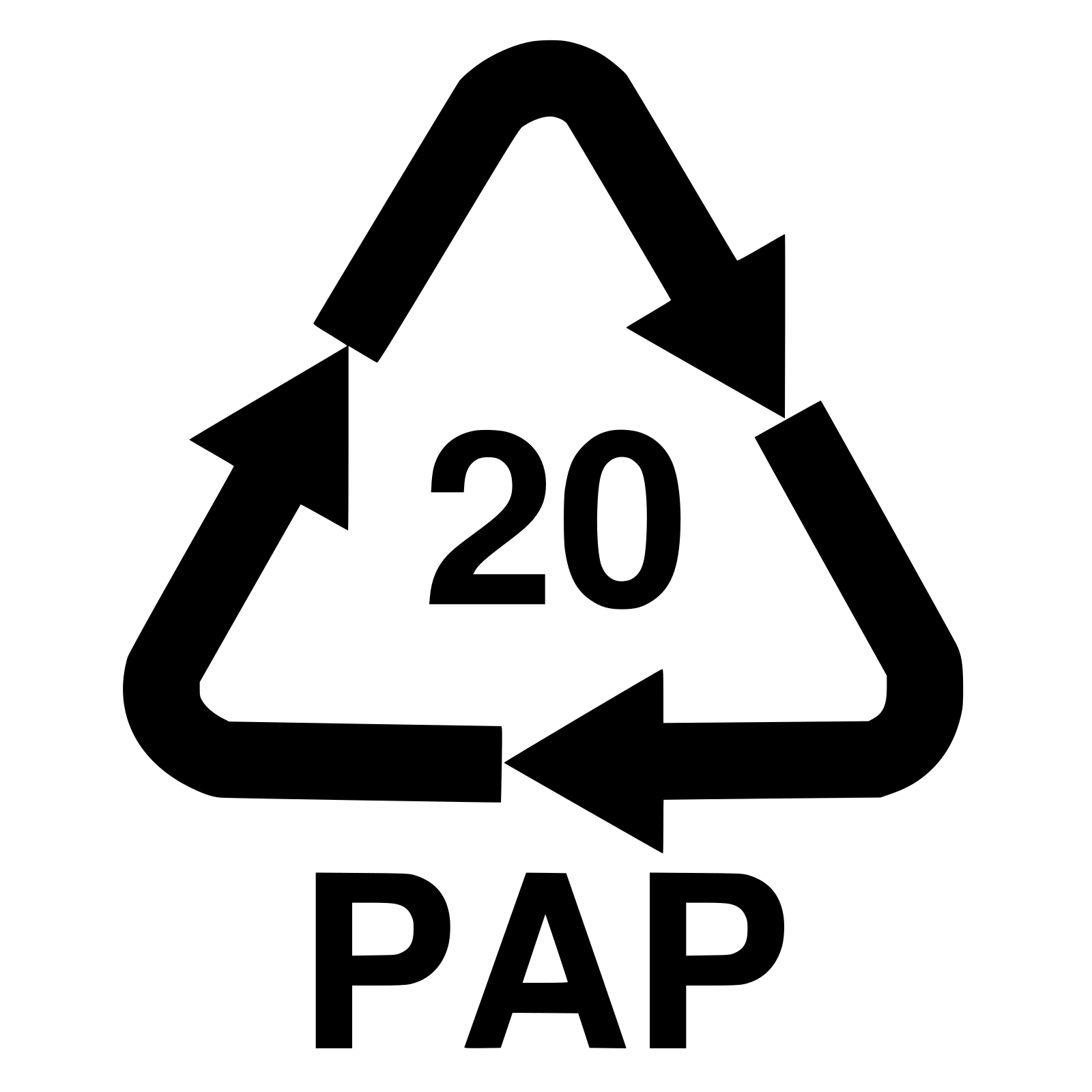
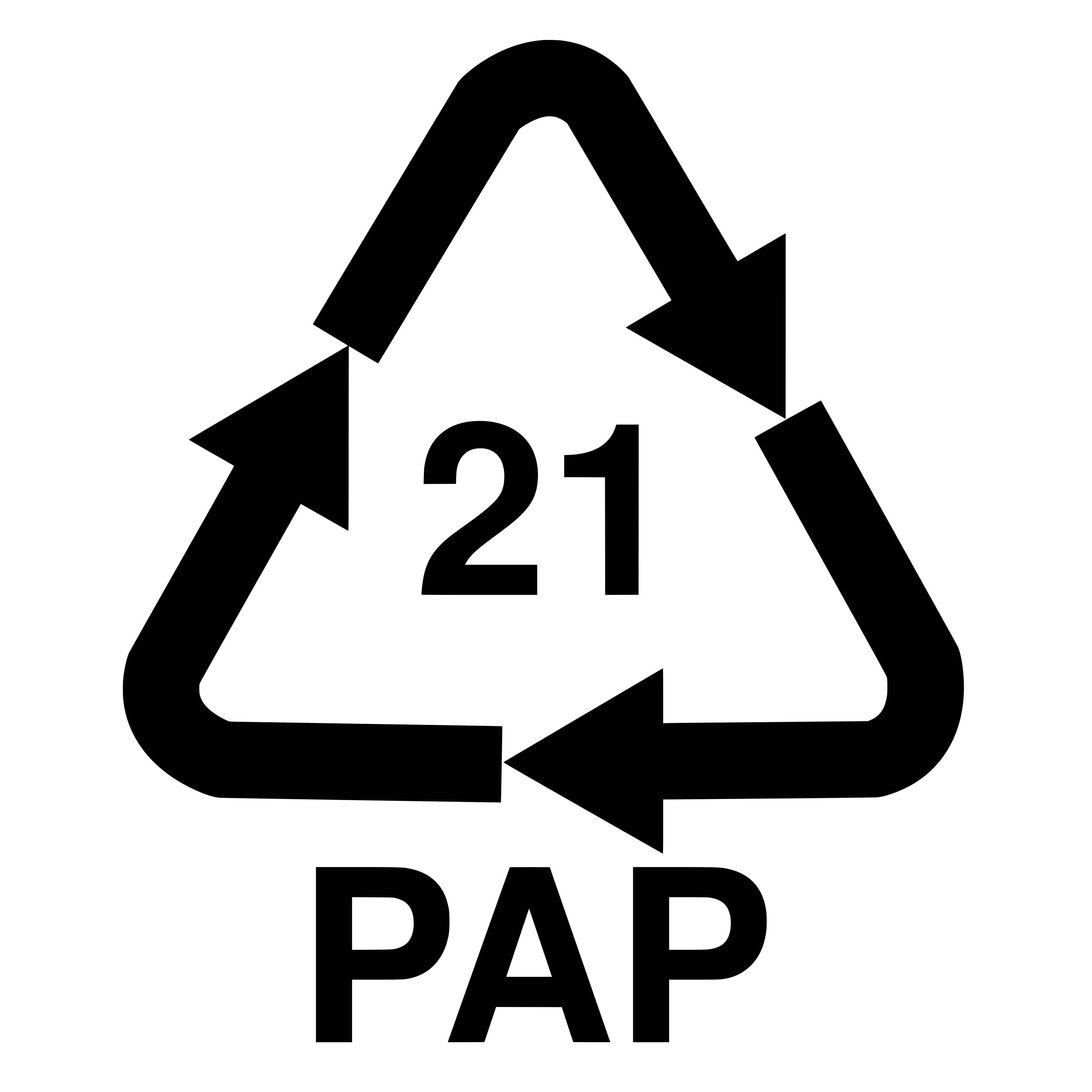
This packaging shows two standard EU material identification codes. PAP 21 indicates that the cardboard box is made of solid board and should be sorted into the paper and cardboard collection stream. PP 5 indicates that the plastic window is made of polypropylene and should be disposed of according to local plastic collection rules. Labels are applied per packaging component, so different parts of the same product may carry different codes.
📎 Download the PAP 20 symbol:
📎 Download the PAP 21 symbol:

EPR Eco Fees & Eco-Modulation
Fees are calculated based on the weight and type of material reported. Luxembourg uses eco-modulation, where fees are higher for materials that are difficult to recycle (such as certain plastics or composites) and lower for highly recyclable materials like cardboard or glass.You can estimate potential compliance costs with Lappa’s EPR fee calculator.
For registration and ongoing compliance costs, see our EPR pricing overview.
Risks, Penalties & Common Mistakes
Non-compliance with the Law of June 9, 2022 can lead to:
-
Administrative fines imposed by the Environment Agency.
-
Prohibitions on selling products in the Luxembourg market.
-
Retroactive payments for previous years of non-compliance.
-
A common mistake for foreign sellers is assuming that industrial packaging (transport boxes) is excluded; as of 2025, industrial packaging reporting is strictly enforced.
What E-Commerce Sellers Should Do Now
-
Conduct a full audit of the packaging weight and materials sent to Luxembourg.
-
Join Valorlux to cover both household and industrial packaging streams.
-
Appoint an Authorized Representative to prepare for the August 2026 PPWR deadline.
-
Set up an internal data tracking system to ensure the February reporting deadline is met.
Get a 20 min free consultation for EPR
Find all your answers and become part of Lappa
FAQ
Is there a minimum weight limit to register in Luxembourg?
- No, the registration threshold is 0 kg; you must register from your first sale.
Do I have to report pallets and stretch film?
- Yes, as of January 1, 2025, all industrial and transport packaging must be reported.
Can I use my French EPR registration for Luxembourg?
- No, EPR is national. You must have a separate agreement with Valorlux in Luxembourg.
What is Valbase?
- Valbase is the online reporting portal provided by Valorlux for members.
Is an Authorized Representative mandatory now?
- It becomes strictly mandatory for all foreign sellers starting August 12, 2026, under the PPWR.
What is Luxembourg EPR Batteries
Luxembourg's battery EPR framework is governed by Regulation (EU) 2023/1542 — the EU Battery Regulation — which applies directly in all EU Member States from 18 August 2025. At national level, Luxembourg implements battery EPR through its waste management legislation, with the Administration de l'environnement (Environment Agency) serving as the competent authority responsible for approving producer organisations and overseeing compliance. The approved collective organisation for batteries in Luxembourg is Ecobatterien (ecobatterien.lu), which is approved by the Minister of Environment, Climate and Sustainable Development to endorse the obligations of producers and importers of batteries. This is distinct from Ecotrel ASBL, which handles WEEE and electrical equipment obligations — battery and WEEE registrations are separate. Any company located outside Luxembourg that sells directly to users — whether B2C or B2B — in Luxembourg is considered an importer under Luxembourg law, and is subject to the same producer obligations as domestically established companies. This explicitly includes e-commerce sellers. Zalando scheduled Luxembourg for its battery EPR verification rollout by 31 March 2026.Does This Apply to E-Commerce & Online Sales
Yes. Luxembourg law explicitly treats e-commerce sellers as importers. Any company located outside the Grand Duchy of Luxembourg that sells battery-containing products directly to Luxembourg users — whether consumers or businesses — is considered an importer and must fulfil the same producer obligations as Luxembourg-established producers. This means that foreign brands with no physical presence in Luxembourg must register with the Administration de l'environnement, join Ecobatterien, and comply with all declaration and contribution obligations. The sales channel — whether a direct webshop, marketplace, or other distance selling method — does not affect this obligation.Who is the "Producer" under Luxembourg EPR?
Under Regulation (EU) 2023/1542 and Luxembourg waste legislation, a producer is any person who, in the course of commercial activity, makes batteries available on the Luxembourg market for the first time. Luxembourg explicitly includes as importers any company located outside Luxembourg that sells directly to Luxembourg users. This covers:- Manufacturers established in Luxembourg who produce and sell batteries domestically under their own brand.
- Importers bringing batteries into Luxembourg from non-EU countries for the first time under their own name.
- Companies introducing batteries from another EU Member State into Luxembourg for the first time.
- Private label owners whose brand name appears on batteries manufactured by third parties.
- Foreign e-commerce sellers delivering battery-containing products directly to Luxembourg consumers or businesses.
- Economic operators who prepare batteries for re-use or repurposing — treated as producers for the second life of the battery.
Who Must Register for EPR Batteries in Luxembourg
All producers and importers placing batteries on the Luxembourg market must register with the Administration de l'environnement and join Ecobatterien — the approved collective organisation for batteries in Luxembourg — or apply for individual approval to fulfil obligations independently. Registration is mandatory before placing batteries on the Luxembourg market. Ecobatterien manages collection, recycling, and reporting obligations on behalf of its members, and is approved by the Minister of Environment, Climate and Sustainable Development.Luxembourg EPR Battery Registration Threshold
Regulation (EU) 2023/1542 does not establish a minimum volume or turnover threshold below which producers are exempt from EPR obligations. Luxembourg's policy — consistent with its zero-threshold approach across EPR streams — requires compliance from the first unit placed on the market, regardless of volume or company size. The only exemption in the Regulation concerns batteries used in military or space equipment, which are outside the scope entirely.Detailed EPR Guidance for each Jurisdiction
We support 36 jurisdictions
Batteries Covered (and Excluded)
Regulation (EU) 2023/1542 defines five battery categories, all within scope for EPR in Luxembourg: Portable batteries Batteries under 5 kg not designed for industrial or vehicle use. Includes batteries in consumer electronics, power tools, household devices, and toys. Light Means of Transport (LMT) batteries Batteries used in e-bikes, e-scooters, e-mopeds, and similar light electric vehicles. Automotive (SLI) batteries Starting, lighting, and ignition batteries used in vehicles. Industrial batteries Batteries used in industrial applications and stationary energy storage systems. Those above 2 kWh have additional requirements including battery passports from 2027. Electric vehicle (EV) batteries Batteries used in electric cars and heavy electric vehicles. Key exclusions:- Batteries designed for military or space equipment — outside scope entirely
- Batteries in nuclear installations — excluded
- Second-life batteries where the operator performing re-use or repurposing becomes the new producer
Producer Responsibility Organization (PRO)
The approved collective organisation for batteries in Luxembourg is Ecobatterien (ecobatterien.lu), approved by the Minister of Environment, Climate and Sustainable Development. Ecobatterien manages collection, recycling, and reporting obligations on behalf of member producers and importers. Producers joining Ecobatterien sign a service agreement and pay contributions based on the weight and category of batteries placed on the Luxembourg market. Ecobatterien reports aggregated compliance data to the Administration de l'environnement on behalf of its members. Producers may alternatively apply for individual approval from the Administration de l'environnement to fulfil obligations independently, but this is rarely the practical route for most producers due to the complexity involved. Important distinction: Ecobatterien covers batteries only. Producers who also place electrical and electronic equipment on the Luxembourg market must separately join Ecotrel ASBL for their WEEE obligations. Battery and WEEE registrations are entirely separate.EPR Registration in Luxembourg
The registration process for battery producers in Luxembourg is as follows:- Determine whether your business qualifies as a producer or importer placing batteries on the Luxembourg market — including via e-commerce.
- If established outside Luxembourg, appoint an authorised representative established in Luxembourg before registering.
- Contact Ecobatterien (ecobatterien.lu) to sign a service agreement and become a member.
- Register with the Administration de l'environnement as a battery producer or importer.
- Declare the batteries placed on the Luxembourg market by category and weight.
- Pay applicable contributions to Ecobatterien based on battery category and volume.
- Submit the annual information obligation to the Administration de l'environnement by 30 April each year.
- Retain records for audit by the Administration de l'environnement.
Authorized Representative
Under Regulation (EU) 2023/1542 (Article 57) and Luxembourg waste legislation, producers established outside Luxembourg must appoint an authorised representative — a legal or natural person established in Luxembourg — to fulfil EPR obligations on their behalf. The authorised representative handles registration with the Administration de l'environnement, Ecobatterien membership, annual declarations, fee payment, and contact with Luxembourg authorities. Important development: In December 2025, the European Commission proposed suspending the authorised representative requirement for EU-established companies until 2035. This proposal has not been formally adopted as of May 2026. For non-EU producers, the requirement is not affected and continues to apply.What Data Must Be Reported
Producers and importers must report the following data annually to the Administration de l'environnement — by 30 April each year:- Total weight (kilograms) and/or number of units of batteries placed on the Luxembourg market during the previous year, broken down by battery category (portable, LMT, SLI/automotive, industrial, EV)
- The amounts of waste batteries collected and processed
- The waste recovery rate achieved
- Battery chemistry type where relevant to contribution calculations
- Brand names under which batteries were placed on the market
First Reporting Period & EPR Reporting Deadlines
Battery EPR has been mandatory in Luxembourg for many years. The new EU Battery Regulation obligations took full effect from 18 August 2025. Key dates:- 18 August 2025: EU Battery Regulation EPR obligations fully in force.
- 31 March 2026: Zalando's Luxembourg battery EPR verification scheduled to activate.
- 30 April (annual): Annual information obligation — producers and importers must inform the Administration de l'environnement of batteries placed on the market, waste collected, and recovery rates achieved during the previous year.
- 18 February 2027: Battery passports mandatory for industrial batteries (>2 kWh) and EV batteries.
- 18 August 2027: Due diligence obligations in force (delayed under Omnibus IV).
Labels & Marketing Claims
Crossed-out wheeled bin symbol From 18 August 2025, all batteries must display the separate collection symbol covering at least 3% of the area of the largest side of the battery, up to a maximum of 5 × 5 cm. Chemical symbols Batteries containing more than 0.002% cadmium must be marked Cd. Batteries containing more than 0.004% lead must be marked Pb. Capacity marking Portable and rechargeable batteries must display capacity information. QR code From 18 August 2026, all batteries must carry a QR code. For LMT, industrial (>2 kWh), and EV batteries, this links to the Digital Battery Passport from 18 February 2027. CE marking Mandatory from 18 August 2024. Language requirements Luxembourg has three official languages: Luxembourgish, French, and German. Consumer-facing product information should be provided in at least French and/or German, which are the primary languages used in commerce and consumer protection contexts. Environmental claims The Empowering Consumers for the Green Transition Directive (2024/825/EU) must be transposed by March 2026, after which unsubstantiated green claims will be prohibited across the EU including Luxembourg.EPR Eco Fees & Eco-Modulation
Ecobatterien sets contribution rates for its members based on the weight and category of batteries placed on the Luxembourg market. Specific fee schedules should be confirmed directly with Ecobatterien at the time of membership registration. Under Regulation (EU) 2023/1542, eco-modulation — adjusting contributions based on battery environmental performance such as durability, recyclability, and recycled content — is required across all Member States. Luxembourg's specific eco-modulation framework under the new Regulation has not been separately published as of May 2026.Risks, Penalties & Common Mistakes
- Assuming e-commerce sales are not captured. Luxembourg law explicitly classifies any company located outside Luxembourg that sells directly to Luxembourg users as an importer subject to full producer obligations. There is no e-commerce exception.
- Confusing Ecobatterien with Ecotrel. Ecobatterien is the PRO for batteries. Ecotrel is the PRO for WEEE and electrical equipment. These are entirely separate organisations requiring separate registrations. A battery registration does not cover WEEE obligations and vice versa.
- Missing the 30 April annual reporting deadline. The annual information obligation to the Administration de l'environnement must be submitted by 30 April each year. Late submission is a compliance breach.
- Failing to appoint an authorised representative. Non-EU and non-Luxembourg producers must appoint a Luxembourg-established representative before registering. Without one, registration cannot be completed.
- Assuming one EU registration covers Luxembourg. Battery EPR registration is national. Registration in another EU member state — including neighbouring Belgium, France, or Germany — does not fulfil Luxembourg obligations.
- Missing labelling requirements. The crossed-out wheeled bin symbol and CE marking are mandatory from August 2025.
- Missing the QR code deadline of August 2026.
What E-Commerce Sellers Should Do Now
- Confirm whether your products contain batteries and whether they are being sold to Luxembourg consumers or businesses — including via direct e-commerce.
- If established outside Luxembourg, appoint an authorised representative established in Luxembourg.
- Contact Ecobatterien (ecobatterien.lu) and sign a service agreement as a battery producer or importer.
- Register with the Administration de l'environnement as a battery producer.
- Submit annual declarations of battery volumes by category and weight, and pay applicable contributions to Ecobatterien.
- File the annual information obligation with the Administration de l'environnement by 30 April each year.
- Verify that all batteries carry the crossed-out wheeled bin symbol, CE marking, capacity information, and consumer instructions in French and/or German as required.
- Plan for the QR code requirement by August 2026 and the Digital Battery Passport for industrial and EV batteries by February 2027.
Register online
Start your EPR Reporting within 24 hours
FAQ
Is battery EPR mandatory in Luxembourg?- Yes. Battery EPR has been mandatory in Luxembourg for many years. From 18 August 2025, the EU Battery Regulation (2023/1542) fully replaced the former Batteries Directive. All producers and importers placing batteries on the Luxembourg market must register with the Administration de l'environnement and join Ecobatterien, submit annual declarations by 30 April, and pay applicable contributions.
- Yes. Luxembourg law explicitly classifies any company located outside the Grand Duchy that sells directly to Luxembourg users as an importer subject to full producer obligations. E-commerce sellers are specifically captured. Non-Luxembourg companies must appoint an authorised representative established in Luxembourg before registering.
- Ecobatterien is the approved PRO for batteries in Luxembourg. Ecotrel is the approved PRO for WEEE and electrical and electronic equipment. These are entirely separate organisations. Producers placing both batteries and electrical equipment on the Luxembourg market must register with both Ecobatterien (for batteries) and Ecotrel (for WEEE) separately.
- The annual information obligation must be submitted to the Administration de l'environnement by 30 April each year, covering batteries placed on the market, waste collected and processed, and the recovery rate achieved during the previous calendar year. Ecobatterien handles this reporting on behalf of its members.
- No. Luxembourg applies a zero-threshold policy across its EPR streams. All producers and importers placing batteries on the Luxembourg market must register and comply regardless of volume or company size.
Packaging EPR law in Luxembourg: None enacted
Luxembourg is not among the countries with enacted textile EPR legislation.Want to be first to know when new EPR will issued?
Only important news!