

How to Start Packaging EPR and Producer Responsibility Compliance in Europe
Sell a boxed product into the EU and you own its packaging waste. Not the shopper. Not the retailer. You. That principle, extended producer responsibility, has quietly governed European packaging for years, and the PPWR just sharpened it. Regulation (EU) 2025/40 has applied since 12 August 2026, with national producer registers and fees that reward good design. This guide walks you through starting from scratch, without the usual panic.
What Extended Producer Responsibility Really Means
The idea is blunt. Put a wrapper on a shelf, and the cleanup tab is yours, not the town council’s. Governments stopped footing that bill decades ago, and they are not going back. Your fees fund the bins, trucks, and sorting plants that handle the waste later.
Directive 94/62/EC set the foundation back in 1994. The PPWR now layers harmonised rules on top of it. The catch: the scheme still runs country by country, so a single sale can trigger duties in several states at once. That fragmentation trips up almost every newcomer.
Understanding Producer Responsibility Obligations
Your producer responsibility obligations boil down to three moves: register, report, and pay. You register with the relevant scheme in each market. You report the weight and type of packaging you place there. Then you pay a fee that scales with those quantities.
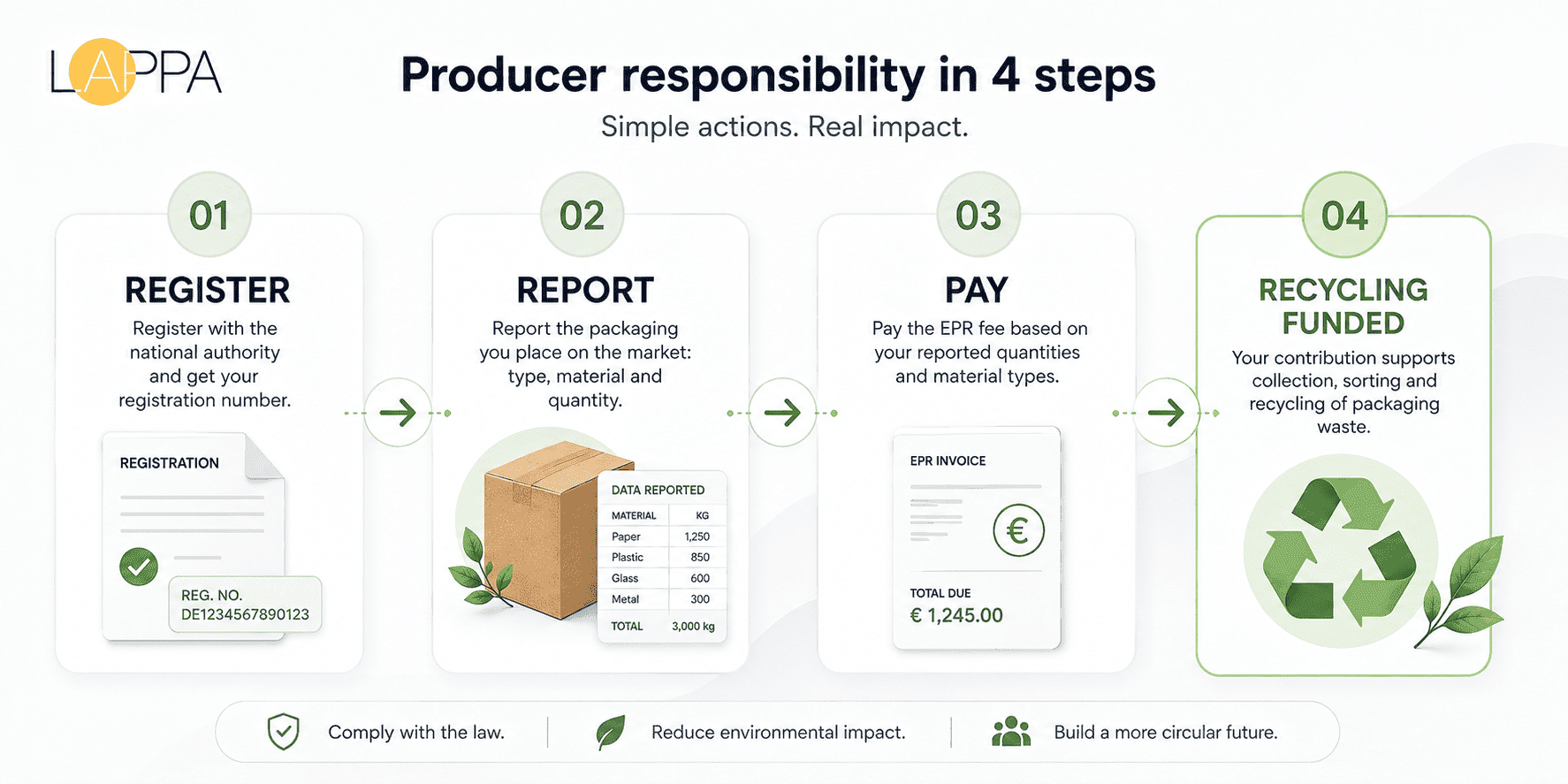
Miss any of the three and the consequences bite fast. Fines, back-payments, and blocked listings all follow a lapse. Amazon and other marketplaces now check your registration before they let you sell. We see this happen often: a brand grows into a new country, forgets to register, and learns the hard way.
How EPR Packaging Rules Work in Europe
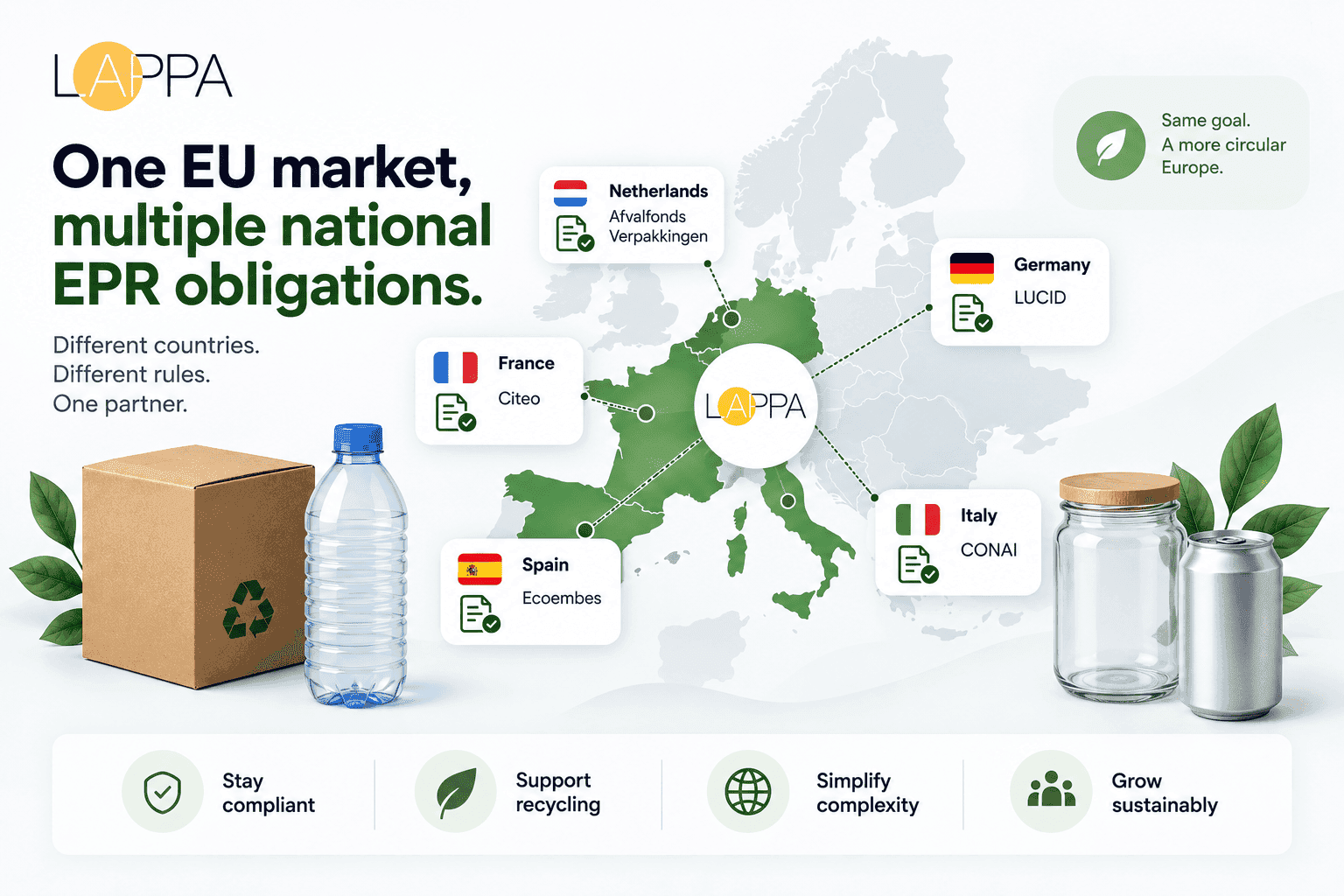
epr packaging schemes are run by producer responsibility organisations, or PROs. Germany has its dual systems, France has Citeo, Italy leans on CONAI. You join the scheme, hand over your data, and it arranges the actual recycling. Think of the PRO as the operator and you as the funder.
Reporting sits at the heart of it. You declare tonnes of paper, plastic, glass, and metal placed on the market each year. Accuracy matters, because the scheme bills you on those figures. Under-report and you risk an audit; over-report and you simply overpay.
Who Counts as a Producer
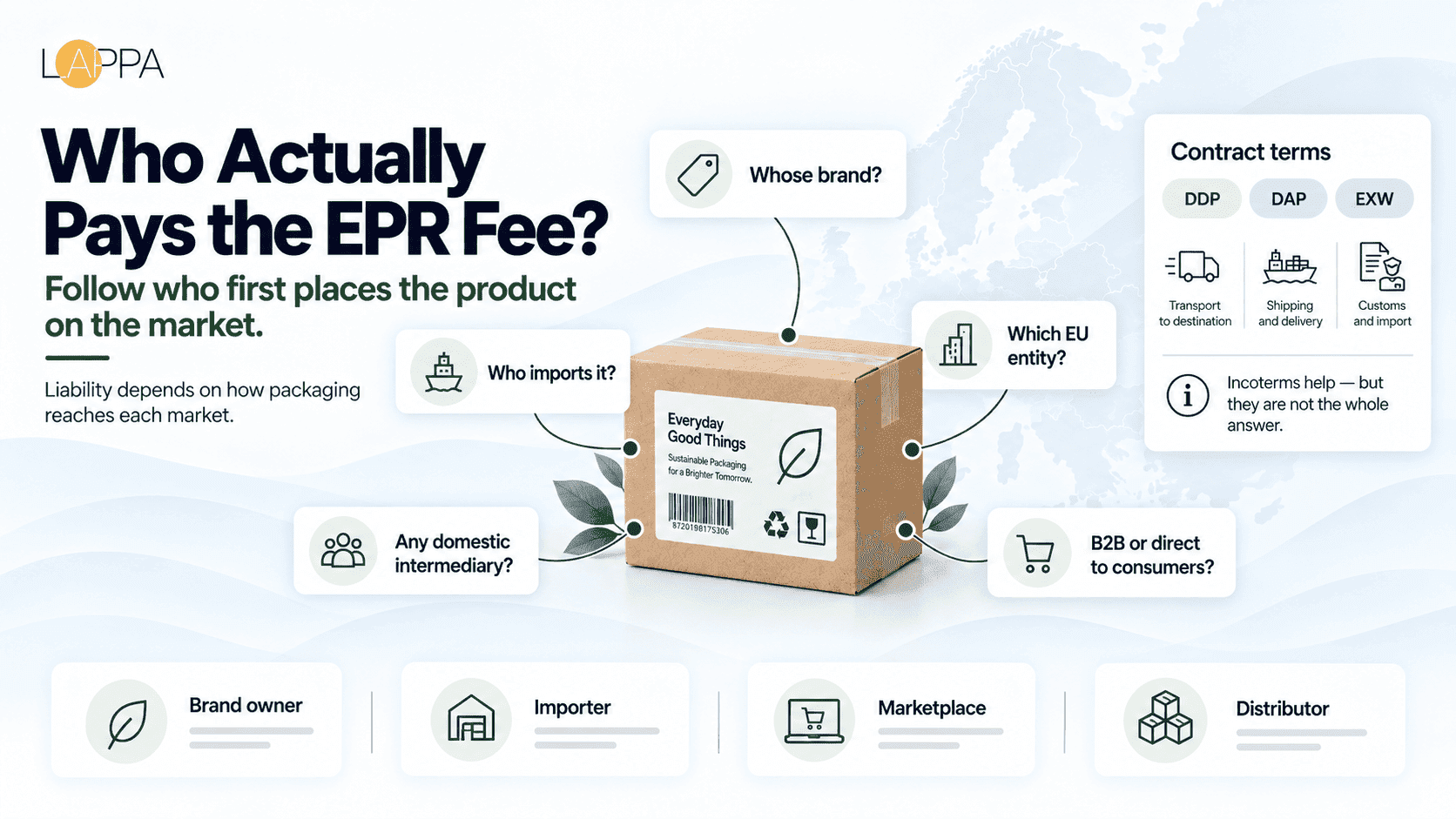
Plenty of businesses assume the label does not apply to them. It usually does. If you first place packaged goods on a national market, you are the producer there. That holds whether you manufacture, import, or sell under your own brand.
Online sellers shipping across borders are the classic surprise case. Ship a parcel from Poland to a French customer and France sees you as the producer. Fulfilment houses and marketplaces can inherit slices of the duty too. Map your real flows before you assume anyone else carries the load.
Registering for Packaging EPR
Getting started with packaging EPR means one registration per country, not one for the whole bloc. No single pan-European register exists, tempting as that shortcut would be. Each state runs its own portal, identifier, and scheme. The paperwork rhymes across borders, yet the details differ every time.
Have these ready before you begin a registration:
- Your company details and local tax identifiers
- Estimated packaging volumes by material and weight
- Product categories and the markets you supply
- A local representative where the country demands one
National Registers You Will Meet
The table below shows a handful of the schemes you are likely to encounter first.
|
Country |
Register or Scheme |
Notes |
|
Germany |
LUCID and a dual system |
Register first, then contract a scheme |
|
France |
Citeo with a unique identifier |
The IDU number is widely requested |
|
Italy |
CONAI |
Long-established national consortium |
|
Spain |
Ecoembes and a national register |
Split producer and scheme duties |
|
Netherlands |
Afvalfonds Verpakkingen |
Reporting above a weight threshold |
Producer Responsibility Regulations Across Member States
The producer responsibility regulations differ enough to catch you out. Thresholds, deadlines, and fee formulas rarely match from one country to the next. Germany wants you registered in LUCID before a single unit ships. France expects the IDU on your invoices and documentation.
Language and timing add friction. A German portal, a French declaration, an Italian consortium form, each on its own calendar. Some states charge annual fees; others bill quarterly. Treat every market as its own small project rather than a copy-paste of the last one.
Eco-modulation and the Cost of Getting It Wrong
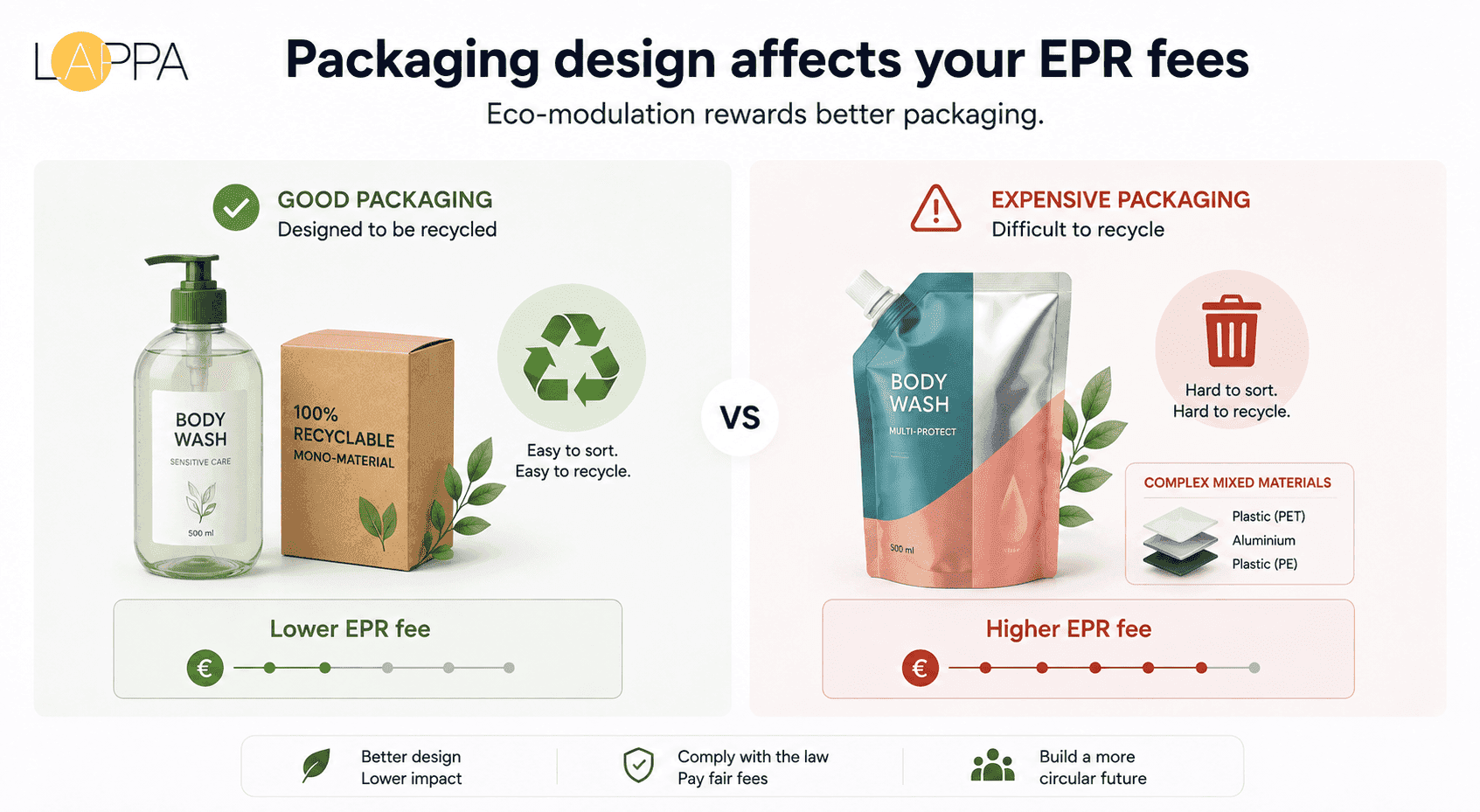
Fees are no longer flat, and that changes the maths. The PPWR forces eco-modulation on every scheme, so your bill now tracks how easily a format recovers. Awkward-to-sort wraps, and anything leaning on virgin plastic, cost you more. Design that recyclers love shaves the invoice down.
Here’s where it gets tricky. The same product can cost very different amounts depending on its wrapper. A mono-material pouch might slide into a lower fee band than a mixed laminate. Design and finance now share a spreadsheet, whether they like it or not.
Distance Sellers and Authorised Representatives
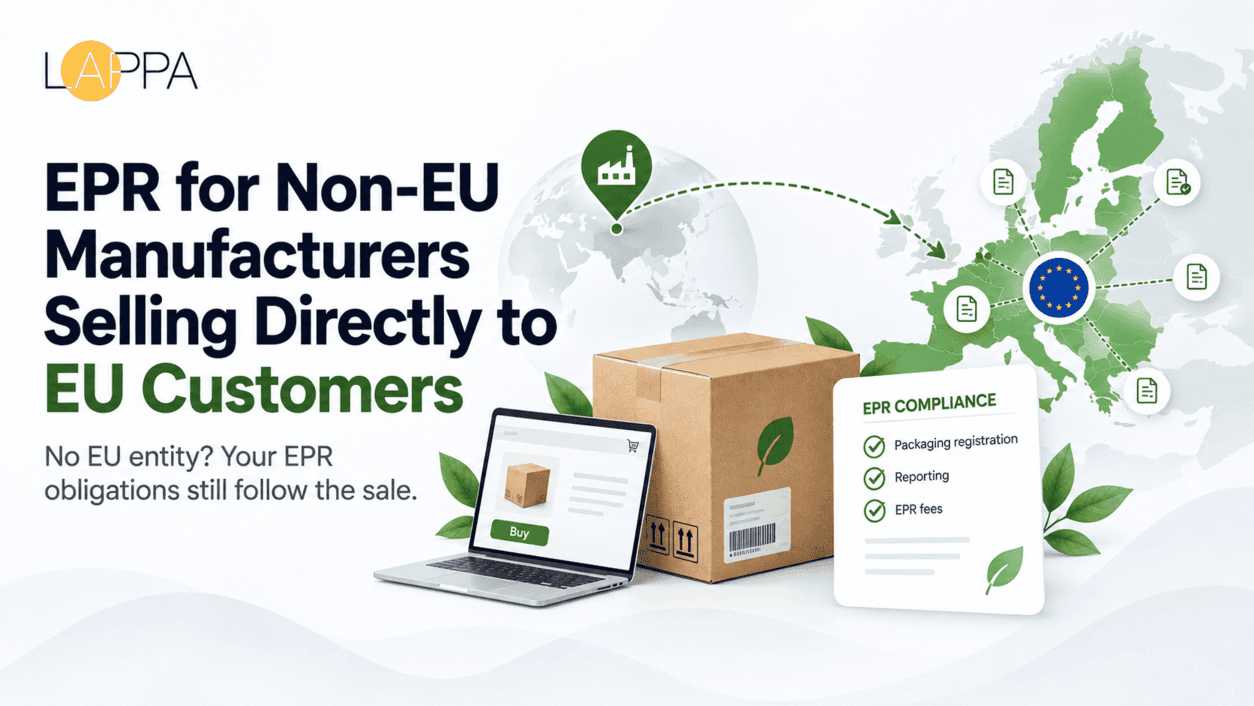
Sell into a country where you have no legal entity and the rules still find you. Most member states require a foreign producer to appoint an authorised representative. That local partner registers, reports, and pays on your behalf. It is the price of reaching a market from the outside.
Skipping this step is a common and costly mistake. Without a representative, your goods can be refused or your listings frozen. Marketplaces increasingly demand proof of a valid local registration. Line up representatives early in every market where you lack a base.
How to Start Your EPR Compliance
A calm start beats a frantic one. Map where your packaging lands first, market by market. Then rank those markets by volume and risk, and tackle the biggest first. One shared tracker keeps registrations, deadlines, and fees in view.
Work through these steps in order:
- List every country where your packaging enters the market
- Confirm the register and scheme for each of them
- Gather volume data by material and weight
- Appoint authorised representatives where required
- Register, report, and diarise the recurring deadlines
Lappa pulls your volumes, registrations, and fee data into one connected view. It flags a missing registration before a marketplace or regulator does. Get a Free Quote and see where your obligations stand today.
Done well, this work quietly pays for itself. Lower eco-modulated fees reward the cleaner formats you were already moving toward. Clean records keep every listing and shelf open to you. Book a Demo to see the workflow across your own markets.
Frequently Asked Questions
It pins the cleanup bill on whoever first puts a wrapper on a national market, not the local authority. You sign up with a national scheme, declare what you ship, and pay in proportion to those tonnes. The logic moves the cost of waste off taxpayers and onto the firms that generate it.