


Austria EPR
What is Austria EPR packaging
Austria has one of the longest-established packaging EPR systems in Europe. Packaging compliance is regulated mainly under the Austrian Waste Management Act (AWG) and the Packaging Ordinance (Verpackungsverordnung). Austria requires companies that place packaging on the Austrian market to:- participate in a licensed packaging collection & recycling scheme
- report packaging volumes
- pay packaging fees (“eco-fees”)
Does this apply to e-commerce & online sales
Yes — Austria explicitly applies packaging EPR rules to:- e-commerce sellers
- distance sellers shipping directly to Austrian consumers
- foreign online retailers selling into Austria
Who is the 'producer' under Austria EPR
The “producer” is generally the entity that first places packaging on the Austrian market, including:- Austrian manufacturers packing goods
- Importers bringing packaged goods into Austria
- Distance sellers shipping directly to Austrian end customers
Who must register for EPR packaging
Any company placing packaged goods on the Austrian market must join a licensed PRO, register accordingly, and submit packaging declarations.Registration threshold
Austria does not have a broad exemption like some EU countries. Even small volumes may trigger obligations. Some simplified reporting exists for very small quantities.External expertise for all your EPR needs
Start EPR reporting within 24 hours

Packaging covered (and excluded)
Austria covers almost all packaging types, including:- household sales packaging
- shipping packaging (e-commerce boxes, fillers)
- grouped packaging
- service packaging (bags, takeaway packaging)
- industrial bulk transport packaging under special regimes
- reusable packaging already in closed-loop systems
Producer Responsibility Organization (PRO)
Austria has multiple licensed PROs (collection & recovery schemes). Major examples include:- ARA (Altstoff Recycling Austria)
- Reclay Systems
- Interzero Austria
EPR registration process
Typical compliance steps:- Select a licensed PRO (e.g., ARA)
- Sign a participation agreement
- Register and obtain an EPR/packaging licence
- Declare packaging volumes (usually quarterly/annually)
- Pay eco-fees based on materials and weight
Authorized representative
Austria requires foreign distance sellers to ensure compliance locally. In practice, many PROs require:- a legal entity or authorised representative established in Austria to handle reporting and fee payments.
- non-Austrian online sellers shipping B2C into Austria.
Data reporting requirements
Companies must report packaging placed on the market by:- material type (paper, plastic, glass, metal, composites)
- weight in kilograms
- household vs commercial packaging streams
First reporting period
Obligations begin as soon as packaging is placed on the Austrian market. Reporting normally starts from the first quarter/year of sales into Austria.EPR reporting deadlines
Deadlines depend on the PRO contract, but typically:- quarterly volume declarations
- annual reconciliation report
Labels & marketing claims
If your product is placed on the Austrian market and falls under the deposit return system (Pfandsystem), it must display the official Austrian Pfand logo.
Austria introduced a mandatory deposit system for single-use beverage containers (plastic bottles and metal cans).
Producers must:
-
Register with the national deposit system operator
-
Label eligible beverage packaging with the official Pfand logo
-
Ensure barcode compatibility for return scanning
Failure to comply may result in fines and sales restrictions.
An example of what a label looks like on packaging for Austria
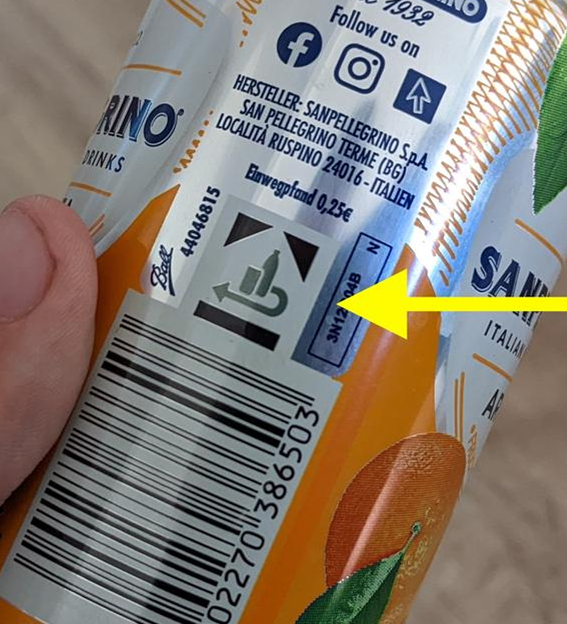
Pfand Logo — Mandatory in Austria
The Austrian Pfand logo is a mandatory mark for in-scope single-use beverage containers.
It shows that:
-
The packaging participates in the national deposit return scheme
-
The container must not be disposed of in regular recycling bins
-
It should be returned to collection points for refund
Only the official approved logo may be used.
📎 Download the Pfand Logo from Lappa:
- PNG – best for digital use.

Eco fees & eco-modulation
Austria applies packaging fees based on:- packaging material
- recyclability
- volume/weight
Risks & penalties
Common compliance risks include:- failing to register before selling into Austria
- assuming marketplace responsibility covers packaging (often false)
- under-reporting shipping materials (cartons, fillers)
- missing foreign seller obligations
- administrative fines
- retroactive fee assessments
- sales restrictions in enforcement cases
What e-commerce sellers should do now
E-commerce sellers shipping into Austria should:- Confirm whether they are the first placer/importer
- Contract with a licensed PRO (ARA or similar)
- Set up packaging material tracking
- Appoint an authorised representative if required
- Align reporting cycles with PRO deadlines
- Budget eco-fees for Austria (especially plastics)
Register online
Start your EPR Reporting within 24 hours
FAQ for Austria EPR Packaging
Do foreign sellers need Austrian packaging registration
Yes, distance sellers shipping directly into Austria are typically in scope.Is Austria strict on enforcement
Yes — Austria is considered one of the more mature and actively enforced EPR systems in the EU.Is there one national PRO
No, Austria has multiple licensed schemes. ARA is the best known.What is Austria EPR Batteries
Austria's battery EPR framework is governed by Regulation (EU) 2023/1542 — the EU Battery Regulation — which applies directly in all EU Member States without requiring national transposition into law. The Regulation entered into force on 18 August 2023 and has applied in stages since 18 February 2024, with EPR and waste management obligations fully in force from 18 August 2025.
At national level, Austria implements the Regulation through the Austrian Battery Ordinance (BAT-VO — Batterienverordnung), which defines national responsibilities for collection, registration, and reporting. The national competent authority is the Federal Environment Agency (Umweltbundesamt — UBA), which administers the EDM portal (Elektronisches Datenmanagement) — Austria's central environmental register through which battery producers must register and report.
The EU Battery Regulation replaced the previous Batteries Directive 2006/66/EC in full from 18 August 2025. It covers all battery types regardless of chemistry or form, whether sold separately or incorporated into products or vehicles.
Does This Apply to E-Commerce & Online Sales
Yes. The EU Battery Regulation applies to all producers placing batteries on the Austrian market for the first time, regardless of sales channel. Distance sellers and cross-border e-commerce operators selling batteries or battery-containing products directly to Austrian consumers are explicitly captured as producers under the Regulation.
A foreign brand operating an online store and shipping battery-containing products to Austrian consumers is treated as a producer and must register in Austria. The obligation attaches to the act of making the battery available on the Austrian market for the first time — not to having a physical presence in the country.
Online marketplaces are required to verify that their sellers are EPR-registered in each country where they sell batteries. Platforms including Amazon, Zalando, and Kaufland actively require sellers to provide valid Austrian battery EPR registration numbers. Failure to provide a registration number will result in product listings being suspended.
Who is the "Producer" under Austria EPR?
Under Regulation (EU) 2023/1542 (Article 56) and the Austrian BAT-VO, a producer is any natural or legal person who, in the course of commercial activity, makes batteries available on the Austrian market for the first time, regardless of the sales method. This covers:
- Manufacturers established in Austria who produce and sell batteries domestically under their own brand.
- Importers bringing batteries into Austria for the first time under their own name or trademark.
- Private label owners whose brand name appears on batteries manufactured by third parties.
- Distance sellers and online retailers established outside Austria who sell batteries or battery-containing products directly to Austrian consumers.
- Economic operators who prepare batteries for re-use or repurposing — these are treated as producers for the second life of the battery.
Where a foreign brand sells through an Austrian-established importer or distributor who takes on the role of first placer on the market, that entity assumes producer obligations. Where the foreign brand retains its identity on the product, the foreign brand is the producer.
Who Must Register for EPR Batteries in Austria
All producers placing batteries on the Austrian market must register with the competent authority before placing products on the market. Registration is conducted through the EDM portal (edm.gv.at), administered by the Federal Environment Agency (UBA). Upon successful registration, producers receive a GLN number — Austria's unique battery producer registration identifier.
Producers must also join an approved collection and recycling system (PRO) or establish their own individual compliance scheme. Approved PROs operating in Austria include UFH (Umweltforum Haushalt), ERP Austria (European Recycling Platform Austria GmbH), and others accredited under Austrian law.
Registration must be completed before batteries are placed on the Austrian market. Marketplaces require the GLN number as proof of compliance.
Austria EPR Battery Registration Threshold
Regulation (EU) 2023/1542 does not establish a de minimis volume or turnover threshold below which producers are exempt from EPR obligations for batteries. All producers placing batteries on the Austrian market are obligated regardless of size or volume.
The only exemption in the Regulation relates to batteries used in military or space equipment, which are outside the scope entirely.
For due diligence obligations (supply chain risk assessment for cobalt, lithium, nickel, graphite), a threshold applies: companies with annual net turnover below €150 million (as proposed under the Omnibus IV package, adopted July 2025) may be exempt from due diligence requirements — but this does not affect EPR registration and reporting obligations, which apply to all producers.
Detailed EPR Guidance for each Jurisdiction
We support 36 jurisdictions
Batteries Covered (and Excluded)
Regulation (EU) 2023/1542 defines five battery categories, all of which are in scope for EPR in Austria:
Portable batteries Batteries with a weight under 5 kg that are not designed for industrial use or for use in vehicles. This includes batteries in consumer electronics, power tools, household devices, and toys. Portable batteries are the most commonly encountered category for e-commerce sellers.
Light Means of Transport (LMT) batteries Batteries used in light electric vehicles such as e-bikes, e-scooters, and e-mopeds. These have specific collection targets and reporting obligations.
Automotive (SLI) batteries Starting, lighting, and ignition batteries used in vehicles. Covered under EPR but typically managed through vehicle-sector collection systems.
Industrial batteries Batteries used in industrial applications, including stationary energy storage systems. Industrial batteries above 2 kWh have additional requirements including carbon footprint declarations and battery passports from 2027.
Electric vehicle (EV) batteries Batteries used in electric cars and other EV categories. Subject to the most stringent requirements including carbon footprint declarations (from February 2025), battery passports (from February 2027), and detailed collection and recycling obligations.
Key exclusions:
- Batteries specifically designed for military or space equipment — outside scope entirely
- Batteries in nuclear installations — excluded
- Batteries that have undergone preparation for re-use, repurposing, or remanufacturing — the operator performing this becomes the new producer
Producer Responsibility Organization (PRO)
Austria operates a PRO-based system for battery EPR. Producers fulfil their obligations by joining an approved collective compliance system (PRO), which manages collection, recycling, and reporting on their behalf, or by establishing an individual system.
The main approved PROs operating in Austria for batteries include:
- UFH (Umweltforum Haushalt GmbH) — one of Austria's leading compliance organisations for batteries and electrical equipment, operating collection and recycling systems and offering authorized representative services
- ERP Austria (European Recycling Platform Austria GmbH) — part of the pan-European ERP network, providing battery compliance and registration services
- Additional accredited system operators approved under Austrian law
PROs collect financial contributions from member producers and use these to finance the take-back, transport, and recycling of waste batteries. The PRO also handles the annual reporting obligations to the Federal Environment Agency on behalf of members.
EPR Registration in Austria
The registration process for battery producers in Austria is as follows:
- Determine whether your business qualifies as a producer under the Austrian BAT-VO and EU Battery Regulation — i.e. whether you are making batteries available on the Austrian market for the first time.
- If established outside Austria, appoint an authorized representative established in Austria before initiating registration.
- Register through the EDM portal (edm.gv.at), submitting company identification details, battery categories, brand names, and information on your EPR compliance arrangements.
- Receive the GLN number — Austria's unique producer registration identifier — issued by the Federal Environment Agency (UBA) upon validation.
- Join an approved PRO or establish an individual collection system approved under Austrian law.
- Provide the GLN number to online marketplaces and distributors as required for platform compliance verification.
- Submit annual reports on battery volumes placed on the Austrian market through the EDM portal or via the PRO system.
Authorized Representative
Under Regulation (EU) 2023/1542 (Article 57), producers established outside the Member State where they are selling batteries must appoint an authorized representative — a legal or natural person established in Austria — to fulfill EPR obligations on their behalf.
The authorized representative is responsible for registration with the Federal Environment Agency, joining the PRO system, annual reporting, and serving as the local point of contact for Austrian authorities. The representative must be appointed in writing.
Important development: In December 2025, the European Commission proposed suspending the authorized representative requirement for EU-established companies until 2035 (under proposals COM(2025) 982). This proposal has not yet been formally adopted as of April 2026. Until adoption, the obligation applies as specified in the Regulation. For non-EU producers (e.g. companies established in the USA, UK, China, or other non-EU countries), the authorized representative requirement is not affected by this proposal and continues to apply.
UFH and ERP Austria both offer authorized representative services for foreign battery producers registering in Austria.
What Data Must Be Reported
Producers registered in Austria must report the following data annually through the EDM portal or via their PRO:
- Total weight (kilograms) of batteries placed on the Austrian market during the reporting year, broken down by battery category (portable, LMT, SLI/automotive, industrial, EV)
- Battery chemistry type where relevant (e.g. lithium-ion, lead-acid, nickel-cadmium, nickel-metal hydride)
- Brand names under which batteries were placed on the market
- Information on collection and recycling performance, including the amounts of waste batteries collected and delivered to treatment facilities (primarily relevant for PROs and large producers)
- For LMT and EV batteries: number of batteries made available on the market and amounts of collected waste batteries delivered to permitted facilities — reported annually to the competent authority
First Reporting Period & EPR Reporting Deadlines
Austria's battery EPR obligations under the new EU Battery Regulation took full effect on 18 August 2025. Key dates:
- 18 February 2024: EU Battery Regulation begins applying. CE marking, substance restrictions, and initial obligations in force.
- 18 August 2024: Performance and durability requirements, conformity assessment obligations in force.
- 18 August 2025: EPR registration, waste management, collection, and labelling obligations fully in force. All producers must be registered.
- 18 February 2027: Battery passports mandatory for industrial batteries (>2 kWh) and EV batteries. Portable batteries must be removable and replaceable by end users.
- 18 August 2027: Due diligence obligations in force (delayed from 2025 under Omnibus IV).
Annual reporting deadlines for volumes placed on the market are set by the Federal Environment Agency and administered through the EDM portal. Producers should confirm specific submission deadlines with their PRO or directly with UBA, as these may vary by battery category.
Labels & Marketing Claims
Crossed-out wheeled bin symbol From 18 August 2025, all batteries must display the separate collection symbol (crossed-out wheeled bin). The symbol must cover at least 3% of the area of the largest side of the battery, up to a maximum of 5 × 5 cm.
Chemical symbols Batteries containing more than 0.002% cadmium must be marked with the chemical symbol Cd. Batteries containing more than 0.004% lead must be marked with the symbol Pb.
Capacity marking Portable batteries and rechargeable batteries must display capacity information to inform users of performance.
QR code From 18 August 2026, all batteries must carry a QR code linking to product information. For LMT, industrial (>2 kWh), and EV batteries, this QR code will link to the Digital Battery Passport from 18 February 2027.
CE marking CE marking is mandatory for all batteries from 18 August 2024 under the EU Battery Regulation's conformity assessment framework.
Environmental claims All environmental and sustainability claims on battery products and marketing must comply with Austrian consumer protection law and the Unfair Commercial Practices Directive. The Empowering Consumers for the Green Transition Directive (2024/825/EU) must be transposed by March 2026, after which unsubstantiated green claims will be prohibited across the EU including Austria.
EPR Eco Fees & Eco-Modulation
Austria has not published a specific national eco-fee schedule for batteries under the new Regulation. Financial contributions are set by the PRO system the producer joins, based on:
- Weight (kilograms) of batteries placed on the market by category
- Battery chemistry — different recycling costs apply to different chemistries (e.g. lithium-ion vs. lead-acid vs. nickel-cadmium)
- Collection and recycling costs — PROs calculate contributions based on the actual cost of the take-back, transport, and treatment system
Under Regulation (EU) 2023/1542 (Article 56), financial contributions paid by producers must cover the costs of separate collection, transport, and treatment of waste batteries. The Regulation requires that contributions reflect the weight and/or quantity of batteries placed on the market and the costs of the EPR system, and must be adjusted where relevant based on eco-design performance (eco-modulation).
Eco-modulation criteria — linking fees to the environmental performance of the battery (durability, recyclability, recycled content) — will be developed by Member States in line with the Regulation's requirements. Austria's specific eco-modulation framework has not been published as of April 2026.
Risks, Penalties & Common Mistakes
- Selling in Austria without a GLN number. Registration must be completed before products are placed on the market. Online marketplaces require the GLN number and will block listings without it.
- Failing to appoint an authorized representative. Non-EU producers must appoint an Austrian-established AR before registering. Without an AR, registration cannot be completed through the EDM portal.
- Assuming existing EU registration covers Austria. Battery EPR registration is national — each Member State requires a separate registration number. A German battery registration number does not fulfil Austrian obligations.
- Missing the labelling requirements. The crossed-out wheeled bin symbol, CE marking, and capacity information are mandatory from August 2025. Non-compliant products may be blocked at market surveillance.
- Failing to join a PRO. Producers must either join an approved collective system or establish an individual approved scheme. Operating without a PRO arrangement is a breach of the Regulation.
- Missing the QR code deadline of August 2026. Companies should begin preparing QR code implementation and the associated product data well in advance of this deadline.
- Ignoring battery passport requirements for industrial and EV batteries. From February 2027, batteries in these categories require a Digital Battery Passport. Companies should begin building the required data infrastructure now.
What E-Commerce Sellers Should Do Now
- Confirm whether your products contain batteries — including batteries incorporated into devices, vehicles, or accessories — and whether these are being sold to Austrian consumers.
- If established outside Austria, identify and appoint an authorized representative established in Austria.
- Register on the EDM portal (edm.gv.at) and obtain your GLN number before placing products on the Austrian market.
- Join an approved Austrian PRO — such as UFH or ERP Austria — to fulfil your collection and recycling obligations.
- Provide your GLN number to all marketplaces where you sell battery-containing products in Austria (Amazon, Zalando, Kaufland, etc.).
- Verify that all battery products carry the crossed-out wheeled bin symbol, CE marking, and capacity information as required from August 2025.
- Plan for the QR code requirement by August 2026, and for the Digital Battery Passport for industrial and EV batteries by February 2027.
- Set up weight-based records by battery category to support annual reporting obligations.
Register online
Start your EPR Reporting within 24 hours
FAQ
Is battery EPR mandatory in Austria?
- Yes. Battery EPR has been mandatory in Austria for many years under the former Batteries Directive (2006/66/EC). From 18 August 2025, the new EU Battery Regulation (2023/1542) fully replaced the Directive and introduced a harmonised, more stringent EPR framework. All producers placing batteries on the Austrian market must register, join a PRO, and report annual volumes.
Do foreign brands selling online into Austria need to register?
- Yes. Distance sellers and e-commerce operators selling batteries or battery-containing products to Austrian consumers are treated as producers under the EU Battery Regulation regardless of where they are established. Non-Austrian companies must appoint an authorized representative in Austria before registering on the EDM portal. Online marketplaces will require the Austrian GLN number to permit battery product listings.
Is there a minimum volume threshold below which registration is not required?
- No. The EU Battery Regulation does not establish a minimum volume or turnover exemption for EPR registration. All producers placing batteries on the Austrian market must register, regardless of size. The only threshold-related provision concerns due diligence obligations (supply chain transparency), which may exempt companies with turnover below €150 million, but this does not affect registration and reporting.
What labelling is required on batteries sold in Austria?
- From 18 August 2025: crossed-out wheeled bin symbol (minimum 3% of largest side surface), CE marking, and capacity information. Chemical symbols (Cd or Pb) where applicable. From 18 August 2026: QR code on all batteries. From 18 February 2027: Digital Battery Passport for industrial (>2 kWh) and EV batteries.
Do online marketplaces check for battery EPR compliance in Austria?
- Yes. Major platforms including Amazon, Zalando, and Kaufland require sellers to submit their Austrian battery EPR registration number (GLN number) to continue selling battery-containing products. Sellers without a valid registration number will have their battery product listings suspended. This enforcement mechanism makes registration a practical market access requirement, not only a legal one.
Textile EPR law in Austria: None enacted
Austria is not among the countries with enacted textile EPR legislation.
Want to be first to know when new EPR will issued?
Only important news!