


Spain EPR
What is Spanish EPR for Packaging
Spain’s Extended Producer Responsibility (EPR) for packaging is regulated under:
-
Law 7/2022 on Waste and Contaminated Soils
-
Royal Decree 1055/2022 on Packaging and Packaging Waste
It requires companies that place packaged products on the Spanish market to finance and organize the collection, recycling, and treatment of packaging waste.
The law fully applies to household, commercial, and industrial packaging.
The objective is to:
-
Increase recycling rates
-
Promote eco-design
-
Reduce packaging waste
-
Support circular economy goals
Does This Apply to E-Commerce & Online Sales
Yes. Absolutely.
EPR applies to:
-
Distance sellers shipping to Spain
-
Non-Spanish companies selling via marketplaces
-
Amazon, Shopify, eBay sellers
-
Cross-border B2C sellers
If you ship packaged goods to customers in Spain — you are in scope.
Who is the “Producer” Under Spanish EPR
The “producer” is the entity that first places packaging on the Spanish market.
This includes:
-
Spanish manufacturers
-
Importers into Spain
-
Distributors introducing packaged goods
-
Online sellers selling cross-border into Spain
-
Businesses using service packaging (bags, takeaway packaging, etc.)
For cross-border e-commerce, the foreign seller is considered the producer.
Who Must Register for Spanish Packaging EPR
All producers placing packaging on the Spanish market must:
-
Register with the Spanish Register of Product Producers (RPP) managed by the Ministry for Ecological Transition (MITECO)
-
Join an authorized Producer Responsibility Organization (PRO / SCRAP) OR establish an Individual Compliance System (SIRAP)
There is no minimum threshold exemption.
Even small sellers must register.
Spanish EPR Packaging Registration Threshold
There is no de minimis threshold.
If you place any amount of packaging on the Spanish market, registration is required.
Easy to use EPR Software to calculate Eco-fee
Manage All Countries with Lappa

Packaging Covered (and Excluded)
Covered Packaging
Spain applies EPR to:
-
Primary packaging (product packaging)
-
Secondary packaging (grouped packaging)
-
Tertiary packaging (transport packaging)
-
Household packaging
-
Commercial packaging
-
Industrial packaging
Materials Covered
-
Plastic
-
Paper & cardboard
-
Glass
-
Metals (steel, aluminum)
-
Wood
-
Composite materials
Not Covered Under This Scheme
-
Batteries (separate EPR)
-
WEEE (electronics)
-
Tyres
-
Other regulated waste streams
Producer Responsibility Organization (PRO / SCRAP)
Producers must join an authorized SCRAP (Sistema Colectivo de Responsabilidad Ampliada del Productor).
Major examples include:
-
Ecoembes – household packaging (plastic, metal, paper)
-
Ecovidrio – glass packaging
-
Procircular – multi-material packaging
Each PRO sets its own fee structure.
Alternatively, companies may establish an Individual System (SIRAP), though this is rare and complex.
EPR Registration in Spain – Step-by-Step
-
Obtain a Spanish tax ID (NIF)
-
Appoint an Authorized Representative (if non-resident)
-
Join a PRO (SCRAP)
-
Register in the official RPP register
-
Obtain your Producer Registration Number
-
Start reporting packaging volumes
-
Pay eco-fees
Authorized Representative
If your company is not established in Spain, you must appoint a Spanish Authorized Representative.
The representative:
-
Registers you in the RPP
-
Handles communication with authorities
-
Ensures reporting compliance
-
Assumes legal responsibility
This is mandatory for foreign distance sellers.
What Data Must Be Reported?
Producers must report annually:
-
Total weight of packaging placed on the Spanish market
-
Breakdown by material (plastic, paper, glass, etc.)
-
Type of packaging (household, commercial, industrial)
-
Recycled content (if applicable)
-
Reusable packaging (if applicable)
Reports are submitted to:
-
The PRO (for fee calculation)
-
The Spanish authorities (via RPP)
First Reporting Period
The packaging regulation became fully operational from:
1 January 2025
(Extension to commercial and industrial packaging included.)
Registration obligations started earlier (2023–2024).
EPR Reporting Deadlines
Deadlines vary depending on the PRO, but generally:
-
Annual reporting for previous year volumes
-
Reporting typically due in Q1 or Q2
-
Eco-fees payable annually (sometimes quarterly advances)
Always confirm with your specific PRO.
Labels & Marketing Claims
Mandatory label for EPR products in Spain
If your product is placed on the Spanish market, it must comply with Royal Decree 1055/2022 on Packaging and Packaging Waste.
Spain does not require a Triman-style national symbol, but producers must:
-
Register with a Spanish PRO (e.g., Ecoembes, Ecovidrio)
-
Report packaging volumes
-
Provide clear sorting instructions to consumers
Failure to comply may result in penalties and sales restrictions.
An example of what a label looks like on packaging for Spain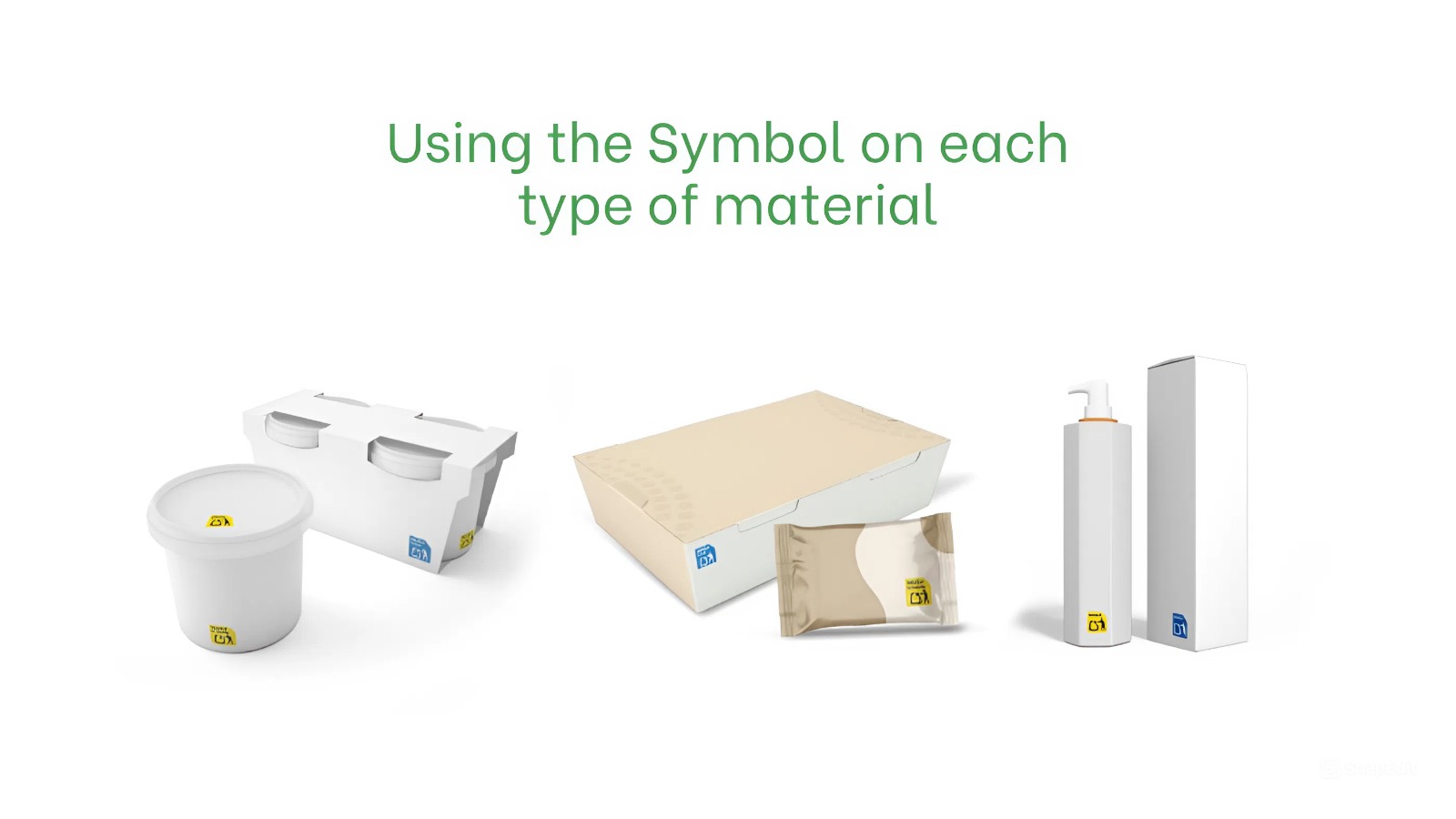
Spanish packaging commonly includes:
-
RECICLA heading
-
Bin color indication
-
Material description (Envase Cartón / Plástico / Vidrio / Metal)
-
Optional material code (e.g., PAP 22, PET 01)
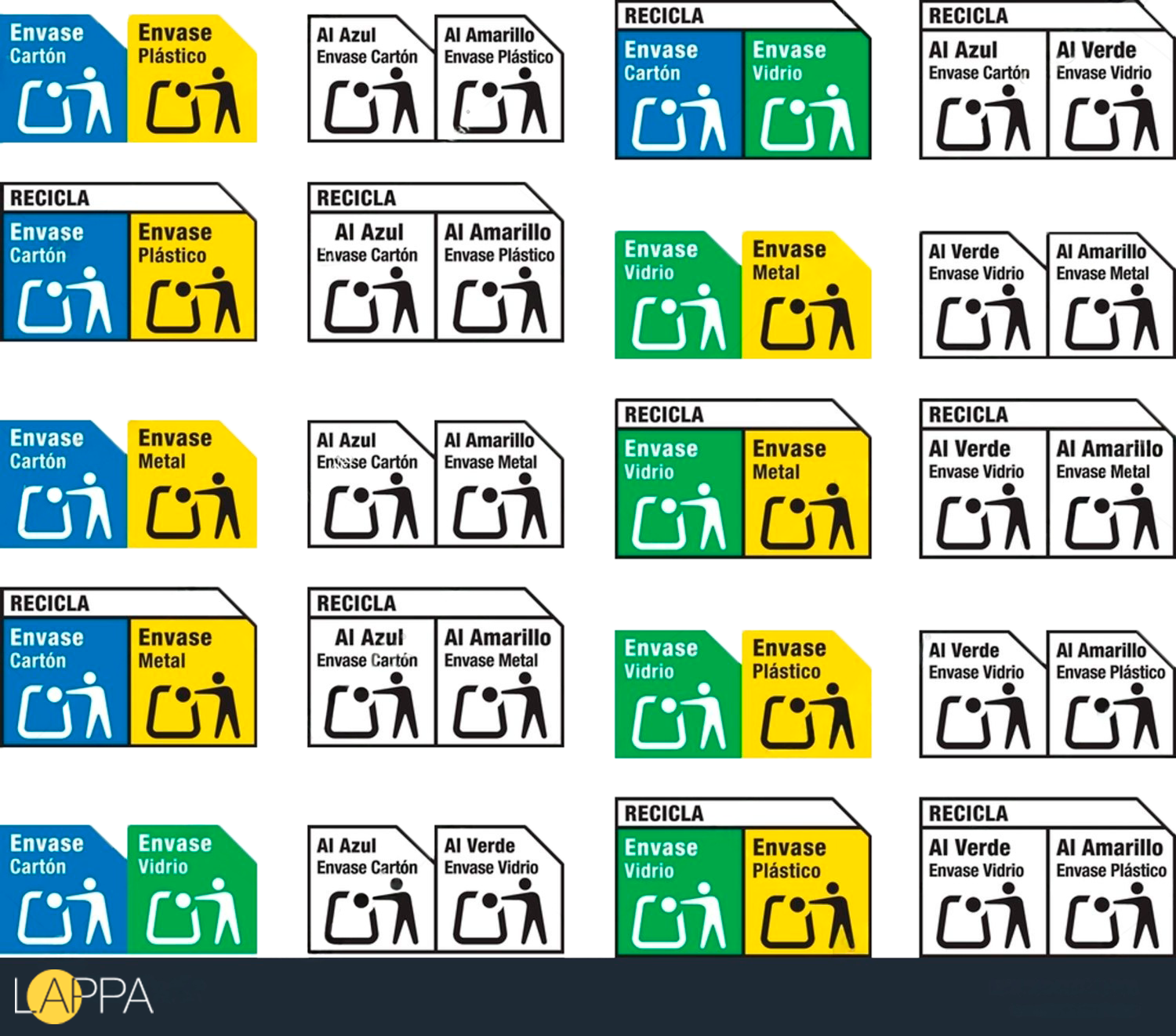
RECICLA sorting logo — Mandatory in Spain
Spain requires clear consumer sorting information on packaging.
-
- PNG – best for digital use.
For more detailed info about Spanish Recycling Labels we highly recommend to read more detailed article
EPR Eco-Fees & Eco-Modulation
Eco-fees depend on:
-
Material type
-
Weight
-
Recyclability
-
Recycled content
-
Design sustainability
Eco-modulation means:
-
Better recyclable packaging = lower fees
-
Non-recyclable packaging = higher fees
Each PRO defines its own tariff tables.
Risks, Penalties & Common Mistakes
Risks & PenaltiesNon-compliance may result in:
-
Significant administrative fines
-
Sales bans
-
Marketplace delisting
-
Legal enforcement actions
Fines can reach tens or hundreds of thousands of euros depending on severity.
Common Mistakes
-
Assuming e-commerce is exempt
-
Not registering industrial packaging
-
Not appointing an Authorized Representative
-
Underreporting packaging weights
-
Using incorrect material classifications
What E-Commerce Sellers Should Do Now
-
Audit your packaging materials
-
Calculate annual packaging volumes
-
Determine if you qualify as a producer
-
Appoint an Authorized Representative (if needed)
-
Join a Spanish PRO
-
Register in the RPP
-
Implement packaging data tracking systems
-
Review eco-design opportunities to reduce fees
Get a 30 min free consultation for EPR
Find all your answers and become part of Lovat
FAQ
Do I need Spanish VAT registration to register for EPR?- Not necessarily — but you need a Spanish NIF and possibly an Authorized Representative.
Does this apply to Amazon FBA sellers?
- Yes, if you sell to Spanish customers.
What happens if I don’t comply?
- You risk fines, blocked sales, and marketplace enforcement.
Is Amazon responsible for my packaging EPR?
- No. The seller remains responsible unless the platform assumes producer status under specific circumstances.
Is there a reporting threshold?
- No. Any quantity triggers obligation.