


France EPR
Provinces
Packaging
Provinces
Packaging
About
Packaging
About
Packaging
Packaging
Packaging
What is France Packaging EPR
France Packaging EPR (“Responsabilité Élargie du Producteur”) is a legal framework under French environmental law requiring companies that place packaged products on the French market to finance the collection, sorting, and recycling of packaging waste. The system is overseen by public authorities and implemented through approved Producer Responsibility Organizations (PROs).Does this apply to e-commerce & online sales?
Yes. Packaging EPR fully applies to e-commerce and online sales. Companies selling packaged goods online to customers in France are considered to be placing packaging on the French market, regardless of where the company is established or from where goods are shipped.Who is the “producer” under France Packaging EPR?
The “producer” is the entity that first places packaged products on the French market. This is typically the manufacturer established in France, the importer, or a foreign distance seller selling directly to French customers. Manufacturing the product is not required to be considered the producer.Who must register for Packaging EPR in France
Any company that places packaged products on the French market must comply with Packaging EPR obligations. This includes French companies, EU and non-EU exporters, online retailers, importers, and distance sellers selling directly to France.France Packaging EPR registration threshold
France does not provide a general exemption threshold for packaging EPR. All companies placing packaging on the French market are subject to the obligation, regardless of volume, although simplified reporting options may exist for very small producers.Register online
Start your EPR Reporting within 24 hours

Packaging covered (and excluded)
Covered packaging includes primary packaging, secondary packaging, tertiary/shipping packaging, household packaging, and commercial/industrial packaging. Excluded packaging may include packaging that does not reach the French market or packaging already declared by another obligated party upstream.Producer Responsibility Organization (PRO)
Producers must comply with Packaging EPR obligations by joining an approved Producer Responsibility Organization (PRO) or, in rare cases, by establishing an individual compliance system. In France, producers must join an approved PRO, such as:- CITEO (main household packaging PRO)
- LEKO (alternative compliance scheme)
- Adelphe (for wines/spirits)
Packaging EPR registration in France
Registration generally involves identifying producer obligations, joining a PRO, obtaining a membership number, registering in national databases if required, and submitting regular packaging declarations.Authorized representative
Foreign producers selling directly into France may appoint an authorized representative to handle registration, reporting, and communication with authorities and PROs. The appointment of a representative does not transfer legal responsibility away from the producer.What data must be reported
Producers must report packaging placed on the French market, including sales units, packaging weight, material breakdown, household versus commercial classification, and information on reuse if applicable.First reporting period
The first reporting period usually corresponds to the first calendar year in which the company places packaging on the French market. In many cases, previous periods must be declared before access to future reporting periods is granted.Packaging EPR reporting deadlines
Reporting deadlines are set by PROs and national rules, typically requiring annual declarations in the year following the reporting period.Labels & marketing claims
Mandatory Triman label for EPR products in France
If your product falls under French EPR regulations, it must display the Triman logo. This label informs consumers about sorting and recycling requirements, and failure to include it may result in penalties.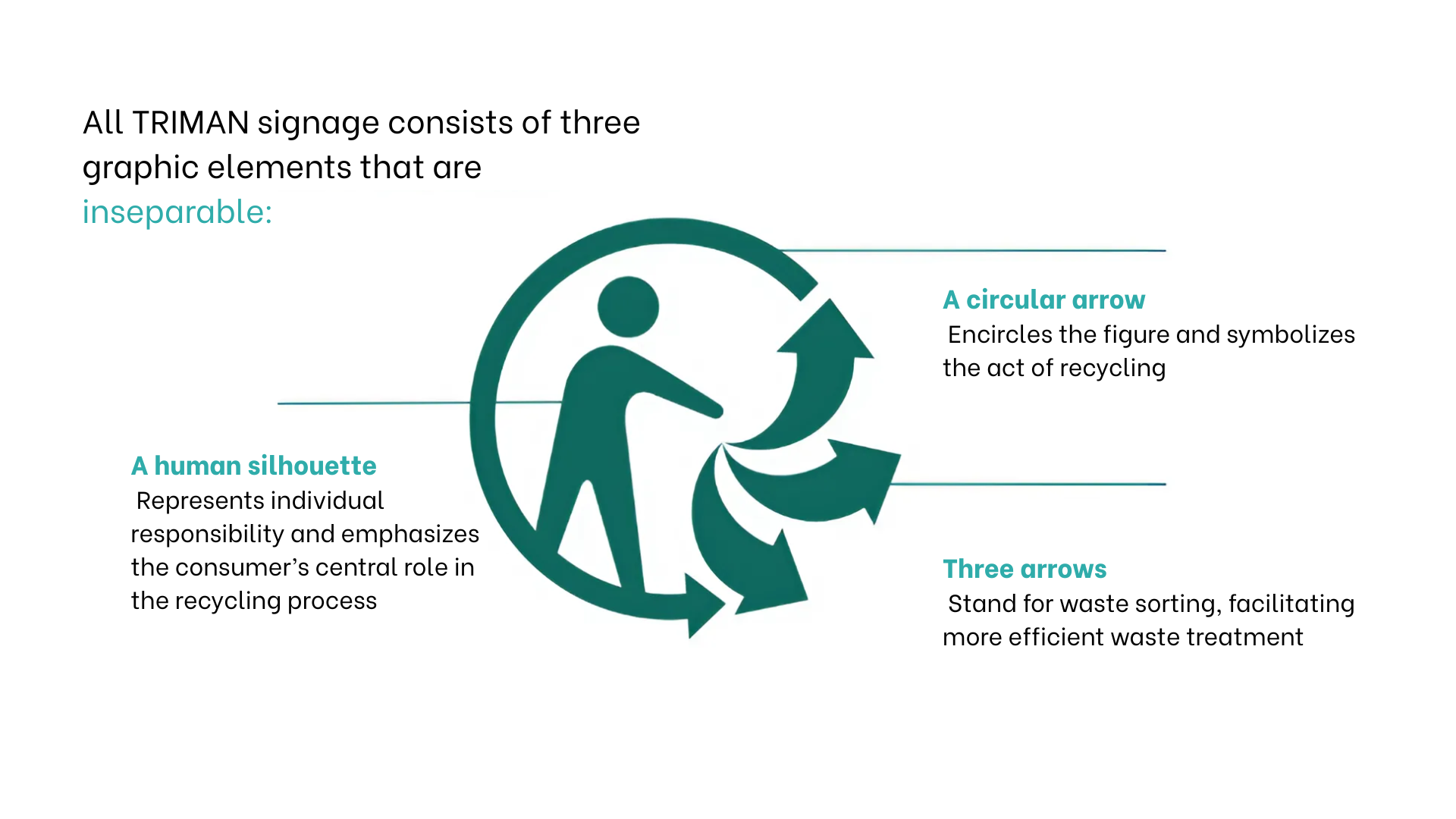
An example of what a label looks like on packaging for France
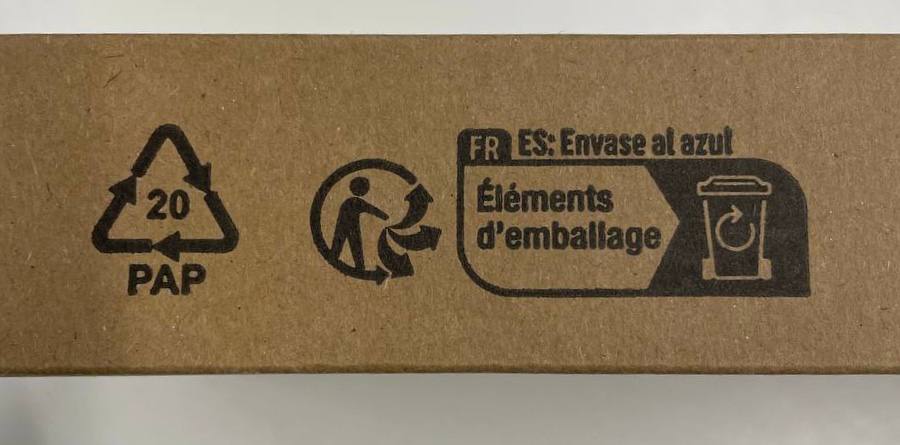 This box includes standard packaging labeling elements used across the EU as part of EPR (Extended Producer Responsibility) requirements.
On this example, we can see the PAP 20 recycling code.
However, paper packaging materials may also be labeled under other PAP categories, such as PAP 21 or PAP 22, depending on the type of cardboard or paper used.
Triman logo — Mandatory in France
The Triman symbol is an mandatory label in France showing that the packaging must be sorted and recycled through the national EPR system.
📎Download the Triman Logo from Lappa:
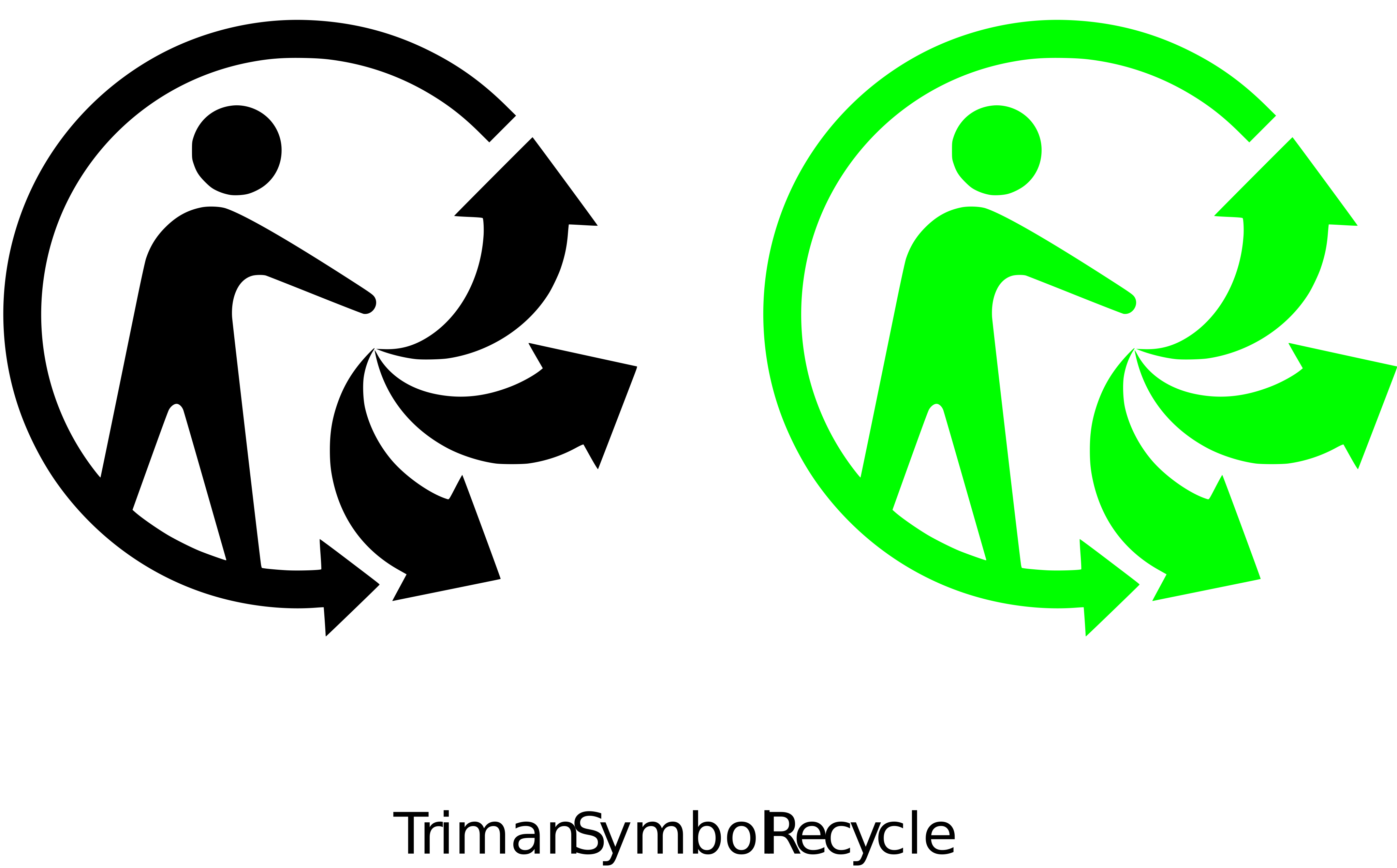
Triman + Info-tri sorting instruction
In France, producers must also display an Info-tri label (sorting guidance) next to the Triman logo to help consumers dispose of packaging correctly.
📎Download the Triman+Info-tri

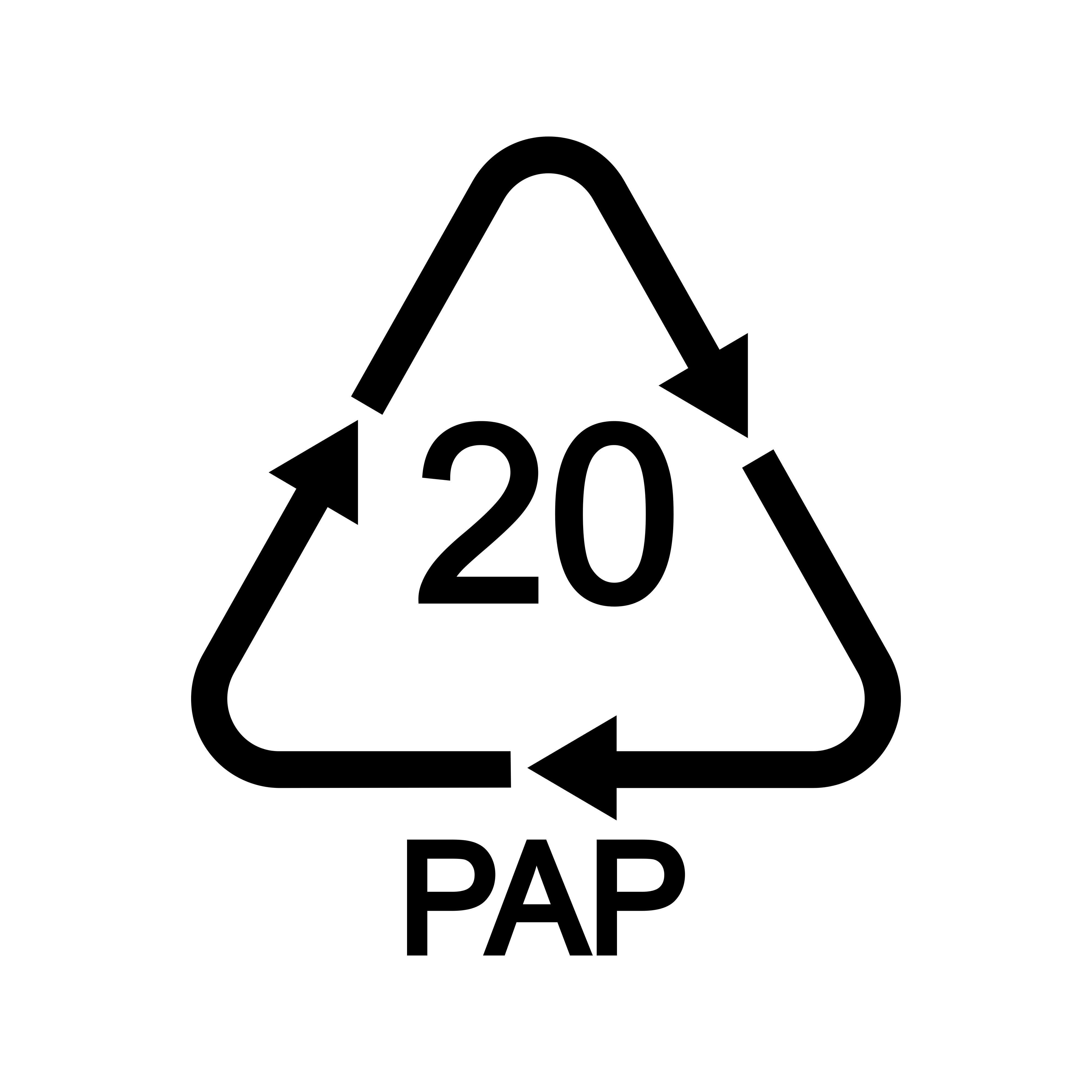
PAP 20 — Corrugated Cardboard
PAP 20 is the material identification code for corrugated cardboard packaging (e.g. shipping boxes). It indicates that the packaging is made primarily of paper fibers and should be sorted for paper/cardboard recycling. 📎 Download the PAP 20 symbol from Lappa:
Eco-fees & eco-modulation
Eco-fees are calculated based on packaging weight, material type, and recyclability. France applies eco-modulation mechanisms that reward recyclable packaging and penalize disruptive materials.Risks, penalties & common mistakes
Non-compliance may result in administrative fines, contract termination by PROs, or market surveillance actions. Common mistakes include incorrect material classification, underreporting packaging, or missing reporting periods.What e-commerce sellers should do now
E-commerce sellers should confirm their producer status, register for Packaging EPR, collect packaging data, submit required declarations, and ensure labeling compliance.Easy to use EPR Software to calculate Eco-fee
Manage All Countries with Lappa