


Australia EPR
Australia EPR for Packaging
Australia does not have one single “EU-style” national packaging EPR registration system. Instead, packaging producer responsibility is implemented through a co-regulatory framework combining:- The Australian Packaging Covenant (APC) (industry + government agreement) run by APCO
- The National Environment Protection (Used Packaging Materials) Measure 2011 (NEPM), applied through state/territory regulator
- Federal product-stewardship settings that allow and support co-regulatory arrangements
- Join APCO (as a Brand Owner Member / Covenant signatory) or comply directly under NEPM requirements, and
- Report annually and maintain a packaging sustainability action plan, and
- Use national tools/standards (e.g., ARL/PREP) and work toward national packaging targets.
What is Australia EPR for packaging
Producer Responsibility / EPR (in practice) in Australia is primarily the Australian Packaging Covenant (APC) framework, delivered by the Australian Packaging Covenant Organisation (APCO) as a co-regulatory approach to reducing packaging impacts. The APC focuses on:- Sustainable packaging design
- Increasing recycling and recovery
- Reducing litter and leakage
- Transparent annual reporting and continuous improvement
Does this apply to e-commerce & online sales
Yes — if your business is a “brand owner” placing packaging on the Australian market, online channels don’t change the obligation. This commonly includes:- E-commerce brands shipping direct to Australian consumers (B2C)
- Importers selling packaged goods online in Australia
- Marketplace brands (if you own/control the brand on the pack and place goods on the AU market)
Who is the “producer” in Australia packaging EPR
Australia typically uses the term “brand owner” (not “producer”) for packaging obligations. A brand owner is usually the organisation that:- Owns the brand on the packaging, or
- Imports packaged goods under its own brand, or
- Controls the packaging specifications and places the packaged product on the Australian market
Who must register / comply for packaging EPR in Australia?
The common threshold (APC / APCO scope) The APC generally applies across the packaging supply chain, and APCO materials describe the Covenant applying to businesses in the supply chain with turnover greater than AUD $5 million. Compliance routes Businesses typically comply by either:- Joining APCO as a Brand Owner Member / Covenant signatory (the most common route), or
- Complying directly with NEPM requirements via relevant state/territory processes.
Australia EPR Packaging — Registration Threshold (2026)
Australia currently does not have a single, fully mandatory national Extended Producer Responsibility (EPR) law for packaging (as exists in many EU countries). Instead, packaging is regulated under a co-regulatory framework combining:
-
National Environment Protection (Used Packaging Materials) Measure 2011 (NEPM) — national standards and state enforcement
-
Australian Packaging Covenant / Australian Packaging Covenant Organisation (APCO) — industry-led compliance mechanism
-
Ongoing federal reforms that may introduce a stronger, more formal EPR scheme in future .
Register online
Start your EPR Reporting within 24 hours

Packaging covered (and excluded)
Covered (typical scope)
Australia’s co-regulatory packaging approach covers consumer packaging placed on the Australian market, across common material categories:- Plastic (rigid and flexible)
- Paper and cardboard
- Glass
- Metals (aluminium/steel
- Composite/multi-material packaging
- Retail
- Wholesale
- E-commerce shipping (secondary/transport packaging where relevant to the brand owner’s operations)
Exclusions (practical)
There is no single universal “exclusion list” identical across all Australian jurisdictions and programs. In practice, the scope you must address is defined by:- APCO’s reporting framework (Packaging Sustainability Framework + metrics), and/or
- State/territory NEPM interpretation and enforcement
Producer Responsibility Organization (PRO) in Australia
In Australia, APCO functions as the main industry body operating the Covenant system (similar to a PRO role in practice), including:- Annual reporting tools and frameworks
- Guidance and programs for sustainable packaging
- National targets progress tracking
- ARL/PREP programs (with partners)
EPR “registration” in Australia (what you actually do)
Step 1 — Determine if you’re a “Brand Owner” under the Covenant/NEPM If you place packaged products on the market and exceed the turnover threshold, assume you’re in scope unless advised otherwise. Step 2 — Join APCO (most common compliance route)- Become an APCO Brand Owner Member / Signatory
- Pay membership fees (commonly structured around turnover)
Authorized representative (Australia)
Australia generally does not operate like EU EPR countries where overseas sellers must appoint a formal authorised representative for packaging EPR. Instead, responsibility typically sits with:- The Australian brand owner, or
- The Australian importer/distributor placing goods on the market
What data must be reported
APCO annual reporting typically includes two major components:- Packaging Sustainability Framework (PSF)
- Packaging metrics (quantitative)
- Packaging material types used
- Volumes/weights placed on market (often by material)
- Recyclability outcomes and design change
- Use of recycled content (where relevant
- Progress against targets and internal commitments
ARL / PREP-related data (if you use the label)
If you adopt the Australasian Recycling Label (ARL), you typically need:- A PREP assessment for packaging component
- Evidence-based recyclability outcomes for correct on-pack disposal instructions
First reporting period (when do obligations start?)
For APCO signatories:- Reporting begins from the financial year following the year you become a signatory/member, using APCO’s reporting tools and deadlines.
- State/territory compliance expectations apply based on NEPM processes and regulator requirements.
EPR reporting deadlines (APCO)
APCO’s published Covenant obligations include:- Annual Report due: 31 March each year
- Action Plan due: 31 May each year (submitted after the Annual Report)
Labels & Marketing claims in Australia
Australasian Recycling Label (ARL)
Mandatory label for EPR products in Australia
If your product is placed on the Australian market, it must comply with the Australian Packaging Covenant (APCO) and national packaging sustainability obligations.
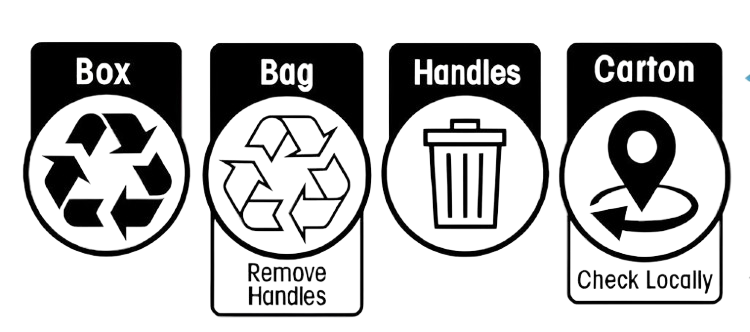
An example of what a label looks like on packaging for Australia
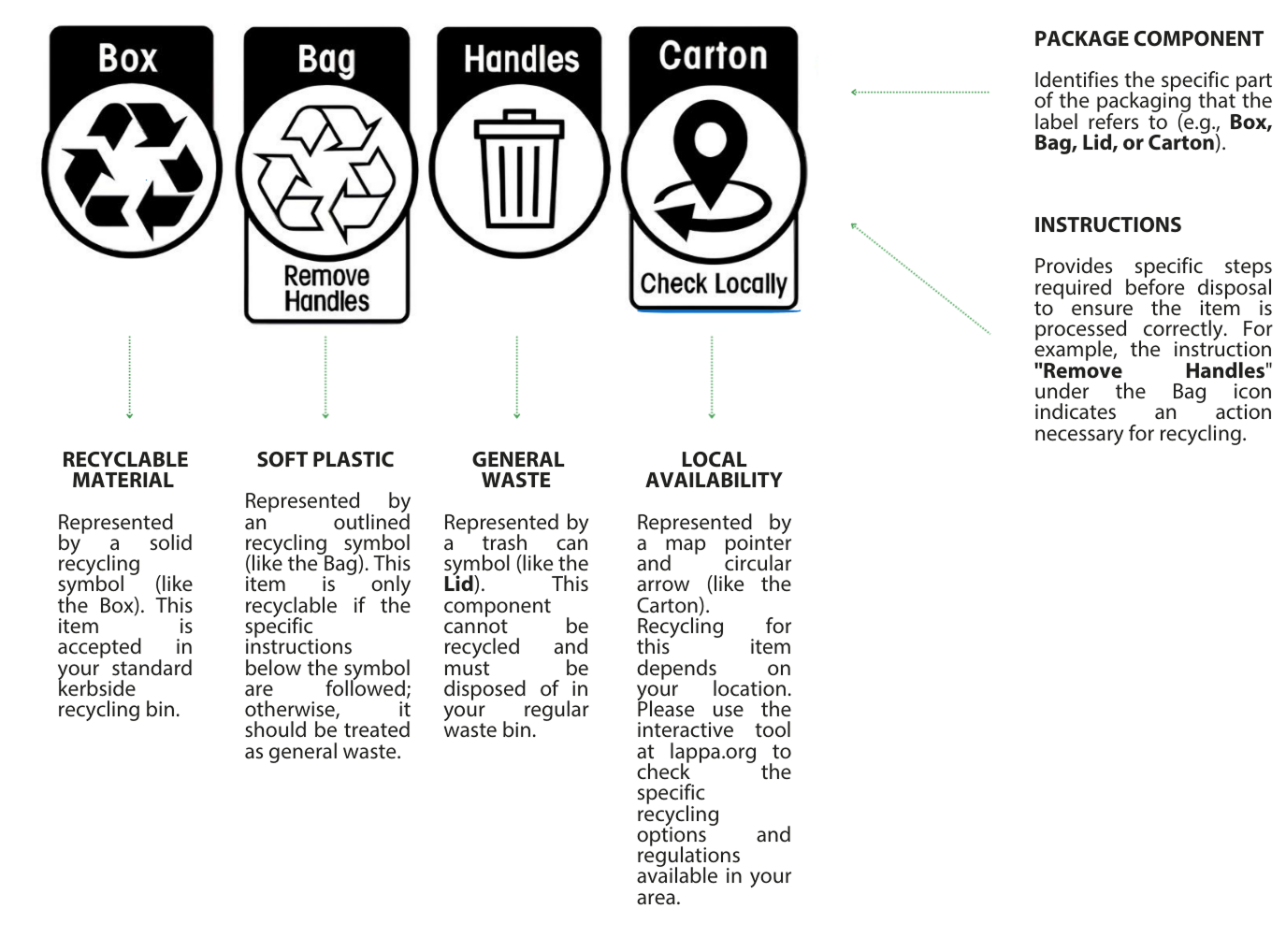
Australia requires clear consumer sorting information on packaging.
The ARL symbol is an mandatory label in Australia showing that the packaging must be sorted and recycled through the national EPR system.
📎Download the ARL Logo from Lappa:
- PNG – best for digital use.
EPR eco fees & eco-modulation
Australia’s system is not yet universally structured as “eco-fees per kg per material” nationwide like many EU systems. Today, the most common “fee” structure businesses experience is:- APCO membership fees (often turnover-based), plus
- Internal costs for packaging redesign, testing, PREP/ARL assessments, and reporting
- EPR strengthening
- Eco-modulation (fees that reward recyclable design and penalise problematic materials)
Risks, penalties & common mistakes
Main risks
- Being non-compliant with APC/NEPM expectations (including reporting)
- Audit risk under NEPM processes (brand owners can be audited)
- Reputational risk (especially for consumer brands and retailers)
- Supply chain pressure (retailer sustainability requirements)
- Incorrect recycling labels/claims → consumer trust and enforcement exposure
Common mistakes (especially for e-commerce brands)
- Assuming “online-only” businesses are out of scope
- Not tracking packaging weights/materials early (makes reporting painful)
- Treating ARL as a marketing badge without a PREP evidence base
- Missing APCO reporting dates (31 March / 31 May)
- Overclaiming recyclability or using incorrect disposal instructions
What e-commerce sellers should do now (Australia checklist)
- Confirm who the brand owner is for each product/SKU sold in Australia
- Check whether you exceed AUD $5m turnover threshold and fall into APC/NEPM scope
- Join APCO (or document your direct NEPM compliance approach)
- Build a packaging data model: SKU → packaging components → material + weight
- If using recycling labels, adopt ARL via PREP assessments
- Align packaging design with national targets and retailer expectations
- Set a compliance calendar:
- Annual Report: 31 March
- Action Plan: 31 May
- If you sell beverages, understand interactions with Container Deposit Schemes (CDS)
Easy to use EPR Software to calculate Eco-fee
Manage All Countries with Lappa
FAQ
Is Australia “EPR registration” like Germany/France?- Not exactly. Australia’s packaging responsibility is mainly co-regulatory (APCO/APC + NEPM), not a single national “register + PRO fee per kg” system.
- The APCO/Covenant threshold is commonly described as turnover > AUD $5m, but specific obligations can depend on your structure and state/territory interpretation under NEPM.
- Not mandatory for all packaging, but it’s the leading standard for clear disposal instructions and helps reduce consumer confusion. If you use it, it must be evidence-based via PREP.
- They are a related but separate policy instrument focused on beverage containers. Australia now has CDS programs across all states/territories, with Tasmania commencing 1 May 2025 (the final jurisdiction to implement one).