


Direct PPWR Compliance for Premium and Established Brands
Luxury sells a feeling first. The product comes second. A heavy glass jar, a magnet that clicks shut just so, a box lined in something soft, all of it whispers quality before a customer reads a single word. Regulation (EU) 2025/40, better known as the PPWR, now puts that instinct on trial. From 12 August 2026, the way you present a product has to answer for its waste, its weight, and its chemistry. Good news: the magic and the rules can coexist. This is how established brands make that happen.
Why Sustainable Packaging Defines Premium Brands Now
Sustainable Packaging stopped being a marketing badge somewhere around the last recession. It is a boardroom line item now. Pay a premium, and you expect the wrapper to live up to the promise inside it. A wasteful, over-built box no longer reads as generous. It reads as tone-deaf.
Heritage houses feel this sharpest, because their history cuts both ways. The regulation only sharpens the pressure. Weight, recyclability, chemistry, each now sits under a measurable ceiling across all 27 states. Estée Lauder and L’Oréal already publish reduction targets pinned to these rules. Brands that bake responsible design into the brief, rather than bolt it on at the end, protect margin and reputation together.
What Is Sustainable Packaging Under the PPWR
Ask what is sustainable packaging in a legal room and the answer is refreshingly exact. The regulation spells it out through recyclability grades, minimisation duties, and substance limits. A format earns the label when it wastes no material and recovers cleanly at end of life. Pretty words on a website do not clear that bar.
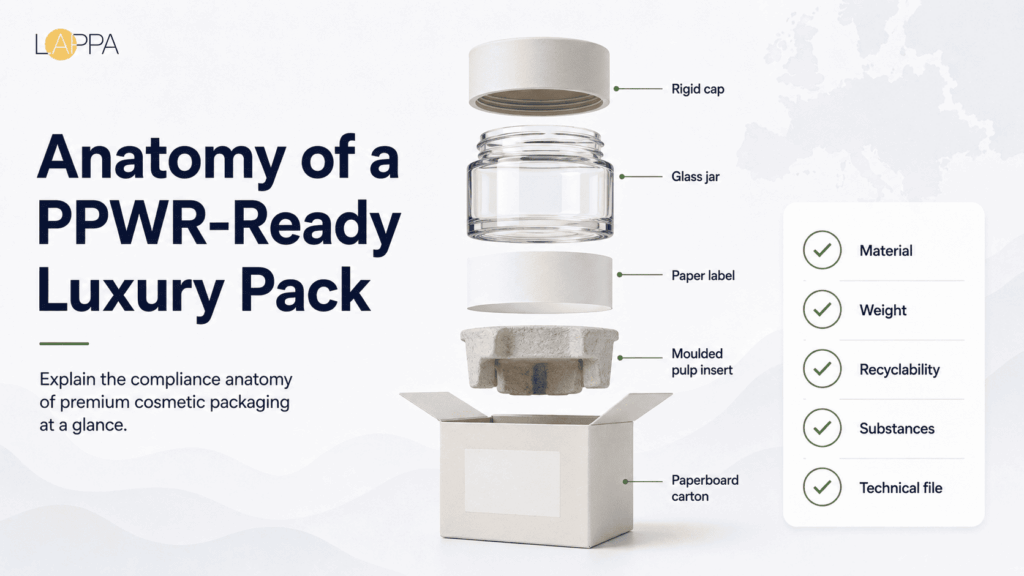
Evidence is the whole game. You hold a signed declaration of conformity for each format, plus a technical file underneath it. Lab data, not adjectives, backs every claim. That is the line between a genuinely green pack and a hopeful one.Managing compliance information across a large product portfolio can quickly become complex. Explore Lappa’s Digital Compliance Labels for a scalable way to make required product and packaging information digitally accessible.
Responsible Packaging Beyond the Logo
Responsible packaging is the kind you can defend to an auditor, not just charm a shopper with. A recycled-content claim needs a test result behind it. A green leaf icon does not. The catch: a glossy sustainability report counts for nothing without the file to prove it.
Premium buyers dig harder than most. One exposé about a hollow eco-claim can bruise a heritage name for years. Aesop and Lush built fierce loyalty partly on material choices you can actually see. Match the substance to the story and you sleep well at night.
The PPWR Rules Premium Brands Cannot Ignore
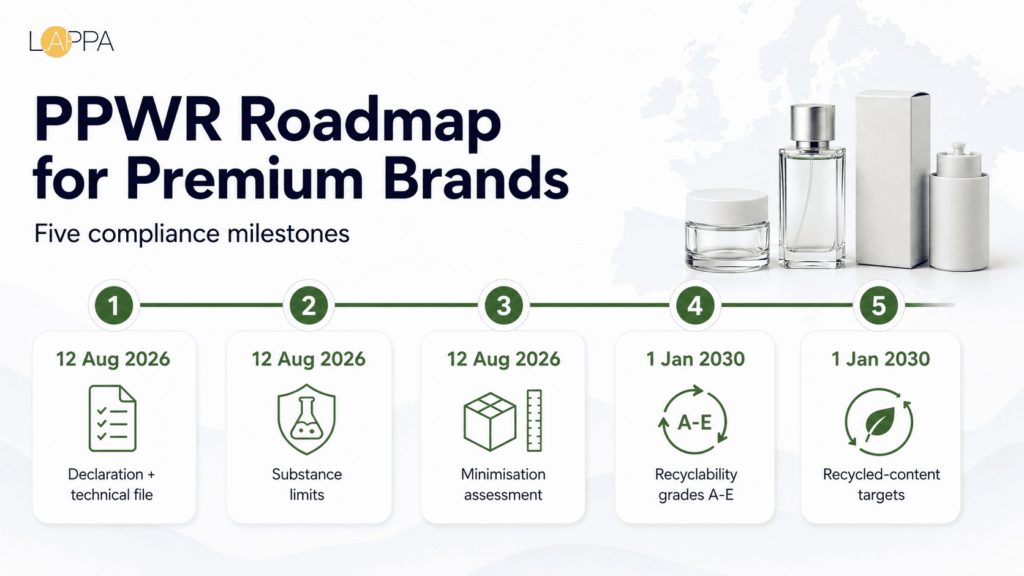
Three duties arrive first. None of them make an exception for luxury. Every unit needs a declaration and a supporting technical file. Restricted chemicals, PFAS included, are out of food-contact wraps. And you have to justify every gram and millimetre through minimisation.
The table below sets the headline dates against the duties they carry.
| Obligation | Applies From | What It Means for Premium Brands |
| Declaration and technical file | 12 August 2026 | No format sold without documented proof |
| Substance limits | 12 August 2026 | Restricted chemicals and PFAS banned |
| Minimisation assessment | 12 August 2026 | Justify weight, layers, and void space |
| Recyclability grades A to E | 1 January 2030 | Decorative formats must still recover |
| Recycled-content targets | 1 January 2030 | Minimum recycled plastic per unit |
Old stock gets no free pass. A gift set assembled in early 2026 still fails if it breaches the limits. Inspectors can ask for your evidence, and so can your retailers. Betting on a quiet first year is a gamble few premium names should make.
The Complex Packaging Problem
Complex packaging is where luxury and the law collide hardest. Think of a flagship perfume. Glass, metal, a magnet, a whisper of flock, three kinds of plastic, all fused into one object. Recyclers cannot pull those apart into clean streams. And the very details that scream prestige are the ones that block recovery.
Multi-component design also bloats the technical file. Each material wants its own weight, its own test, its own reason to exist. A magnetic closure or a velvet tray can quietly drag a whole format below a recyclable grade. Smart houses redesign the offending touch rather than die on the hill defending it.
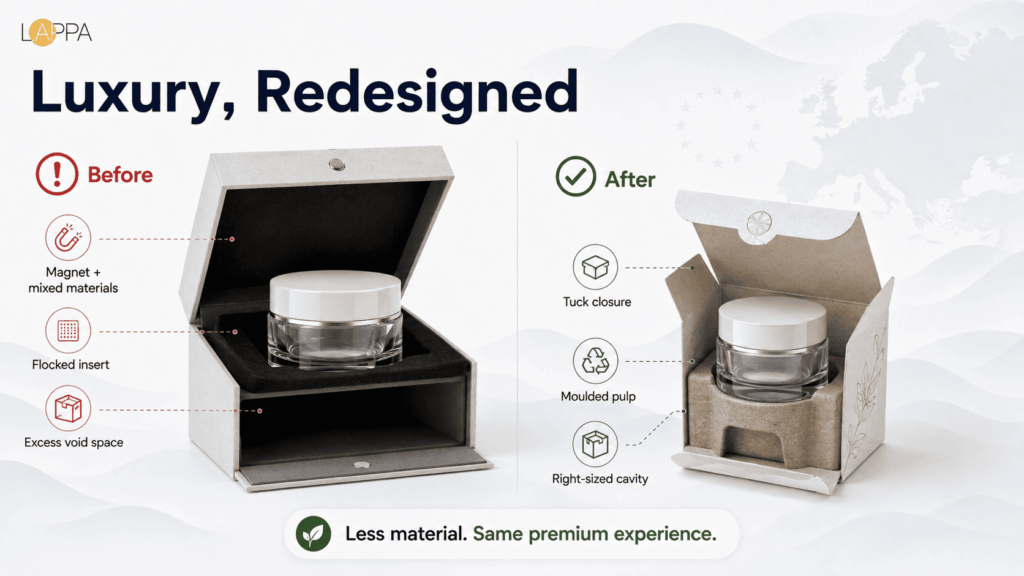
The table below pairs common premium features with a compliant alternative.
| Premium Feature | PPWR Concern | Smarter Alternative |
| Magnetic rigid box | Mixed metal and board, poor recovery | Structural board with a tuck closure |
| Full-bleed metallised film | Blinds sorting, low recyclability | Recyclable paper with spot foil |
| Velvet or flock lining | Contaminates the fibre stream | Moulded paper pulp inserts |
| False-bottom gift box | Void space breaches minimisation | Right-sized cavity with a snug fit |
Cosmetics Design Europe Faces New Limits
These rules are rewriting cosmetics design Europe wide, from Paris ateliers to lab benches in Düsseldorf. Beauty formats are fiddly by nature, all pumps and caps and layered decoration. Refills have become the sector’s headline answer. L’Oréal, Chanel, and Guerlain now sell refillable icons that slash the material burned through per use.
Suppliers are scrambling to keep up. Quadpack and Albéa, two of the big beauty-pack makers, are rebuilding ranges around mono-material and refill formats. A refillable lipstick keeps the jewel-like shell and drops the waste. That trick answers minimisation and flatters a conscious buyer in the same move.
Sustainable Plastic Packaging and Recycled Content
sustainable plastic packaging brings its own numbers to hit. Plastic formats face rising recycled-content thresholds, roughly 30 percent on average by 2030. Cosmetics and food-contact packs get tailored figures, because safety rules bite there. Lock in verified recycled resin early, or you will fight for supply later.
Recycled resin and beauty do not always play nicely. Post-consumer material can carry a faint colour or odour that clashes with a luxury feel. Brands work around it with clear over-labels, or by keeping the recycled stuff in secondary layers. The direction is fixed either way, so start courting suppliers now.
What It Means for Consumer Goods
Fast-moving consumer goods meet the same rules at a brutal scale. A shampoo brand shipping millions of units feels every stray gram. Unilever and Procter and Gamble have both stripped out layers and moved to mono-material formats. Tiny design savings, multiplied by volume, turn into real money and lower fees.
Scale raises the audit stakes too. One non-compliant hero product can pull a whole range off the shelf. Retailers screen suppliers on documentation before they ever agree to list. Nail the file and you protect the shelf and the balance sheet at once.
Balancing Luxury and Minimisation
Article 10 minimisation keeps premium teams up at night, and fairly so. The rule kills material used purely for theatre, the classic false bottom being exhibit A. Protection, hygiene, genuine consumer information, those still justify material. Marketing heft does not.
Cutting waste without gutting the luxury feel is a craft, not a concession. Structure, texture, weight of paper, print quality, all carry prestige without dead mass. Run a short review over each premium format:
- Confirm the real function of every layer and insert
- Remove void space that adds no protection or information
- Swap mixed materials for recoverable single families
- Record the reason each remaining gram earns its place
Guerlain and Hermès show that restraint can still feel opulent. Often a lighter, cleaner format reads as more confident, not less. Buyers notice. They reward it. Your design brief simply gains one more constraint to solve with taste.
Building a Compliance Plan for Established Brands
A plan turns a scary law into a list of dated jobs. Map every format across your ranges. Then hand each line an owner and a deadline. Start with the high-volume and food-contact lines, since that is where the risk concentrates. One shared tracker keeps design, procurement, and legal honest.
Work through these essentials before the deadline:
- Inventory every format and its full material breakdown
- Test restricted substances on food-contact and colour cosmetics
- Draft a minimisation rationale for each decorative choice
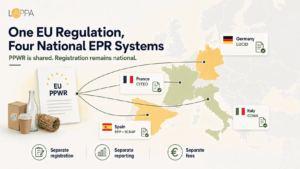
- Confirm national producer registrations in every market
Selling packaged products into the EU from outside the market? Learn how Lappa’s EU Authorized Representative service can support your packaging compliance.
- Sign the declaration and complete its technical file
Lappa pulls your material data, test results, and declarations into one connected system. It flags the weak formats before an auditor or a buyer ever does. Get a ree Quote and see where your portfolio stands today.
For a premium name, this is about more than ticking a box. A clean, credible file guards the brand equity you spent decades building. It wins listings. It trims producer fees. Book a Demo to see the workflow on your own formats.
Frequently Asked Questions



What counts as sustainable under the PPWR for luxury brands
The regulation judges a format on measurable recyclability, minimisation, and substance limits, not on how it looks. A luxury pack passes when it wastes no material and recovers cleanly at end of life. Every claim has to sit behind a signed declaration and a technical file an inspector can open and check.
Are decorative elements like foiling and magnets banned
Not outright, but they often push a format below a recyclable grade. A magnetic rigid box blends metal and board in a way recyclers struggle to separate. Most houses now swap these touches for recoverable alternatives that keep the premium feel and still clear the rules.
How does minimisation affect gift sets and premium boxes
Article 10 bans material used purely for show, which puts false bottoms and oversized cavities squarely at risk. You need a genuine function on record for each layer, such as protection or hygiene. Right-sizing the cavity to the product usually fixes it without spoiling the unboxing moment.
Do refillable cosmetics really help with compliance
Refills cut the material used per application, which feeds both the minimisation and recycled-content goals. L’Oréal, Chanel, and Guerlain have all launched refillable formats that keep the iconic outer shell. The model trims waste while preserving the ritual premium buyers pay for, so it answers several duties in one stroke.
What recycled-content targets apply to plastic packs
Plastic formats face rising recycled-content thresholds, averaging near 30 percent by 2030, with tailored figures for cosmetics and food contact. Hitting those levels means locking in verified recycled resin from reliable suppliers well before the deadline. Plenty of brands keep the recycled material in secondary layers to protect the look of the primary pack.
When should an established brand start preparing
Now, honestly, because the first hard duties land on 12 August 2026 with no grace period for existing stock. Reworking complex or decorative formats always takes longer than the team expects. An early inventory and a phased plan let you protect compliance and brand equity without a last-minute panic.
