EPR Compliance in Europe 2026 for Marketplaces and Online Sellers
August 12, 2026 is a hard deadline. Every business selling packaged goods into the EU must comply. There are no grace periods after that date. Non-compliant sellers face listing suspension on Amazon, Zalando, and eBay. This guide explains exactly what to do and when.
The regulation applies in all 27 member states at once. No national transposition is needed. The rules are the same in Warsaw, Madrid, and Stockholm.
What changed in extended producer responsibility Europe in 2026

The concept of extended producer responsibility Europe has existed in fragments since the 1990s. Now it is one unified law.
Regulation (EU) 2025/40 replaced the old Packaging Directive 94/62/EC. It entered into force on February 11, 2025. Most provisions apply from August 12, 2026.
Under extended producer responsibility Europe, whoever places packaged goods on the EU market owns the end-of-life obligation. This includes distance sellers and marketplace third-party vendors.
The scope is broad. It covers packaging, electronics, batteries, and textiles. Each stream has its own registration and reporting requirements.
European extended producer responsibility now means real cross-border enforcement. Marketplaces must verify compliance. Non-compliant sellers lose listings without warning.
Who must register and in which countries
There is no single EU EPR registry. Each member state runs its own national producer register. You register separately in each country where you sell.
Germany uses the LUCID Packaging Register. France uses ADEME. Spain, Italy, the Netherlands, and Sweden each have their own systems.
The October 2027 deadline applies for new national registers. But enforcement starts August 12, 2026.
Simplify your EPR registration with Lappa. From country-specific requirements to full setup, we take care of everything. Fill out the form or book a demo today.
The authorized representative obligation
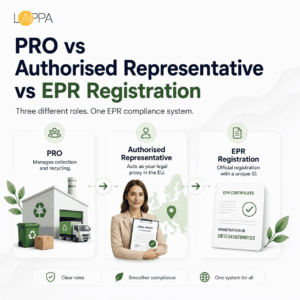
Sellers without a legal entity in an EU country must appoint an Authorized Representative (AR). The AR handles registration, reporting, and fee payment.
This applies to non-EU sellers, marketplace vendors shipping from outside the EU, and cross-border distance sellers.
One shortcut exists. If you have an AR under GPSR (EU 2023/988), that representative can extend their mandate to cover packaging EPR. Get written confirmation of the scope.
The AR’s contact details must appear on your packaging from August 2026.
What the packaging waste regulation EU demands from sellers
The packaging waste regulation eu replaces the old directive with a directly applicable law. It sets binding rules on packaging design, materials, and recyclability.
Empty space in parcels must not exceed 40%. This applies to all e-commerce shipments from August 12, 2026.
PFAS chemicals are banned in food-contact packaging above defined thresholds.
The packaging waste regulation EU requires a Declaration of Conformity for each packaging type. Sellers must request this document from their packaging suppliers now.
Packaging not meeting recyclability Grade A, B, or C may not be sold in the EU from January 1, 2030. Start recyclability assessments now — redesign takes time.
Compliance with packaging waste regulation across the EU is verified by marketplaces. Amazon and Zalando are already building registration verification portals.
EU directive packaging rules that apply from August 2026
The eu directive packaging framework has been replaced by a directly applicable regulation. Directives allowed national variation. This regulation does not.
Every packaging type entering the EU market needs an EU Declaration of Conformity. This document confirms compliance with Regulation 2025/40.
Under EU directive packaging obligations, SKU-level packaging data is now required. This includes material type, weight, and recyclability rating per product.
Most ERP systems do not capture this data today. Updating your data systems is a prerequisite for compliant reporting.
The EU directive on packaging also requires that national EPR registration numbers appear on invoices and marketplace listings. Platforms check these numbers before allowing listings.
EU directive packaging waste and the new recyclability rules
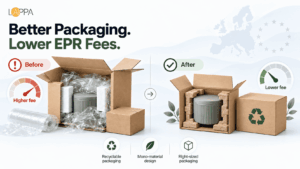
The eu directive packaging waste framework introduced eco-modulation. EPR fees are now tied to packaging recyclability grades.
Grade A and B packaging gets reduced fees. Grade D packaging faces surcharges. These fee levels apply to 2025/2026 sales data, invoiced in early 2027.
The EU directive packaging waste rules make packaging redesign a financial decision — not just an environmental one. Redesigning now costs less than cumulative fee penalties from 2027.
Grades are assigned per packaging component. A mixed-material box may have different grades for each layer.
Recyclability assessments must follow the harmonized EU methodology. The European Commission is publishing implementing acts to define this methodology.
The EU directive covering packaging waste also introduces labeling requirements. QR codes and recycling instructions become mandatory on a phased schedule through 2028.
EPR reporting data: what you need to collect
Reporting under the new regulation requires far more granular data than before. Aggregate tonnages are no longer sufficient.
The EU Commission will publish a harmonized XML/JSON reporting schema. Companies should build data systems that can export this format.
Required data elements per SKU:
- Material type per packaging component — plastic, glass, paper, metal, wood
- Weight per packaging unit
- Recyclability grade — A, B, C, or D
- Sales volume by destination country
- National EPR registration number per country of sale
Most EU countries require annual reports in Q1 of the following year. France requires packaging reports by February 28 for the prior calendar year. Germany runs on a separate LUCID reporting cycle.
Sellers must include their national EPR registration number on all invoices. Missing registration numbers trigger automatic listing suspension on major marketplaces.
Stay compliant with accurate and timely EPR reporting. Lappa helps you manage data and submit reports without errors. Fill out the form or book a demo today.
Fines and market access risks under EPR enforcement in the EU
Penalties are set at national level. They vary significantly across member states. Selling in multiple countries multiplies exposure.
| Country | Maximum Fine | Marketplace Consequence |
| Germany | Up to €200,000 | LUCID suspension, Amazon delisting, sales ban |
| France | Up to €30,000 per offense | Listing removal, ADEME audit, sales restriction |
| Spain | Variable by volume | Platform account suspension, customs hold |
| Netherlands | Variable | Market authorization withdrawal |
| Italy | Variable | Customs detention, online sales block |
| EU-wide | Cumulative per country | Loss of access across all 27 member states |
Country differences that still matter under the unified framework
Harmonization does not mean identical implementation. Member states retain control over their national registers, fee structures, and enforcement priorities.
Germany
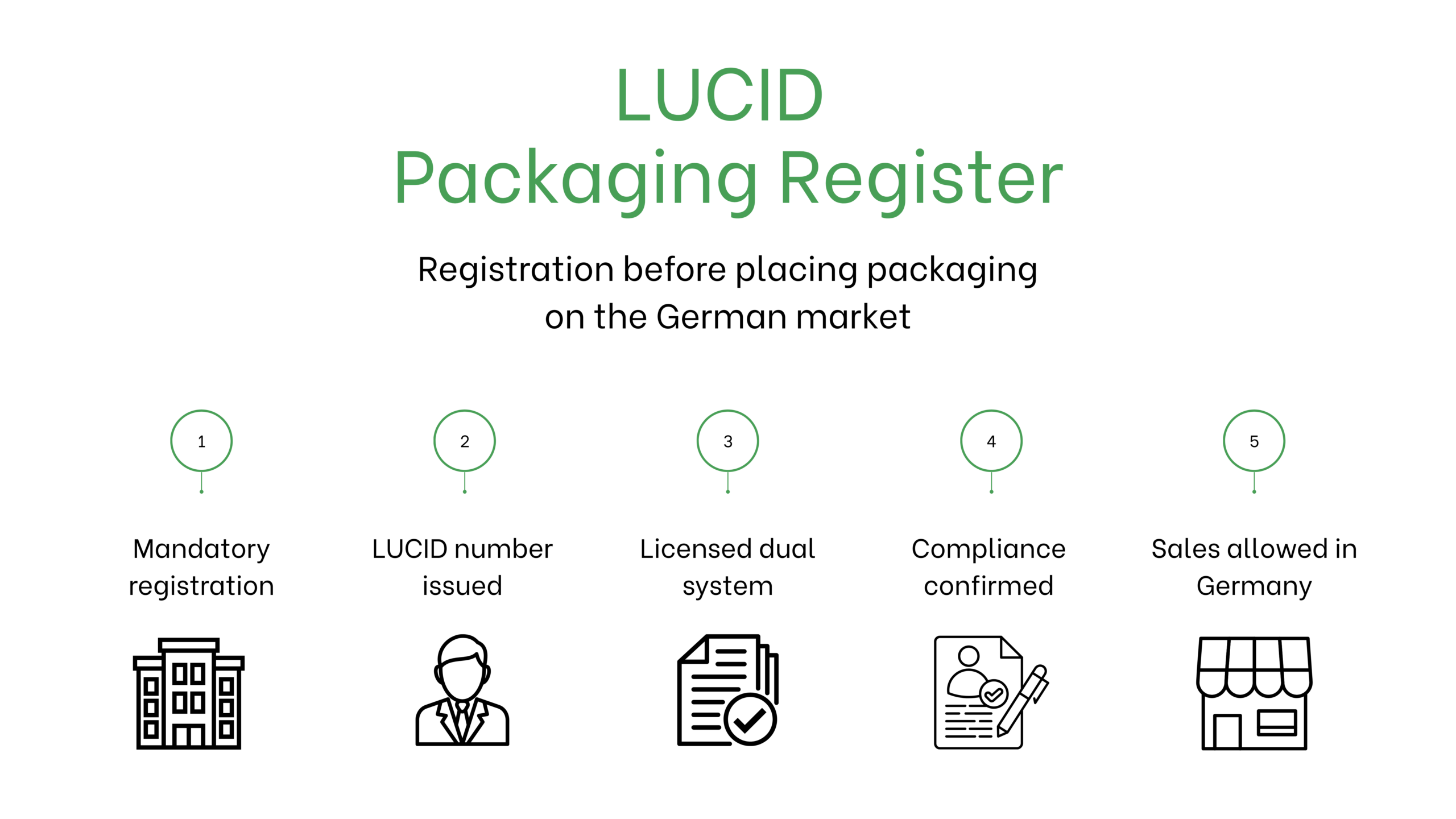
LUCID registration is mandatory before first sale. No volume threshold applies. Single-use plastics EPR added in 2025. Registration numbers must appear on all marketplace listings.
France
France uses a Unique Identification Number (UIN) from ADEME. The Triman recycling logo is mandatory on all packaging. France covers packaging, electronics, batteries, textiles, and furniture — each as a separate EPR stream.
Spain
Spain added packaging EPR in January 2023. Battery rules followed in October 2024. Marketplaces in Spain must verify seller compliance and remove non-compliant listings.
Netherlands, Italy and Sweden
The Netherlands requires registration through accredited organizations. Italy prioritizes biodegradable alternatives in plastic packaging. Sweden enforces universal coverage — no volume exemptions apply.
Understand EPR regulations in each country you sell to. Our detailed guides break down key obligations and processes. Read the guides to get started.
Separate EPR Obligations for Batteries and Electronics Running in Parallel
Sellers of electronics or battery-containing products face additional EPR streams alongside packaging.
Battery Regulation EU 2023/1542
All battery sellers must register in each EU country of sale by August 18, 2025. This deadline has passed. If you have not registered, act immediately.
From August 18, 2026, full labeling is required. This includes capacity, lifespan, QR codes, and recycling instructions.
Digital battery passports launch February 18, 2027 for EV batteries.
Amazon set a March 31, 2026 deadline for battery registration numbers. Sellers who missed it were auto-enrolled in a fee-based service.
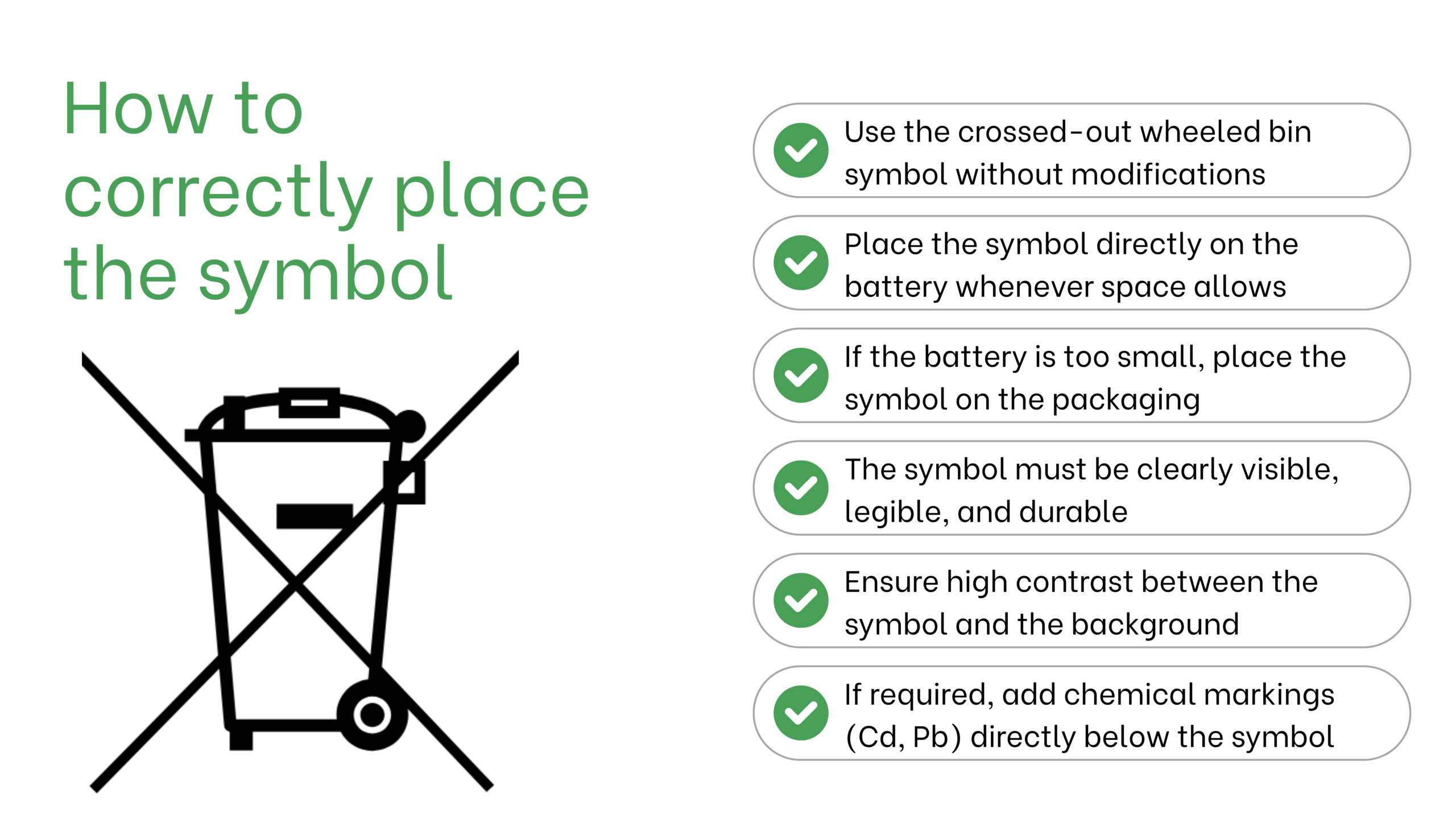
WEEE Electronics
WEEE registration is required before selling any electronic product in an EU country. Germany registers through Stiftung EAR. Registration numbers must be provided to Amazon.
The EU is revising the WEEE directive under the Circular Economy Act. A revised framework is expected by end of 2026. Collection targets will increase from 40% to 65%.
A practical action plan for what to do before August 12
Time is short. These steps are ordered by urgency.
Now through June 2026
- Audit all products for EPR obligations — packaging, electronics, batteries
- Identify which EU countries require separate registration
- Appoint Authorized Representatives where no local entity exists
- Confirm GPSR representative can extend mandate to cover packaging EPR in writing
- Request Declarations of Conformity from all packaging suppliers
- Update ERP systems to capture SKU-level packaging weights and materials
June through August 12, 2026
- Obtain national EPR registration numbers via Authorized Representatives
- Add registration numbers to invoices, listings, and marketplace seller profiles
- Commission recyclability assessments for all packaging types
- Verify packaging void space does not exceed 40%
- Submit packaging data to your Producer Responsibility Organization
Ongoing after August 2026
- File annual reports in Q1 of each year per country deadlines
- Pay eco-contribution fees to PROs based on sales volumes
- Monitor EU Commission implementing acts on harmonized reporting
- Review packaging recyclability grades before launching new products
August 2026 is not the finish line
The regulation phases in additional requirements through 2030. Reusable packaging options must be offered at checkout for online sellers by January 1, 2030. Only packaging grades A, B, and C may be sold in the EU from that date.
This is the time to build compliance infrastructure — not patch it. Sellers who register early, collect clean data, and design recyclable packaging will pay lower fees and face no market access disruption.
Sellers who wait risk automatic delisting on every major EU marketplace simultaneously.
Automate your EPR reporting with Lappa. Collect, manage, and submit data accurately across multiple countries. Fill out the form or book a demo today.