The circular economy won’t arrive on its own: Lappa helps businesses prepare for a new era of packaging
International technology company headquartered in Edinburgh applies artificial intelligence to packaging classification, environmental reporting, and clear disposal instructions
Edinburgh, July 2026. On 12 August 2026, the European Union’s new Packaging and Packaging Waste Regulation (PPWR) will begin to apply across the board.
The regulation changes the approach to packaging across its entire lifecycle — from material selection and design to labelling, reuse, recyclability, and the payment of environmental fees. The regulation entered into force on 11 February 2025, but many of its technical requirements will be phased in over the following years.
For manufacturers, this means that packaging data is becoming as important a part of a product as its composition, price, or barcode.
International technology company Lappa is developing tools that help businesses identify packaging materials and components, prepare Extended Producer Responsibility (EPR) reporting, calculate environmental fees, and provide customers with local waste-sorting instructions.
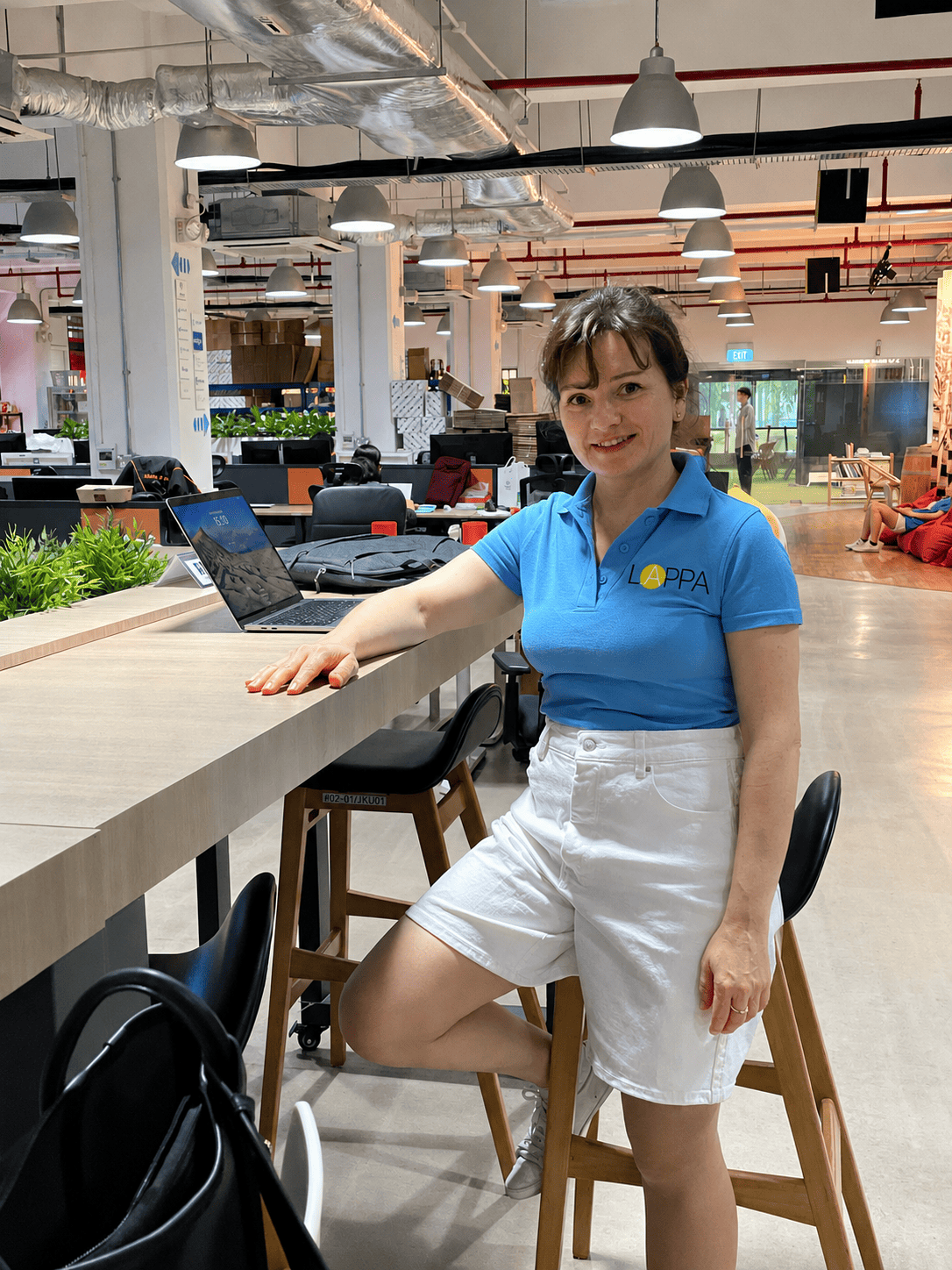
“The circular economy doesn’t start at the bin. It starts much earlier — the moment a manufacturer chooses a material, designs the packaging, and creates data about it. Without that data, even the most carefully designed regulation risks staying on paper,” says Olga Maksimova, founder and CEO of Lappa.
79.7 million tonnes of packaging waste a year
According to Eurostat, the European Union generated 79.7 million tonnes of packaging waste in 2023 — an average of 177.8 kg per resident. Despite a decrease compared with 2022, this is 21.2 kg per person more than a decade earlier.
At the same time, packaging rarely consists of a single material. An ordinary bottle can include a plastic container, a cap made of a different polymer, a paper or plastic label, adhesive, and protective film. A box may simultaneously contain cardboard, a plastic window, and an inner insert.
For environmental reporting, each component may require a separate classification. The accuracy of that classification affects the size of the environmental fee, the content of the EPR declaration, labelling requirements, and in some cases whether a product can be brought to market at all.
Based on observations by the Lappa team, in 2026 even many large international companies are only beginning to build unified packaging catalogues, determine the exact composition of their packaging, and distribute responsibility across production, procurement, logistics, sustainability, and compliance departments.
For small businesses, the task is even harder. They must meet the same requirements, often without a dedicated environmental compliance team, a laboratory, or a centralised product data management system.
“We see that even large brands are only now starting to get a systematic handle on their packaging data. Small businesses face essentially the same requirements, but without a separate sustainability department or an army of consultants. Our goal is to turn compliance from an endless project into a clear digital process,” notes Maksimova.
Artificial intelligence for identifying packaging
Lappa develops and trains artificial intelligence models that help identify packaging categories, materials, and individual components based on several sources of information:
- packaging photographs;
- product text descriptions;
- technical specifications;
- supplier documents;
- laboratory test results.
For example, the system should help determine that packaging does not consist of a single generic “plastic,” but of a bottle, cap, label, and film, which may belong to different material categories and be treated differently in national EPR reporting.
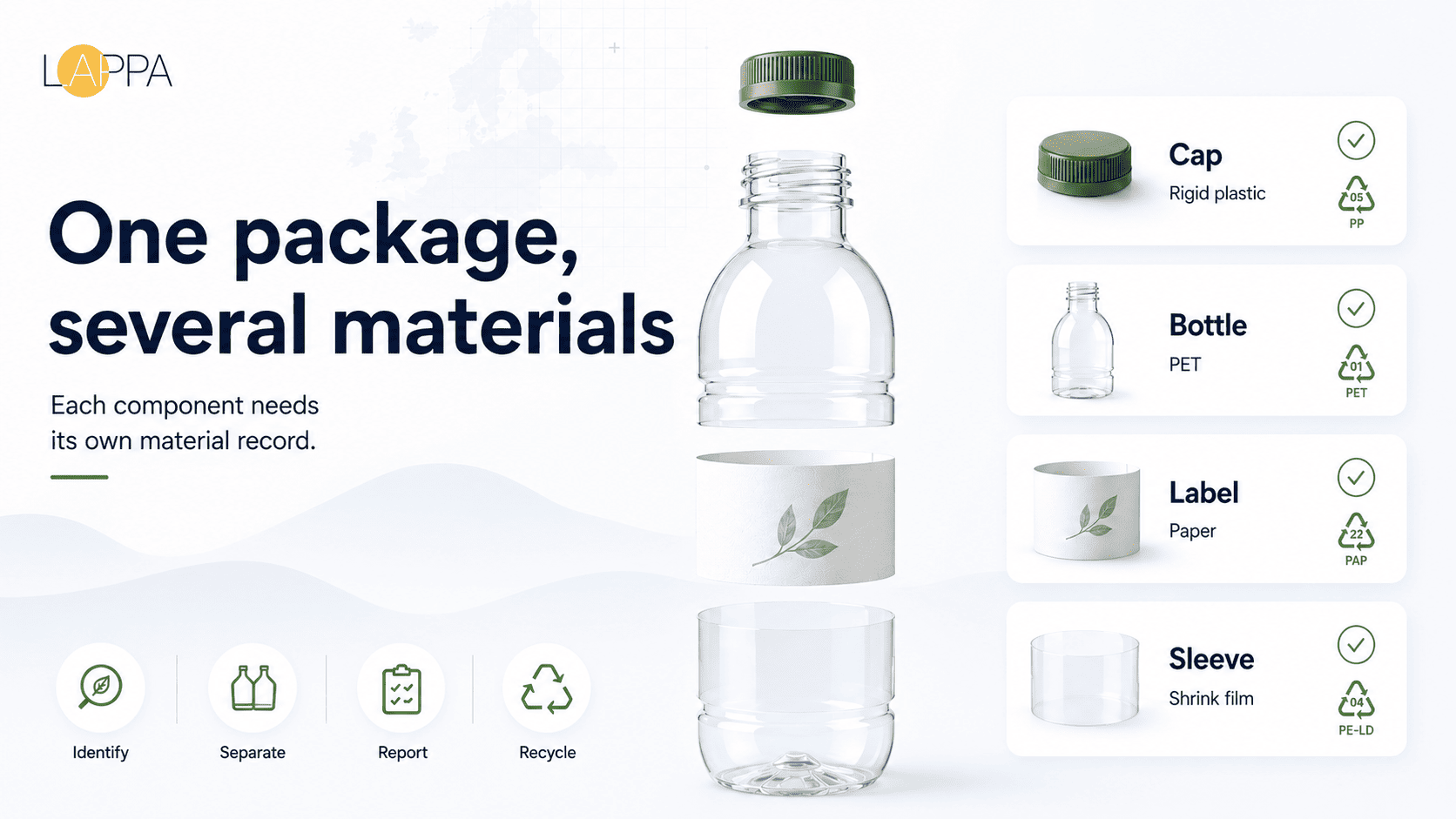
Once classified, the same verified data can be used for several tasks: calculating environmental fees, preparing reporting, checking the requirements of a specific market, generating labelling, and analysing ways to reduce the cost of packaging compliance.
Lappa’s profile on the Bayes Centre website describes the platform as a solution for environmental and tax reporting that helps companies account for the packaging they sell, calculate environmental fees, and meet the requirements of different countries. It also notes the use of AI to find opportunities to reduce eco-fees and improve compliance.
“AI in this field isn’t meant to make a nice-looking guess about a material from a photo. It has to pull together scattered information, show what the classification is based on, flag missing data, and pass the result on for human review. When fees and market access depend on the answer, speed matters, but so does verifiability,” Maksimova explains.
Lappa keeps a specialist in the loop. The artificial intelligence performs the initial analysis, matches information against classifications, and flags possible inconsistencies, after which the result can be confirmed by the manufacturer or a compliance expert.
One product, dozens of sorting rules
The challenge doesn’t end once the environmental declaration is filed.
Sorting rules, material labels, instruction languages, and even bin colours differ from country to country. The same packaging component can come with different instructions in different states.
For a manufacturer selling through an online store or an international marketplace, there is an added complication: at the moment the packaging is produced, the manufacturer may not yet know which country a particular unit of product will end up in.
Producing a separate version of the packaging for each market raises costs, complicates inventory management, and creates a risk that a product with the wrong label will be shipped to the wrong country.
Lappa sees digital labelling as one possible solution. A QR code or another digital identifier can supplement the mandatory physical label and open an instruction adapted to the country, language, product type, and components of the specific packaging.

“A customer shouldn’t have to be an expert in the local colours of waste bins, and a manufacturer shouldn’t have to print dozens of versions of the same packaging. A digital layer can show a person a clear instruction in their own language and under their own country’s rules: what to separate, what to fold, and where to throw it,” says Maksimova.
Digital labelling should not automatically be treated as a replacement for mandatory physical information. However, it can supplement it with more detailed and up-to-date information that is difficult to fit directly on the packaging.
From tax software to circular-economy infrastructure
Lappa grew out of a platform for automating international tax compliance. The team started with VAT, sales tax, e-invoicing, and other obligations for companies selling goods and services outside their home country.
Working with international businesses showed that tax compliance and environmental compliance share a common problem: rules differ between countries, and a company’s source data is rarely already in a form that can be used directly for reporting.
As a result, Lappa shifted its strategic focus toward EPR, waste reporting, packaging data management, and digital labelling, while keeping its tax and e-invoicing products as part of a single compliance platform.
Today, Lappa provides EPR registration and reporting in more than 30 countries, covering packaging, electrical and electronic equipment, batteries, textiles, and other regulated categories.
The platform is used by more than 3,000 clients from 48 countries. The entire Lappa ecosystem supports tax and regulatory processes in 111 jurisdictions. The company’s public profile cites more than 3,000 clients from over 47 countries.
Headquarters in Scotland, a team in Latvia, and sales in the US
The group’s parent company, Lovat Compliance Ltd, is registered in Scotland, making the United Kingdom Lappa’s home jurisdiction. The company’s registered office is located in Edinburgh.
Lappa founder Olga Maksimova moved to Edinburgh after obtaining a UK Global Talent visa. In addition to its Scottish headquarters, Lappa has an operations office and a team in Latvia.
In the US, the company is building its own sales function. The team found the person who now leads its US market efforts while taking part in the Techscaler Silicon Valley pilot programme.
Lappa was one of 12 Scottish technology companies to receive workspace at the first Techscaler San Francisco Hub. The programme was created to help Scottish start-ups build connections with US customers, partners, and investors.
“For us, Techscaler wasn’t abstract networking — it produced a concrete business result. During the programme in Silicon Valley we found the person who now runs our US sales. Scotland remains our main base, but from the start we’ve been building a product for the international market,” says Maksimova.
Participation in the University of Edinburgh’s AI Accelerator
In 2025, Lappa joined the University of Edinburgh’s AI Accelerator.
The AI Accelerator is a six-month programme for established AI companies, focused on business strategy, international scaling, strategic partnerships, engagement with researchers, and access to potential investors. The programme has supported more than 100 companies since launch.
For Lappa, taking part in the accelerator coincided with the development of a new direction: applying AI to packaging data, environmental fees, and the circular economy.
The company also recently featured as one of the central subjects of the industry publication The Nexus Issue 14: UK E-invoicing & LOVAT. The feature reflects Lappa’s accumulated expertise in tax technology and international e-invoicing — the foundation on which the company is now building its next generation of environmental compliance tools.
What’s next
Lappa plans to expand the number of supported packaging classifications, increase the accuracy of its AI models, and bring together in a single system the data needed by manufacturers, regulators, waste management organisations, and consumers.
The company’s goal is to create a single digital layer in which packaging information is collected and verified once, then used across all related processes:
- manufacturer registration;
- EPR reporting;
- calculating environmental fees;
- checking the requirements of the country of sale;
- physical and digital labelling;
- sorting instructions;
- finding ways to reduce packaging volume and the cost of handling it.
“Regulations can require businesses to pay for waste, but on their own they won’t create a circular economy. That requires accurate data, instructions consumers can understand, and a digital infrastructure connecting the manufacturer to every country where its product is sold. That’s the infrastructure we’re building,” Olga Maksimova concludes.
About Lappa
Lappa is an international technology company headquartered in Edinburgh, with an operations office in Latvia.
The company develops a single platform for EPR registration and reporting, packaging data management, digital labelling, VAT and sales tax automation, e-invoicing, and international marketplace compliance.
Lappa’s products are used by more than 3,000 clients from 48 countries. The company provides EPR solutions in more than 30 countries, and its overall compliance platform supports operations in 111 jurisdictions.
Lappa is a graduate of the University of Edinburgh’s AI Accelerator and a participant in the first Techscaler Silicon Valley programme.