Lappa Newsletter – June 2026
Product update
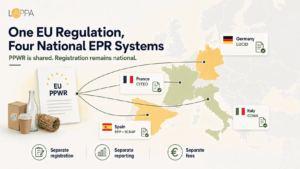
EPR Consolidation Now Available in L’EPR
Businesses can now manage all EPR obligations across 30+ countries from a single account. The service covers every major product category, handles registrations, reporting, and authorized representatives — no more juggling multiple local providers. Learn more
Digital Product Passports for packaging
When there’s not enough space on the label, Lappa’s new international labeling solution lets you link to full recycling and compliance instructions via URL or QR code. Keeps packaging clean, keeps you compliant. Learn more
Billing History & Payments redesign
Invoices, payments, and credit notes now live in separate tabs with cleaner navigation, better status visibility, and a new overview for credits and request funds.
Security History
Access logs are now available directly in a dedicated Security History section, so you can review account activity without digging around.
VAT News
EU Removes €150 Customs Duty Exemption from 1 July 2026
From 1 July 2026, the longstanding €150 de minimis threshold for customs duties on B2C imports into the EU no longer applies. Under Council Regulation (EU) 2026/382, every commercial parcel entering the EU from a third country is now subject to customs processing. A transitional flat rate of €3 per HS6 tariff line replaces the previous exemption and will remain in effect until 30 June 2028. IOSS registration continues to handle import VAT separately and does not cover the new customs duty.
The reform affects all cross-border e-commerce sellers shipping to EU consumers, regardless of order value. Businesses currently operating under DAP/DDU terms should evaluate a shift to DDP to avoid customs fees being collected from buyers at delivery — a friction point that increases failed deliveries and damages customer experience. A second compliance milestone follows on 1 November 2026, when Product Identifiers (GTIN/EAN) become mandatory in H7 customs datasets. Companies should audit their SKU-level HS code coverage and checkout configuration now, ahead of both deadlines. Read more
EPR News
France Expands EPR to Professional Packaging from 1 July 2026
B2B packaging, transport packaging, and industrial packaging will fall under a new extended producer responsibility scheme in France from 1 July 2026. Companies supplying or using professional packaging in France should verify their producer or distributor status, check registration requirements with the relevant eco-organisation, and begin collecting packaging data now ahead of the reporting deadline.
This expansion reflects a broader trend across the EU toward closing exemptions that previously excluded business-to-business packaging flows from EPR obligations. France is among the first Member States to formalise B2B packaging EPR ahead of the wider PPWR framework, and companies operating in the French market should treat the July 2026 deadline as an immediate compliance priority rather than a transitional measure. Learn more
Washington State Launches Packaging EPR
Producers must register with a Producer Responsibility Organisation by 1 July 2026. The requirement applies to brands, importers, private label sellers, and e-commerce companies selling packaged or paper products in Washington State.
Washington’s packaging EPR programme is the first of its kind to reach the registration stage in the United States, and it signals a broader shift in US regulatory policy toward producer-funded collection and recycling systems. Companies selling consumer packaged goods or paper products into Washington should verify whether they meet the definition of a producer under the programme, prepare their packaging data, and confirm registration with an approved PRO before the deadline. Read more
California Introduces the First Textile EPR Law in the US
Under SB 707, textile producers selling in California will need to join an approved producer responsibility organisation. Companies should prepare for registration and upcoming compliance requirements by 1 July 2026.
SB 707 establishes the first mandatory textile extended producer responsibility programme in the United States, covering apparel, footwear, and home textiles sold in California. Producers — including brands, importers, and private label sellers — will be required to register with an approved PRO and contribute to a funded system for textile collection and recycling. With California typically setting a precedent for other US states, companies selling textiles nationally should treat SB 707 as an indicator of the direction of US producer responsibility legislation more broadly. Read more
Lappa makes EPR rules easy to follow. We register, report, and ensure your avoidance of costly fines — all in one place. Get a Fee Quote | Book a Demo
PPWR News
How to Split PPWR Duties with Your EU Distributors
Under PPWR, either the local distributor registers as the “first placer” and handles compliance locally, or the manufacturer registers directly and provides an EPR number to the distributor. Both approaches are fully compliant — the choice depends on your supply chain structure.
The Packaging and Packaging Waste Regulation introduces the concept of the “first placer” — the economic operator that first makes packaging available on the EU market. For international manufacturers selling through EU distributors, determining who holds first placer status has direct implications for EPR registration, reporting obligations, and authorised representative requirements. Clarifying this in distribution agreements now avoids ambiguity when national regulators begin enforcement, and ensures that neither party inadvertently carries compliance obligations they are not prepared to fulfil. Learn more
How to Conduct a Packaging Audit for EU Requirements
A step-by-step guide covering material classification, recyclability assessment, EPR registration checks, and labelling review under PPWR. Includes the most common compliance gaps companies find — and how to fix them before regulators do.
A packaging audit is the starting point for any serious PPWR compliance programme. It identifies which materials are used across your packaging portfolio, whether those materials meet PPWR recyclability requirements, which markets require EPR registration, and whether current labelling meets PPWR and national requirements. For companies managing packaging across multiple EU markets, a structured audit process also helps prioritise which gaps carry the most regulatory risk and where remediation is most urgent. Read more
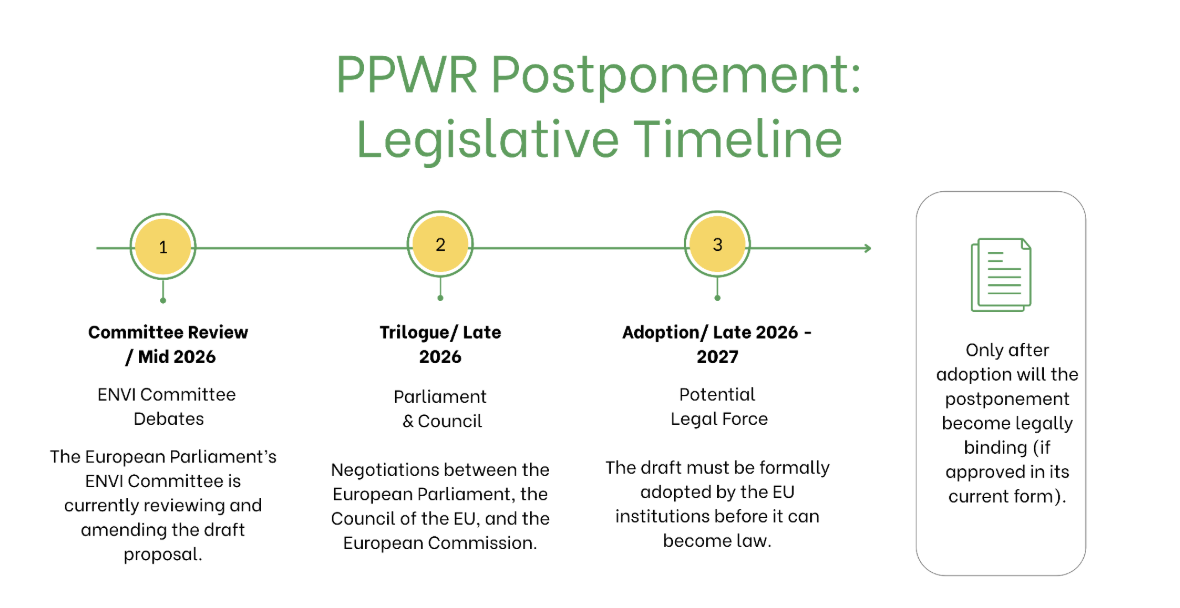
PPWR 2026 Postponement — What You Need to Know
The proposed delay to 2035 applies only to EU-based companies. For non-EU sellers, the 12 August 2026 Authorised Representative deadline remains unchanged.
The European Commission’s proposed postponement of certain PPWR obligations has created confusion about which deadlines remain in force. The key distinction is between EU-established companies — which may benefit from the extended transition period — and non-EU sellers placing packaged products on the EU market. For non-EU companies, the requirement to appoint an Authorised Representative under PPWR applies from 12 August 2026 and is not affected by the proposed postponement. Companies in this category should continue their compliance preparations and not treat the postponement as applying to their situation. Read more
Lappa helps businesses prepare for PPWR and stay compliant with evolving EU packaging rules — all in one place. Get a Fee Quote | Book a Demo
We are here to support your compliance journey. If you have questions or need assistance, feel free to reach out to our dedicated team.
Follow us on social networks to be the first to know the latest news: Facebook, LinkedIn