

Two Compliant Ways to Divide PPWR Duties with Your EU Distributors – Who Holds the Packaging Hot Potato

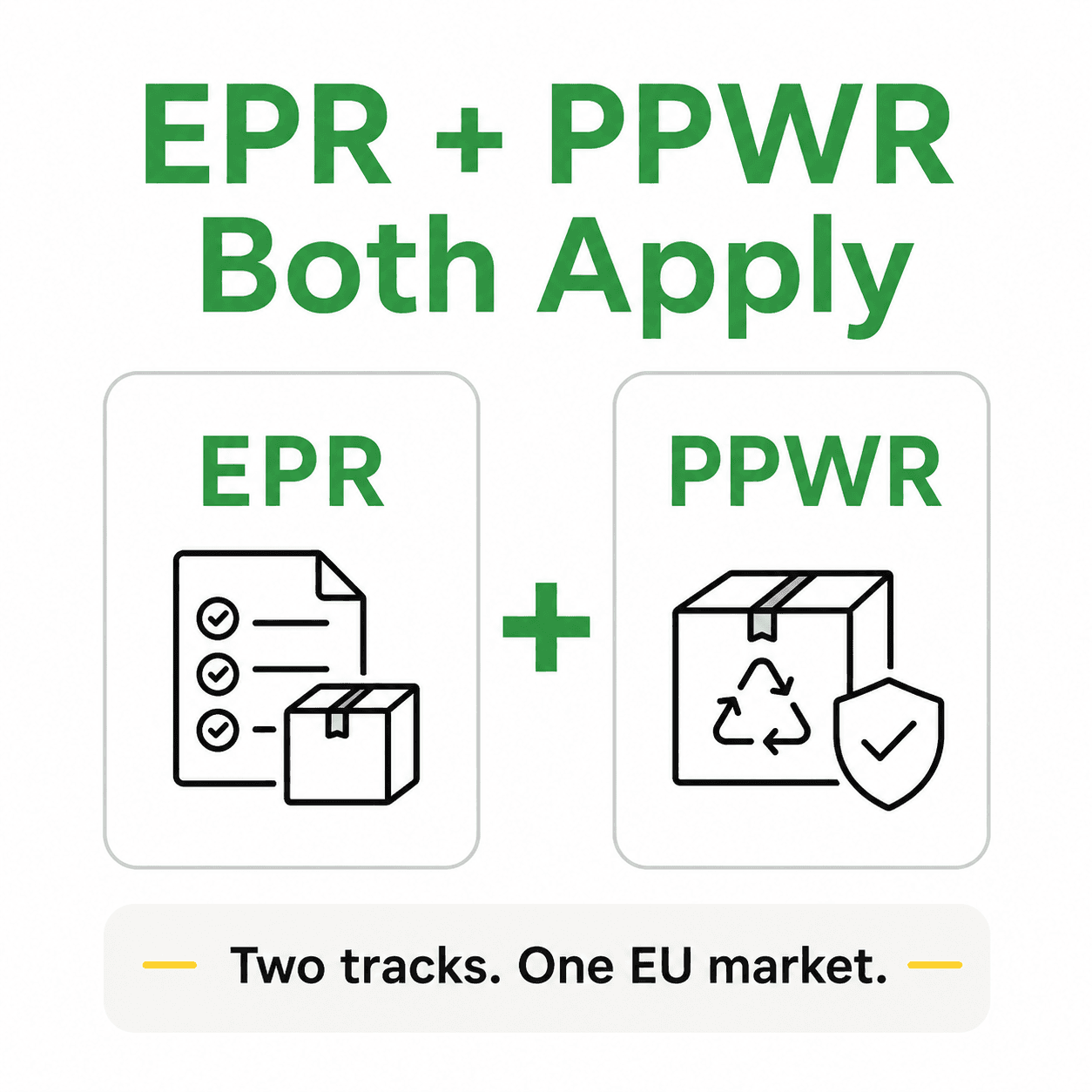
If you are a manufacturer shipping goods across EU borders—say, from a production facility in the Netherlands to distributors in Latvia—the EU Packaging and Packaging Waste Regulation (PPWR) and local Extended Producer Responsibility (EPR) laws have likely landed on your desk with a thud.
The compliance landscape can feel like a game of musical chairs. When the music stops, who is actually responsible for registering with national registries, tracking every gram of cardboard and plastic, and paying those local eco-fees?
The short answer? It depends on how you write your contract. The even better news? Under EU law, there are two completely valid, compliant approaches to splitting these duties. Neither contradicts PPWR rules; they simply shift the legal levers. Here is a breakdown of both strategies so you can decide which fits your supply chain best.
Approach 1 – The Distributor Takes the Wheel
In this setup,also known as The First Placer Route the manufacturer acts purely as a supplier, and the local distributor handles 100% of the PPWR and EPR compliance in their home territory.
How it works:
Under the strict letter of the law, the entity that first introduces packaged goods onto the market of a specific EU Member State is considered the “Producer.” In a standard cross-border B2B transaction, your distributor crosses the national border with your shipment. Therefore, by default, they are the “first placer.”
The Contractual Setup:
Your contract explicitly states that the distributor is the responsible party. They must:
- Register with their local environmental authorities or a local Producer Responsibility Organisation (PRO).
- Report the packaging data for the specific goods they import.
- Pay all eco-fees, green dot fees, or natural resource taxes.
- The Manufacturer’s only job: Provide the distributor with raw packaging data (tare weights, material types) so they can file accurate reports.
Pros & Cons:
- Pros for the Manufacturer: Zero administrative overhead in foreign countries. No need to register for foreign tax IDs or PROs.
- Cons for the Manufacturer: If you have multiple distributors in one country, compliance becomes fragmented. Distributor A might report flawlessly, while Distributor B forgets, putting your brand reputation at risk with local inspectors.
Approach 2 – The Manufacturer Retains Control (The “Centralized” Route)
In this setup, also known The “Centralized” Route – the manufacturer steps up, registers directly in the destination country, and takes full financial and operational responsibility for the brand’s packaging footprint.
How it works
To keep supply chains smooth and protect brand consistency, the PPWR explicitly allows foreign EU manufacturers to voluntarily assume the “Producer” status through Cross-Border Registration or by appointing an Authorized Representative (AR) in the destination country.
By registering yourself, you legally lift the “Producer” burden off your distributors’ shoulders.
The Contractual Setup:
The tables turn completely in this contract clause.
- The Manufacturer handles the registration, files the master reports, pays the eco-fees, and provides their valid EPR Registration Number to the distributor.
- The Distributor shifts from being a “Producer” to a “Data Provider.” They are contractually obligated to provide the manufacturer with regular, precise local sales and distribution data so the manufacturer knows exactly what entered the market.
Pros & Cons:
- Pros for the Manufacturer: Total control. You ensure 100% compliance across all sales channels, and your distributors love you because you’ve removed a massive administrative headache for them. Furthermore, providing your EPR number satisfies the distributor’s legal obligation to verify that their upstream supplier is registered.
- Cons for the Manufacturer: Higher administrative burden. You must manage relationships with PROs across multiple EU countries.
The Million-Dollar Question – Do Both Approaches Comply with PPWR
Yes. Absolutely. A common misconception is that PPWR forces one specific entity to pay, regardless of agreements. In reality, EU regulators primarily care about two things:
- Traceability: Is every piece of packaging accounted for?
- Funding: Are the recycling eco-fees being paid?
Whether those fees are paid directly by a proactive manufacturer via a cross-border registration (Approach 2) or by a local importer acting as the first placer (Approach 1), the law is satisfied. The PPWR actually designed the “Distributor Verification Obligation” (Article 45) precisely to accommodate both routes, ensuring that if a manufacturer takes the lead, the distributor can easily verify it via an EPR number.

Which Path Should You Choose
Choose Approach 1 (Distributor-Led) if: You have a single, highly capable exclusive distributor in a region who already has robust local legal and logistics teams to handle environmental compliance.
Choose Approach 2 (Manufacturer-Led) if: You have multiple distributors in the same country, sell via omnichannel (B2B + e-commerce), or want to use “hassle-free compliance” as a major competitive selling point to attract new distributors.
Whichever route you choose, ensure your Distribution Agreement features a watertight PPWR/EPR clause. Clear boundaries prevent double-reporting, avoid unexpected regulatory fines, and keep your cross-border trade flowing smoothly.
Frequently asked question
Responsibility usually falls on the entity that first places the packaged goods on the market in a specific EU Member State. In many B2B cross-border cases, this is the local distributor. However, the manufacturer can also voluntarily take over this responsibility through cross-border registration or by appointing an Authorized Representative.