

PPWR Label Requirements for
EU Packaging Compliance
Lappa tracks the labelling rules PPWR sets for packaging, so your team always knows what a pack must show and when. Pictograms, the digital data carrier, every deadline — it all sits in one dashboard instead of a dozen tabs.
All PPWR label rules in one place
These rules shift by material, tier, and date. Regulation (EU) 2025/40 rewrites what a pack must show.
Lappa is built around PPWR labelling requirements specifically, flagging what’s due well before a redesign becomes urgent, and keeping every deadline in one shared view.
Complete
PPWR label services
with Lappa
- Recyclability pictograms and material breakdowns kept current on every SKU
- A declaration of conformity packaging file stored and ready for any audit
- Traceability and batch marks built right into your master artwork, not bolted on after
- Recycled content percentages reconciled against your existing EPR filings
- Digital product data carrier rollout planned well ahead of 2028

Lappa
PPWR label services
include
Recyclability Label Tracker
PPWR Label Compliance Dashboard
Packaging Artwork Version Control
Batch and Traceability Marking
Recycled Content Disclosure Calculator
Digital Product Passport Readiness
Declaration of Conformity Packaging Vault
Regulation (EU) 2025/40 Rollout Planning
PPWR Label process with Lappa
Core elements of PPWR label compliance with Lappa
Recyclability grading and pictogram placement
Packaging labelling requirements by tier
Batch marking and artwork sign off
Regulation (EU) 2025/40 deadline tracking
Global
PPWR label compliance
coverage
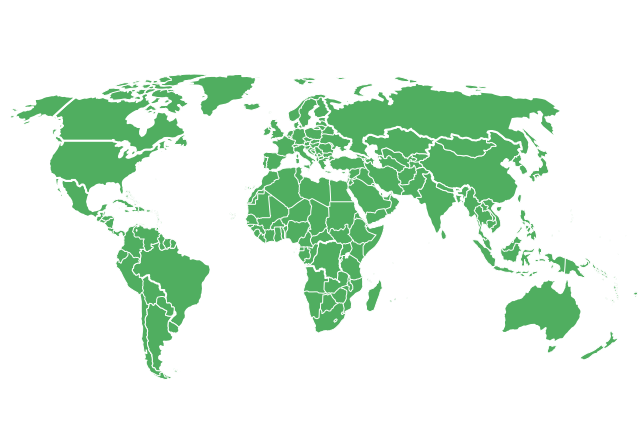
Requirements roll out on different dates and cover different tiers depending on where you sell. Circular packaging targets follow that same country by country pattern, and circular economy packaging goals sit right alongside them on the same timeline. Lappa tracks the EU as one market, not 27 separate rulebooks.
You manage every jurisdiction from a single platform, with one calendar and one file for every declaration of conformity, instead of a folder per country.
Lappa for
PPWR label compliance
A single Lappa platform for pack rules across every market. It’s packaging compliance without five separate spreadsheets.
Circular Packaging Tracking
Circular Economy Packaging Reporting
PPWR Labelling Change Alerts
Why choose Lappa as your
packaging labelling requirements partner
- One dashboard for every requirement, declaration, and deadline across every market
- Recyclability grading and recycled content tracked side by side, not in separate tools
- Artwork and traceability marking built into the same workflow as your EPR filings
- Digital data carrier rollout planned years, not weeks, ahead of 2028
- One flat, predictable price — no surprise fees tacked on per country
- A separate spreadsheet for every packaging tier and every country
- Artwork updates that slip through without a compliance check during a routine reprint
- Recycled content figures that never get checked against EPR filings
- No single view of what's actually up to date
Lappa connects to your existing tools





Learn more about PPWR labelling requirements
Regulation (EU) 2025/40 explained
What the A to E scale means for your packaging, and which grades stay sellable after 2030.
read moreDeclaration of Conformity Versus the Label
Why the physical marking and the technical file behind it are two different things authorities check separately.
read moreHow Brands Consolidate Label and EPR Compliance
In our blog, explore articles explaining EPR registration requirements step by step, including obligation triggers, product category determination, country-specific rules.
read moreWhat our customers say about us

Elena Voss
Head of Sustainability
Before Lappa, keeping everything current across fourteen countries was a constant scramble. We knew Regulation (EU) 2025/40 was coming, but nobody on our small team owned it end to end, and PPWR details kept slipping through the cracks between our packaging supplier and our compliance folder. Once we brought everything onto Lappa, that changed fast. The platform mapped every SKU against the current recyclability label rules automatically, flagged which formats needed a redesign before 2030, and kept our declaration of conformity packaging files in one place instead of scattered inboxes.
Traceability marking got built right into our master artwork, so print vendors stopped guessing what belonged on each version. We’ve since expanded into three new markets, and every new rollout works from the same system instead of a fresh project each time. A small team really does feel that kind of change the most.

Marcus Feld
Compliance Manager
We import consumer electronics into the EU, and PPWR labelling requirements felt like a second regulation stacked on top of our existing EPR work. Every country wanted slightly different pictogram placement, and we had no clear owner for the digital product data carrier rollout. Lappa’s team mapped our full catalogue against the recyclability label and packaging artwork rules in one pass, and built our declaration of conformity packaging files before we even asked. The dashboard now shows exactly which SKUs are ready for 2028 and which still need attention. What used to take our operations lead a full week each quarter now takes an afternoon. We’ve avoided two shipment holds that our old process would likely have caused, and every packaging compliance question our team has gets answered from the same screen instead of five different documents.

Priya Shah
VP Operations
Our company acquires small e-commerce brands, and every one of them arrived with its own patchwork of compliance files, or none at all. Bringing a dozen brands onto one packaging labelling requirements process looked like a multi-year job when we started. Instead, onboarding took about six weeks for our first five brands. Lappa’s team imported each catalogue directly, mapped recyclability grading and recycled content figures automatically, and flagged which formats faced the 2030 single-use bans early. We now see every acquired brand’s label and declaration of conformity status on one screen, which our finance team relies on during due diligence. Circular packaging targets that used to live in a spreadsheet somewhere now show up automatically for every new acquisition. New brands go live in existing markets within days instead of months, since the groundwork already exists before we even close a deal.
Tomas Novak
Packaging Director
PPWR hit our category hard, since beverage packaging faces some of the strictest recyclability rules in the whole regulation. We needed to know which formats required a redesign, and by when, across a dozen markets at once. Lappa’s team mapped our full packaging artwork against the incoming PPWR label rules and flagged exactly which SKUs needed changes first. That early visibility gave our design team almost a full year of runway instead of a scramble near the 2028 deadline. We rebuilt our compliance calendar around the platform’s alerts, and every redesign now has a clear owner and date attached. Traceability checks that used to happen on paper now run automatically with every batch. Circular economy packaging targets that once felt abstract are now tracked line by line against real recycled content data. Two years in, we’ve hit every PPWR label deadline on time, and our redesign costs came in well under budget.
Anna Byrne
Finance Lead
Textile packaging rules started multiplying across every country we sell in, and our finance team had no reliable way to forecast what recycled content compliance would actually cost. Lappa’s declaration of conformity packaging tracker and recyclability label dashboard changed that almost immediately. It gave us accurate, country by country visibility instead of guesswork, and flagged one country where our recycled content figure didn’t match what we’d already filed for EPR. That single catch covered a meaningful chunk of the annual subscription on its own. Ppwr labelling used to mean five spreadsheets nobody fully trusted; now it’s one dashboard our CFO actually checks. Board reporting on packaging compliance now takes minutes instead of a full afternoon, and every decision ties back to the same underlying data as our EPR filings.