


What you need to know about PPWR 2026 postponement
Update — August 12, 2026: This article was reviewed and updated today following the publication of the second edition of the European Commission’s PPWR Frequently Asked Questions on August 3, 2026. The new FAQ provides important clarification on the August 12 application date, existing packaging stock, conformity requirements, traceability and how authorities are expected to approach enforcement during the transition.
The key point remains unchanged: the general PPWR application date of August 12, 2026 has not been postponed. However, the new FAQ confirms a significantly more practical transition than many businesses previously expected.
The European Packaging and Packaging Waste Regulation (PPWR) is transforming compliance rules for the e-commerce, retail and packaging sectors.
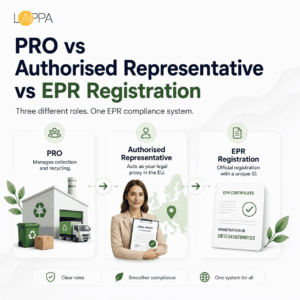
One of the biggest concerns for companies operating across several EU countries has been the requirement to appoint an Authorized Representative (AR) for Extended Producer Responsibility (EPR).
Under Regulation (EU) 2025/40, producers selling directly to end users in another EU Member State may be required to appoint an Authorized Representative for EPR in that country.
At the same time, a European Commission proposal would suspend part of this requirement until January 1, 2035.
This has created understandable confusion: Has the August 12, 2026 deadline effectively been postponed?
Let’s look at the current situation and, importantly, what changed following the European Commission’s updated FAQ.
Is a PPWR postponement confirmed
The short answer is no.
The PPWR entered into force on February 11, 2025 and its general application date remains August 12, 2026. The European Commission continues to list this as the general application date.
There is a separate European Commission proposal to suspend Article 45(3) of the PPWR concerning Authorized Representatives for EPR until January 1, 2035.
However, this proposal is still going through the EU legislative process and has not become law. The EUR-Lex procedure currently remains ongoing.
The proposed text would suspend Article 45(3) until 2035 and give Member States additional flexibility regarding producers established outside the EU.
Therefore, businesses should not treat the proposed 2035 date as an adopted postponement.
There is, however, another important development.
The European Commission’s updated PPWR FAQ published on August 3, 2026 makes clear that implementation of the Regulation should be practical and should not unnecessarily interrupt normal business operations.
What the August 3 FAQ changes
The FAQ does not change the legal application date.
Instead, it provides practical clarification on how businesses can comply and how enforcement should work after August 12.
The Commission explicitly states that enforcement of the requirements applicable from August 12 should not disrupt trade flows, supply chains or consumer access to goods.
This is particularly important for manufacturers, importers and sellers that are not yet completely ready.
If an authority identifies non-compliance, the economic operator should generally:
- first be informed of the problem;
- receive an opportunity to take corrective action;
- be given a reasonable period to adapt.
More serious measures, such as prohibiting, withdrawing or recalling non-compliant packaging, should come into play where the operator does not correct the identified non-compliance.
This is very different from an assumption that every compliance issue automatically results in products being removed from the market on August 12.
Existing packaging stock gets important relief
Another major clarification concerns packaging that was already manufactured before the PPWR application date.
Packaging produced before August 12, 2026 but not yet placed on the market does not need to be destroyed, remanufactured or relabelled simply because the application date has arrived.
For this existing stock, information required under Article 15(5) and 15(6), including identification of the packaging and manufacturer information, may be provided through an accompanying document.
Packaging that was already placed on the market before August 12 can also remain on the market even if it does not comply with the new PPWR requirements.
For packaging manufactured after August 12, accompanying documents remain possible where the size or nature of the packaging makes it impossible to place the required information directly on it.
Missing supplier information does not automatically make old stock unusable
The updated FAQ also addresses a common practical problem: companies may have packaging in stock but no longer be able to obtain all the required information from the original supplier.
For packaging manufactured before August 12, where information is missing or insufficient, the manufacturer should make best efforts to obtain the necessary documentation.
This may include contacting the previous supplier, contacting a successor company after a merger or acquisition, or carrying out its own assessment where necessary.
This gives manufacturers a practical compliance route instead of making older packaging automatically unusable.
Packaging traceability is simpler than it may appear
The updated FAQ also clarifies the requirement for unique identification of packaging.
It does not mean that every individual box, bottle or packaging component needs its own unique serial number.
Identification may be based on:
- a packaging type;
- a model;
- a batch number;
- a production batch;
- another equivalent identifier.
For standard packaging such as adhesive tape, generic plastic bags or desiccant bags, production-batch-level traceability will normally be sufficient.
This significantly reduces the practical burden compared with individual item-level serialization.
Not every new PPWR requirement starts on August 12
Another important point confirmed by the FAQ is that August 12, 2026 does not mean every PPWR sustainability requirement becomes applicable immediately.
The general application date applies where the Regulation does not provide another date.
Many of the most significant requirements are phased in later.
For example:
- key recyclability requirements apply around 2030;
- minimum recycled-content requirements for plastic packaging generally apply from 2030 or later depending on the relevant implementing act;
- the new packaging minimisation requirements apply from January 1, 2030;
- the 50% maximum empty-space requirement for grouped, transport and e-commerce packaging applies from 2030 or later depending on the implementing act;
- major reuse targets generally apply from 2030.
Therefore, manufacturers should distinguish between obligations applicable now and requirements for which they still have several years to prepare.
What does apply from August 12, 2026
Some obligations do apply from the general application date and should not be ignored.
Manufacturers and importers need to consider the requirements relating to conformity assessment, technical documentation, declarations of conformity, identification and manufacturer/importer information where the corresponding substantive PPWR requirements are already applicable.
The Commission specifically explains that Articles 15 and 18 apply from August 12, but these obligations must be read together with the individual sustainability requirements in Articles 5–12, many of which have their own later application dates.
One particularly important area that does apply from August 12 is substances of concern.
The general obligation to minimise substances of concern and the existing limits concerning four heavy metals apply to packaging from August 12, 2026.
The specific PFAS concentration limits under Article 5(5) apply to food-contact packaging.
What about Authorized Representatives for EPR
This is where it is important to distinguish between the existing PPWR and the proposed postponement.
The Commission has proposed suspending the application of Article 45(3) until January 1, 2035.
The proposal is real, but it is not yet adopted legislation.
For producers established in the EU and selling directly to end users in another Member State, the proposal is intended to reduce the burden of appointing an AR in every country where they operate.
For producers established outside the EU, the situation is more nuanced than simply saying that every non-EU business faces the same automatic EU-wide AR obligation.
Under the PPWR framework, Member States may impose Authorized Representative requirements on third-country producers. The Commission’s proposed amendment would preserve Member States’ ability either to require an AR or use alternative mechanisms to ensure traceability and enforcement.
For this reason, non-EU sellers should check the requirements of each Member State where they sell, rather than assume either that the 2035 postponement automatically applies or that exactly the same AR rule applies everywhere.
Deadline comparison: EU vs. non-EU sellers
EU-established producer selling directly into another Member State
Current position: Article 45(3) has not yet been suspended.
Proposed change: suspension of the AR requirement until January 1, 2035.
Status: proposal only — not yet law.
Producer established outside the EU
Requirements may depend on the Member State concerned.
The proposed legislation would allow Member States to require an Authorized Representative or use alternative enforcement and traceability arrangements.
Therefore, third-country producers should verify national rules in each destination market.
What happens if you are not fully ready on August 12
The new FAQ provides considerably more reassurance on this point than was available when this article was originally published.
Companies should not interpret August 12 as an automatic market shutdown date for every technical or documentation issue.
The Commission’s stated approach is that enforcement should avoid disrupting trade and supply chains.
Where non-compliance is found, the operator should first be asked to correct it and should receive a reasonable period for adaptation.
This does not mean that compliance can be ignored.
Companies should be able to demonstrate that they are actively working toward compliance, responding to supplier-document requests, maintaining relevant technical documentation and correcting identified deficiencies.
Action steps for retailers and e-commerce brands
If your PPWR compliance work is still in progress, focus first on the obligations that actually apply now.
1. Map your producer and manufacturer status
Identify who is considered the manufacturer and who is the producer under the PPWR for each supply chain.
This may not always be the same company.
The new FAQ contains extensive additional clarification on branded packaging, transport packaging and situations involving multiple companies in the supply chain.
2. Check your EPR and Authorized Representative position
Determine the countries in which your company is considered a producer.
For cross-border sales, check whether an EPR Authorized Representative is currently required under the applicable rules.
Do not assume that the proposed 2035 suspension has already entered into force.
3. Separate existing packaging stock from newly manufactured packaging
Identify packaging manufactured before August 12.
The updated FAQ gives this stock more flexibility, including the possibility of providing certain information through accompanying documentation.
4. Collect supplier documentation
Request technical information from packaging suppliers and keep evidence of those requests.
Suppliers are required to provide manufacturers with the information and documentation necessary to demonstrate compliance.
Where documentation for older packaging cannot be obtained, document your best efforts and any internal assessment performed.
5. Build packaging traceability at batch level
You generally do not need a unique serial number on every individual packaging item.
A type, model or batch-based identification system can be sufficient where it allows the packaging to be linked to its technical documentation.
6. Prioritise requirements applicable now
Do not treat every 2030 requirement as an August 2026 emergency.
Focus first on the requirements already applicable, particularly documentation, identification where required and substances-of-concern rules.
Risk of relying on the postponement
The Commission’s proposal to postpone the AR requirement is important, but it remains a legislative proposal.
Until it is formally adopted and enters into force, companies should not structure their compliance strategy on the assumption that Article 45(3) has already been suspended.
At the same time, the new FAQ means businesses should also avoid the opposite assumption: that every imperfectly compliant package will automatically be prohibited from August 12.
The Commission has now explicitly described a transition based on corrective action, reasonable adaptation periods and continuity of trade.
Summary
The PPWR has not been generally postponed.
August 12, 2026 remains its general application date.
The proposed postponement of certain Authorized Representative obligations until January 1, 2035 has not yet become law.
However, the European Commission FAQ published on August 3, 2026 introduces important practical clarification for the transition:
- authorities should give businesses the opportunity to correct non-compliance before taking stronger action;
- enforcement should not unnecessarily disrupt trade flows or supply chains;
- packaging manufactured before August 12 can continue to be used without being destroyed, remanufactured or automatically relabelled;
- accompanying documents can be used in specified situations;
- best efforts can be used where documentation for older packaging is unavailable;
- batch-level traceability can be sufficient;
- and many of the major new sustainability requirements do not apply until 2030 or later.
The best approach is therefore not to ignore August 12 — but neither should businesses treat it as an overnight switch requiring every future PPWR rule to be fully implemented immediately.
The transition is phased, practical and focused on bringing businesses into compliance rather than unnecessarily stopping trade.
Frequently
asked question



Is the PPWR 2026 deadline officially postponed
No. The general PPWR application date remains August 12, 2026.
Was the Authorized Representative requirement postponed until 2035
Not yet.
The European Commission has proposed suspending Article 45(3) until January 1, 2035, but the legislative procedure is still ongoing.
What changed in August 2026
The European Commission published the second edition of its PPWR FAQ on August 3, 2026, containing new and updated clarification on compliance and enforcement.
Can packaging produced before August 12 still be used
Yes.
Packaging already produced before August 12 but not yet placed on the market does not need to be destroyed, remanufactured or relabelled solely because of the new application date.
Will non-compliant products immediately be banned
The Commission says enforcement should not disrupt trade flows, supply chains or consumer access to goods.
An operator should first be given an opportunity to correct identified non-compliance.
Does every package need an individual serial number
No.
A batch number, packaging type, model or similar identifier may be sufficient where it allows the packaging to be linked to the relevant documentation.
Do all PPWR sustainability requirements apply from August 12
No.
Many important requirements, including major recyclability, recycled-content, minimisation, empty-space and reuse requirements, apply from 2030 or later.
