


VAT and Customs Operations – How Goods Move
A practical guide for businesses trading within the EU and with non-EU countries
When goods cross a border, a series of steps must be taken, such as filing customs declarations, exchanging documents, and figuring out VAT obligations. It’s not just a matter of following the rules; knowing how these processes work has a direct impact on cash flow, risk exposure, and operational efficiency.
This guide talks about the three main types of movement that businesses face:
Intra-EU movement is when goods move between EU member states.
This guide explains the three main movement scenarios businesses encounter:
- Imports from outside the EU—goods coming into the EU from other countries
- Exports are goods that leave the EU and go to other countries.
- Intra-EU movement is when goods move between EU member states.
Imports from outside the EU—goods coming into the EU from other countries.Exports are goods that leave the EU and go to other countries.
We go over the customs procedures, the papers needed, and how VAT will be handled for each situation. France is used as an example jurisdiction next to EU-wide rules when concrete examples are needed.
Customs and VAT difference
Customs and VAT are two different sets of laws, but in practice they are very closely related. Both of these things happen at the same time every time goods cross an international border.
| Items | Customs | VAT |
|---|---|---|
| Purpose | Controls physical movement of goods across borders | Taxes the consumption of goods |
| Who administers it | Customs authorities (e.g. HMRC, DGDDI, Zoll) | Tax authorities (e.g. DGFiP, Finanzamt, HMRC) |
| Key output | Customs declaration → MRN (Movement Reference Number) | VAT return / import VAT statement |
| Data link | Provides the MRN, customs value, duty calculation | Uses customs data as the basis for VAT calculation and reporting |
The customs MRN is not just a shipping reference; it is the main proof used to determine how VAT should be applied to imports and exports.
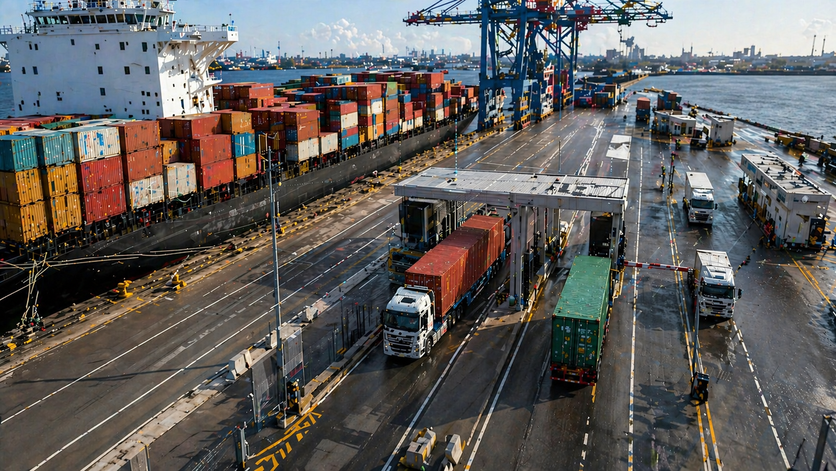
1.Moving goods within the EU
When goods are sold and moved from one EU member state to another, they don’t cross a customs border. There are no customs duties and no customs declarations. But VAT responsibilities are still there; they are just handled differently than when goods are brought in or sent out.
How Intra-EU government works
The main idea is that the seller doesn’t charge VAT on an intra-EU supply; instead, the buyer pays it in their own country. This is called the reverse charge mechanism for purchases.
- From the seller’s side, they can issue a zero-rated invoice (Art. 138 VAT Directive) as long as the buyer has a valid VAT number in another EU member state.
- Goods in transit can move freely across EU borders without having to stop at customs, pay duties, or make a declaration at the border.
- On the buyer’s side, they get the goods and then report the VAT they owe on their regular VAT return at the local rate.
The buyer says the same amount for both output VAT (due) and input VAT (recoverable). This means that businesses with full VAT recovery rights won’t have to pay any cash.
What documents required for customs and VAT
Even though there are no customs requirements, the parties must be able to show that the goods actually crossed an EU border. The zero-rating can be questioned if there is no proof of this.
| Document | What it is | Why it matters for VAT |
|---|---|---|
| Commercial invoice | Invoice issued by seller to buyer, without VAT, showing both parties’ VAT numbers | Establishes the zero-rated supply; VAT numbers must be verified in VIES before issuance |
| CMR consignment note / Bill of Lading / AWB | Transport document issued by the carrier, showing origin, destination, and goods description | Primary evidence that goods physically moved between two EU countries |
| Delivery confirmation / Proof of arrival | Signed receipt from the buyer or carrier confirming goods arrived in destination member state | Required in many jurisdictions to complete the evidence chain for zero-rating |
| EC Sales List (ESL) entry | Periodic report filed by the seller listing all intra-EU supplies by VAT number | Cross-checked by tax authorities between member states to verify matching declarations |
Key compliance requirements for Customs and VAT
- VIES check: Before sending a zero-rated invoice, the seller must check the buyer’s VAT number in the EU’s VIES database. If you give something to a number that isn’t valid or isn’t registered, the zero rating is no longer valid.
- The seller must report the supply in the ESL, and the buyer must report the acquisition in their VAT return. Cross-border mismatches are a common reason for audits.
- When three parties from three different EU countries are involved in a transaction, specific simplification rules apply under Art. 141 of the VAT Directive—this simplification means that the middle party (B) doesn’t have to register for VAT in the country of destination; instead, the tax responsibility goes to the final acquirer (C). This necessitates meticulous documentation and reporting.
Key point: The absence of customs borders does not reduce documentary obligations. The VAT evidence chain for intra-EU supplies must be maintained with the same rigour as for imports and exports.
2.Importing goods into the EU (Non-EU to EU)
Goods that come from outside the EU, like the US, China, the UK after Brexit, or any other country, must go through customs before they can be sold freely. There is both a customs declaration and an import VAT event in this process.
The journey of an Imported Shipment
| Step | What happens | Customs procedure | VAT implication |
|---|---|---|---|
| 1 | Goods arrive at EU port or border | Entry summary declaration (ENS) sent in ahead of time | No VAT event yet |
| 2 | Importer or broker lodges customs declaration | The customs authority received the import declaration, and the goods were put under a customs procedure. | Taxable event is triggered at this point |
| 3 | Customs checks and release | The customs authority checks goods, issues MRN, and reviews them. | MRN is the reference for import VAT reporting |
| 4 | Goods released for free circulation | Duties paid (or deferred); goods enter EU market | Import VAT becomes due — either paid at customs or reverse-charged (see 3.3) |
| 5 | Goods delivered to buyer/warehouse | All transport paperwork is finished (CMR, AWB, etc.). | VAT reporting period: import VAT declared in next VAT return |
The Documents That Drive the Process
| Document | What it is | Role in VAT |
|---|---|---|
| Customs import declaration | Electronic declaration sent to the customs authority (in the EU, this is done through the national AIS system) | Sets the taxable event; includes the customs value, HS code, and procedure code |
| MRN (Movement Reference Number) | Every accepted customs declaration gets a unique reference number. | Important reference for matching VAT return entries to customs records |
| Commercial invoice | Invoice from the seller that shows the value, description, Incoterms, and origin | Basis for calculating VAT and customs value |
| Packing list | A list of the contents, weights, and amounts | Helps with the right HS classification and valuation |
| Bill of Lading / AWB / CMR | Transport document given to the carrier | Proof of physical movement, which is needed to clear customs |
| Certificate of origin | Document certifying where goods were produced | Sets the duty rate (preferential vs. standard) and changes the VAT base by the amount of duty. |
| Import VAT statement | Statement issued by the national customs authority confirming import VAT paid or accounted for (e.g. avis de mise en recouvrement in France, Einfuhrabgabenbescheid in Germany) | Used as proof of input VAT recovery in the VAT return |
How import VAT is handled
When goods are released, you have to pay import VAT. Across the EU, there are two main ways to do things:
| Mechanism | How it works | Cash flow impact |
|---|---|---|
| Classic (pay at customs) | VAT is paid at the point of customs clearance, before goods are released. The business later reclaims it via the VAT return. | Negative — cash tied up between payment and recovery (weeks to months) |
| Reverse charge / Deferred (recommended) | VAT is not paid at customs. Instead, the importer self-declares it in their periodic VAT return as both output and input VAT simultaneously. | Neutral — no cash outflow. Used where the importer has full VAT recovery rights |
Most EU member states now offer or require deferred/reverse charge import VAT for businesses that are registered for VAT. France made this mandatory (autoliquidation de la TVA à l’importation—ATI) starting on January 1, 2022. The Netherlands has an Article 23 license for the same reason. Germany has the Einfuhrumsatzsteuer (EUSt) system, which lets you do your taxes later.
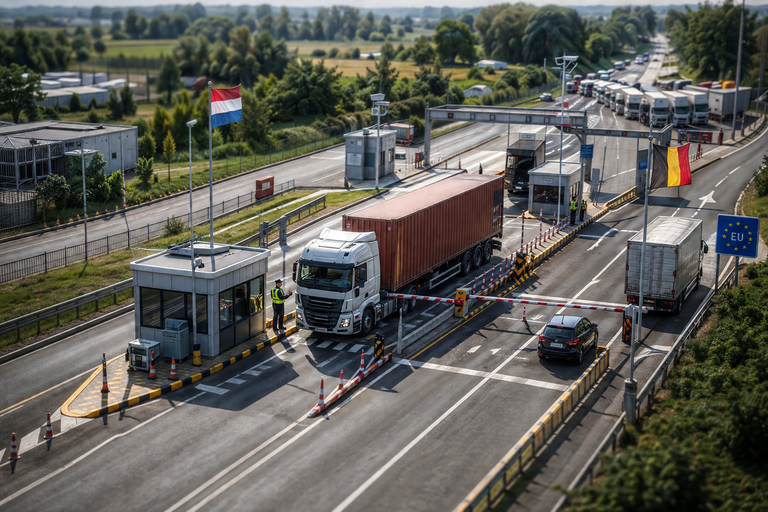
How import VAT is calculated
The VAT base for imports is more than just the price on the invoice. It has:
- The value of the goods for customs purposes is usually the transaction value, or the price paid.
- Duties to pay to customs
- Costs of shipping and insurance to the EU point of entry
- Commissions, brokerage fees, and packaging costs (Art. 86, VAT Directive 2006/112/EC)
- The buyer must pay royalties and license fees as part of the sale.
This extended base means that businesses often don’t realize how much import VAT they have to pay, especially for goods that cost a lot to transport or license.
Special Customs procedures that affect VAT timing
Things don’t always go right into free circulation. There are a number of customs procedures that let businesses put off or stop paying VAT and duties:
| Procedure | What it means in practice | Time limit (UCC) | VAT / duty treatment |
|---|---|---|---|
| Customs Warehousing | Goods stored in an approved warehouse under customs supervision, without entering free circulation | No statutory time limit under UCC (Art. 237), but subject to periodic review by customs authority | VAT and duties suspended until goods are released for free circulation |
| Inward Processing Relief (IPR) | Goods imported, processed or manufactured, then re-exported. Designed for manufacturing and value-added operations | 6 months standard, extendable to 24 months (Art. 211 UCC) | VAT and duties suspended; bill of discharge required on completion |
| Temporary Admission | Goods temporarily imported for a specific purpose (exhibitions, testing, professional equipment) and then re-exported without modification | Maximum 24 months (Art. 250 UCC) | Full or partial duty/VAT relief; standard rate applies if goods are not re-exported in time |
| Transit (T1 / T2) | Goods move through EU territory under customs supervision without being released. T1 for non-EU goods; T2 for EU-status goods | Determined by transport route and authority | No VAT or duty triggered during transit; only upon release at destination |
Key point: These procedures are powerful cash flow tools — but they require active management. Missed deadlines trigger immediate customs debt and VAT liability on the full goods value.
3. Exporting Goods from the EU (EU to Non-EU)
When goods leave the EU and go to a place that is not in the EU, an export procedure starts. It is very important to handle this process correctly because the 0% VAT rate on exports only applies if you can show that goods left the EU.
The Export Process Step by Step
| Step | What happens | Customs procedure | VAT implication |
|---|---|---|---|
| 1 | Exporter or broker lodges export declaration | Electronic declaration filed via national AES (Automated Export System) | Sale is provisionally treated as zero-rated |
| 2 | Customs authority assigns MRN | Export MRN issued; goods placed under export procedure | MRN is the reference for VAT evidence |
| 3 | Goods presented at exit point (port, airport, border) | Exit customs authority validates the shipment | No VAT event — goods are still under procedure |
| 4 | Goods physically leave the EU | Exit confirmation message generated in AES | Zero-rating confirmed; export VAT exemption secured |
| 5 | Exporter receives proof of exit | AES exit confirmation / IE599 message archived by exporter | Essential documentary evidence — must be retained and matched to the export invoice |
Export Documents and Their VAT Role
| Document | What it is | Role in VAT |
|---|---|---|
| Export declaration (via AES) | The customs authority must receive an electronic declaration before the goods leave | Starts the export process and makes the export MRN |
| MRN (export) | A unique number is given to the export declaration. | Reference number used to keep track of the shipment and link it to VAT records |
| Confirmation of AES exit (IE599) | Message from the system confirming that the goods have left the EU | Main proof of export for VAT purposes—confirms the 0% rate |
| Invoice for business | Seller’s bill to buyer, with no VAT added | Must show 0% and say that the goods are for export; this is checked against customs data. |
| Transport document (CMR / AWB / BL) | Carrier’s paperwork that shows the route, the destination outside the EU, and the delivery of the goods | Proof that goods left the EU territory |
The Documentary Deadline — A Common Risk
There are conditions on the export zero rating. Customs and tax officials will treat the sale as a domestic supply and charge the normal VAT rate if the exporter can’t show valid proof of exit.
- Time limit: In most member states, exporters must get proof of exit, usually the AES/IE599 exit confirmation, within 90 days of the export declaration date. Some member states allow up to 150 days. Check the local deadline before shipping.
- If you don’t pay, you’ll have to pay the full standard rate VAT on the value of the transaction, plus interest and possible penalties, going back to the original supply date.
- Best practice: set up a way to consistently ask for, get, and store IE599 exit confirmations for every export shipment. Don’t count on carriers to keep these automatically.
Key point: The AES exit confirmation (IE599 message) is the single most important document in an export transaction from a VAT perspective. Without it, the 0% rate cannot be defended.
Who Is Responsible for What
From a VAT point of view, the AES exit confirmation (IE599 message) is the most important document in an export deal. The 0% rate can’t be defended without it.
| Party | Main role | Key documents they own | Risk if they fail |
|---|---|---|---|
| Importer of Record (IOR) | Legally responsible for making sure the customs declaration is correct, paying the duty, and reporting the import VAT | Commercial invoice, packing list, customs declaration, MRN, and import VAT statement | Full financial and legal responsibility for any mistakes, including taxes, penalties, and duties |
| Exporter / Seller | In charge of filing the export declaration, zero-rating the supply, and keeping proof of exit | Export declaration, AES exit confirmation (IE599), commercial invoice, and transport documents | If proof of exit is missing or late, the VAT will be reassessed at the standard rate. |
| Customs Broker / Freight Forwarder | Makes and sends declarations for the importer or exporter; arranges for the physical transport and paperwork. Under indirect representation (UCC Art. 18), the broker acts in their own name and is responsible for the customs debt with the principal. Under direct representation, the principal is still responsible. | Customs declarations, transport papers (CMR, AWB, BL), and MRN confirmations | The principal (IOR/exporter) is still responsible for the data they give, but they are only responsible for procedural mistakes. |
| Tax / VAT Advisor or Representative | Makes sure that the right VAT treatment is used, that VAT returns are filed, and that reverse charge is handled correctly. In many places, this is required for businesses that are not in the EU. | VAT returns, reconciliation reports, and import VAT statements VAT returns, reconciliation reports, and import VAT statements | Not reporting VAT correctly, using the wrong reverse charge, and not registering on time |
Key point: Incorrect Incoterms are the single most common root cause of IOR misallocation. Always confirm who the Importer of Record will be before the shipment departs.
VAT treatment by movement type — quick reference
| Movement type | Customs involved? | VAT mechanism | Key document | Cash flow |
|---|---|---|---|---|
| Intra-EU supply (seller) | No | Zero-rated supply (Art. 138 VAT Dir.) | Commercial invoice + ESL | Neutral |
| Intra-EU acquisition (buyer) | No | Reverse charge — buyer self-accounts (Art. 200 VAT Dir.) | VAT return declaration | Neutral |
| Import — reverse charge / deferred | Yes | Deferred/reverse charge (varies by member state; see Section 3.3) — declared in VAT return | MRN + import VAT statement | Neutral |
| Import — VAT paid at customs | Yes | VAT paid on clearance; reclaimed in VAT return | MRN + customs receipt | Negative (temporary) |
| Export | Yes | Zero-rated (Art. 146 VAT Dir.) | AES exit confirmation (IE599) | Neutral |
| Customs warehousing | Yes | VAT and duties suspended | Warehouse authorisation | Positive |
| Inward processing (IPR) | Yes | Suspended; bill of discharge required | IPR authorisation + discharge | Positive |
| Temporary admission | Yes | Full or partial relief (max 24 months) | TA authorisation | Positive |
| Transit (T1/T2) | Yes | No VAT event during transit | Transit declaration + MRN | Neutral |
Common risks and how to address them
| Risk | Consequence | Recommended action |
|---|---|---|
| Incorrect Importer of Record because of wrong Incoterms | Liability is incorrectly assigned; the wrong entity is responsible for duties, VAT, and penalties. | Before each shipment, make sure the IOR assignment is correct in business terms and go over the Incoterms with the logistics team. |
| Exports that don’t get AES exit confirmation on time or at all | No 0% VAT rate; the standard rate was applied retroactively with interest. | Set up a way to consistently gather and store IE599 exit messages by the deadline, which is usually 90 days but can be up to 150 days in some member states (check with your local office). |
| Incorrect customs valuation (incomplete VAT base) | Wrong customs valuation (missing VAT base) | Include all required cost components per Art. 86 VAT Directive: duties, transport, insurance, commissions, royalties |
| No VIES validation for supplies within the EU | Zero rating is no longer valid; VAT is now due on the supply | Add VIES checks to the invoicing process automatically; keep records of the results and store them. |
| Breach of the special regime deadline (IPR, temporary admission) | Immediate customs debt and VAT on the full value of imported goods | Keep track of when authorizations expire, set reminders for 30 and 60 days before the deadline, and file the bill of discharge ahead of time. |
| There is a difference between customs declarations and VAT returns. | Reconciliation problems, audit risk, and the need to make changes quickly | Set up a regular process for reconciling MRN and VAT returns, and automate it when ERP lets you. |
Conclusion
When goods move between EU countries or across an international border, the physical movement of the shipment and the VAT treatment are two sides of the same coin. The MRN, CMR, and AES exit confirmation are not just logistics paperwork; they are also proof of the movement. They are what makes the VAT position legal.
Businesses that see customs processes and VAT compliance as one process instead of two are less likely to make expensive mistakes, better able to handle cash flow, and more confident when facing audits.
The EU’s VAT in the Digital Age (ViDA) package, which was passed in 2024, will slowly change how VAT is reported starting in 2030. For example, the current ESL (EC Sales List) will be replaced with real-time digital transaction reporting. Businesses that do business across borders in the EU should keep an eye on the ViDA implementation timelines so they can get their ERP and compliance processes ready ahead of time.
Glossary
| Term | Definition |
|---|---|
| AES | Automated Export System — EU-wide electronic platform for processing export declarations, mandatory across all member states since 2021. |
| ATI | Autoliquidation de la TVA à l’importation — French mandatory reverse charge mechanism for import VAT, applicable to all VAT-registered importers since 1 January 2022. |
| AWB | Air Waybill: a document that an airline or freight forwarder gives to a customer to ship air cargo.. |
| BL | Bill of Lading: a document that a shipping company gives to a shipper for sea freight. |
| CMR | The Convention on the Contract for the International Carriage of Goods by Road is the standard transport document for road freight. |
| ESL | The EC Sales List is a report that sellers file every so often that lists all goods and services sold to VAT-registered customers in other EU member states. In EU law, this is also called the Recapitulative Statement (Art. 262 VAT Directive). |
| HS Code | Harmonised System code: a standard way to classify goods around the world that is used to figure out trade statistics and customs duty rates. |
| IE599 | AES exit confirmation message: an electronic message that goods have really left the EU. Main proof of export for VAT reasons. |
| IOR | The Importer of Record is the legal entity that makes sure that goods are properly cleared through customs and that all taxes and duties are paid and reported. |
| IPR | Inward Processing Relief — customs regime allowing goods to be imported for processing or manufacturing and re-exported with suspension of duties and VAT. |
| MRN | Movement Reference Number: a unique number given to each accepted customs declaration (for import or export) by the customs authority. |
| T1 / T2 | The UCC has rules for external and internal transit. T1 is for non-EU goods moving through EU territory, and T2 is for EU-status goods moving between EU territories with a customs border (for example, through a non-EU country). |
| UCC | Union Customs Code—EU Regulation 952/2013 that sets rules for customs procedures in all member states. |
| VIES | VAT Information Exchange System: a database in the EU that checks the validity of VAT registration numbers in all member states. |
Frequently Asked Question



What is the difference between customs and VAT in cross-border trade?
Customs regulates the movement of goods and applies duties, while VAT taxes consumption.
They are interconnected because customs declarations (MRN, value, duties) form the basis for VAT calculation and reporting.
How is VAT handled for goods moving within the EU
In intra-EU trade:
- The seller applies 0% VAT (zero-rated supply)
- The buyer uses the reverse charge mechanism
- VAT is reported in the buyer’s country, usually with no cash impact
When is import VAT due in the EU?
Import VAT is triggered when goods are:
- Declared to customs
- Released for free circulation
It can be:
- Paid at customs (cash impact), or
- Deferred/reverse charged in VAT return (cash-neutral)
What proof is required to apply 0% VAT on exports
The key document is the AES exit confirmation (IE599), which proves goods left the EU.
Without it, tax authorities can:
- Deny the 0% rate
- Apply full domestic VAT plus penalties
What is the MRN and why is it important for VAT
The Movement Reference Number (MRN) is a unique ID for each customs declaration.
It is critical because it:
- Links customs and VAT data
- Serves as proof for imports/exports
- Is required for audit and VAT reconciliation

