

Automated
EPR Reporting
from Lappa
Lappa provides comprehensive EPR reporting services and automated compliance solutions for businesses operating internationally, helping you submit accurate epr reports and manage ongoing obligations across Europe, UK, USA, and other global markets.
We track all EPR reporting deadlines across every jurisdiction
Managing EPR compliance across multiple countries is complex due to different reporting schedules, data requirements, and submission formats. L’EPR simplifies this with automated deadline tracking and a centralized reporting calendar. We monitor all EPR obligations across the EU, UK, USA, and other markets, send proactive deadline alerts, calculate required quantities, format data to local rules, and submit EPR reports on your behalf. This ensures timely quarterly and annual reporting, payment deadlines, and compliance renewals across all jurisdictions—reducing manual work and minimizing the risk of penalties.
Complete EPR automation services
with L'EPR
- Automated report generation and submission across all regions without manual data entry
- Multi-region support managing EPR reports for Europe, UK, USA, and other global markets simultaneously
- Expert data validation ensuring all submissions meet local authority requirements and formatting standards
- Centralized management of all EPR categories including packaging, electronics, batteries, and textiles reporting

Lappa
EPR report
services include
Fully automated reporting
Multi-country data aggregation
Deadline tracking and alerts
Validation before submission
Annual and quarterly reports
Payment tracking and processing
Compliance assessment reporting
Real-time status dashboard
EPR how to report with Lappa automation
Core elements of EPR compliance assessment report
EPR annual report
management worldwide
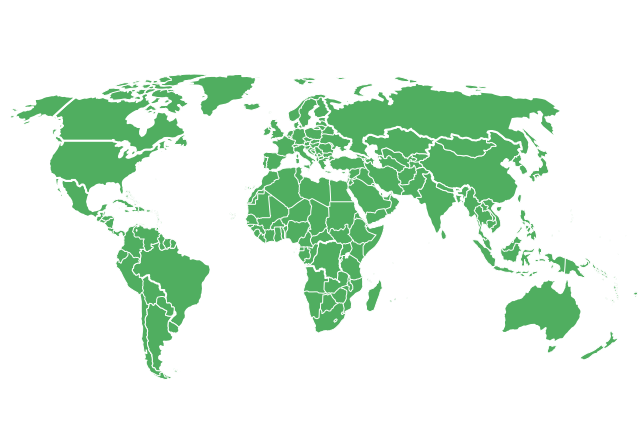
We deliver EPR annual report services and ongoing compliance management across Europe, including Germany, France, Italy, Spain, all EU member states, the United Kingdom with its unique reporting formats, the United States with emerging EPR frameworks, and other international markets.
With L’EPR, all jurisdictions are managed through a unified platform powered by our epr automation system, removing separate reporting processes in each country. Our multi-region approach ensures data quality, aligned submission timelines, centralized oversight, and efficient global EPR compliance regardless of operational complexity.
L'EPR
for EPR reporting
Automated EPR reporting and compliance worldwide.
Automated data collection from all sales channels
Smart report generation for all jurisdictions
Centralized submission and payment tracking
Why choose L'EPR as your
EPR reports
- Full automation of EPR reporting across Europe, UK, USA, and other regions simultaneously
- All product categories supported including packaging, WEEE, batteries, textiles reporting in one platform
- Automated deadline tracking with proactive alerts for all quarterly and annual submissions
- Direct integrations with e-commerce platforms and ERP systems for seamless data collection
- Transparent, scalable pricing
- Manual data collection and report preparation requiring constant team involvement
- Single-country focus requiring multiple tools for international operations
- Manual deadline tracking with high risk of missing submission dates
- Limited or no integration capabilities requiring spreadsheet-based processes
Seamless EPR automation integration





Learn more about EPR reporting
EPR automation best practices
Expert insights on implementing epr automation solutions including how to integrate sales data, set up validation rules, configure deadline alerts, and ensure data accuracy across multiple product categories and jurisdictions for efficient compliance management.
read moreComplete guide to EPR reporting
Comprehensive overview explaining EPR reporting requirements including what data to collect, how to calculate quantities by material type, submission deadlines by country, and best practices for maintaining accurate records across multiple jurisdictions.
read moreEPR annual report blog
Explore our blog and read detailed articles about EPR annual report requirements in the EU, UK, and USA, covering reporting formats, validation rules, and compliance best practices.
read moreWhat our customers say about L'EPR

Sarah M.
CEO
Before L’EPR, managing EPR reporting across 6 European countries was consuming our entire compliance team’s time. We were manually collecting sales data from multiple platforms, converting units, filling out different forms in various languages, and constantly worried about missing deadlines. Lappa’s automation transformed our entire workflow by connecting directly to our Shopify store and Amazon account, automatically calculating quantities by material type for each country, and generating compliant epr reports for every jurisdiction. The platform submits everything on time and tracks all our payment obligations through the epr payment report feature. Since implementing L’EPR, we’ve had zero missed deadlines, eliminated manual data entry errors, and our team can focus on strategic work instead of administrative compliance tasks.

Michael T.
Manager
As an electronics distributor with an epr number in multiple countries, understanding epr how to report correctly was overwhelming. Each country wanted data formatted differently, had different calculation methods, and used different submission portals. L’EPR’s experts configured everything for us, mapping our product catalog to the correct EPR categories and setting up automated reporting for packaging and WEEE across Germany, France, UK, and the Netherlands. The EPR compliance assessment report feature helps us verify everything is accurate before submission, and the centralized dashboard gives us complete visibility into our status everywhere we operate. The peace of mind knowing our reporting is handled correctly and automatically is invaluable.

Jennifer K.
Tax specialist
We’re a fast-growing e-commerce business and were struggling to keep up with quarterly and annual EPR reporting requirements as we expanded into new markets. The manual process of tracking what we sold, calculating packaging weights, and preparing EPR annual report submissions was not sustainable. L’EPR’s epr automation solution scaled perfectly with our growth by automatically aggregating sales data across all our channels, calculating everything needed for reports in each country, and handling all submissions without any manual intervention from our team. The automated deadline alerts ensure we’re always ahead of requirements, and the integration with our accounting system makes payment tracking seamless through the epr payment report module.
David L.
Compliance Manager
Managing EPR reports for multiple product categories including packaging, batteries, and electronics across different countries was creating a huge administrative burden for our finance team. We were spending hours each quarter gathering data, double-checking calculations, and navigating different authority portals. L’EPR automated the entire process through intelligent integrations with our ERP system that pull all necessary data automatically, validate it against local requirements, and generate compliant reports for submission. The transparency into our compliance status and the audit trail of all submissions has made regulatory reviews much easier. Since implementing Lappa’s solution, we’ve reduced the time spent on EPR compliance by over 80 percent while improving accuracy.
Lisa R.
Head of Tax, E-commerce Aggregator
As a small business expanding internationally, understanding epr how to report in each new country we entered was daunting. We didn’t have the resources for a full compliance team, but penalties for non-compliance were severe. L’EPR gave us enterprise-level EPR reporting capabilities at a price point we could afford. Their team set up everything, explained our obligations clearly, and now the platform handles all our quarterly and annual submissions automatically. The proactive deadline tracking means we’re never surprised by upcoming requirements, and their expert support team is always available when we have questions about new markets we’re entering. It’s like having a dedicated compliance department without the overhead.