Do B2B Sellers need EPR Registration and eco-fee payment for Packaging
If you sell goods B2B, one of the most common questions is whether you need to register for an EPR number for packaging and submit EPR packaging reports.
First of all, it depends on what happens to your goods after your customer purchases them.
If the buyer is the end user, then yes, you need to pay the eco fee for that packaging and, accordingly, obtain an EPR number.
For example, a company sold 10 laptops to France, and the buyer plans to use them for business purposes. This means the seller must pay the eco fee for this packaging in France.
If the business buyer purchases the goods for resale purposes, there are several scenarios. In this article, we will give the general principle, but in each specific country there may also be particular rules and local nuances. Each of these scenarios is determined primarily by the agreement between the parties, and not only by the legislation of a particular country.
This is why businesses involved in B2B sales, cross-border trade, and packaging compliance in Europe should carefully assess who is responsible for EPR registration and reporting in each supply chain.
Scenario 1: Everyone Registers EPR and Everyone Pays
For primary packaging and packaging related to transportation, the seller is responsible, while for secondary packaging, the business buyer is responsible.
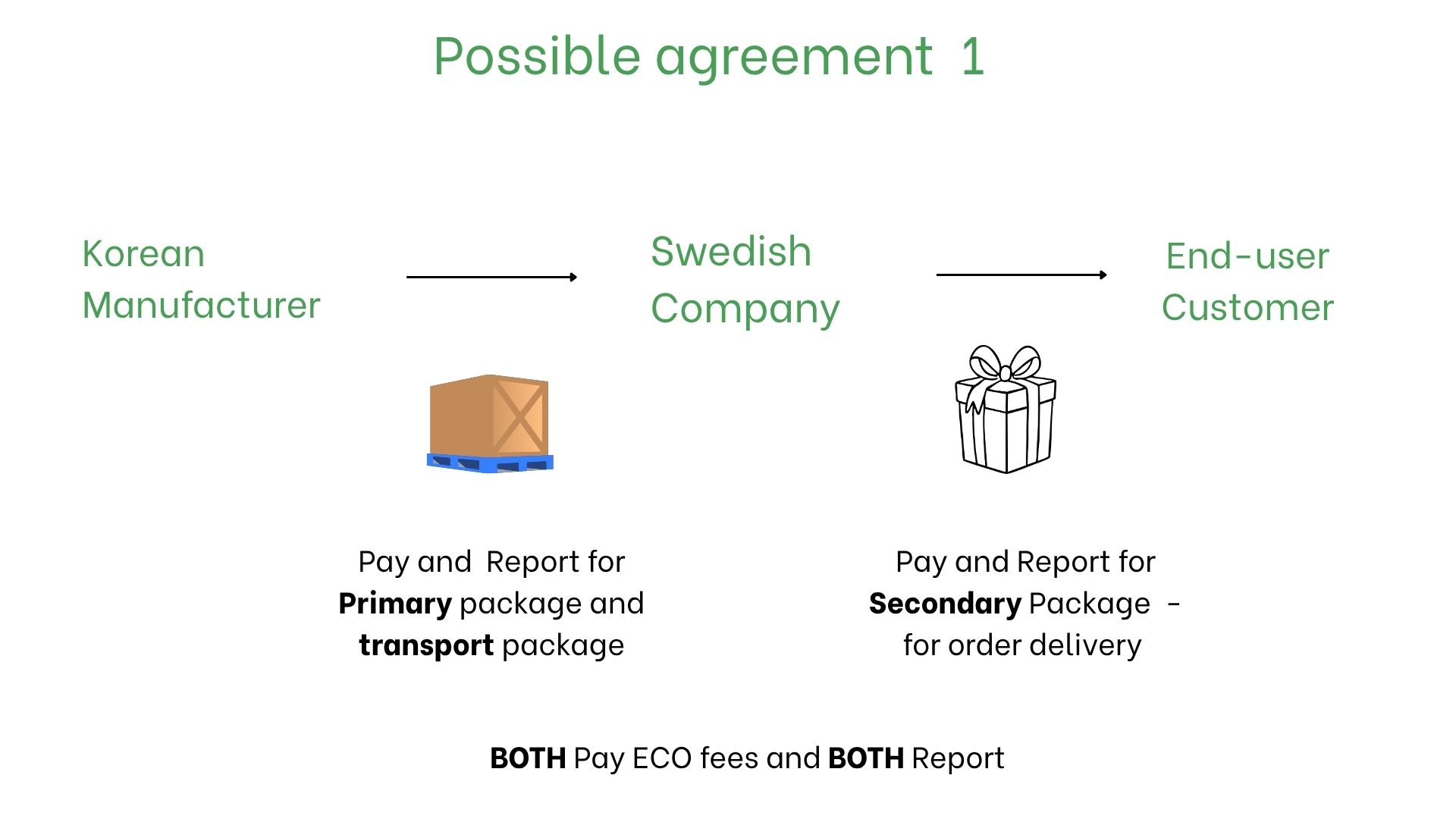
This is one of the most common situation: cosmetics manufacturer from Korea supplies its products to a company in Sweden. Then the Swedish company sells the goods through its website and delivers the goods to customers. According to the agreement between the two companies, the Korean manufacturer reports the primary packaging — bottles and tubes — as well as the transport packaging — boxes. And the seller in Sweden reports the secondary packaging, the one used for order delivery.
In practice, this means that both parties may need to maintain packaging data, calculate packaging weight, and ensure that the relevant packaging categories are correctly reported under local EPR regulations.on EPR packaging compliance models in B2B supply chains where both parties place packaging on the market in different ways.
Example:
A cosmetics manufacturer from Korea supplies its products to a company in Sweden. Then the Swedish company sells the goods through its website and delivers the goods to customers. According to the agreement between the two companies, the Korean manufacturer reports the primary packaging — bottles and tubes — as well as the transport packaging — boxes. And the seller in Sweden reports the secondary packaging, the one used for order delivery.
In practice, this means that both parties may need to maintain packaging data, calculate packaging weight, and ensure that the relevant packaging categories are correctly reported under local EPR regulations.
Scenario 2: The Local Distributor Pays
Under this scenario, the manufacturer enters into a supply agreement under which the first placement on the market — import — is declared by the buyer, and this supply agreement may provide that the distributor is responsible for registration and payment of eco fees in the destination country.
At the same time, the manufacturer undertakes to provide the buyer-distributor with complete information on the composition and weight of the primary packaging, which is necessary for the distributor to include this data in its packaging report.
This scenario is especially relevant for companies working with local distributors, marketplace operators, and large resellers that already hold EPR registrations in several countries.
Example:
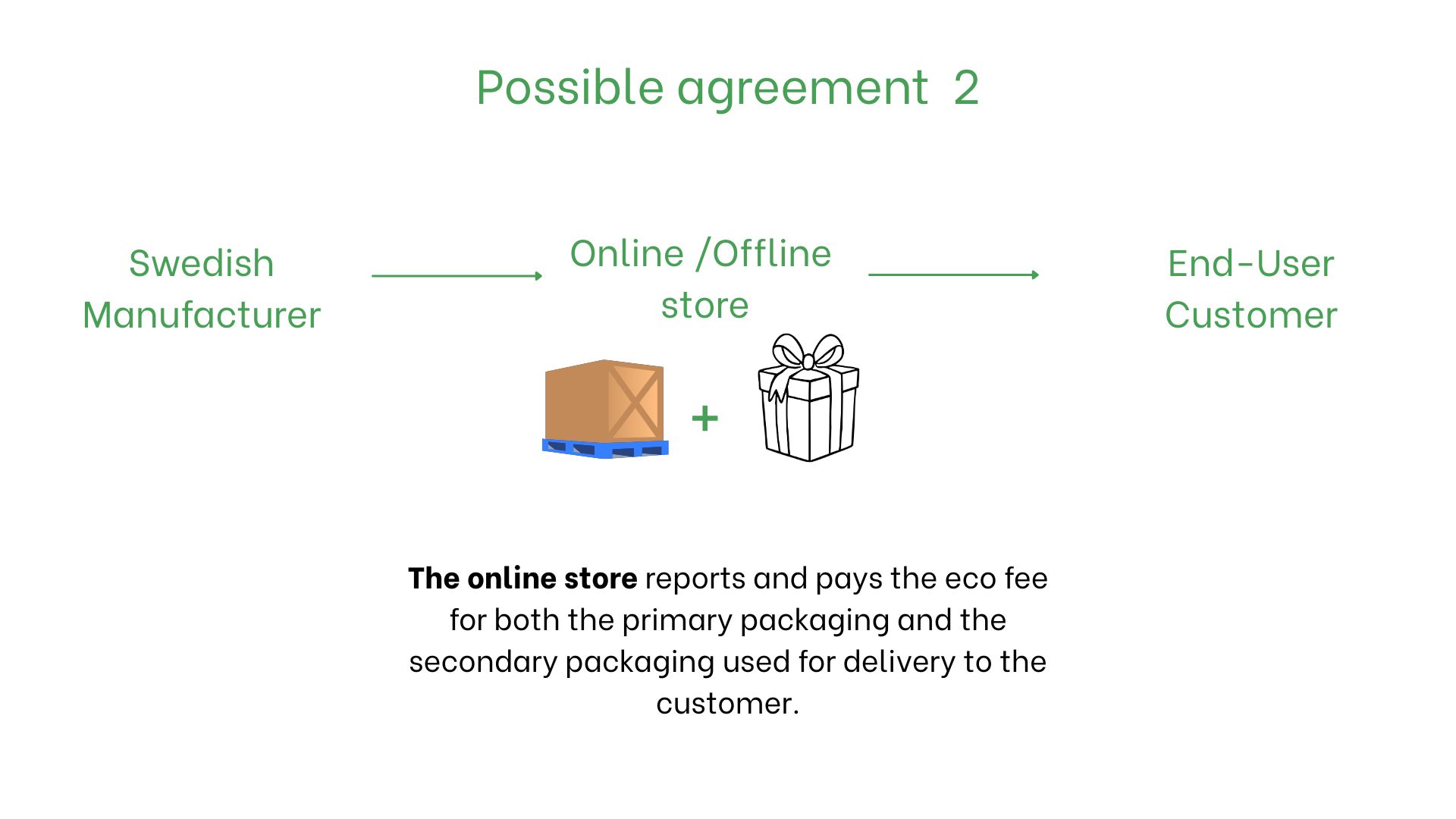
A Swedish clothing manufacturer sells goods to a large online store distributor in Austria, Germany, and Poland. This online store sells clothing from different manufacturers. The online store sells goods B2C to customers in Austria, Germany, and Poland. It has EPR numbers in all of these countries. The online store reports and pays the eco fee for both the primary packaging and the secondary packaging used for delivery to the customer.
In this case, the distributor effectively becomes the main party responsible for packaging EPR reporting, while the manufacturer’s role is to provide correct and complete packaging specifications.
Get a 20 min free consultation for EPR
Ask your questions and get practical next steps

Scenario 3: The Buyer Is the End User
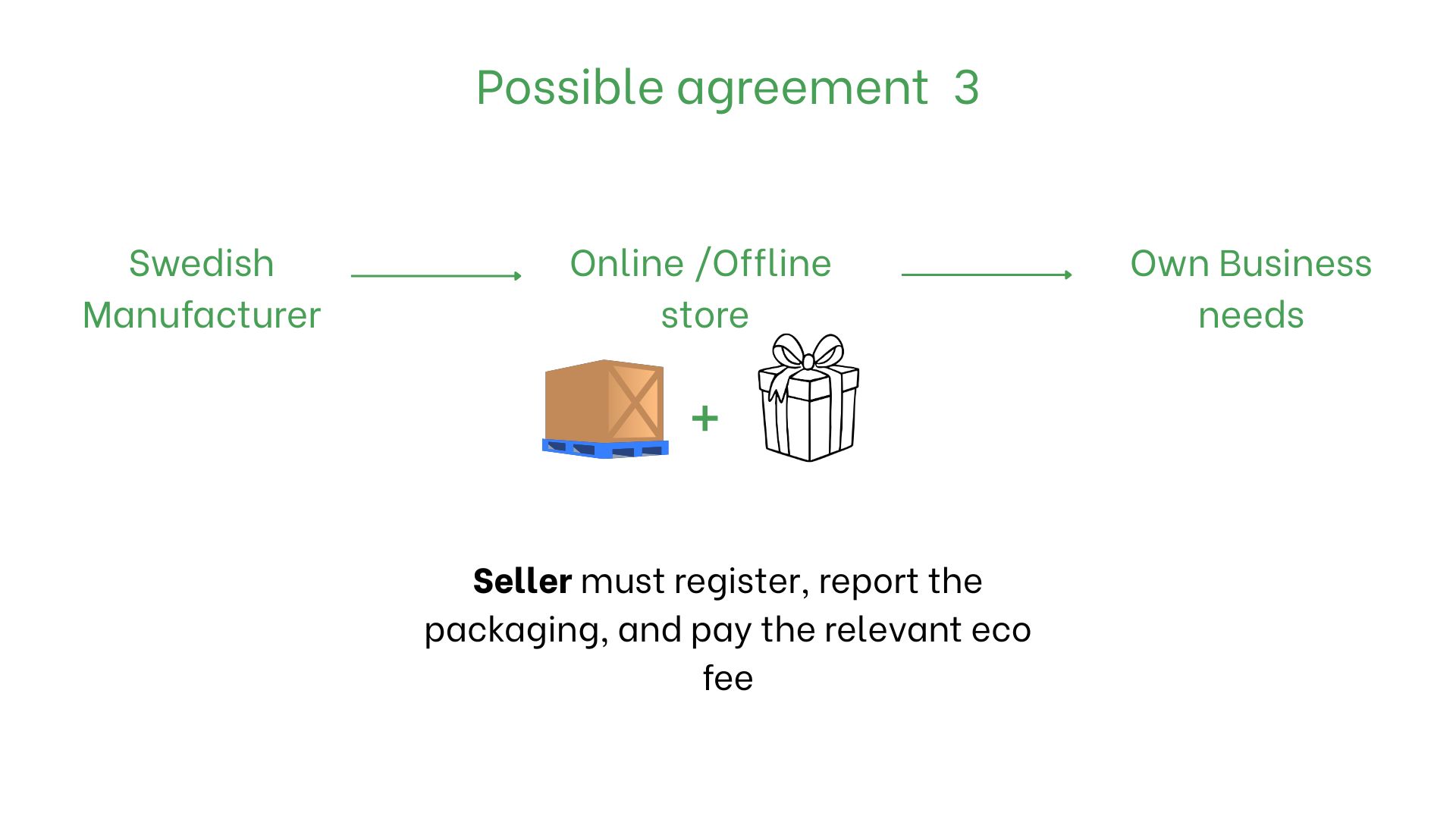
If the buyer is not reselling the products and instead uses them for its own business needs, then the seller remains responsible for the packaging placed on the market.
This point is critical for businesses that assume that B2B sales are automatically exempt from EPR obligations. In many cases, that assumption is incorrect.
Example:
A company sells laptops to a business customer in France, and that customer uses the laptops internally for work. In this case, the seller must register, report the packaging, and pay the relevant eco fee in France.
So even though the sale is B2B, the packaging is still considered subject to EPR because the buyer is the final user of the product.
Important Note on Country-Specific Rules
We give the general principle in this article, but each country may have its own exceptions, definitions, and reporting practices. The allocation of responsibility may depend on:
- who is considered the first party to place the packaging on the market,
- whether the goods are sold for end use or resale,
- the exact wording of the contract
- and the local EPR rules in the country concerned.
For this reason, businesses selling internationally should not rely only on a general interpretation. They should review each destination country individually.
Need Help Understanding Your Packaging EPR Obligations?
If you have a question specifically about your case, you can book a free 30-minute consultation and discuss with a specialist whether you need to register in your case.
This is especially useful if you sell B2B in the EU, work with distributors, or are unsure who is responsible for EPR registration for packaging in your supply chain.
Get a 20 min free consultation for EPR
Find all your answers and become part of Lappa