


USA EPR

Western U.S
EPR (Extended Producer Responsibility) requirements for packaging in Western U.S. states


East U.S
EPR (Extended Producer Responsibility) requirements for packaging in Eastern U.S. states

North U.S
EPR (Extended Producer Responsibility) requirements for packaging in Northern and Midwestern states


Packaging EPR law in Arizona: None enacted.
Arizona is not among the states with enacted packaging EPR legislation. There is no confirmed packaging EPR bill advancing at this time and no planned implementation timeline.Want to be first to know when USA will issue new EPR?
Only important news!

Packaging EPR law in Nevada : None enacted.
Nevada does not currently enforce a packaging EPR law. There are no publicly confirmed active packaging EPR bills moving toward adoption. No implementation date has been establishedWant to be first to know when USA will issue new EPR?
Only important news!
Packaging EPR law in Virginia : None enacted.
Virginia does not currently have a packaging EPR law in force. Packaging EPR bills have been proposed in prior legislative sessions but did not pass. Future proposals are possible, but no adoption date or implementation timeline is confirmed.Want to be first to know when USA will issue new EPR?
Only important news!
What is California EPR packaging
California EPR packaging refers to the Extended Producer Responsibility system introduced by SB 54 (Plastic Pollution Prevention and Packaging Producer Responsibility Act).
The law requires companies placing packaging or certain single-use plastic products on the California market to finance and manage the recycling and disposal of their packaging waste.
The program aims to:
-
Reduce plastic pollution
-
Increase recycling rates
-
Ensure packaging is recyclable or compostable
-
Shift waste management costs from municipalities to producers
The system will be implemented through a Producer Responsibility Organization (PRO) approved by the state.
Does this apply to e-commerce & online sales
Yes. California EPR compliance for sellers applies to e-commerce and online sellers if packaging is used to ship products to consumers in California.
This includes:
-
Online marketplaces
-
Direct-to-consumer brands
-
Cross-border sellers shipping into California
If packaging enters California through online sales, it may fall under the EPR rules.
Who is the “producer” under California EPR
Under SB 54, the producer is the company responsible for placing packaged products on the California market.
The producer may be:
-
The brand owner whose name appears on the product
-
The importer if the brand owner is outside the US
-
The distributor or retailer if no brand owner exists
-
The online marketplace in some marketplace-seller scenarios
Only one entity must take responsibility for the packaging.
Who must register for EPR packaging in California
EPR registration is required for producers that sell or distribute covered packaging or plastic products in California.
This may include:
-
Manufacturers
-
Importers
-
Brand owners
-
Online sellers
-
Marketplace operators
Companies must participate in an approved Producer Responsibility Organization (PRO) rather than registering directly with the government.
California EPR packaging registration threshold
For EPR Packaging thresholds certain small producers may qualify for exemptions.
Typical exemptions may apply if a producer:
-
Generates less than $1 million in annual revenue, or
-
Places very small volumes of packaging on the market.
Final thresholds and eligibility are defined in the implementing regulations.
Easy to use EPR Software to calculate Eco-fee
Manage All Countries with Lappa
Packaging covered (and excluded)
Covered packaging
California EPR applies to:
-
Primary packaging
-
Secondary packaging
-
E-commerce shipping packaging
-
Plastic food service ware
-
Single-use plastic items
Examples:
-
Plastic containers
-
Cardboard shipping boxes
-
Flexible packaging
-
Plastic wraps and films
Excluded packaging
Some packaging may be excluded, including:
-
Medical packaging
-
Packaging regulated by federal law
-
Certain hazardous materials packaging
Producer Responsibility Organization (PRO)
A Producer Responsibility Organization (PRO) manages the system on behalf of producers.
The PRO is responsible for:
-
Collecting producer fees
-
Managing recycling programs
-
Reporting compliance to California regulators
-
Meeting recycling and reduction targets
Producers must join a PRO to comply with the law.
EPR registration in California
Producers do not register individually with the state.
Instead, they must EPR Register:
-
Join an approved PRO
-
Provide packaging data
-
Pay EPR eco-fees
The PRO then manages compliance reporting to the state.
Authorized representative
California EPR currently does not explicitly require an authorized representative for foreign companies, but producers outside the US may need a US entity responsible for compliance.
Many companies appoint a compliance partner or US subsidiary.
What data must be reported
Producers must EPR report packaging data including:
-
Material type (plastic, paper, metal, glass)
-
Packaging weight
-
Packaging format
-
Quantity placed on the California market
-
Recyclability or compostability status
This data is used to calculate EPR eco-fees.
You can estimate potential packaging compliance costs with Lappa’s EPR fee calculator based on material type, packaging weight and market.
First reporting period
The first official reporting periods will begin after the PRO plan is approved and the system becomes operational.
Early preparation and data collection are strongly recommended.
EPR reporting deadlines
Key milestones include:
-
Producer registration with PRO
-
Annual packaging data reporting
-
Eco-fee payments
Exact deadlines will depend on the implementation timeline approved by California regulators.
Labels & marketing claims
California does not have a single mandatory recycling logo for packaging. Instead, the state relies on a combination of voluntary industry labeling programs and strict legal requirements under SB 343 (Truth in Labeling) and AB 1201, which together set some of the toughest rules on recyclability and compostability claims in the United States.
An example of what a label looks like on packaging for California
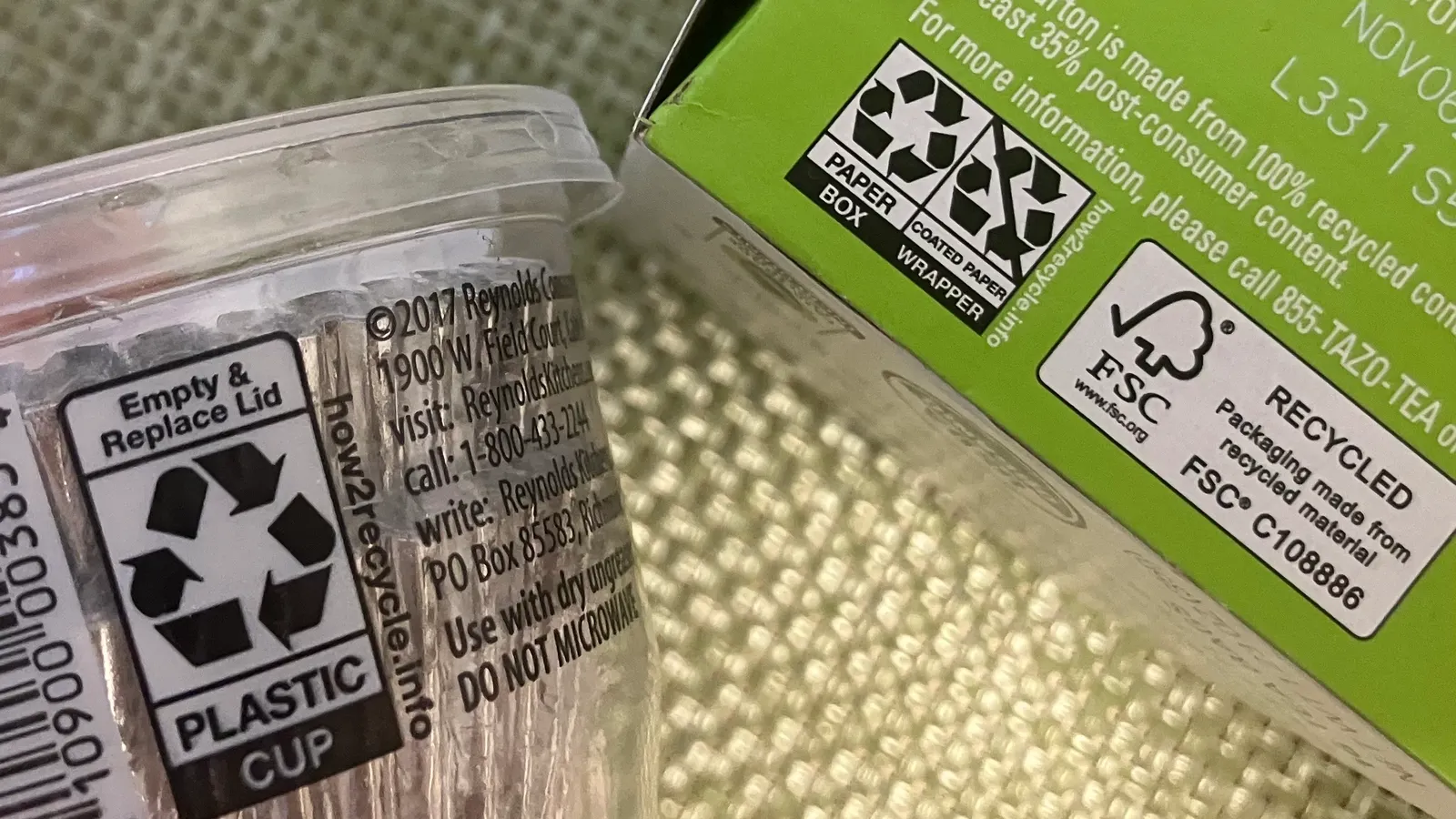
This packaging shows two labels commonly found on products sold in California. The How2Recycle label on the plastic cup — a chasing arrows symbol inside a bordered square with the material identification "Plastic Cup" and the instruction "Empty & Replace Lid" — communicates the specific disposal steps and recyclability status of the packaging component. The cardboard box carries a How2Recycle multi-material label identifying three separate packaging components — Paper Box, Coated Paper, and Wrapper — each with its own recycling guidance directing consumers to how2recycle.info.
📎 Download the How2Recycle symbols:
EPR eco fees & eco-modulation
Producers will pay eco-fees based on the amount and type of packaging placed on the market.
Fees may vary depending on:
-
Material recyclability
-
Environmental impact
-
Use of recycled content
-
Packaging weight
This system is known as eco-modulation.
Risks, penalties & common mistakes
Non-compliance may lead to:
-
Administrative penalties
-
Product restrictions
-
Legal enforcement actions
Common mistakes include:
-
Not identifying the correct producer
-
Missing reporting obligations
-
Incorrect packaging data
-
Misleading recycling claims
What e-commerce sellers should do now
Online sellers shipping to California should:
-
Identify whether they qualify as a producer
-
Map packaging materials used in shipments
-
Track packaging volumes entering California
-
Monitor PRO registration requirements
-
Review environmental marketing claims
Preparing early will help avoid compliance risks once the system becomes operational.
Get a 20 min free consultation for EPR
Find all your answers and become part of Lappa
FAQ
Is California EPR already active?
- The system is currently being implemented and will roll out in phases.
Does this apply to Amazon sellers?
- Yes, if they ship products to consumers in California.
Do foreign companies need to comply?
- Yes, if they place packaging on the California market.
Extended producer responsibility for packaging in United States of America - Colorado
Colorado has adopted a packaging EPR framework called the Producer Responsibility Program for Statewide Recycling (often referred to as Colorado’s “Producer Responsibility Program”). It requires obligated producers of packaging material supplied in/into Colorado to participate in the program (typically via a Producer Responsibility Organization, or PRO) and fund recycling collection, transportation, and processing services statewide. This is a key part of United States of America packaging recycling policy and a flagship example of EPR packaging United States of America in practice. The environmental authority overseeing the program is Colorado Department of Public Health and Environment (CDPHE) EPR.
Does this apply to e-commerce & online sales?
Yes. E-commerce sellers are covered if they:- Sell packaged goods into Colorado
- Ship directly to Colorado consumers
- Import goods into the U.S. and sell into Colorado
Who is the 'producer' under Colorado EPR
Colorado uses a producer hierarchy. Generally, the producer is:- The brand owner of the product sold under its brand
- If no brand owner is in the U.S. → the importer
- If no importer → the distributor or retailer
- For private label → the brand owner of the private label
Who must register for EPR packaging in Colorado
All producers of covered packaging and paper products that sell into Colorado must:- Register with the approved PRO (Circular Action Alliance – CAA)
- Submit annual data reports
- Pay eco-modulated fees
Colorado EPR packaging registration threshold
A producer is exempt if:- Global gross revenue is under $5 million, OR
- The producer supplies less than 1 ton of covered materials annually into Colorado
External expertise for all your EPR needs
Start EPR reporting within 24 hours
Packaging covered (and excluded)
Covered materials include:
- Paper and cardboard packaging
- Plastic packaging (rigid and flexible)
- Glass packaging
- Metal packaging
- Food service ware
- Printed paper (catalogs, newspapers, office paper)
Exclusions include:
- Beverage containers covered by deposit programs
- Packaging for certain medical or drug products
- Industrial packaging not typically disposed of by households
- Certain hazardous materials packaging
Producer Responsibility Organization (PRO)
Circular Action Alliance (CAA) is the approved PRO in Colorado. It manages producer registration, fee collection, recycling funding, program planning, and performance reporting.EPR registration in Colorado
Producers must:- Create an account in the CAA portal
- Register their company
- Submit packaging data
- Pay required fees
Authorized representative
Colorado does not require a mandatory in-state authorized representative. However, companies without a U.S. presence may rely on an importer or responsible U.S. entity under the producer hierarchy.What data must be reported
Producers must report:- Total weight of packaging and paper supplied into Colorado
- Breakdown by material type (plastic, glass, metal, paper, etc.)
- Format categories (rigid, flexible, etc.)
- Potential recyclability classifications
First reporting period
Initial registration occurred in 2024. The first full supply data reporting covers packaging supplied in 2024, with reporting due in 2025.EPR reporting deadlines
Key milestones:- Registration deadline: October 1, 2024 (initial phase)
- First annual reporting deadline: July 31, 2025
- Fee payments begin as program implementation starts in 2026
Labels & marketing claims
Colorado does not have a mandatory recycling logo for packaging. However, the state has introduced specific labeling requirements for compostable products under SB 23-253 (Compostable Product Labeling Act), in force since July 1, 2024, making it one of the few states with legally binding rules on compostability claims.
An example of what a label looks like on packaging for Colorado
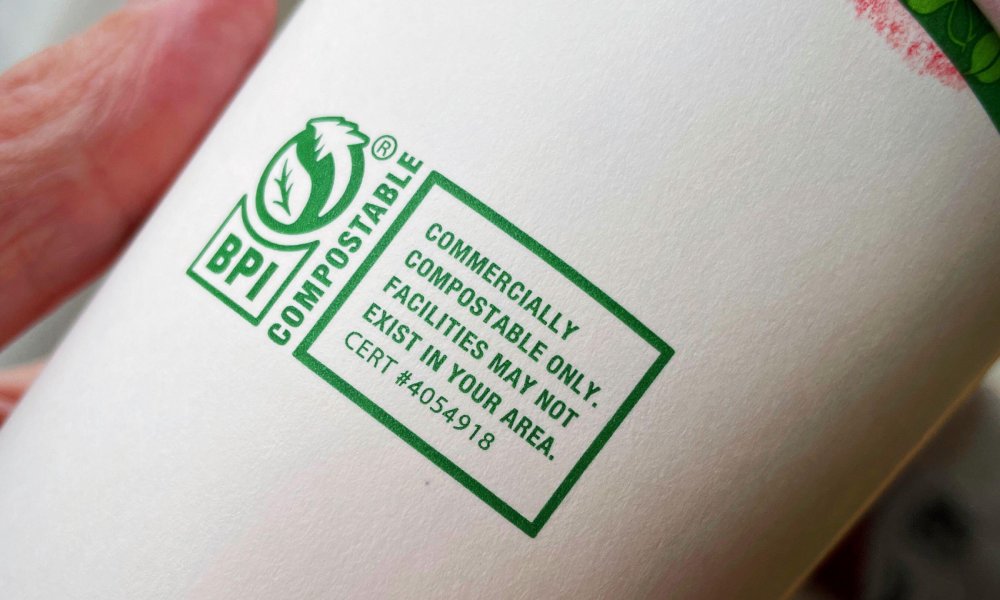
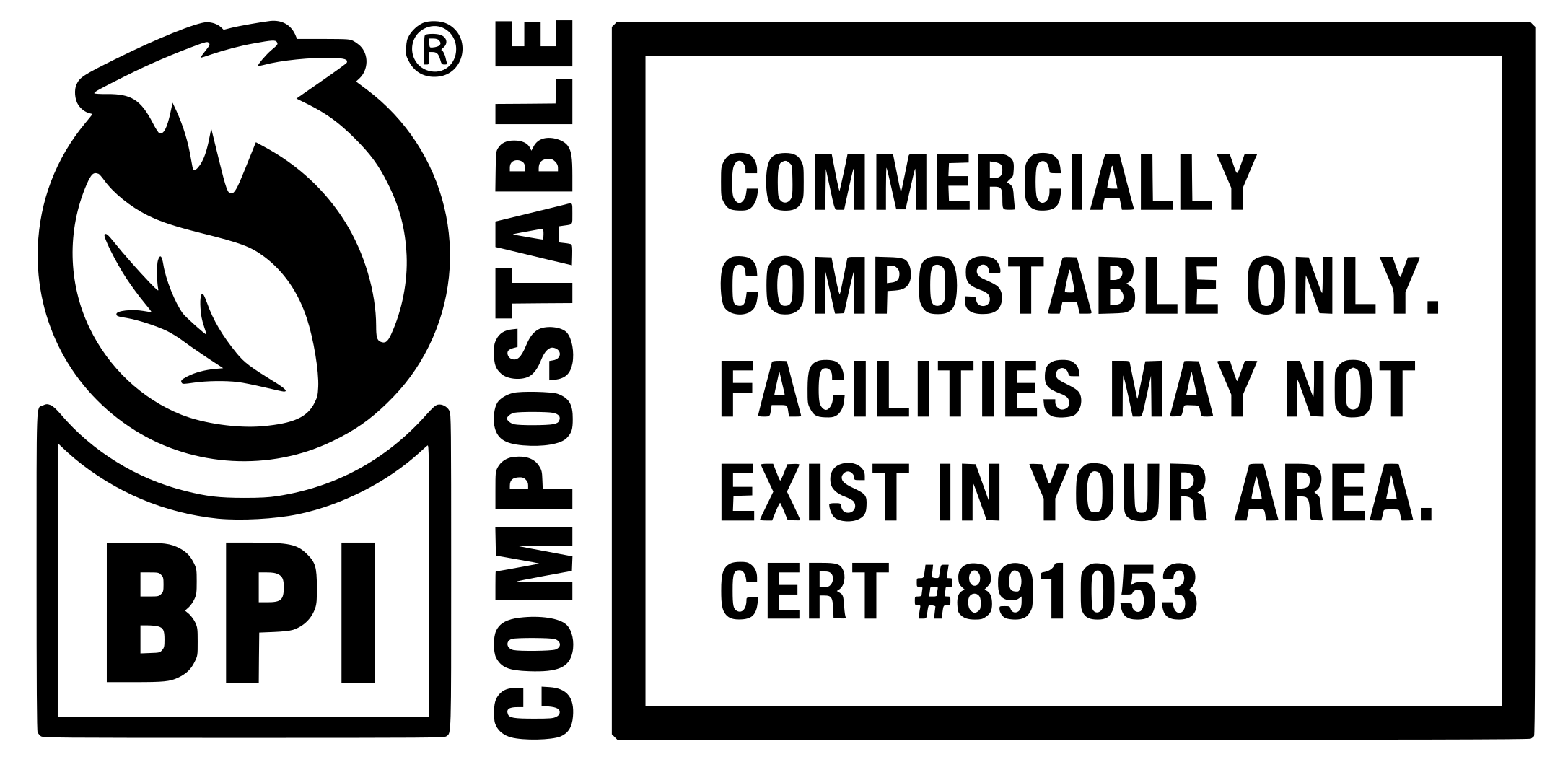
This packaging shows a BPI Compostable label commonly found on food service products sold in Colorado. The mark — a green square logo with a leaf symbol and the text "BPI Compostable" — indicates that the product is certified compostable to ASTM D6400 or ASTM D6868 standards by the Biodegradable Products Institute. The accompanying notice "Commercially Compostable Only. Facilities May Not Exist In Your Area" clarifies that the product requires industrial composting conditions and may not be accepted by all local programs.
📎 Download the BPI Compostable symbol:

EPR eco fees & eco-modulation
Colorado uses eco-modulated fees. Fees are based on:- Material type
- Recyclability
- Recycling system costs
- Environmental impact factors
Risks, penalties & common mistakes
Risks:
- Administrative penalties for failure to register
- Daily fines for non-compliance
- Potential prohibition from selling into Colorado
Common mistakes:
- Assuming marketplace platforms handle compliance automatically
- Ignoring service packaging (e-commerce shipping materials)
- Underestimating packaging weights
- Missing reporting deadlines
What e-commerce sellers should do now
- Determine if you qualify as the “producer.”
- Assess revenue and tonnage thresholds.
- Register with CAA (if required).
- Begin collecting packaging weight data by material type.
- Review packaging design for future eco-fee impact.
Register online
Start your EPR Reporting within 24 hours
FAQ for Colorado EPR
Does Colorado EPR apply to small Etsy sellers- Only if revenue exceeds $5M OR packaging exceeds 1 ton annually into Colorado.
- Yes, if supplied to Colorado consumers.
- Only if they fall into the producer hierarchy.
- Full operational funding begins as the program rolls out in 2026.
What is Maine EPR packaging
Maine has a statewide Extended Producer Responsibility (EPR) program for packaging that requires producers to fund municipal recycling and waste management costs for packaging placed on the Maine market. The program is administered by the Maine Department of Environmental Protection (DEP).
Does this apply to e-commerce & online sales
Yes. If you ship packaged products into Maine (DTC, marketplaces, cross-border), the packaging entering Maine can be in scope. The obligation follows the “producer” definition (below).
Who is the “producer” under Maine EPR
Generally, the producer is:
-
The brand owner (legal owner of the brand on the product), or
-
If the brand owner has no U.S. physical presence, the importer into the U.S. (and other fallbacks may apply depending on the product/structure).
Who must register in Maine EPR
Producers of covered packaging sold/offered for sale/distributed in Maine must register with the state-approved program operator (Maine uses the term Stewardship Organization (SO) rather than PRO).
Maine EPR packaging registration threshold (key exemptions)
DEP summarizes exemptions as including:
-
< $2,000,000 gross annual revenue (standard exemption), and
-
< 1 ton of packaged Maine sales (standard exemption).
There is also a phase-in small producer exemption: for the first 1–3 years after the program contract effective date, the revenue threshold is $5 million (then it drops to $2 million).
Low-volume reporting option: DEP notes “low-volume producers” (e.g., <15 tons/year) may be able to report in a simplified manner and pay a flat rate per ton.
External expertise for all your EPR needs
Start EPR reporting within 24 hours
Packaging covered (and excluded)
Maine’s program covers packaging material broadly (multiple materials and formats). DEP also lists certain producer/material exclusions and exemptions on its program page.
Producer Responsibility Organization (PRO)
-
Maine calls the operator a Stewardship Organization (SO).
-
The SO is selected via a DEP process (RFP/contract) and then manages producer onboarding, data intake, and invoicing to fund municipal reimbursements.
EPR registration in Maine
In practice, producers comply by:
-
Registering with the approved SO,
-
Submitting required packaging data, and
-
Paying invoices/fees to the SO (which funds municipal reimbursements).
Authorized representative
Maine’s statute focuses on the “producer” definition (brand owner/importer). Whether you need a U.S. compliance contact is typically handled operationally via the SO onboarding process (especially for non-U.S. entities).
What data must be reported
DEP program materials and implementation summaries indicate reporting is based on the amount/type of packaging placed on the market, used to calculate payments and reimbursements.
Typical data fields producers should be ready to provide:
-
Material category / format
-
Weight (and/or units converted to weight)
-
Maine sales allocation method (how you determine what enters Maine)
First reporting period & deadlines
Maine finalized program rules in December 2024, and DEP communications describe a ramp to program start and first payments/reimbursements around 2027.
DEP and industry reporting also reference:
-
DEP contracting steps in 2026
-
Producer registration/reporting of prior-year data in 2026
-
Municipal reimbursements beginning fall 2027 (for earlier cost years).
(Exact dates can shift with DEP contracting; treat the DEP timeline as the source of truth.)
Labels & marketing claims
Maine does not mandate a universal recycling logo on packaging. Instead, the state's EPR law (LD 1541) financially incentivizes producers to use clear, accurate labeling by offering lower fees for packaging that reduces consumer confusion about recyclability. In practice, the most widely used voluntary labeling system across the US market — including products sold in Maine — is the How2Recycle label, developed by the Sustainable Packaging Coalition.
An example of what a label looks like on packaging for Maine
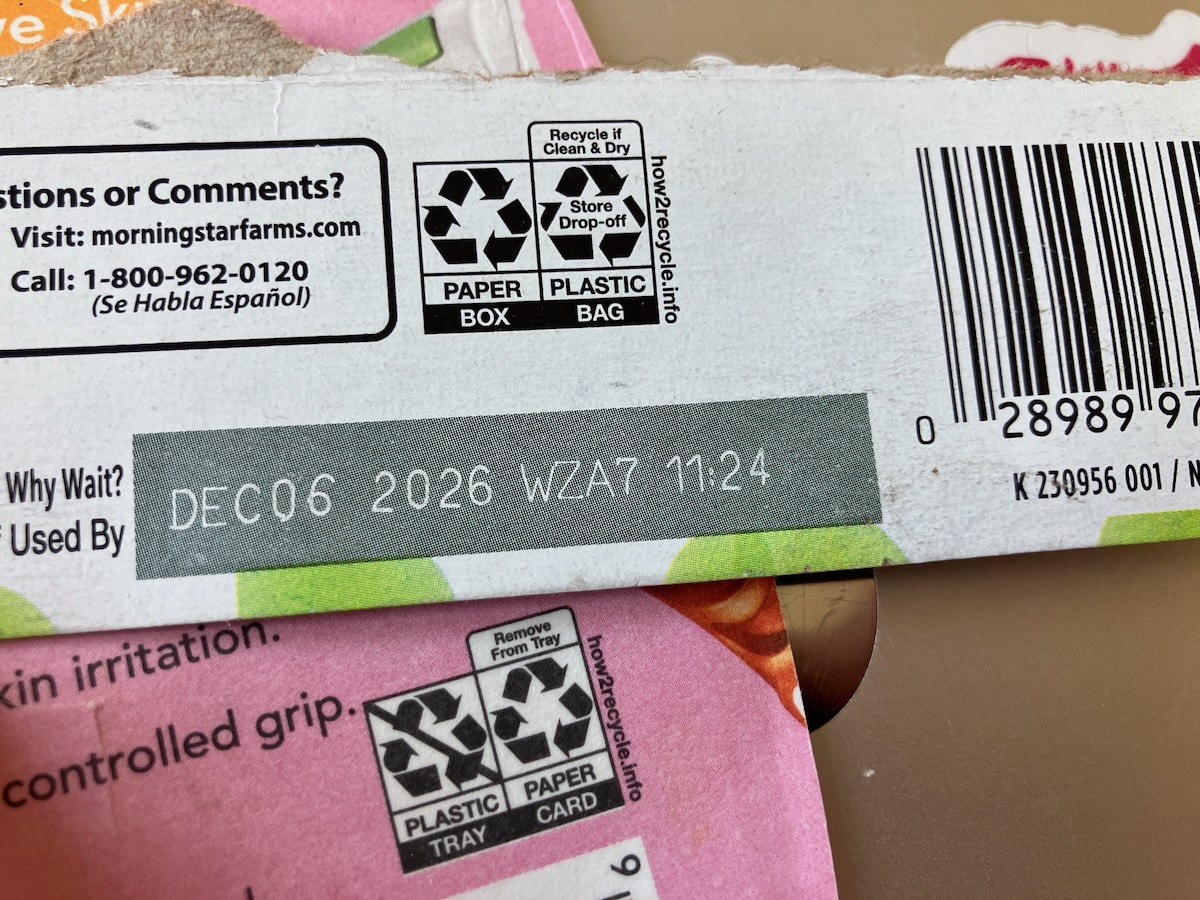
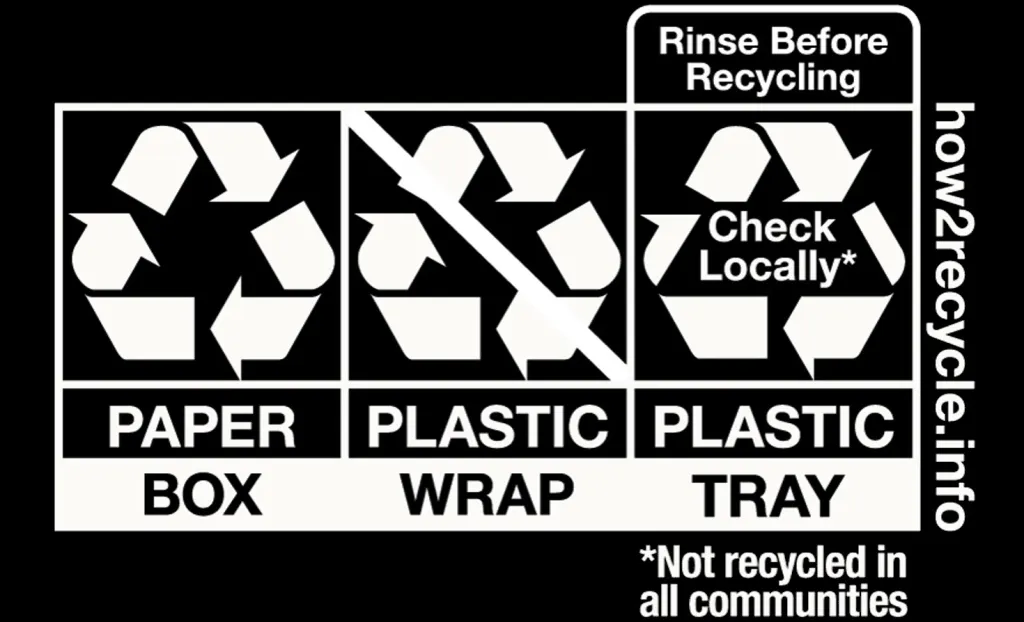
These two consumer products show How2Recycle multi-component labels. Each tile gives separate disposal instructions for a different packaging component. The Paper Box and Paper Card tiles indicate curbside recyclability. The Plastic Bag tile directs consumers to a store drop-off location, while the Plastic Tray tile — marked with crossed-out arrows — indicates the component is not recyclable. Both labels reference how2recycle.info for location-specific guidance.
📎 Download the How2Recycle symbols:
EPR eco fees & eco-modulation
Maine’s approach is designed so producer payments vary based on amount and type of packaging, with adjustments intended to incentivize better environmental outcomes (eco-modulation concepts).
Risks, penalties & common mistakes
Common pitfalls to call out in your guide:
-
Assuming “marketplace” is always responsible (often it’s still the brand owner/importer)
-
Missing the small producer exemption phase-in (the $5M → $2M shift)
-
Underestimating Maine allocation (how much packaging enters the state)
-
Misclassifying materials / weights → incorrect invoices and compliance risk
What e-commerce sellers should do now
-
Map all packaging components used for Maine shipments (product + shipping materials)
-
Identify the producer in your structure (brand owner vs importer fallback)
-
Build a repeatable Maine sales allocation method
-
Monitor the SO onboarding announcements and DEP timeline
Get a 20 min free consultation for EPR
Find all your answers and become part of Lappa
FAQ for Maine EPR
Is there a mandatory EPR logo in Maine?
- No universal logo requirement under the EPR law; compliance is mainly registration/reporting/fees.
Are small businesses exempt?
- Often yes—Maine has revenue and tonnage exemptions, including a phase-in threshold.
What is Maryland EPR packaging
Maryland adopted an Extended Producer Responsibility (EPR) framework for packaging through the Packaging Materials Producer Responsibility Act.
The law introduces a system where producers of packaging must finance and support recycling and waste management programs in the state.
The program is overseen by the Maryland Department of the Environment (MDE) and will be implemented through a Producer Responsibility Organization (PRO).
The goal is to:
-
Improve recycling infrastructure
-
Reduce packaging waste
-
Shift recycling costs from municipalities to producers.
Does this apply to e-commerce & online sales
Yes.
Maryland EPR applies to e-commerce and online sales if packaging enters the Maryland market through shipped products.
This includes:
-
Direct-to-consumer brands
-
Online marketplaces
-
Importers shipping products to Maryland customers.
Who is the “producer” under Maryland EPR
Under the Maryland EPR law, the producer is typically:
-
The brand owner whose name appears on the product
-
If the brand owner has no U.S. presence, the importer into the United States
-
If neither applies, the distributor or retailer
Only one entity must assume responsibility for the packaging.
Who must register for EPR packaging in Maryland
Producers that sell packaged products in Maryland must:
-
Register with an approved Producer Responsibility Organization (PRO)
-
Report packaging data
-
Pay eco-fees based on packaging materials placed on the market.
Maryland EPR packaging registration threshold
Certain small producers may qualify for exemptions, typically based on:
-
Annual revenue thresholds
-
Low volumes of packaging placed on the market.
Specific thresholds and details will be defined in implementing regulations.
Detailed EPR Guidance for each Jurisdiction
We support 36 jurisdictions
Packaging covered (and excluded)
Covered packaging
The Maryland program applies to many types of packaging, including:
-
Primary packaging
-
Secondary packaging
-
Shipping and e-commerce packaging
-
Plastic, paper, glass, and metal packaging.
Excluded packaging
Some packaging may be excluded, including:
-
Medical packaging
-
Hazardous material packaging
-
Packaging regulated by federal law.
Producer Responsibility Organization (PRO)
A Producer Responsibility Organization (PRO) will administer the Maryland EPR system.
The PRO will:
-
Collect producer data
-
Calculate eco-fees
-
Finance recycling programs
-
Report compliance to regulators.
Producers will comply by joining the PRO rather than registering directly with the state.
EPR registration in Maryland
Producers must:
-
Join the approved PRO
-
Submit packaging data
-
Pay annual EPR fees
The PRO will manage reporting obligations to the state.
Authorized representative
Foreign producers selling into Maryland may need a U.S.-based entity or representative responsible for compliance with the EPR system.
What data must be reported
Producers will generally need to report:
-
Packaging material type
-
Weight of packaging placed on the market
-
Packaging format or category
-
Recyclability status.
This data will determine the producer’s eco-fees.
First reporting period
The first reporting periods will begin once the PRO system and regulations are finalized and implemented by Maryland authorities.
Companies should begin preparing packaging data in advance.
EPR reporting deadlines
The program will include:
-
Initial producer registration
-
Annual packaging data reporting
-
Periodic fee payments
Exact deadlines will be defined in the implementation timeline.
Labels & marketing claims
Maryland EPR does not introduce a mandatory recycling logo for packaging. Producers selling into the state are expected to follow standard U.S. labeling practices, including the voluntary How2Recycle label system and FTC Green Guides requirements for any environmental marketing claims such as "recyclable" or "eco-friendly."
An example of what a label looks like on packaging sold in Maryland
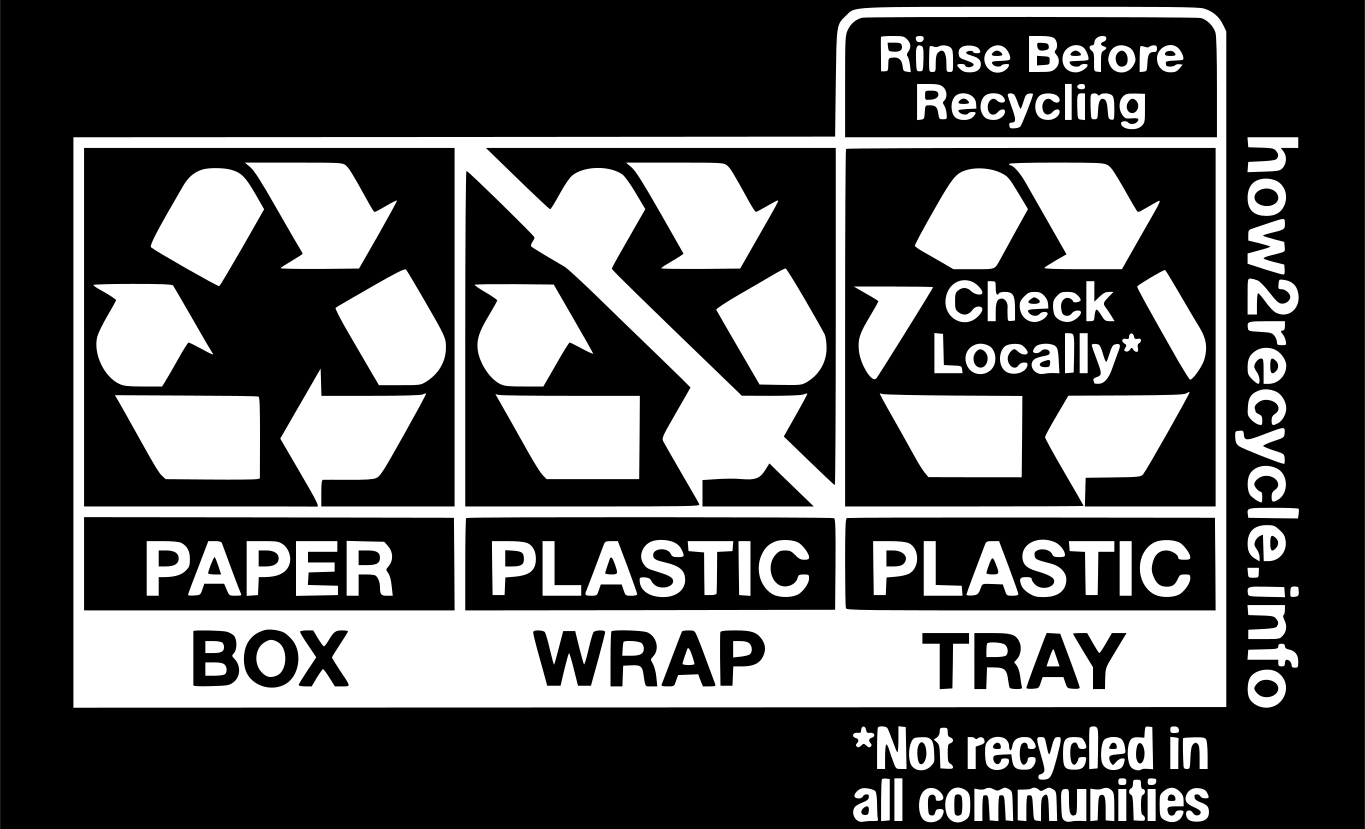
This packaging shows How2Recycle labels commonly found on products sold in Maryland. Each label identifies disposal instructions per component: the Paper Box is recyclable curbside ("Recycle if Clean & Dry"), while the Plastic Bag requires store drop-off. The Paper Card is recyclable, while the Plastic Tray is not — consumers are instructed to separate components before disposal. The How2Recycle label is a voluntary standardized system widely adopted by U.S. brands; it is not mandated by Maryland law.
📎 Download the How2Recycle symbols:
EPR eco fees & eco-modulation
Producers will pay eco-fees based on:
-
Packaging weight
-
Material type
-
Recyclability
-
Environmental impact.
More sustainable packaging may benefit from lower eco-fees through eco-modulation.
Risks, penalties & common mistakes
Non-compliance may result in:
-
Financial penalties
-
Enforcement actions
-
Restrictions on selling products in the state.
Common mistakes include:
-
Not identifying the correct producer
-
Failing to report packaging data
-
Misclassifying packaging materials.
What e-commerce sellers should do now
Online sellers shipping to Maryland should:
-
Identify whether they qualify as a producer
-
Track packaging materials used in shipments
-
Monitor regulatory updates and PRO requirements
-
Prepare packaging data for reporting.
Get a 20 min free consultation for EPR
Find all your answers and become part of Lappa
FAQ for Maryland EPR
Is Maryland EPR already active?
- The system is being implemented and will roll out in phases.
Does this apply to online sellers?
- Yes, if packaging enters Maryland through shipped products.
Is there a mandatory recycling logo?
- No. Maryland EPR focuses on producer reporting and financing recycling systems.
What is Minnesota EPR packaging
Minnesota introduced an Extended Producer Responsibility system through the Packaging Waste and Cost Reduction Act (2024).
The law requires companies placing packaging, food packaging, or paper products on the Minnesota market to finance recycling and waste management systems.
The program aims to:
-
Reduce packaging waste
-
Improve recycling and composting infrastructure
-
Increase reusable and recyclable packaging
-
Shift waste management costs from municipalities to producers.
The program is overseen by the Minnesota Pollution Control Agency (MPCA).
Does this apply to e-commerce & online sales
Yes.
Minnesota EPR applies to products shipped into the state, including online and e-commerce sales.
If packaging is used to ship goods to Minnesota consumers, it may fall under the EPR requirements.
Who is the “producer” under Minnesota EPR
The producer is generally the company responsible for introducing packaging into the Minnesota market.
This may include:
-
The brand owner
-
The manufacturer
-
The importer of the product
-
In some cases, the retailer or distributor
The law uses a tiered definition to identify which company must take responsibility.
Who must register for EPR packaging in Minnesota
Companies that sell packaged goods, food packaging, or paper products in Minnesota must participate in the EPR system.
To comply, producers must:
-
Join the state-approved Producer Responsibility Organization (PRO)
-
Report packaging data
-
Pay EPR eco-fees.
Minnesota EPR packaging registration threshold
Small producers may be exempt if they:
-
Have less than $2 million in annual global revenue, or
-
Sell less than 1 ton of covered packaging per year into Minnesota.
Companies exceeding these thresholds must comply with the program.
Make your first declaration within 24 hours
Easy to use EPR Software
Packaging covered (and excluded)
Covered packaging
The Minnesota EPR program covers:
-
Product packaging
-
E-commerce shipping packaging
-
Food packaging
-
Paper products
-
Packaging components
Packaging includes materials used to transport, protect, or market products.
Excluded packaging
Certain packaging is excluded, including:
-
FDA-regulated medical products
-
Hazardous materials packaging
-
Certain regulated agricultural products.
Producer Responsibility Organization (PRO)
Minnesota requires producers to join a Producer Responsibility Organization (PRO).
The state approved Circular Action Alliance (CAA) as the first PRO responsible for managing the program.
The PRO will:
-
Collect producer data
-
Set recycling targets
-
Collect eco-fees
-
Fund recycling and composting systems.
EPR registration in Minnesota
Producers must register with the PRO (CAA) to comply with the law.
The first producer registration deadline was July 1, 2025.
After registration, producers must provide packaging data and participate in the stewardship program.
Authorized representative
Companies located outside the United States may need a U.S. entity or responsible party to handle compliance with the Minnesota EPR program.
What data must be reported
Producers must report data including:
-
Packaging material type
-
Packaging weight
-
Packaging format or category
-
Quantity placed on the Minnesota market.
This information is used to calculate EPR eco-fees.
First reporting period
The program will roll out gradually as the PRO develops a statewide stewardship plan and recycling system.
Key milestones include needs assessments and infrastructure development managed by the MPCA and the PRO.
EPR reporting deadlines
Important milestones include:
-
July 1, 2025 – producer registration deadline
-
2026 – statewide needs assessment
-
2028 – stewardship plan finalized
-
2029–2031 – producers gradually cover most recycling system costs.
Labels & marketing claims
Minnesota EPR does not introduce a mandatory recycling logo for packaging. Producers are expected to follow standard U.S. labeling practices, including the voluntary How2Recycle label system and FTC Green Guides requirements for environmental claims.
An example of what a label looks like on packaging sold in Minnesota
This packaging shows How2Recycle labels commonly found on products sold in Minnesota. Each label identifies disposal instructions per component: the Paper Box is recyclable curbside ("Recycle if Clean & Dry"), while the Plastic Bag requires store drop-off. The Paper Card is recyclable, while the Plastic Tray is not — consumers are instructed to separate components before disposal. The How2Recycle label is a voluntary standardized system widely adopted by U.S. brands; it is not mandated by Minnesota law.
📎 Download the How2Recycle symbols:
EPR eco fees & eco-modulation
Producers must pay eco-fees based on the amount and type of packaging placed on the market.
Fees may vary depending on:
-
Packaging material
-
Recyclability
-
Environmental impact.
The system encourages companies to use more sustainable packaging designs.
Risks, penalties & common mistakes
Non-compliance may lead to significant penalties.
Violations can result in fines of up to $25,000 per day, increasing for repeated violations.
Common mistakes include:
-
Not identifying the correct producer
-
Missing registration deadlines
-
Incorrect packaging reporting.
What e-commerce sellers should do now
Companies selling products to Minnesota should:
-
Determine if they qualify as a producer
-
Track packaging materials used for shipments
-
Register with the PRO if required
-
Prepare packaging data for reporting.
Register online
Start your EPR Reporting within 24 hours
FAQ for EPR Minnesota
Is Minnesota EPR already active?
- Yes, the program has been adopted and is currently being implemented in phases.
Does this apply to online sellers?
- Yes, if products are shipped into Minnesota with packaging.
Is there a mandatory recycling label?
- No, Minnesota EPR focuses on reporting and financing recycling systems rather than mandatory packaging logos.
What is Oregon EPR packaging
Oregon introduced Extended Producer Responsibility for packaging through the Plastic Pollution and Recycling Modernization Act (SB 582).
The law requires producers of packaging, paper products, and food service ware to finance improvements to the state’s recycling system.
The program is overseen by the Oregon Department of Environmental Quality (DEQ) and implemented through a Producer Responsibility Organization (PRO).
The law aims to:
-
Improve recycling infrastructure
-
Increase recycling rates
-
Reduce contamination in recycling systems
-
Shift recycling costs from municipalities to producers.
Does this apply to e-commerce & online sales
Yes. Oregon EPR compliance for online sellers applies to products shipped into Oregon, including packaging used for e-commerce and online sales.
If packaging is used to deliver products to Oregon consumers, it may fall under the EPR program.
Who is the “producer” under Oregon EPR
Under Oregon EPR, the producer is typically:
-
The brand owner whose name appears on the product
-
If the brand owner is located outside the United States, the importer
-
If neither applies, the distributor or retailer
Only one company is responsible for the packaging.
Who must register for EPR packaging in Oregon
Companies placing covered EPR registration for packaging or paper products on the Oregon market must:
-
Join an approved Producer Responsibility Organization (PRO)
-
Report packaging data
-
Pay EPR eco-fees.
Oregon EPR packaging registration threshold
For EPR packaging thresholds Certain small producers may be exempt if they:
-
Have less than $5 million in annual revenue, or
-
Sell less than 1 ton of covered material per year into Oregon.
Companies exceeding these thresholds must comply with the EPR program.
Easy to use EPR Software to calculate Eco-fee
Manage All Countries with Lappa
Packaging covered (and excluded)
Covered packaging
The Oregon EPR program covers:
-
Product packaging
-
E-commerce shipping packaging
-
Paper products
-
Food service ware.
Covered materials include:
-
Plastic packaging
-
Paper and cardboard
-
Glass packaging
-
Metal packaging.
Excluded packaging
Certain packaging types may be excluded, including:
-
Medical packaging
-
Hazardous materials packaging
-
Packaging regulated by federal law.
Producer Responsibility Organization (PRO)
Oregon approved Circular Action Alliance (CAA) as the Producer Responsibility Organization responsible for managing the program.
The PRO will:
-
Collect packaging data from producers
-
Calculate eco-fees
-
Fund recycling system improvements
-
Report compliance to Oregon regulators.
EPR registration in Oregon
Producers must register with the PRO (Circular Action Alliance) rather than directly with the state.
Registration includes:
-
Providing company information
-
Reporting packaging data
-
Paying annual eco-fees.
Authorized representative
Foreign producers selling into Oregon may need a U.S.-based entity or representative responsible for compliance.
What data must be reported
Producers must EPR report packaging data including:
-
Material type (plastic, paper, glass, metal)
-
Packaging weight
-
Packaging format
-
Quantity placed on the Oregon market.
This information is used to calculate eco-fees.
First reporting period
Oregon EPR reporting officially launched its producer registration in 2024, with producers required to submit packaging data for the program rollout.
The recycling modernization program will gradually expand over the coming years.
EPR reporting deadlines
Key milestones include:
-
2024 – producer registration begins
-
July 2025 – new recycling system improvements start
-
Ongoing annual reporting and fee payments.
Labels & marketing claims
Oregon EPR does not introduce a mandatory recycling logo for packaging. Producers are expected to follow standard U.S. labeling practices, including the voluntary How2Recycle label system and FTC Green Guides requirements for environmental claims.
An example of what a label looks like on packaging sold in Oregon
This packaging shows How2Recycle labels commonly found on products sold in Oregon. Each label identifies disposal instructions per component: the Paper Box is recyclable curbside ("Recycle if Clean & Dry"), while the Plastic Bag requires store drop-off. The Paper Card is recyclable, while the Plastic Tray is not — consumers are instructed to separate components before disposal. The How2Recycle label is a voluntary standardized system widely adopted by U.S. brands; it is not mandated by Oregon law.
📎 Download the How2Recycle symbols:
EPR eco fees & eco-modulation
Producers must pay eco-fees based on:
-
Packaging material
-
Packaging weight
-
Recyclability
-
Environmental impact.
Eco-modulation encourages producers to adopt more sustainable packaging designs.You can estimate potential packaging compliance costs with Lappa’s EPR fee calculator based on packaging material and volume. For registration, reporting and ongoing compliance service costs, see Lappa’s EPR pricing page.
Risks, penalties & common mistakes
Non-compliance may lead to:
-
Financial penalties
-
Enforcement actions
-
Restrictions on selling products in Oregon.
Common mistakes include:
-
Not identifying the responsible producer
-
Missing registration deadlines
-
Incorrect packaging data reporting.
What e-commerce sellers should do now
Companies shipping products to Oregon should:
-
Identify whether they qualify as a producer
-
Track packaging materials used in shipments
-
Register with the PRO if required
-
Prepare packaging data for reporting.
Easy to use EPR Software to calculate Eco-fee
Manage All Countries with Lappa
FAQ
Is Oregon EPR already active?
- Yes, the program is currently being implemented.
Does this apply to online sellers?
- Yes, if packaging is used to ship products to Oregon consumers.
Is there a mandatory recycling logo?
- No. Oregon EPR focuses on reporting and financing recycling systems rather than mandatory packaging labels.
What is Washington EPR packaging
Washington introduced Extended Producer Responsibility for packaging through the Recycling Reform Act (SB 5284).
The law creates a statewide system requiring producers of packaging, paper products, and food service ware to finance and improve recycling programs.
The program is overseen by the Washington State Department of Ecology and implemented through a Producer Responsibility Organization (PRO).
The law aims to:
-
Improve recycling infrastructure
-
Increase recycling access across the state
-
Reduce packaging waste
-
Shift recycling costs from municipalities to producers.
Does this apply to e-commerce & online sales
Yes.
Washington EPR applies to products shipped into Washington, including packaging used for e-commerce and online sales.
If packaging is used to ship goods to consumers in Washington, it may fall under the EPR program.
Who is the “producer” under Washington EPR
Under Washington EPR, the producer is typically:
-
The brand owner whose name appears on the product
-
If the brand owner has no U.S. presence, the importer of the product
-
If neither applies, the distributor or retailer
Only one entity is responsible for the packaging under the law.
Who must register for EPR packaging in Washington
Companies that sell or distribute covered packaging or paper products in Washington must:
-
Join an approved Producer Responsibility Organization (PRO)
-
Report packaging data
-
Pay EPR eco-fees.
Washington EPR packaging registration threshold
Certain small producers may be exempt if they:
-
Have less than $5 million in annual revenue, or
-
Sell less than 1 ton of covered packaging per year into Washington.
Companies exceeding these thresholds must comply with the program.
Easy to use EPR Software to calculate Eco-fee
Manage All Countries with Lappa
Packaging covered (and excluded)
Covered packaging
The Washington EPR program covers:
-
Product packaging
-
Shipping and e-commerce packaging
-
Paper products
-
Food service ware.
Materials may include:
-
Plastic packaging
-
Paper and cardboard
-
Glass containers
-
Metal packaging.
Excluded packaging
Some packaging may be excluded, including:
-
Medical packaging
-
Hazardous materials packaging
-
Packaging regulated by federal law.
Producer Responsibility Organization (PRO)
The program will be managed by a Producer Responsibility Organization (PRO) approved by the Washington Department of Ecology.
The PRO will:
-
Collect packaging data from producers
-
Calculate eco-fees
-
Fund recycling system improvements
-
Ensure compliance with state recycling targets.
EPR registration in Washington
Producers will comply by:
-
Joining the approved PRO
-
Submitting packaging data
-
Paying eco-fees.
The PRO will report compliance to the state.
Authorized representative
Foreign companies selling products into Washington may need a U.S.-based entity or compliance representative responsible for EPR obligations.
What data must be reported
Producers will generally need to report:
-
Packaging material type
-
Packaging weight
-
Packaging format or category
-
Quantity placed on the Washington market.
This data will determine eco-fees.
First reporting period
The Washington EPR program will be implemented in phases following approval of the PRO plan and program rules.
Producers should begin preparing packaging data in advance.
EPR reporting deadlines
The program rollout includes several milestones, including:
-
Initial producer registration
-
Development of the PRO plan
-
Annual packaging reporting and eco-fee payments.
Exact dates will be set by the Department of Ecology during implementation.
Labels & marketing claims
Washington EPR does not introduce a mandatory recycling logo for packaging. Producers are expected to follow standard U.S. labeling practices, including the voluntary How2Recycle label system and FTC Green Guides requirements for environmental claims.
An example of what a label looks like on packaging sold in Washington
This packaging shows How2Recycle labels commonly found on products sold in Washington. Each label identifies disposal instructions per component: the Paper Box is recyclable curbside ("Recycle if Clean & Dry"), while the Plastic Bag requires store drop-off. The Paper Card is recyclable, while the Plastic Tray is not — consumers are instructed to separate components before disposal. The How2Recycle label is a voluntary standardized system widely adopted by U.S. brands; it is not mandated by Washington law.
📎 Download the How2Recycle symbols:
EPR eco fees & eco-modulation
Producers must pay eco-fees based on the amount and type of packaging placed on the Washington market.
Fees may vary depending on:
-
Material type
-
Recyclability
-
Environmental impact.
This eco-modulation system encourages the use of more sustainable packaging materials.
Risks, penalties & common mistakes
Non-compliance may lead to:
-
Financial penalties
-
Enforcement actions
-
Restrictions on selling products in the state.
Common mistakes include:
-
Not identifying the responsible producer
-
Missing registration deadlines
-
Incorrect packaging data reporting.
What e-commerce sellers should do now
Companies selling products to Washington should:
-
Identify whether they qualify as a producer
-
Track packaging materials used for shipments
-
Monitor PRO registration requirements
-
Prepare packaging data for reporting.
Get a 20 min free consultation for EPR
Find all your answers and become part of Lappa
FAQ for Washington EPR
Is Washington EPR already active?
- The law has been adopted and will be implemented in phases.
Does this apply to online sellers?
- Yes, if packaging is used to ship products to consumers in Washington.
Is there a mandatory recycling logo?
- No. Washington EPR focuses on reporting and financing recycling systems rather than mandatory packaging labels.
Packaging EPR law in Texas: None enacted.
Texas does not currently have a statewide packaging EPR law in force. There is no confirmed active packaging EPR bill progressing through the legislature at this time. No implementation timeline or planned effective date has been announced.Want to be first to know when USA will issue new EPR?
Only important news!
Packaging EPR law Pennsylvania : None enacted.
Pennsylvania does not have a statewide packaging EPR law. While packaging EPR has been discussed in broader waste policy conversations, there is no enacted legislation or confirmed implementation timeline currently in place.Want to be first to know when USA will issue new EPR?
Only important news!
What is Alabama EPR EEE
As of March 2026, Alabama remains one of the states without a dedicated Extended Producer Responsibility (EPR) or mandatory "take-back" law for electronics. Unlike "Producer Responsibility" states (like Washington or Oregon), Alabama does not require electronics manufacturers to fund a statewide recycling system or register their brands in a specialized e-waste database. Instead, electronic waste is managed under the state's broader Solid Wastes and Recyclable Materials Management Act (SWRMMA) and Universal Waste Rules, overseen by the Alabama Department of Environmental Management (ADEM).
Does this apply to e-commerce & online sales
Since there is no formal EPR registration for electronics, e-commerce and online sellers are not required to register brands or pay per-unit recycling fees to the state of Alabama. However, if your business has a physical presence in Alabama (such as a warehouse or retail store) and you generate electronic waste, you must comply with ADEM Division 14 (Hazardous Waste) rules, which were updated with new requirements effective February 14, 2026.
Who is the “producer” under Alabama EPR?
Because there is no formal EPR framework, the legal concept of a "producer" in the context of recycling does not officially exist in Alabama. Responsibilities are instead placed on Generators (the businesses or entities discarding the waste).
-
Retailers/Sellers: Have no mandatory take-back obligations for general electronics (except for specific lead-acid battery rules).
-
Manufacturers: Are not legally required to provide or fund recycling for their products sold in Alabama.
Who must register for EPR packaging in Alabama
No registration is required. Alabama has not enacted a packaging EPR law. Producers and e-commerce sellers do not need to register with a Producer Responsibility Organization (PRO) like the Circular Action Alliance (CAA) for their sales in Alabama, nor is there a state registry for packaging materials.
Alabama EPR Packaging Registration Threshold
-
Electronics: N/A (No registration exists).
-
Packaging: N/A (No law enacted).
-
Recycling Facilities: Only businesses that operate as a Materials Recovery Facility (MRF) or Recovered Materials Processing Facility (RMPF) in Alabama must register with ADEM. A major transition occurred on February 11, 2026, where all old "PRF" registrations expired and facilities were required to obtain new MRF or RMPF numbers.
Easy to use EPR Software to calculate Eco-fee
Manage All Countries with Lappa
Packaging Covered (and Excluded)
-
Covered Materials: None. Alabama does not regulate packaging via EPR fees.
-
Lead-Acid Batteries: Alabama law strictly prohibits the disposal of lead-acid batteries in mixed municipal waste. Retailers must accept up to three used lead-acid batteries from customers for recycling if offered.
-
Universal Waste: Certain electronics (mercury-containing equipment, batteries, lamps) are categorized as Universal Waste to allow for easier transport to recycling facilities rather than hazardous waste landfills.
Producer Responsibility Organization (PRO)
There is no designated PRO for Alabama. Most recycling efforts in the state are handled by local government grants funded by the Alabama Recycling Fund. Applications for these grants must be submitted via AEPACS by March 1st of each year.
EPR Registration in Alabama
-
Manufacturer Registry: None for general electronics.
-
ENDS Directory: Manufacturers of Electronic Nicotine Delivery Systems (ENDS) must be listed on the Alabama Department of Revenue’s approved directory.
-
Facility Registration: Commercial recyclers must use the Alabama Environmental Permitting and Compliance System (AEPACS) to register.
Authorized Representative
Since there is no manufacturer registration for electronics or packaging, an Authorized Representative is not required for EPR compliance. However, for ENDS (vape) products, manufacturers must submit certifications via the My Alabama Taxes (MAT) portal.
What Data Must Be Reported
-
Manufacturers/Sellers: No reporting required for general EEE.
-
Registered Recycling Facilities: Must report recovery data annually via AEPACS on or before February 15th.
-
Vape Manufacturers: Must provide SKU-level documentation and FDA marketing status for the state directory.
First Reporting Period & EPR Reporting Deadlines
-
February 11, 2026: Deadline for existing recycling facilities to transition to new MRF/RMPF registration numbers.
-
February 15, 2026: Annual deadline for registered recycling facilities to report recovery data.
-
April 30, 2026: Annual deadline for ENDS (vape) manufacturers to renew their directory certification and pay the $500 renewal fee.
-
October 1, 2026: Implementation of the new $0.10/ml vape excise tax on consumable vapor products (Act 2025-377).
Labels & Marketing Claims
-
Battery Notice: Retailers of lead-acid batteries must post a 8.5 x 11 inch notice stating that landfill disposal is illegal.
-
Vape Warnings: Retailers of ENDS products must display a specific sign (8.5 x 11 inches) warning that the use of some devices may increase exposure to toxic heavy metals such as lead, chromium, and nickel.
EPR Eco Fees & Eco-Modulation
-
No Eco Fees: There are no state-mandated "eco-fees" at the point of sale for electronics in Alabama.
-
Excise Tax: Note the upcoming October 1, 2026 excise tax for vapor products.
-
Landfill Fees: A $1 per ton fee is collected at landfills to fund the state's recycling grant program.
Risks, Penalties & Common Mistakes
-
Illegal Dumping: Discarding electronics in a dumpster is a violation of ADEM solid waste rules and can lead to significant fines.
-
Unlisted Vape Products: Selling ENDS products not listed on the state directory carries daily penalties and potential seizure of inventory.
-
Common Mistakes: Assuming Alabama follows "take-back" rules like other states; it remains a voluntary state for most electronics producers.
Register online
Start your EPR Reporting within 24 hours
FAQ
Do I need to pay a recycling fee for electronics sold in Alabama?
- No. Alabama has no point-of-sale recycling fee for general EEE.
Is e-waste banned from Alabama landfills?
- Businesses are legally required to manage hazardous electronics (like CRTs) through proper channels; lead-acid batteries are strictly prohibited for everyone.
What is the ENDS Directory?
- It is a mandatory list of approved vapor products. If your product isn't listed by April 30th, it cannot be sold in Alabama.
Where should I tell my Alabama customers to recycle?
- Refer them to the ADEM Recycling Program website or national retail take-back programs (e.g., Best Buy, Staples).
What is Alaska EPR EEE
As of March 2026, Alaska is in a significant transition period regarding electronic waste. Historically, the state had no mandatory Extended Producer Responsibility (EPR) law. However, SB 61 (Electronic Product Stewardship Program) was introduced and debated during the 2025–2026 legislative session. While the full stewardship obligations (manufacturer-funded recycling) are slated for later implementation (registrations starting 2028), the state has moved to treat e-waste as Universal Waste under new Hazardous Waste Regulations (18 AAC 62) effective June 1, 2025. This program is overseen by the Alaska Department of Environmental Conservation (DEC).
Does this apply to e-commerce & online sales
Yes, the emerging stewardship framework applies to any manufacturer whose products are "offered for sale" in Alaska, including through internet sales and distance retailers. Under the new state-led Hazardous Waste Program (seeking full EPA authorization in mid-2026), online sellers must ensure their products meet labeling and "Universal Waste" disposal guidelines if they have a physical presence or significant nexus in the state.
Who is the “producer” under Alaska EPR?
Under the stewardship framework being established in 2026, a "manufacturer" (producer) includes:
-
Brand Owners: Any person who manufactures a covered electronic device under its own brand.
-
Licensees: Any person who sells a device under its own brand produced by others.
-
Importers: For foreign brands with no U.S. presence, the first importer into the U.S. who sells the product in Alaska is considered the producer.
Who must register for EPR packaging in Alaska
No registration is required yet. Alaska does not currently have an active packaging EPR law (like the "Circular Action Alliance" requirements in other states). While the DEC is streamlining regulations under AO 360 in 2026, the focus remains on hazardous waste and electronic product stewardship rather than general packaging materials.
Alaska EPR Packaging Registration Threshold
-
Electronics Stewardship: Under the proposed SB 61 timeline, initial brand registrations will not be required until June 2028.
-
Hazardous Waste: There is no "unit threshold" for compliance with Universal Waste rules; any business generating regulated e-waste must comply with storage and transport standards as of June 1, 2025.
-
Small Quantity Generators (SQG): Businesses generating less than 100 kg of hazardous waste per month have simplified requirements but must still avoid landfilling prohibited items.
Easy to use EPR Software to calculate Eco-fee
Manage All Countries with Lappa
Packaging Covered (and Excluded)
The current regulatory focus in Alaska is on Covered Electronic Devices (CEDs):
-
Covered EEE: Computers, monitors, laptops, and televisions (typically those with screens >4 inches).
-
Lead-Acid Batteries: Disposal in municipal solid waste is strictly prohibited.
-
Exclusions:
-
Motor vehicle components.
-
Large-scale industrial or medical equipment.
-
Household appliances (white goods) that do not contain a regulated display screen.
-
Producer Responsibility Organization (PRO)
Alaska is establishing an Electronics Recycling Advisory Council to oversee the transition to a PRO-led model. By 2027-2028, manufacturers will be expected to join a PRO to manage the unique logistical challenges of e-waste collection in Alaska’s rural and remote areas.
EPR Registration in Alaska
-
Manufacturer Registry: Not currently active for 2026 sales.
-
Hazardous Waste ID: Businesses in Alaska can now apply for state-specific EPA ID numbers through the DEC’s new hazardous waste portal as part of the 2026 program authorization.
Authorized Representative
For the upcoming stewardship program, foreign manufacturers will be required to appoint a local Authorized Representative to manage their "Manufacturer E-Scrap Program Plan." In the interim (2026), importers are responsible for ensuring that disposal information is available to consumers.
What Data Must Be Reported
Under the new 18 AAC 62 regulations (effective June 2025):
-
Annual Reports: Large quantity handlers of Universal Waste must report the types and amounts of e-waste managed.
-
Stewardship Data: Future requirements (post-2027) will include the weight of all electronics sold in the state by category.
First Reporting Period & EPR Reporting Deadlines
-
January 1, 2026: Transition to new state-level hazardous waste enforcement begins.
-
March 31, 2028: First deadline for manufacturers to submit proposed e-scrap program plans.
-
June 30, 2028: Deadline for initial manufacturer registration under the new stewardship act.
Labels & Marketing Claims
-
Branding: All covered electronics sold in Alaska must be permanently labeled with the manufacturer’s brand.
-
Disposal Notices: Manufacturers are encouraged to provide "Do Not Landfill" notices, as Alaska’s DEC is increasing enforcement on illegal e-waste disposal in 2026.
EPR Eco Fees & Eco-Modulation
-
No Eco Fees: Alaska does not currently charge a point-of-sale "Advanced Recycling Fee."
-
Program Administration Fees: Starting in the 2028 cycle, manufacturers will pay an annual fee to the DEC to fund the oversight of the stewardship program.
Risks, Penalties & Common Mistakes
-
Littering & Illegal Disposal: Penalties for illegal e-waste disposal are being posted more aggressively at state parks and public entrances in 2026.
-
RCRA Compliance: Since Alaska is transitioning from Federal (EPA) to State (DEC) oversight in 2026, failing to update your waste manifest procedures to state standards is a common risk.
-
Common Mistakes: Assuming that Alaska's remote nature exempts you from "Universal Waste" rules—the DEC is specifically targeting rural "backhaul" programs for compliance.
Detailed EPR Guidance for each Jurisdiction
We support 36 jurisdictions
FAQ
Is there an electronics recycling code for Alaska in 2026?- No, there is no manufacturer registration code required for sales this year.
- Yes, they are managed under the Universal Waste rules; they must be separated from general trash to prevent landfill fires.
- While bills have been introduced, Alaska has not yet enacted a formal "Right to Repair" law as of early 2026.
- The DEC maintains a list of permitted hazardous waste handlers, but the official "Compliant Manufacturer" list for stewardship is not expected until 2028.
What is Arizona EPR EEE
Extended Producer Responsibility (EPR) for electronics in Arizona is governed by the Arizona Electronic Device Recycling Act (SB 1419). Effective January 1, 2026, this law mandates that manufacturers of "Covered Electronic Devices" (CEDs) take responsibility for the collection, transportation, and recycling of their products from households and small entities. The program is designed to shift the financial burden of e-waste management from municipalities to the producers. The Arizona Department of Environmental Quality (ADEQ) oversees the program and maintains the registry of compliant brands.
Does this apply to e-commerce & online sales
Yes. The law applies to any manufacturer or retailer that sells or offers for sale covered electronic devices "in or for delivery in" Arizona. This explicitly includes internet sales, catalog transactions, and other forms of remote commerce. If a foreign or out-of-state company sells a CED to an Arizona resident via a website, they are legally responsible for registration, labeling, and establishing a take-back plan.
Who is the “producer” under Arizona EPR?
Under the 2026 Arizona statutes, the "manufacturer" (producer) is defined as:
-
Brand Owners: Any person who manufactures a covered electronic device under its own brand or label.
-
Licensees: Any person who sells a device under its own brand produced by others.
-
Importers: If the brand owner has no physical presence in the United States, the first importer into the U.S. who sells the product in Arizona assumes the legal responsibilities.
Who must register for EPR packaging in Arizona
All manufacturers of covered electronic devices must register with the ADEQ.
-
Electronics Registration: Mandatory annually starting January 1, 2026.
-
Packaging: Arizona does not currently have a mandatory statewide packaging EPR program. However, manufacturers must ensure their electronic hardware meets all specific Arizona registration requirements to remain legal for sale.
Arizona EPR Packaging Registration Threshold
Arizona's electronics law requires registration from the first unit sold to a household.
-
New Market Entrants: Any manufacturer that begins selling CEDs in Arizona after January 1, 2026, and has not filed a registration must submit one to the ADEQ within 10 days of their first sale.
-
Annual Fee: Manufacturers must pay an annual registration fee determined by the ADEQ (typically deposited into the Solid Waste Fee Fund).
Register online
Start your EPR Reporting within 24 hours
Packaging Covered (and Excluded)
The Arizona law focuses on specific hardware categories:
-
Covered EEE (CEDs): Desktop computers, laptop/portable computers, computer monitors, and televisions with a screen greater than 4 inches diagonally.
-
Exclusions:
-
Motor vehicle components and large-scale industrial equipment.
-
Telephones (smartphones are currently excluded).
-
Electronic cigarettes (unless they meet specific battery-embedded criteria under separate rules).
Producer Responsibility Organization (PRO)
Arizona allows manufacturers to satisfy the law through an Individual Plan or a Group Plan. Most manufacturers participate in a collective program to meet the "convenient service" requirements, which include providing collection sites or events in every county and in any city with a population over 50,000.
EPR Registration in Arizona
-
myDEQ Portal: Manufacturers must register through the ADEQ’s digital portal, myDEQ.
-
Annual Renewal: Registration must be renewed on or before January 1st each year.
-
Plan Submission: Manufacturers must submit a plan describing their statewide program for collecting, transporting, and recycling devices from covered entities free of charge.
Authorized Representative
Foreign manufacturers with no U.S. presence must appoint an Authorized Representative or rely on their Importer of Record. This representative is responsible for filing the annual registration and ensuring the manufacturer’s collection plan meets the "environmentally sound management practices" required by the ADEQ.
What Data Must Be Reported
Manufacturers must report the following annually:
-
A list of all brand names sold in Arizona.
-
The total weight of covered electronic devices collected and recycled in the previous year.
-
Documentation of publicity and promotion efforts used to inform consumers about recycling opportunities.
First Reporting Period & EPR Reporting Deadlines
-
Initial Registration: Due January 1, 2026.
-
Annual Fee/Renewal: Due January 1st of each subsequent year.
-
New Entrants: Registration is due within 10 days of the first sale after the program start date.
Labels & Marketing Claims
As of January 1, 2026, a manufacturer or retailer may not sell a covered electronic device in Arizona unless it is labeled with a brand that is permanently affixed and readily visible. The use of deceptive or misleading claims regarding a product's recyclability is strictly prohibited under 2026 consumer protection enhancements.
EPR Eco Fees & Eco-Modulation
Arizona utilizes an Administrative Fee system rather than a per-unit eco-fee.
-
Registration Fee: Paid annually to the ADEQ to cover program oversight.
-
Collection Costs: Manufacturers must provide recycling free of charge to consumers, internalizing the costs of transport and processing into their business model.
Risks, Penalties & Common Mistakes
-
Civil Penalties: Violations can result in penalties of up to $2,500 per day, with a maximum of $100,000 per violation.
-
Sales Prohibition: Retailers are prohibited from selling brands that are not listed on the ADEQ registry.
-
Common Mistakes: Failing to register new brands within the 10-day window and neglecting the requirement for "convenient" collection sites in all counties.
What E-Commerce Sellers Should Do Now
-
Register on myDEQ: Ensure your company is registered before the January 1st annual deadline.
-
Verify Branding: Confirm all electronics shipped to Arizona have permanent, visible manufacturer labels.
-
Review Collection Plan: If you are a brand owner, ensure your recycling plan provides the mandatory "free of charge" service for Arizona residents.
-
Audit Retail Partners: Ensure your brand appears on the ADEQ compliance list to avoid your products being pulled from digital marketplaces.
External expertise for all your EPR needs
Start EPR reporting within 24 hours
FAQ
Mandatory status- Registration and free consumer take-back are mandatory for all manufacturers of covered electronics sold in Arizona.
- Non-U.S. companies must comply through a U.S.-based Authorized Representative or their first importer.
- There is no volume exemption; registration is required from the first unit sold, though the ADEQ may adjust fees by rule.
- Permanent manufacturer labels are required; unbranded products cannot be legally sold in the state.
- Online platforms are restricted from hosting brands that are not registered with the ADEQ as of January 2026.
What is Arkansas EPR EEE
As of March 2026, Arkansas remains a non-EPR state for electronics. Unlike states with mandatory "Producer Responsibility" laws (such as California or Minnesota), Arkansas does not require manufacturers to fund a statewide collection system or meet specific recycling targets. Instead, the state follows the Arkansas Computer and Electronic Solid Waste Management Act (Act 1410 of 2001), which focuses on state agency electronics management and voluntary recycling grants. The Arkansas Department of Energy and Environment (E&E), specifically the Division of Environmental Quality (DEQ), oversees these voluntary programs.
Does this apply to e-commerce & online sales
Since there is no mandatory EPR registration or point-of-sale recycling fee for general electronics in Arkansas, e-commerce and online sellers are not required to register brands or collect "eco-fees" from Arkansas customers. However, online retailers with a physical presence (Nexus) in the state must still comply with Universal Waste Rules regarding the handling and disposal of hazardous e-waste (like CRTs or batteries) from their own operations.
Who is the “producer” under Arkansas EPR?
Because Arkansas lacks a formal EPR framework, there is no legal "Producer" definition for electronics recycling.
-
Manufacturers: Have no legal mandate to provide "take-back" programs.
-
State Agencies: Are the primary regulated entities under Act 1410, required to have plans for the "demanufacturing" and secure data destruction of their surplus electronics.
Who must register for EPR packaging in Arkansas
No registration is required. Arkansas has not enacted a packaging EPR law as of early 2026. Producers selling into Arkansas do not need to register with a Producer Responsibility Organization (PRO) like the Circular Action Alliance (CAA) for this specific state.
Arkansas EPR Packaging Registration Threshold
-
Electronics: N/A (No registration exists).
-
Packaging: N/A (No law enacted).
-
Grants: Only local governments and solid waste management districts that apply for Computer and Electronic Equipment Recycling Grants must go through a formal state application process.
External expertise for all your EPR needs
Start EPR reporting within 24 hours
Packaging Covered (and Excluded)
-
Covered Materials: None. Arkansas does not regulate packaging via EPR.
-
Regulated E-Waste: While not an EPR law, Arkansas Universal Waste rules encourage the recycling of:
-
Desktop and laptop computers.
-
Computer monitors and televisions (especially those containing Cathode Ray Tubes).
-
Printers, fax machines, and cell phones.
-
-
Lead-Acid Batteries: Disposal in municipal landfills is prohibited; they must be recycled through a lead-acid battery retailer or a secondary lead smelter.
Producer Responsibility Organization (PRO)
There is no designated PRO for Arkansas. E-waste recycling is primarily managed by Regional Solid Waste Management Districts using state-funded grants and private IT Asset Disposition (ITAD) vendors.
EPR Registration in Arkansas
-
Manufacturer Registry: None.
-
E-Waste Collection Centers: Local collection sites and brokers may voluntarily register with the DEQ to be listed on the state's public recycling map.
Authorized Representative
An Authorized Representative is not required for EPR compliance. However, for e-commerce sellers, a Registered Agent is still recommended for standard business compliance and to handle any inquiries regarding Universal Waste violations.
What Data Must Be Reported
-
Manufacturers/Sellers: No reporting is required for sales or recycling volumes.
-
Recycling Grant Recipients: Must submit reports to the DEQ detailing how grant funds were used and the total weight of electronic waste diverted from landfills.
First Reporting Period & EPR Reporting Deadlines
-
Ongoing: Grant applications for the Computer and Electronic Equipment Recycling Fund are typically reviewed on an annual cycle.
-
2026 Focus: The DEQ is currently updating its "State of Recycling in Arkansas" report, which compiles data from voluntary recycling programs.
Labels & Marketing Claims
-
Manufacturer Labeling: While not a state mandate, products must follow federal FTC "Green Guides" if making recyclability claims.
-
Data Security: Arkansas Act 1410 places heavy emphasis on data destruction. Manufacturers and recyclers are encouraged to follow NIST 800-88 standards for data sanitization.
EPR Eco Fees & Eco-Modulation
-
No State Fee: Arkansas does not charge an "Advanced Recycling Fee" at checkout.
-
Grant Funding: The state's electronics recycling programs are funded by a portion of the solid waste disposal fees collected at landfills, not by direct producer fees.
Risks, Penalties & Common Mistakes
-
Data Breaches: Under Arkansas Code § 25-34-103, improper disposal of devices containing sensitive data can lead to legal liability.
-
Hazardous Waste Violations: Discarding large quantities of CRTs (older monitors) or lithium-ion batteries in a commercial dumpster is a violation of federal and state hazardous waste laws.
-
Common Mistakes: Assuming that a "voluntary" state means no rules—Arkansas is active in prosecuting illegal dumping and hazardous waste mismanagement.
External expertise for all your EPR needs
Start EPR reporting within 24 hours
FAQ
Do I need an EPR code for Arkansas?
- No. There is no manufacturer code or EPR registration number for Arkansas.
Is there a landfill ban on electronics?
- There is no statewide ban for households, but many Regional Solid Waste Management Districts have their own local bans and provide specific drop-off centers instead.
Do I need to report sales data?
- No, Arkansas does not track manufacturer sales for electronics recycling purposes.
Where should I tell my Arkansas customers to go?
- Direct them to the ADEQ E-waste Collection Centers directory.
What is California EPR EEE
Extended Producer Responsibility (EPR) for Electrical and Electronic Equipment (EEE) in California is a regulatory framework designed to manage the lifecycle of electronics. It is primarily governed by the Electronic Waste Recycling Act of 2003 and significantly expanded by Senate Bill (SB) 1215. As of January 1, 2026, California has introduced a new Covered Battery-Embedded (CBE) Waste Recycling Fee, which extends responsibility to a vast range of portable electronics with non-removable batteries. The California Department of Resources Recycling and Recovery (CalRecycle) oversees the program, while the California Department of Tax and Fee Administration (CDTFA) handles the collection of fees.
Does this apply to e-commerce & online sales
Yes. The law applies to all retail sales of covered electronic devices and battery-embedded products to consumers in California, regardless of the seller's location. This includes cross-border e-commerce sellers, distance sellers, and marketplace facilitators. If you sell a covered product through an online platform to a California address, the responsibility to ensure the fee is collected and remitted falls on the retailer (or the marketplace facilitator acting as the retailer).
Who is the “producer” under California EPR?
In the context of California’s EEE and E-waste laws, the responsible entities include:
-
Manufacturers: Entities that manufacture and sell covered electronic products under their own brand.
-
Brand Owners: Entities that own the brand or license for a covered product sold in California.
-
Importers: Companies that import covered products into the United States for sale in California.
-
Retailers/Online Sellers: Any entity engaged in the retail sale of covered electronics, including foreign companies selling directly to California residents.
Who must register for EPR packaging in California
Every retailer (including online sellers) "engaged in business in California" who sells covered electronic devices must register for a Covered Electronic Waste (CEW) Recycling Fee account and/or a Covered Battery-Embedded (CBE) account with the CDTFA. Manufacturers also have specific registration and notification obligations to CalRecycle to identify their covered products.
California EPR Packaging Registration Threshold
California does not have a "de minimis" or minimum sales threshold for E-waste compliance. The obligation to register, collect the fee, and report data begins with the first sale of a covered electronic device to a customer in California. Foreign sellers are not exempt based on volume or turnover.
Make your first declaration within 24 hours
Easy to use EPR Software
Packaging Covered (and Excluded)
While this guide focuses on EEE, it is important to note that SB 54 (Plastic Pollution Prevention and Packaging Producer Responsibility Act) regulates the packaging of these electronics.
-
Covered EEE: Includes "Covered Electronic Devices" (CEDs) like video displays (>4 inches) and "Covered Battery-Embedded" (CBE) products (e.g., smartphones, tablets, smartwatches, power tools).
-
Exclusions:
-
Certain medical devices (Class II and III).
-
Energy storage systems (e.g., home battery backups).
-
Electronic nicotine delivery systems (e-cigarettes).
-
Devices where the battery is easily removable by the user with common household tools.
Producer Responsibility Organization (PRO)
Unlike European models with private PROs, California’s E-waste system is a state-run program. Retailers remit fees directly to the CDTFA, and these funds are used by the state to pay for authorized collectors and recyclers. For the packaging aspect (SB 54), producers must join the Circular Action Alliance (CAA), which serves as the designated PRO for packaging materials.
EPR Registration in California
-
Account Registration: Create an account via the CDTFA online portal for the relevant fee programs (CEW and CBE).
-
Manufacturer Notification: On or before July 1st annually, manufacturers must notify CalRecycle and all their retailers of which products are "covered" or "exempt."
-
Nexus Determination: Out-of-state sellers must determine their "nexus" status, though most e-commerce activity into California now triggers mandatory collection.
Authorized Representative
Foreign companies (manufacturers) are encouraged to appoint a compliance partner or local representative to manage the annual CalRecycle notifications and reporting. For the CDTFA fee remittance, foreign retailers can register directly but often use tax automation providers to handle the calculations and filings.
What Data Must Be Reported
Obligated entities must report:
-
Unit Sales: Total number of covered products sold in or into California.
-
Product Categories: Specific identification of the device type (e.g., screen size or battery-embedded status).
-
Battery Chemistry: For CBE products, information on the battery's chemical composition must be available.
-
Retailer Lists: Manufacturers must report which retailers they have notified.
First Reporting Period & EPR Reporting Deadlines
-
Fee Collection: Mandatory collection of the CBE fee begins January 1, 2026.
-
Remittance Deadlines: Fees must typically be filed and paid to the CDTFA on a quarterly basis, due on or before the last day of the month following the reporting period (e.g., April 30, 2026, for Q1).
-
Annual Manufacturer Report: Due to CalRecycle on or before July 1st of each year.
Labels & Marketing Claims
Covered electronic products must be labeled with the manufacturer’s name or brand. Additionally, CBE products must either be labeled with the battery chemistry or have this information clearly accessible on the manufacturer's website. Receipts provided to consumers must separately identify the recycling fee as a distinct line item.
EPR Eco Fees & Eco-Modulation
Fees are set by CalRecycle and are generally flat rates or percentages:
-
CED Fees: Based on screen size categories.
-
CBE Fees: Effective January 1, 2026, a fee of 1.5% (capped at $15) is applied to the retail sales price of covered products.
These fees are adjusted annually to ensure the program's costs for collection and recycling are covered.
Risks, Penalties & Common Mistakes
-
Fines: Failure to comply can result in administrative civil penalties of up to $2,500 per violation or $5,000 for intentional violations.
-
Market Access: CalRecycle may ban the sale of products from manufacturers who fail to submit required notifications.
-
Common Mistakes: Failing to list the fee as a separate line item on the invoice and neglecting to register for the new CBE fee specifically, assuming it is covered by standard sales tax.
What E-Commerce Sellers Should Do Now
-
Audit Product Portfolio: Identify which electronic products contain non-removable batteries.
-
Register with CDTFA: Ensure you have a CBE and/or CEW recycling fee account active before January 1, 2026.
-
Update Invoicing Systems: Configure your checkout process to calculate and display the fee as a separate line item.
-
Notify Retailers: If you are a manufacturer, send your mandatory product identification notice by July 1st.
-
Monitor SB 54: Ensure your product packaging is also registered through the Circular Action Alliance.
Detailed EPR Guidance for each Jurisdiction
We support 36 jurisdictions
FAQ
-
Is the California CBE fee mandatory for sellers outside the USA?
Yes, any seller shipping covered electronics to a California consumer is responsible for collecting and remitting the fee.
-
What happens if a marketplace like Amazon collects the fee?
Marketplace facilitators are generally responsible for the collection; however, sellers should verify their specific contract terms to ensure compliance is met.
-
Is there a minimum sales threshold for E-waste fees?
No, there is a zero-threshold policy; the fee applies to the very first sale.
-
Do I need to put a label on the battery?
The product itself must identify the battery chemistry or point to a website where the information is available.
-
Does this fee replace the packaging EPR fee (SB 54)?
No, these are separate obligations. One covers the electronic product (EEE), and the other covers the packaging it comes in.
What is Colorado EPR EEE
Extended Producer Responsibility for Electrical and Electronic Equipment in Colorado is primarily managed through the Electronic Device Recycling Protection Act. This law prohibits consumers from disposing of electronic devices in landfills and requires manufacturers of specific equipment to establish or participate in recycling programs. As of 2026, the state is also integrating these requirements with the broader Circular Economy Development Center initiatives to enhance recovery rates for precious metals and hazardous components. The Colorado Department of Public Health and Environment (CDPHE) is the lead regulatory agency.
Does this apply to e-commerce & online sales
Yes. The act applies to any "manufacturer" or "retailer" that sells or offers for sale covered electronic devices to individuals or small businesses in Colorado. This includes cross-border e-commerce sellers and online retailers. If a foreign entity sells a covered device via a website to a Colorado resident, they are responsible for ensuring that the brand is registered and that the consumer has access to required recycling information.
Who is the “producer” under Colorado EPR?
Under Colorado law, the "manufacturer" is the primary obligated party, defined as:
-
Brand Owners: Any person who manufactures a covered electronic device under its own brand or label.
-
Licensees: Any person who sells a covered electronic device under its own brand produced by others.
-
Importers: Any person who imports a covered electronic device manufactured by a person without a presence in the United States.
Who must register for EPR packaging in Colorado
Manufacturers of covered electronic devices must register annually with the CDPHE. Retailers (including online sellers) are prohibited from selling a covered electronic device unless the manufacturer is listed on the CDPHE website as being in compliance. While retailers do not always have to register as "producers," they must maintain records proving they only sell compliant brands.
Colorado EPR Packaging Registration Threshold
Colorado does not provide a specific "small-seller" de minimis exemption based on revenue for electronics. If a manufacturer’s brand is sold in the state, registration is required. However, for the packaging-specific EPR law (HB22-1355), there is an exemption for producers with less than $5 million in realized gross total revenue in the US or those who place less than 1 ton of packaging on the market.
Detailed EPR Guidance for each Jurisdiction
We support 36 jurisdictions
Packaging Covered (and Excluded)
The E-waste law covers "Covered Electronic Devices" (CEDs), while the packaging is covered by the separate Producer Responsibility Program for Recycling.
-
Covered EEE: Includes computers, monitors, laptops, tablets, printers, and video display devices (>4 inches).
-
Exclusions:
-
Motor vehicle components.
-
Large appliances (white goods).
-
Telephones (except for tablets with cellular capability).
-
Industrial or medical equipment that contains a display but is not a standalone consumer electronic.
Producer Responsibility Organization (PRO)
Colorado utilizes a "Market Share" or "Return Share" model. Manufacturers must either implement an individual recycling program or, more commonly, join a collective program. For the packaging aspect, the Circular Action Alliance (CAA) has been designated as the sole PRO to manage the statewide recycling system for all packaging materials.
EPR Registration in Colorado
-
Manufacturer Registration: Submit an annual registration form and a $500 fee to the CDPHE.
-
Recycling Plan: Submit a plan detailing how the manufacturer will provide free and convenient recycling to Colorado residents.
-
Retailer Verification: Online sellers must check the CDPHE Compliant Manufacturer List before listing electronic products for sale.
Authorized Representative
Foreign manufacturers who do not have a physical presence in the United States must appoint an Authorized Representative or an importer of record to assume the legal responsibilities for registration, reporting, and plan implementation within the state of Colorado.
What Data Must Be Reported
Obligated manufacturers must report:
-
The weight of all covered electronic devices sold in Colorado during the previous calendar year.
-
The weight of all electronic waste collected and recycled by the manufacturer’s program.
-
A list of all brand names under which the manufacturer sells devices.
First Reporting Period & EPR Reporting Deadlines
-
Annual Registration: Due by January 30th of each year.
-
Annual Progress Report: Manufacturers must submit a report detailing the previous year's collection amounts by January 30th.
-
Packaging EPR (HB22-1355): Initial data collection for packaging began in 2024-2025, with fee payments scaling up significantly by 2026.
Labels & Marketing Claims
Every covered electronic device sold in Colorado must be labeled with the manufacturer’s brand, and this brand must be permanently affixed and readily visible. Additionally, manufacturers and retailers must provide recycling information to consumers at the time of sale, which can be done via a website link on the checkout page or an insert in the packaging.
EPR Eco Fees & Eco-Modulation
For E-waste, manufacturers pay an annual $500 registration fee plus the operational costs of their recycling programs. For the packaging EPR (SB 54/HB 1355), fees are eco-modulated based on the recyclability of the materials, the use of recycled content, and the presence of "toxic substances" like PFAS.
Risks, Penalties & Common Mistakes
-
Fines: Violations can result in civil penalties of up to $10,000 per day.
-
Stop-Sale Orders: Retailers selling non-compliant brands can be ordered to immediately cease sales of those products.
-
Common Mistakes: Foreign sellers often fail to check if their manufacturer is registered with the CDPHE, leading to liability for the retailer.
What E-Commerce Sellers Should Do Now
-
Verify Brands: Cross-reference your electronic inventory against the CDPHE Compliant Manufacturer List.
-
Appoint an AR: If you are a foreign brand owner, appoint a local representative to handle the January 30th registration.
-
Update Consumer Info: Ensure your website provides a clear link to electronics recycling locations in Colorado for your customers.
-
Register for Packaging: If your US revenue exceeds $5M, ensure you are registered with the Circular Action Alliance for your boxes and mailers.
Register online
Start your EPR Reporting within 24 hours
FAQ
Mandatory status- Registration and compliance are mandatory for any manufacturer or retailer whose covered products enter the Colorado market.
- Non-US companies must comply through an importer or a designated Authorized Representative to fulfill registration and recycling obligations.
- While there is a $5 million threshold for the packaging EPR program, the electronics (E-waste) law has no such minimum for brand registration.
- All devices must be permanently labeled with the brand name, and recycling information must be provided to the consumer at the point of sale.
- Online marketplaces are increasingly required to ensure that the electronic brands sold on their platforms are compliant with the CDPHE registry.
What is Connecticut EPR EEE
Connecticut operates one of the oldest and most established mandatory Extended Producer Responsibility (EPR) programs for electronics in the U.S., governed by CGS §§ 22a-629 through 22a-640. Unlike voluntary states, Connecticut requires manufacturers to finance the transportation and recycling of "Covered Electronic Devices" (CEDs) collected by municipalities. The Department of Energy and Environmental Protection (DEEP) oversees the program, ensuring manufacturers—not taxpayers—pay for the end-of-life management of their products.
Does this apply to e-commerce & online sales
Yes. The law applies to any manufacturer that "sells or offers for sale" a CED in Connecticut. This includes all online, catalog, and telephone sales.
-
Sales Ban: Retailers (including online marketplaces) are strictly prohibited from selling brands that are not on the DEEP Compliant Manufacturer List.
-
Customer Info: You must provide e-waste recycling information to your customers at the time of sale (often via a link to the DEEP website or a toll-free number).
Who is the “producer” under Connecticut EPR?
A "producer" (manufacturer) is defined as any person who:
-
Brand Owners: Manufactures a CED under its own brand or label.
-
Licensees: Sells a CED under its own brand produced by others.
-
Importers: If the brand owner has no physical presence in the U.S., the first importer into the country is legally responsible for the product's end-of-life costs in Connecticut.
Who must register for EPR packaging in Connecticut
-
Electronics: Mandatory registration for all manufacturers of computers, printers, monitors, and TVs.
-
Packaging: As of March 2026, Connecticut does not have a mandatory packaging EPR law. While a formal study on the viability of packaging EPR was proposed in 2025, it has not yet transitioned into an active registration requirement for producers.
-
Batteries: Under Public Act 25-34 (passed in 2025), a new Battery EPR program is active. Producers must submit their stewardship plans to DEEP by July 1, 2026, with full implementation and sales bans on non-compliant batteries starting in 2027.
Connecticut EPR Registration Threshold
-
Electronics: 0-unit threshold. If you sell even one branded CED in the state, you must register.
-
Registration Fees: Manufacturers must pay an annual registration renewal fee (based on market share or a flat fee) to the DEEP.
-
Orphan Share: Manufacturers are also responsible for a pro-rata share of "orphan devices" (branded items from companies no longer in business).
Detailed EPR Guidance for each Jurisdiction
We support 36 jurisdictions
Packaging Covered (and Excluded)
The Connecticut program is specific to Covered Electronic Devices (CEDs):
-
Covered: Desktop computers, laptops, monitors (CRTs and flat panels), printers, and televisions.
-
Excluded:
-
Motor vehicle components.
-
Video game consoles (if not functioning as a computer).
-
Handheld devices (PDAs/Smartphones) are generally excluded from the CED definition but may fall under the new 2026 Battery EPR rules.
Producer Responsibility Organization (PRO)
Unlike other states, Connecticut's electronics program does not use a single PRO.
-
Instead, it uses a Covered Electronic Recycler (CER) model.
-
DEEP approves specific recyclers who then bill manufacturers directly for the actual weight of their branded products (plus orphan share) collected at municipal sites.
-
However, for the new Battery EPR (2026), producers must join an approved Battery Stewardship Organization.
EPR Registration in Connecticut
-
Annual Renewal: Manufacturers must renew their registration with DEEP annually.
-
Recycler Renewal: For 2026, approved recyclers (CERs) must submit their renewal applications between January 7 and March 9, 2026.
-
Do Not Sell List: If a manufacturer fails to register or pay its recycling invoices, it is placed on a public "Do Not Sell" list, making its products illegal for retail in CT.
Authorized Representative
Manufacturers may appoint an Authorized Representative to handle registrations and billing arrangements with CERs. For foreign companies, the first importer usually acts as the point of contact for financial and legal liability.
What Data Must Be Reported
-
Recyclers (CERs): Report the total weight of devices collected, sorted by brand.
-
Manufacturers: Must report their annual sales data to DEEP (or use market share data provided by the state) to determine their financial obligation for the upcoming year.
First Reporting Period & EPR Reporting Deadlines
-
March 9, 2026: Deadline for CER (Recycler) renewal applications.
-
July 1, 2026: Deadline for battery producers to submit their Battery Stewardship Plans to DEEP.
-
Quarterly: Manufacturers are typically billed quarterly by CERs for the weight of materials processed.
Labels & Marketing Claims
-
Permanent Labels: All CEDs sold in CT must have a visible, permanent label identifying the manufacturer.
-
Battery Labeling: Under the new 2025/2026 rules, specific labeling for lithium and medium-format batteries will be required by 2029, but preparation for these labels starts in the 2026 planning phase.
EPR Eco Fees & Eco-Modulation
-
Internalized Costs: There is no fee charged to consumers at the register. Manufacturers pay the costs of the program "behind the scenes."
-
Recycling Rates: Recyclers bill manufacturers at a rate per pound that is approved by the DEEP Commissioner.
Risks, Penalties & Common Mistakes
-
Sales Prohibition: The most significant risk is being added to the "Do Not Sell" list, which cuts off all legal retail channels in the state.
-
Disposal Ban: It has been illegal to dispose of CEDs in CT landfills since 2011; businesses caught dumping can face heavy environmental fines.
-
Common Mistakes: Forgetting that printers are covered in CT (many other states exclude them).
Make your first declaration within 24 hours
Easy to use EPR Software
FAQ
Do I need to register my brand if I only sell on Amazon?
- Yes. If the product is delivered to a Connecticut address, the brand must be registered with DEEP.
Are vapes covered under Connecticut EPR?
- In March 2026, the legislature is currently studying a specific EPR bill (SB 147) to add vapes and solar panels to the program.
What is the "Orphan Share"?
- It is the cost of recycling devices from companies that no longer exist. This cost is split among all registered manufacturers based on their market share.
Is there a Right to Repair in Connecticut?
- Yes, Connecticut is one of the states that has enacted Right to Repair policies (as of early 2026), specifically for certain electronic classes.
What is Delaware EPR EEE
As of March 2026, Delaware remains a non-EPR state for electronics. There is no mandatory "Extended Producer Responsibility" law that requires manufacturers to fund a statewide recycling system or meet specific recovery targets. Instead, the state relies on the Delaware Solid Waste Authority (DSWA) and its network of recycling centers to manage e-waste. While producers aren't forced to pay for a collective system, Delaware law prohibits most electronic waste from entering landfills, placing the responsibility for proper disposal on the end-user and business generators.
Does this apply to e-commerce & online sales
Because there is no formal EPR registry or per-unit fee, e-commerce and online sellers are not required to register their brands or collect "recycling taxes" from Delaware customers at checkout. Your primary obligation as a seller is to ensure products are labeled correctly (if battery rules apply) and to comply with federal standards for hazardous material disclosures.
Who is the “producer” under Delaware EPR?
Since no formal EPR framework exists, there is no legal "Producer" definition for electronics recycling in Delaware.
-
Manufacturers: Have no legal mandate to finance end-of-life recovery.
-
Businesses (Generators): Are the regulated parties. Businesses in Delaware are legally required to recycle items like computers, monitors, and servers rather than disposing of them in general trash.
Who must register for EPR packaging in Delaware
No registration is required. As of March 2026, Delaware has not enacted a packaging EPR law. Producers do not need to register with a PRO (like the Circular Action Alliance) for Delaware, although you likely already do so for nearby states like Maryland or New Jersey which have active or pending requirements.
Delaware EPR Packaging Registration Threshold
-
Electronics: N/A (No registration exists).
-
Packaging: N/A (No law enacted).
-
Hazardous Waste: Businesses that accumulate 5,000 kg (approx. 11,000 lbs) or more of universal waste (including batteries and mercury-containing equipment) must notify the DNREC and receive an EPA ID Number.
Detailed EPR Guidance for each Jurisdiction
We support 36 jurisdictions
Packaging Covered (and Excluded)
-
Covered Materials: None. Delaware does not regulate packaging via EPR fees.
-
Prohibited Items (Landfill Ban): Under Delaware's environmental guidelines, the following must be diverted from landfills:
-
Computers, laptops, and tablets.
-
Monitors (both flat-screen and older CRTs).
-
Printers, keyboards, and mice.
-
-
Lead-Acid Batteries: Strictly prohibited from municipal waste; must be returned to a retailer or specialized recycler.
Producer Responsibility Organization (PRO)
There is no designated PRO for Delaware. E-waste recycling is managed by the Delaware Solid Waste Authority (DSWA) through its collection events and permanent drop-off sites.
EPR Registration in Delaware
-
Manufacturer Registry: None.
-
Business Compliance: Businesses should maintain a Certificate of Destruction or a bill of lading from an ITAD (IT Asset Disposition) provider to prove compliance with landfill bans and data security laws.
Authorized Representative
An Authorized Representative is not required for EPR registration because the registry does not exist. However, for e-commerce companies, having a Registered Agent in Delaware is a standard requirement for general business operations.
What Data Must Be Reported
-
Manufacturers/Sellers: No reporting required.
-
Large Quantity Handlers: Businesses that accumulate large amounts of universal waste (e.g., batteries) must track shipments on a manifest and keep records for at least 3 years.
First Reporting Period & EPR Reporting Deadlines
-
No EPR Deadlines: There are no annual producer reports due for electronics or packaging in 2026.
-
Federal Transition: Note that in 2026, the EPA is moving toward a paper manifest sunset for hazardous waste, meaning Delaware businesses will need to use the e-Manifest system for any regulated e-waste shipments.
Labels & Marketing Claims
-
Manufacturer Labeling: Products must be labeled with the manufacturer's brand, though this is a market standard rather than a specific Delaware EPR requirement.
-
Data Privacy: Delaware law emphasizes that businesses are responsible for secure data destruction on all retired devices.
EPR Eco Fees & Eco-Modulation
-
No State Fee: Delaware does not charge an "Advanced Recycling Fee" at the point of sale.
-
Free Resident Drop-off: The DSWA offers free electronics recycling for residents (not businesses) at its recycling centers, funded through general tipping fees at landfills.
Risks, Penalties & Common Mistakes
-
Landfill Fines: Disposing of electronics in a commercial dumpster can lead to significant environmental penalties from the DNREC.
-
Data Breaches: Improperly handling old servers or laptops is a major liability; a single data breach from an unrecycled device can lead to civil lawsuits.
-
Common Mistakes: Assuming that because there is no "producer fee," there are no rules—Delaware is strict about keeping lead and mercury out of its soil and water.
External expertise for all your EPR needs
Start EPR reporting within 24 hours
FAQ
Is there a code I need for Delaware e-waste?
- No. There is no manufacturer code or EPR registration number required.
Where should I send Delaware customers to recycle?
- Point them to the Delaware Solid Waste Authority (DSWA) website for a list of permanent collection sites.
Are lithium batteries regulated?
- Yes, as of 2026, new federal and state guidelines treat lithium-ion batteries as universal waste to prevent landfill fires.
Do I need to join the CAA for Delaware?
- No, Delaware has not joined the states requiring CAA registration for packaging.
What is Maine EPR EEE
Extended Producer Responsibility for Electrical and Electronic Equipment in Maine is governed by the Electronic Waste Recycling Law (38 M.R.S. §1610). This legislation establishes a shared responsibility model where manufacturers are financially responsible for the collection and recycling of "covered electronic devices" (CEDs). As of 2026, this framework is closely integrated with Maine’s groundbreaking EPR for Packaging Law (LD 1541), which requires producers to also fund the management of the packaging materials associated with these electronic products. The Maine Department of Environmental Protection (DEP) serves as the primary regulator for both electronic waste and packaging stewardship.
Does this apply to e-commerce & online sales
Yes. The law explicitly applies to any entity that sells covered electronic devices "in or into" the state. This includes cross-border e-commerce sellers, distance sellers, and online retailers. If a foreign company sells a covered electronic device to a Maine resident through a website or digital marketplace, that company is legally responsible for ensuring the brand is registered with the DEP and that all associated recycling and packaging fees are paid.
Who is the “producer” under Maine EPR?
Under Maine legislation, the responsible party (producer/manufacturer) is defined as:
-
Brand Owners: Any person who manufactures a covered electronic device under its own brand.
-
Licensees: Any person who sells a device under its own brand produced by other suppliers.
-
Importers: If the brand owner has no physical presence in the United States, the first importer into the U.S. assumes all legal producer responsibilities for the Maine market.
Who must register for EPR packaging in Maine
Manufacturers of covered electronics must register annually with the Maine DEP. Additionally, under the new packaging stewardship rules, producers must register with the Stewardship Organization (SO), which is expected to be the Circular Action Alliance (CAA). Retailers are prohibited from selling any covered electronic device unless the manufacturer is in full compliance and the brand is listed on the DEP’s official registry.
Maine EPR Packaging Registration Threshold
Maine’s E-waste law has no minimum sales threshold for registration; compliance is required from the first unit sold. However, the packaging EPR program (LD 1541) provides a simplified "low-volume" option:
-
Low-Volume Producers: Companies that place less than 15 tons of packaging on the Maine market annually can pay a flat fee of $500 per ton instead of detailed reporting.
-
Small Business Exemption: Producers with less than $5,000,000 in total gross revenue may qualify for specific exemptions from the packaging stewardship fund.
Make your first declaration within 24 hours
Easy to use EPR Software
Packaging Covered (and Excluded)
The legislation covers both the electronic device and its associated packaging:
-
Covered EEE: Includes televisions, laptops, tablets, e-readers, game consoles, computer monitors, and printers (weighing <100 lbs).
-
Covered Packaging: Includes primary, secondary, and tertiary materials (plastic, paper, glass, metal).
-
Exclusions:
-
Motor vehicle components and large appliances.
-
Certain medical devices and industrial equipment.
-
Packaging used for long-term storage or specialized beverage containers covered by the "Bottle Bill."
Producer Responsibility Organization (PRO)
Maine’s E-waste system operates through state-approved consolidators who invoice manufacturers directly for their "return share" (based on actual waste collected) or "market share." For the packaging component, the Circular Action Alliance (CAA) acts as the designated Stewardship Organization to coordinate municipal reimbursements and manage the packaging waste stream.
EPR Registration in Maine
-
DEP Registration: Submit the Electronic Waste Manufacturer Registration Form to the Maine DEP by July 1st annually.
-
Stewardship Organization Enrollment: Register with the CAA for packaging compliance by May 2026.
-
Fee Payment: Pay the annual registration fee of $3,000 (for market share $\geq$ 0.1%) or $750 (for market share $<$ 0.1%).
Authorized Representative
Foreign manufacturers without a U.S. presence must appoint an Authorized Representative or rely on their first U.S. importer to fulfill all obligations. The AR is responsible for submitting registration forms, reporting annual sales data, and remitting recycling payments to the DEP and the Stewardship Organization.
What Data Must Be Reported
Obligated producers must report:
-
Total weight of covered electronic devices sold in Maine.
-
Detailed weight and material type of all packaging (plastic, paper, etc.) sold in or into the state.
-
National market share data to determine the applicable registration fee tier.
First Reporting Period & EPR Reporting Deadlines
-
Manufacturer Registration: Due annually by July 1st.
-
Packaging Data Reporting: Initial packaging reports to the SO are due in May 2026.
-
Payment Deadlines: Consolidator invoices for E-waste must be paid within 30 days; packaging invoices are typically due by September 1st.
Labels & Marketing Claims
All covered electronic devices must have a permanent label identifying the manufacturer. Packaging must increasingly include accurate recycling instructions and meet state-specific "readily recyclable" criteria. By 2030, at least 50% of packaging must meet these strict recyclability standards to avoid heavy fee surcharges.
EPR Eco Fees & Eco-Modulation
Fees are calculated based on the actual costs of municipal recycling and collection. For packaging, Maine utilizes an eco-modulation model where fees are adjusted based on:
-
Recyclability: Lower fees for materials that are easy to process.
-
Toxicity: Surcharges for materials containing hazardous substances or "forever chemicals" (PFAS).
-
Recycled Content: Incentives for producers using post-consumer recycled materials.
Risks, Penalties & Common Mistakes
-
Fines: Penalties for non-compliance can reach $10,000 per day, with some E-waste violations assessed on a per-package basis.
-
Market Exclusion: Retailers will be notified to pull non-registered brands from digital and physical shelves.
-
Common Mistakes: Forgetting to report tertiary packaging (shipping boxes) and failing to update the DEP registration when new brand names are acquired.
What E-Commerce Sellers Should Do Now
-
Audit Brand Registry: Ensure every electronic brand you sell is registered on the Maine DEP Compliant Manufacturer List.
-
Appoint a Representative: If you are a foreign brand owner, designate a U.S. partner to handle the July 1st filing.
-
Track Packaging Weights: Implement a system to track the weight of shipping boxes and product packaging sent to Maine addresses.
-
Register with CAA: Join the Circular Action Alliance portal before the May 2026 deadline.
-
Review Labeling: Confirm that all electronics have permanent manufacturer labels and that packaging meets new 2026 sustainability guidelines.
Register online
Start your EPR Reporting within 24 hours
FAQ
Mandatory status
- Registration is mandatory for all manufacturers and distance sellers whose covered electronics enter the Maine market.
Foreign sellers
- Non-U.S. companies must comply through their first U.S. importer or a designated Authorized Representative.
Thresholds
- There is no minimum sales threshold for electronics registration, but packaging producers under 15 tons may use simplified reporting.
Labels
- Each device must carry a permanent manufacturer's mark, and packaging must follow updated recyclability labeling rules by 2026.
Marketplaces
- Online platforms must verify producer compliance to ensure that only registered electronic brands are sold to Maine residents.
What is Maryland EPR EEE
Extended Producer Responsibility (EPR) for electronics in Maryland is governed by the Statewide Electronics Recycling Program (Sections 9-1727 to 9-1730 of the Environment Article). This law requires manufacturers of specific electronic devices to register with the state and contribute to a recycling fund. Additionally, Maryland recently signed SB 901 (the Producer Responsibility Plan for Packaging and Paper Products), which is the first of its kind to allow multiple Producer Responsibility Organizations (PROs) to operate simultaneously. The Maryland Department of the Environment (MDE) is the primary authority overseeing both e-waste and packaging compliance.
Does this apply to e-commerce & online sales
Yes. The law applies to any manufacturer that sells or offers for sale covered electronic devices to any person in Maryland. This specifically includes transactions conducted through sales outlets, catalogs, or the internet. Foreign and out-of-state e-commerce sellers are considered "manufacturers" if they sell directly to Maryland consumers and must ensure their brands are registered before any sales occur.
Who is the “producer” under Maryland EPR?
In Maryland, a "manufacturer" or "producer" is defined as any person:
-
Brand Owners: A person that manufactures a covered device under its own brand or label.
-
Licensees: A person that sells covered devices manufactured by others under a brand that the seller owns or is licensed to use.
-
Importers: A person that imports a covered electronic device manufactured by a person without a physical presence in the United States.
Who must register for EPR packaging in Maryland
All electronic device manufacturers must register annually with the Maryland Department of the Environment (MDE). Under the new packaging law (SB 901), producers must also register with a PRO (such as the Circular Action Alliance) or submit an individual compliance plan to the MDE by July 1, 2026.
Maryland EPR Packaging Registration Threshold
Maryland applies different thresholds for electronics and packaging:
-
Electronics: Registration is required if the manufacturer produced an average of more than 1,000 covered electronic devices per year in the preceding 3-year period.
-
Packaging (De Minimis): Producers are exempt from the packaging law if they introduced less than 1 ton of covered material into the state or earned global gross revenues of less than $2,000,000 in their most recent fiscal year.
Make your first declaration within 24 hours
Easy to use EPR Software
Packaging Covered (and Excluded)
The Maryland framework covers specific device categories and all associated single-use packaging:
-
Covered EEE: Desktop computers, laptop/notebook computers, computer monitors, and televisions with a screen greater than 4 inches diagonally.
-
Covered Packaging: Single-use packaging made of plastic, paper, glass, or metal.
-
Exclusions:
-
Telephones of any type (including smartphones in some contexts).
-
Devices that are part of a motor vehicle or a larger piece of industrial/medical equipment.
-
Household appliances such as microwave ovens, dishwashers, and refrigerators.
Producer Responsibility Organization (PRO)
The Maryland electronics program is state-managed, with manufacturers paying fees directly to the State Recycling Trust Fund. For the packaging law, Maryland allows for multiple PROs, though the Circular Action Alliance (CAA) is currently the primary approved organization for producers to join.
EPR Registration in Maryland
-
Electronics Registration: Complete the Maryland Electronics Manufacturer Registration Form on the MDE portal.
-
Packaging Enrollment: Join an approved PRO (e.g., CAA) or file an individual plan by July 1, 2026.
-
Fee Payment: Remit the applicable annual fee to the MDE based on prior-year sales volume.
Authorized Representative
Non-U.S. manufacturers are required to appoint a Resident Agent or Authorized Agent located in the United States. This agent serves as the legal point of contact for the MDE, handles registration renewals, and ensures that all mandatory recycling fees are paid on behalf of the foreign producer.
What Data Must Be Reported
Producers must report the following information annually:
-
The total number of Covered Electronic Devices (CEDs) sold in Maryland during the prior year.
-
A list of all brand names owned or licensed by the manufacturer.
-
For packaging, the weight and material type introduced into the Maryland market.
First Reporting Period & EPR Reporting Deadlines
-
E-waste Registration Renewal: Due by March 1st of each year (covering the period from March 1 to February 28).
-
Packaging Producer Registration: Must be completed by July 1, 2026.
-
Initial Packaging Plans: PROs must submit comprehensive plans to the MDE by July 1, 2028.
Labels & Marketing Claims
Manufacturers are prohibited from selling a covered electronic device in Maryland unless it is labeled with the manufacturer’s name or brand label. For packaging, producers must comply with performance goals for recycling, reuse, and waste reduction that will be established in the first five-year stewardship plan.
EPR Eco Fees & Eco-Modulation
Fees for electronics are based on sales volume and program participation:
-
0–99 units sold: $0 (No fee).
-
100–999 units sold: $5,000 initial fee.
-
1,000+ units sold: $10,000 initial fee.
-
Take-Back Discount: Manufacturers with an MDE-approved take-back program pay a reduced renewal fee of $500.
Risks, Penalties & Common Mistakes
-
Fines: Failure to register or pay fees can lead to administrative penalties and enforcement actions by the MDE.
-
Retailer Bans: Retailers are forbidden from selling any brand not listed on the MDE Registered Electronic Manufacturers list; non-compliant brands are blocked from sale.
-
Common Mistakes: Failing to renew the registration before the March 1st deadline and neglecting to register all subsidiary brands under the parent company account.
What E-Commerce Sellers Should Do Now
-
Check Brand Status: Verify your electronic brands are on the MDE list for the 2026–2027 cycle.
-
Appoint a U.S. Agent: If you are a foreign seller, ensure your Authorized Agent details are updated with the MDE.
-
Assess Packaging Volume: Determine if your Maryland revenue exceeds $2,000,000 to prepare for the July 2026 packaging registration.
-
Configure Take-Back: Evaluate if implementing a free consumer take-back program can reduce your annual MDE fee from $5,000 to $500.
Detailed EPR Guidance for each Jurisdiction
We support 36 jurisdictions
FAQ
Mandatory status
- Participation is legally required for any manufacturer or internet seller whose covered electronic products or packaging enter the Maryland market.
Foreign sellers
- Non-U.S. entities must comply through a U.S.-based Authorized Agent and are subject to the same fee structure as domestic manufacturers.
Thresholds
- Electronics registration triggers at an average of 1,000 units annually, while packaging compliance starts at $2,000,000 in global gross revenue.
Labels
- Every electronic device must feature a visible, permanent manufacturer or brand label to be legal for sale in the state.
Marketplaces
- Marketplace facilitators are increasingly responsible for verifying that electronic brands sold on their platforms are registered with the MDE and may block non-compliant listings.
What is Minnesota EPR EEE
Extended Producer Responsibility for Electrical and Electronic Equipment in Minnesota is primarily governed by the Minnesota Electronics Recycling Act (Minn. Stat. § 115A.1310). This law mandates that manufacturers of "Video Display Devices" (VDDs) are responsible for the collection and recycling of "Covered Electronic Devices" (CEDs) from Minnesota households. As of 2026, this exists alongside the newly active Packaging Waste and Cost Reduction Act, which covers the boxes and materials used to ship these electronics. The Minnesota Pollution Control Agency (MPCA) is the lead regulator, while the Minnesota Department of Revenue handles the collection of registration fees.
Does this apply to e-commerce & online sales
Yes. The law explicitly covers any entity that sells or offers for sale covered electronic devices to a household in Minnesota. This includes cross-border e-commerce, catalog sales, and internet-based transactions. If a foreign company ships a VDD directly to a Minnesota consumer, they are legally responsible for registering as a manufacturer and fulfilling recycling obligations.
Who is the “producer” under Minnesota EPR?
Under the Electronics Recycling Act, a "manufacturer" (producer) is defined as:
-
Brand Owners: Any person who manufactures a video display device under its own brand or label.
-
Licensees: Any person who sells a device under a brand that the person owns or is licensed to use.
-
Importers: If the brand owner has no physical presence in the United States, the first importer into the U.S. assumes all producer responsibilities for the Minnesota market.
Who must register for EPR packaging in Minnesota
Every manufacturer of VDDs must register with the MPCA annually. Retailers (including online sellers) are prohibited from selling a VDD brand unless that manufacturer is listed as compliant on the MPCA’s official registry. Additionally, under the 2026 packaging rules, producers must also register with the Circular Action Alliance (CAA) to cover the materials used in shipping and product protection.
Minnesota EPR Packaging Registration Threshold
Minnesota’s electronics law uses a volume-based threshold for fees:
-
Registration Fee: A $2,500 annual fee applies if the manufacturer sold 100 or more VDDs to households in the state during the previous calendar year.
-
Small Volume: Manufacturers selling fewer than 100 units must still register and report data, but the $2,500 fee is waived.
-
Packaging Threshold: For the separate packaging stewardship law, an exemption applies to producers with less than $2 million in global revenue or less than 1 ton of packaging placed in the state.
Register online
Start your EPR Reporting within 24 hours
Packaging Covered (and Excluded)
The E-waste law focuses on devices, while the packaging law covers the materials:
-
Covered EEE (VDDs): Televisions and computer monitors with a screen size greater than 4 inches diagonally (including laptops and tablets).
-
Covered CEDs (for recycling): Computers, peripherals (keyboards/printers), fax machines, and DVD players.
-
Exclusions:
-
Telephones and PDAs (Cell phones are not covered CEDs).
-
Motor vehicle components.
-
Household appliances (white goods).
-
Transport packaging (pallets and industrial crates) used solely for B2B transport.
Producer Responsibility Organization (PRO)
Minnesota’s e-waste program is a manufacturer-run system. Producers often contract with recyclers and collectors to meet their weight-based recycling targets. For the packaging aspect, the Circular Action Alliance (CAA) is the state’s sole approved PRO, and electronics manufacturers must join it to handle their boxes and mailers.
EPR Registration in Minnesota
-
Initial Registration: Submit the VDD Manufacturer Registration Form to the MPCA within 10 days of the first sale.
-
Annual Renewal: Submit a renewal and report previous year’s sales data by August 15th each year.
-
Packaging Registration: Enroll in the CAA portal to ensure the product’s packaging is compliant with the 2026 reporting cycle.
Authorized Representative
Foreign manufacturers with no U.S. location must designate a local Authorized Representative or rely on their Importer of Record. This representative is responsible for filing the annual August 15th return with the Department of Revenue and ensuring that the manufacturer's recycling obligation (based on weight) is fulfilled.
What Data Must Be Reported
Manufacturers must report the following annually:
-
The total number of units of VDDs sold to Minnesota households.
-
The total weight of VDDs sold (to calculate recycling obligations).
-
The total weight of CEDs collected and recycled from Minnesota households to meet their 80% weight-based target.
First Reporting Period & EPR Reporting Deadlines
-
Registration/Reporting: The program year runs from July 1 to June 30. Reports and registration fees are due by August 15th.
-
Sales Reporting: Manufacturers must report their market share of VDDs by March 1st via the Re-Trac Connect system.
-
PFAS Reporting: As of July 1, 2026, manufacturers must also report any intentionally added PFAS in products or components to the MPCA.
Labels & Marketing Claims
Every VDD sold in Minnesota must have a permanent label identifying the manufacturer. Packaging must also move toward standardized "Recyclable" labels. By 2032, all packaging must be fully recyclable, reusable, or compostable to be legally sold in the state.
EPR Eco Fees & Eco-Modulation
For electronics, manufacturers pay a variable Recycling Fee if they fail to meet their collection targets (80% of sales weight). For packaging, the CAA is implementing eco-modulation in 2026, where fees are reduced for packaging that uses post-consumer recycled content or avoids toxic chemicals.
Risks, Penalties & Common Mistakes
-
Fines: Failure to register or report can lead to administrative penalties of up to $10,000 per violation.
-
Daily Penalties: Packaging EPR violations can incur fines of $25,000 per day for initial offenses.
-
Common Mistakes: Forgetting that laptops and tablets are considered VDDs and failing to report "Peripheral" sales weight (printers/keyboards) as part of the total electronic waste stream.
What E-Commerce Sellers Should Do Now
-
Audit SKU List: Identify all screens >4 inches (VDDs) and verify their manufacturer is on the MPCA registry.
-
Track Sales Volume: Monitor if you exceed the 100-unit threshold for the $2,500 registration fee.
-
Join the PRO: Ensure your company is registered with the Circular Action Alliance for your packaging.
-
Prepare PFAS Data: Start gathering chemical disclosure data from suppliers for the July 1, 2026 PFAS reporting deadline.
-
Update Checkout: Inform customers that e-waste recycling is available and provide a link to the MPCA’s collection site map.
Want to be first to know when USA will issue new EPR?
Only important news!
FAQ
Mandatory status- Compliance is mandatory for all manufacturers and distance sellers whose covered electronics or packaging enter Minnesota.
- Non-U.S. companies must comply via an Authorized Representative or their first U.S. importer.
- A $2,500 fee applies for sales of 100+ VDDs; packaging rules apply to those with $2M+ in revenue or 1 ton+ of material.
- Permanent manufacturer branding is required on all devices, and new recyclability standards apply to packaging by 2026.
- Platforms must verify that electronic brands are registered with the MPCA to allow sales to Minnesota households.
What is Nevada EPR EEE
As of 2026, Nevada remains one of the few states without a mandatory Extended Producer Responsibility (EPR) law for electronics. Unlike California or Oregon, there is no state-run program that forces manufacturers to fund a collective recycling system. Instead, Nevada relies on SB 311 (the Right to Repair Act), which became fully operational in 2025–2026, and strict Hazardous Waste Regulations that prohibit certain e-waste from entering landfills. The Nevada Department of Environmental Protection (NDEP) oversees these waste rules, but there is no "recycling fee" at the point of sale.
Does this apply to e-commerce & online sales
Yes, but only in terms of consumer rights, not recycling fees. If you sell digital electronic equipment (laptops, tablets, smartphones) into Nevada via e-commerce, you must comply with SB 311. This means you must provide Nevada consumers and independent repair shops with the same diagnostic tools, parts, and manuals that you provide to your authorized repair networks. You are not, however, required to collect a "recycling tax" from Nevada customers at checkout.
Who is the “producer” under Nevada EPR?
Since there is no formal EPR registry, the "producer" (manufacturer) is defined by their Right to Repair and Liability obligations:
-
Digital Electronic Equipment Manufacturers: Any entity that manufactures a device with a wholesale value of $100 or more that is sold in Nevada.
-
Lead-Acid Battery Producers: Manufacturers and wholesalers of lead-acid batteries are subject to mandatory "take-back" and disposal rules.
-
Importers: For foreign brands, the first importer into the U.S. is often the target for hazardous waste liability and consumer protection claims.
Who must register for EPR packaging in Nevada
No registration is required. As of March 2026, Nevada has not passed a packaging EPR law. Producers selling electronics into Nevada do not need to register with a Stewardship Organization (like the CAA) for this specific state, though they may still be liable for hazardous waste management if they operate a physical warehouse in the state.
Nevada EPR Packaging Registration Threshold
Explain thresholds (turnover, volume, exemptions).
-
Electronics: 0 units (No registration exists).
-
Right to Repair: Applies to all digital devices first manufactured and sold on or after July 1, 2021, with a wholesale price over $100.
-
Hazardous Waste: Businesses that generate more than 100 kg (approx. 220 lbs) of electronic waste per month are subject to full hazardous waste reporting and disposal regulations.
Easy to use EPR Software to calculate Eco-fee
Manage All Countries with Lappa
Packaging Covered (and Excluded)
-
Covered Materials: No general packaging is covered by EPR fees.
-
Regulated Batteries: Lead-acid and certain small-sealed lead-acid (SSLA) batteries have mandatory disposal paths.
-
Exclusions:
-
Motor vehicles and their components (covered under separate auto-salvage laws).
-
Medical devices that are not "consumer" digital electronics.
-
Video game consoles (often excluded from Right to Repair mandates).
Producer Responsibility Organization (PRO)
There is no designated PRO for electronics or packaging in Nevada. Manufacturers operate their own voluntary sustainability and take-back programs. Many brands use national partners like ERI or Call2Recycle to provide Nevada residents with drop-off locations, but this is not mandated by state law.
EPR Registration in Nevada
-
No Manufacturer Portal: You do not need to upload a brand list to the NDEP for EPR.
-
Repair Portals: Manufacturers should maintain a publicly accessible portal where Nevada residents can purchase spare parts and tools on "fair and reasonable" terms.
Authorized Representative
An Authorized Representative is not required for EPR registration because the registry does not exist. However, for foreign sellers, a Registered Agent in Nevada is necessary for handling legal notices related to the Right to Repair Act or consumer protection lawsuits.
What Data Must Be Reported
-
Hazardous Waste Generators: If your Nevada facility produces over 100 kg of e-waste per month, you must report this to the NDEP and use a manifest system for transport.
-
Battery Retailers: Must maintain records of lead-acid batteries accepted for recycling to demonstrate compliance with the "one-for-one" exchange law.
First Reporting Period & EPR Reporting Deadlines
-
January 1, 2026: All digital electronics sold in Nevada must be supported by a repair infrastructure (parts/tools/manuals).
-
Biennial Reports: The NDEP publishes its recycling and waste diversion report every two years, which tracks voluntary industry participation.
Labels & Marketing Claims
-
Battery Labeling: Under 2026 standards, all lithium-ion and lead-acid batteries must be clearly labeled to prevent them from being placed in municipal trash.
-
Warranties: Manufacturers are prohibited from telling Nevada consumers that their warranty is "void if the seal is broken" (pursuant to the Magnuson-Moss Warranty Act and state law).
EPR Eco Fees & Eco-Modulation
-
No State Fee: Nevada is not a "fee-at-checkout" state.
-
Internalized Costs: Manufacturers are expected to cover the cost of providing repair information and tools, though they can charge "fair and reasonable" prices for physical parts.
Risks, Penalties & Common Mistakes
-
Deceptive Trade Practices: Violating the Right to Repair law is considered a deceptive trade practice in Nevada, which can lead to civil penalties.
-
Landfill Bans: Dumping CRTs (older monitors/TVs) or batteries in a Nevada landfill is a violation of state law and can lead to major environmental fines.
-
Common Mistakes: Forgetting that B2B sales in Nevada are also subject to certain hazardous waste disposal rules and Right to Repair disclosures.
What E-Commerce Sellers Should Do Now
-
Check Repair Links: Ensure your website provides a path for Nevada customers to get parts or manuals for devices >$100.
-
Battery Compliance: Update product descriptions for items containing lithium batteries to include "Do Not Dispose in Trash" warnings for the Nevada market.
-
Monitor the 2027 Session: Nevada legislators are currently reviewing EPR for Packaging models used in other states; a bill is highly likely for the next session.
Register online
Start your EPR Reporting within 24 hours
FAQ
Is there a code I need to enter for Nevada e-waste?
- No. There is no manufacturer code or registration number required for Nevada at this time.
Do I need to join the Circular Action Alliance for Nevada?
- Not yet. Only California, Oregon, Colorado, and Maine require CAA registration for packaging in 2026.
Can I sell unbranded electronics in Nevada?
- Yes, though it is not recommended for consumer trust and may complicate Right to Repair compliance.
Where should I send Nevada customers to recycle?
- Point them to the NDEP's "NV Recycles" map or national drop-off programs like Best Buy or Staples.
What is Oregon EPR EEE
Extended Producer Responsibility for Electrical and Electronic Equipment in Oregon is governed by the Oregon E-Cycles Law, which was significantly updated by House Bill 3220 (2023). This modernized framework, effective January 1, 2026, requires manufacturers to fund and provide a statewide system for the collection and recycling of "Covered Electronic Devices" (CEDs). Additionally, Oregon’s Plastic Pollution and Recycling Modernization Act (SB 582) now regulates the packaging associated with these electronics. The Oregon Department of Environmental Quality (DEQ) oversees the program, ensuring manufacturers take responsibility for their products' end-of-life management.
Does this apply to e-commerce & online sales
Yes. The law explicitly includes any manufacturer "irrespective of the selling technique used, including by means of remote sale." This means that foreign e-commerce companies and out-of-state online retailers shipping covered electronics to Oregon consumers must comply with all registration, fee, and recycling obligations. Online marketplaces are also increasingly monitored to ensure the electronic brands they host are compliant with Oregon’s registry.
Who is the “producer” under Oregon EPR?
Under the modernized 2026 statutes, a "manufacturer" (producer) is defined as:
-
Brand Owners: Any entity that manufactures a covered electronic device under its own brand or label.
-
Licensees: Any person who sells a device under a brand that the person owns or is licensed to use.
-
Importers: If the brand owner has no physical presence in the United States, the entity that first imports the product into the U.S. for sale in Oregon becomes the responsible producer.
Who must register for EPR packaging in Oregon
All manufacturers of covered electronic devices must register annually with the Oregon DEQ. Starting in 2026, manufacturers are also required to designate and join a Producer Responsibility Organization (PRO). For the electronics themselves, manufacturers must join an electronics PRO, while for their packaging, they must register with the Circular Action Alliance (CAA), Oregon's designated packaging PRO.
Oregon EPR Packaging Registration Threshold
Oregon uses a tiered system for electronics and a specific threshold for packaging:
-
Electronics Exemption: Manufacturers that sell fewer than 50 covered electronic devices in Oregon per year are exempt from registration and fees.
-
Packaging Threshold: Under the Recycling Modernization Act, producers are exempt if they have less than $5 million in global gross revenue or place less than 1 ton of covered packaging on the Oregon market annually.
Make your first declaration within 24 hours
Easy to use EPR Software
Packaging Covered (and Excluded)
The dual framework covers both the hardware and the shipping/product protection:
-
Covered EEE (2026 Expansion): Now includes computers, monitors (>4 inches), televisions, printers, fax machines, VCRs, DVD players, game consoles, portable music players, routers, modems, and scanners.
-
Covered Packaging: Includes all packaging, printing and writing paper, and food serviceware.
-
Exclusions:
-
Motor vehicle parts and specialized industrial/medical equipment.
-
Telephones of any type (smartphones are currently excluded from the E-waste law).
-
3D printers and large-scale servers.
Producer Responsibility Organization (PRO)
The 2026 law discontinued the "State Contractor Program," mandating that all manufacturers join a private PRO. For electronics, the PRO calculates obligations based on market share. For packaging, the Circular Action Alliance (CAA) is the sole authorized organization responsible for coordinating the statewide recycling system and collecting producer dues.
EPR Registration in Oregon
-
E-waste Registration: Manufacturers must register for the upcoming year between October 15 and December 31.
-
CAA Enrollment: Producers must register on the Circular Action Alliance portal for packaging compliance.
-
Brand Listing: All associated brands (current and past) must be listed in the Electronics Recycling Coordination Clearinghouse (ERCC) portal used by the DEQ.
Authorized Representative
Foreign manufacturers with no U.S. presence must designate a local Authorized Representative or rely on their Importer of Record. This representative is legally responsible for fulfilling the manufacturer’s registration, data reporting, and financial obligations to both the DEQ and the PRO.
What Data Must Be Reported
Producers are required to report:
-
Unit Sales: The total number of covered electronic devices sold in or into Oregon.
-
Packaging Weight: Total tonnage of packaging materials (plastic, paper, etc.) sold in the prior calendar year.
-
Market Share: Data used by the DEQ to assign manufacturers to one of seven fee tiers.
First Reporting Period & EPR Reporting Deadlines
-
Electronics Registration: Must be completed by December 31st for the following program year.
-
Packaging Data Report: The 2025 supply data report is due to the CAA by May 31, 2026.
-
Fee Payments: Packaging fees are typically invoiced in January and July following the reporting cycle.
Labels & Marketing Claims
All covered electronic devices must be permanently labeled with the manufacturer's brand. By 2032, the Recycling Modernization Act mandates that 100% of packaging in Oregon must be recyclable or compostable. Producers must also avoid deceptive environmental claims and ensure all "recyclable" markings align with the Uniform Statewide Collection List.
EPR Eco Fees & Eco-Modulation
-
Electronics Fees: Registration fees range from $40 (Tier 7) to $35,000 (Tier 1), depending on market share.
-
Packaging Eco-Modulation: In 2026, the CAA is implementing bonuses and surcharges based on packaging design. Discounts are offered for recycled content and high recyclability, while surcharges apply to "difficult-to-recycle" materials.
Risks, Penalties & Common Mistakes
-
Fines: Non-compliance can result in civil penalties of up to $25,000 per day.
-
Sales Bans: If a manufacturer is not on the DEQ Compliant List, retailers and online platforms are prohibited from selling their products in Oregon.
-
Common Mistakes: Assuming that small electronics like routers or scanners are still exempt (they became covered in 2026) and failing to report "shipping packaging" as part of the packaging EPR obligation.
What E-Commerce Sellers Should Do Now
-
Verify VDD/CED Status: Check if your devices now fall under the expanded 2026 definitions (e.g., game consoles, routers).
-
Register with DEQ: Ensure your annual registration is submitted via the ERCC portal by December 31st.
-
Join the CAA: If you ship more than 1 ton of packaging to Oregon, you must join the Circular Action Alliance.
-
Update Product Labels: Ensure every electronic device has a visible brand label.
-
Report May Data: Prepare your 2025 packaging supply data for the May 31, 2026 reporting deadline.
Register online
Start your EPR Reporting within 24 hours
FAQ
Mandatory status
- Registration and PRO membership are legally required for manufacturers and remote sellers of covered electronics and packaging.
Foreign sellers
- Non-U.S. entities must comply through their first U.S. importer or a designated Authorized Representative.
Thresholds
- Electronics fees apply if selling 50+ units; packaging rules apply to those with $5M+ in revenue or 1 ton+ of material.
Labels
- Permanent manufacturer branding is mandatory on all hardware, and packaging must meet new recyclability standards by 2026.
Marketplaces
- Online platforms must verify that brands are listed as "Compliant" on the DEQ Manufacturer Compliance List before allowing sales to Oregon.
What is Pennsylvania EPR EEE
Extended Producer Responsibility (EPR) for electronics in Pennsylvania is governed by the Covered Device Recycling Act (CDRA), also known as Act 108 of 2010. This law establishes a system where manufacturers of certain electronic devices are responsible for the collection and recycling of their products from Pennsylvania consumers and small businesses. In late 2025 and 2026, the state has seen a significant push to modernize the CDRA through new legislation aimed at expanding the list of covered devices and improving public access to recycling. The Pennsylvania Department of Environmental Protection (DEP) is the lead regulatory authority overseeing the program.
Does this apply to e-commerce & online sales
Yes. The CDRA explicitly applies to any manufacturer that offers a covered device for sale in Pennsylvania, regardless of the selling method. This includes Internet sellers, catalog sellers, and other distance retailers. If a foreign or out-of-state company sells a covered device directly to a Pennsylvania resident via a website, they must comply with registration, fee, and recycling requirements. Under the law, no retailer or internet seller may sell a new covered device in the state unless the brand is registered with the DEP.
Who is the “producer” under Pennsylvania EPR?
Under Pennsylvania law, a "manufacturer" (producer) is defined as any person:
-
Brand Owners: A person who manufactures a covered device under its own brand or label.
-
Licensees: A person who sells covered devices manufactured by others under a brand that the seller owns or is licensed to use.
-
Importers: If the brand owner has no physical presence in the United States, the entity that first imports the product into the U.S. for sale in Pennsylvania.
Who must register for EPR packaging in Pennsylvania
Every manufacturer of covered electronic devices must register with the DEP before offering their products for sale in the state. For the 2026 program year, manufacturers must have submitted their registration forms and fees by the August 31, 2025 deadline. Additionally, manufacturers must participate in an approved recycling plan (either individually or as part of a group) to manage the collection of e-waste.
Pennsylvania EPR Packaging Registration Threshold
Pennsylvania does not have a "de minimis" sales or turnover threshold for registration.
-
Registration Fee: Any manufacturer of a covered device (except those only producing computer peripherals) must pay an annual registration fee of $5,000.
-
Peripherals Exemption: Manufacturers that solely sell computer peripherals (mice, keyboards, printers) are excluded from the $5,000 registration fee and specific manufacturer requirements, though their products are still "covered" for recycling purposes.
Detailed EPR Guidance for each Jurisdiction
We support 36 jurisdictions
Packaging Covered (and Excluded)
The current CDRA focus is on the hardware itself, but a separate packaging EPR bill is being monitored in the 2026 legislative session.
-
Covered EEE: Desktop computers, laptop computers, computer monitors, computer peripherals, and televisions.
-
2026 Expansion (Proposed): Pending legislation aims to add smartphones, tablets, and networking hardware to the covered list.
-
Exclusions:
-
Motor vehicle components.
-
Devices contained within a large household appliance.
-
Professional/industrial equipment not typically used by households.
Producer Responsibility Organization (PRO)
Pennsylvania does not utilize a single state-run PRO. Instead, manufacturers must either manage their own collection and recycling program or join a Group Plan with other manufacturers. These groups act as de facto PROs, coordinating with certified recyclers to meet the weight-based collection goals assigned by the DEP.
EPR Registration in Pennsylvania
-
Registration Form: Submit the Manufacturer of Covered Electronic Devices Registration Form via the DEP GreenPort portal.
-
Fee Payment: Remit the $5,000 registration fee (electronic payments are preferred).
-
Recycling Plan: Submit a detailed collection and recycling plan for the upcoming year, outlining how the manufacturer will meet its weight-based goal.
Authorized Representative
Foreign manufacturers with no U.S. presence must designate a local Authorized Representative to sign certifications and handle legal obligations. This representative is responsible for verifying that the manufacturer is in compliance with the CDRA and that all materials are managed at certified facilities (e.g., R2 or e-Stewards).
What Data Must Be Reported
Manufacturers must submit an Annual Report (due January 31st) containing:
-
Total weight of covered devices sold in Pennsylvania from two years prior.
-
Total weight of covered devices collected, transported, and recycled in the previous calendar year.
-
Names and locations of all certified recyclers used in the program.
First Reporting Period & EPR Reporting Deadlines
-
Registration & Plan: Due August 31st prior to the start of the program year.
-
Annual Report: Due January 31st (e.g., the 2025 report is due January 31, 2026).
-
Unmet Goal Payment: If a manufacturer fails to meet its recycling goal, they must submit a penalty payment by March 15th of the following year.
Labels & Marketing Claims
All covered electronic devices offered for sale in Pennsylvania must be labeled with the manufacturer's brand, whether owned or licensed. The label must be permanent and visible. Manufacturers are strictly prohibited from charging consumers a fee for the recycling of a covered device at the point of collection, unless a financial incentive of equal value (like a coupon) is provided.
EPR Eco Fees & Eco-Modulation
Pennsylvania currently uses a "Sales-to-Collection" weight model rather than eco-modulated fees.
-
Recycling Goal: A manufacturer's goal is equal to its sales weight in Pennsylvania from two years prior.
-
Shortfall Penalty: If the goal is not met, the manufacturer must pay $2 per pound for the unmet portion, plus an additional 10% penalty.
Risks, Penalties & Common Mistakes
-
Sales Ban: If a manufacturer is not registered, the DEP will ban the sale of all their brands in the state. Brands like Gigabyte and Evervue have historically faced such bans.
-
Civil Penalties: Violations can lead to administrative fines and legal action by the Office of Attorney General.
-
Common Mistakes: Not accounting for the two-year lookback on sales weight and failing to ensure that all sub-brands are registered under the parent company.
What E-Commerce Sellers Should Do Now
-
Verify Brand Registry: Check the DEP's List of Registered Manufacturers to ensure your products are legal to sell in Pennsylvania.
-
Pay the August Fee: Ensure your $5,000 registration for the 2027 cycle is submitted by the August 31, 2026 deadline.
-
Audit Certified Recyclers: Confirm your recycling partners hold R2 or e-Stewards certifications as required by state law.
-
Notify Customers: Update your website to inform Pennsylvania customers where and how they can recycle their electronics for free.
-
Monitor SB 47791: Track the progress of the 2026 modernization bill to see if your smartphones or tablets will require new registrations.
Register online
Start your EPR Reporting within 24 hours
FAQ
Mandatory status
- Registration and program participation are mandatory for all manufacturers of covered electronics sold in Pennsylvania.
Foreign sellers
- Non-U.S. companies must appoint a local Authorized Representative to manage registrations and legal certifications.
Thresholds
- There is no revenue threshold; any manufacturer selling covered devices must register, though peripheral-only sellers are exempt from the $5,000 fee.
Labels
- Every device must have a permanent brand label; selling unbranded or non-registered electronics is a violation of the CDRA.
Marketplaces
- Internet sellers and marketplaces must verify that the brands they carry are on the DEP’s "In Compliance" list.
What is Texas EPR EEE
Extended Producer Responsibility (EPR) for electronics in Texas is split into two distinct, manufacturer-led programs: the Texas Recycles Computers Program (Subchapter I) and the Texas Recycles TVs Program (Subchapter J). These laws mandate that manufacturers who sell computer or television equipment in the state must provide consumers with free and convenient recycling options. Unlike some states with unified systems, Texas requires separate compliance pathways for these two categories, all overseen by the Texas Commission on Environmental Quality (TCEQ).
Does this apply to e-commerce & online sales
Yes. The law applies to any manufacturer that sells "in or into" Texas, including online sales and distance selling. If a brand ships covered equipment directly to a Texas resident from outside the state or country, they must be registered and appear on the TCEQ compliant manufacturer list. Retailers (including marketplaces) are prohibited from selling brands that are not listed as compliant.
Who is the “producer” under Texas EPR?
The "manufacturer" (producer) is the entity responsible for compliance. This includes:
-
Brand Owners: Any person who manufactures a covered electronic device under its own brand or label.
-
Licensees: Any person who sells a device under a brand that the person owns or is licensed to use.
-
Importers: If the brand owner has no physical presence in the United States, the entity that first imports the product into the U.S. for sale in Texas assumes the producer's obligations.
Who must register for EPR packaging in Texas
Manufacturers of covered electronics must register with the TCEQ.
-
Computer Manufacturers: Must submit a one-time notification and recovery plan. No annual fee is required, but the plan must be updated if brands change.
-
TV Manufacturers: Must register annually and pay a fee (unless participating in a Recycling Leadership Program).
-
Packaging: Currently, Texas does not have a broad EPR law for packaging (like California's SB 54), but manufacturers should monitor the 2026 legislative session for potential updates.
Texas EPR Packaging Registration Threshold
Texas does not have a de minimis revenue threshold for electronics; obligations are based on the type of equipment sold:
-
Computer Equipment: Registration is required for any manufacturer selling their brand in Texas, regardless of volume.
-
Televisions: Manufacturers must register and pay a $2,500 annual fee if they choose the "Individual" market share program.
-
Small TV Manufacturers: If you join a Recycling Leadership Program (RLP) by January 1st, the $2,500 annual fee is waived.
External expertise for all your EPR needs
Start EPR reporting within 24 hours
Packaging Covered (and Excluded)
The current Texas EPR focus is on the hardware itself:
-
Covered Computer Equipment: Desktops, laptops, monitors, and the accompanying keyboard and mouse (if of the same brand). Tablets are generally included.
-
Covered TV Equipment: Any display device with a tuner that receives broadcast signals.
-
Exclusions:
-
Mobile phones and smartphones.
-
Computer peripherals sold separately (e.g., a standalone mouse not part of a computer kit).
-
Professional/industrial equipment not typically used by households.
Producer Responsibility Organization (PRO)
Texas uses a "Manufacturer-Operated" model rather than a state-run PRO. For TVs, manufacturers can join a Recycling Leadership Program (RLP), which acts as a collective organization to meet collection site requirements and public education goals. For computers, each manufacturer is responsible for their own brand's "take-back" program.
EPR Registration in Texas
-
Computer Registration: File a one-time notification and recovery plan with TCEQ. Ensure your brand is listed on the TexasRecyclesComputers.org database.
-
TV Registration: Submit the Annual Registration and Reporting Form by January 31st each year.
-
RLP Enrollment: To avoid the annual fee, join an approved RLP by January 1st.
Authorized Representative
Foreign manufacturers with no U.S. presence must appoint a local Authorized Representative or agent. This representative handles the TCEQ filings, ensures the brand is correctly listed on the public registry, and manages the logistics of the required free take-back program for Texas consumers.
What Data Must Be Reported
Manufacturers must report annually (by January 31st):
-
Total weight of covered equipment sold in Texas during the previous year.
-
Total weight of equipment collected and recycled from Texas.
-
A current list of all brands sold by the manufacturer.
-
Documentation of environmental management practices used by their recyclers.
First Reporting Period & EPR Reporting Deadlines
-
January 1st: Deadline to join a Recycling Leadership Program (RLP) to waive TV fees.
-
January 31st: Deadline for annual TV registration, annual reports, and payment of the $2,500 fee (if applicable).
-
Continuous: Computer manufacturers must update their recovery plans immediately if they add or remove brands.
Labels & Marketing Claims
Manufacturers are prohibited from selling new computer or TV equipment in Texas unless it is labeled with the manufacturer’s brand. The label must be permanently affixed and readily visible. Manufacturers must also provide consumers with information on how to recycle the device for free (typically via a link on their website).
EPR Eco Fees & Eco-Modulation
Texas does not currently use eco-modulation (bonuses for green design).
-
Computer Fee: $0 (No registration fee).
-
TV Fee: $2,500 annually for the individual program; $0 if in an RLP.
Manufacturers are responsible for all costs associated with their take-back programs, including shipping or collection site fees.
Risks, Penalties & Common Mistakes
-
Fines: Violations of the TV recycling law can result in penalties of up to $2,500 per day. TCEQ environmental violations can reach $25,000 per day.
-
Market Access: If your brand is not on the TCEQ compliant list, it is illegal for any retailer or marketplace to sell your product in Texas.
-
Common Mistakes: Failing to register a new sub-brand and assuming that "small" e-commerce sellers are exempt from the take-back requirement.
What E-Commerce Sellers Should Do Now
-
Check the Registry: Ensure your brand is listed on the TCEQ "Manufacturers Meeting the Requirements" list.
-
Review TV Deadlines: If you sell TVs, ensure your $2,500 fee or RLP membership is settled before the January 31st deadline.
-
Verify Labels: Confirm all products shipped to Texas have a permanent brand label.
-
Publish Take-Back Info: Add a clear "Recycle this product" link to your website for Texas customers.
-
Monitor Packaging Laws: While Texas is hardware-focused, watch for the introduction of packaging-specific EPR bills in the 2026 legislative cycle.
Get a 20 min free consultation for EPR
Find all your answers and become part of Lappa
FAQ
Is there a sales threshold to be exempt in Texas?
- No, any manufacturer selling covered electronics in Texas must register and provide a take-back program, regardless of sales volume.
Can I charge a consumer a fee for recycling their old device?
- No, the law mandates that the recycling program must be free to the consumer at the point of return.
Are smartphones covered under Texas EPR?
- No, the current Texas laws only cover "Computer Equipment" (laptops, desktops, monitors) and "Television Equipment."
What happens if my manufacturer is not registered?
- It is illegal for you to sell that brand in Texas. You could face fines and be forced to stop all sales to Texas residents.
Who pays for the shipping of recycled electronics?
- The manufacturer must cover the costs, which usually involves providing a pre-paid shipping label or a local drop-off point.
What is Virginia EPR EEE
Extended Producer Responsibility (EPR) for electronics in Virginia is regulated under the Virginia Computer Recovery and Recycling Act (§ 10.1-1425.27 et seq.). This law requires manufacturers of "Covered Computer Equipment" to provide consumers with a free and convenient system for recycling their branded products. The program is "manufacturer-operated," meaning each brand is responsible for its own recovery infrastructure, all of which is overseen by the Virginia Department of Environmental Quality (DEQ).
Does this apply to e-commerce & online sales
Yes. The law applies to any manufacturer that "sells or offers for sale" covered equipment in Virginia. This explicitly includes internet sales, catalog sales, and any other distance-selling method. If you ship a branded laptop or monitor to a Virginia resident via an online transaction, you are legally considered a manufacturer and must be registered with the DEQ.
Who is the “producer” under Virginia EPR?
A "manufacturer" (producer) in Virginia is defined as anyone who:
-
Brand Owners: Manufactures computer equipment under its own brand or label.
-
Licensees: Sells equipment under its own brand produced by others.
-
Importers: If the brand owner has no physical presence in the U.S., the first importer into the country who sells the product in Virginia assumes all legal manufacturer obligations.
Who must register for EPR packaging in Virginia
Manufacturers of covered computer equipment must register with the DEQ.
-
Electronics Registration: Mandatory if you sold more than 500 units of your brand in Virginia in the previous calendar year.
-
Packaging: As of March 2026, Virginia does not have a mandatory statewide packaging EPR law (like California's SB 54). While packaging EPR bills have been discussed in the 2025–2026 legislative sessions, they have not yet been enacted into law.
Virginia EPR Packaging Registration Threshold
Virginia's law includes a specific unit-based threshold for electronics:
-
The 500-Unit Rule: You are only required to register and provide a recovery plan if you manufacture and sell (or offered for sale) more than 500 units of computer equipment in Virginia under your brand.
-
Reporting Threshold: Even if you meet the 500-unit sale threshold, there is no state-mandated fee per unit; the obligation is to fund the recycling system itself.
External expertise for all your EPR needs
Start EPR reporting within 24 hours
Packaging Covered (and Excluded)
The Virginia law is narrowly focused on specific computer hardware:
-
Covered Computer Equipment: Desktop computers, notebook/laptop computers, and computer monitors.
-
Exclusions:
-
Televisions (covered in other states, but excluded from Virginia’s Computer Act).
-
Personal Digital Assistants (PDAs) and Telephones/Smartphones.
-
Computer peripherals sold separately (e.g., keyboards or mice not bundled with a computer).
-
Equipment leased to a consumer.
Producer Responsibility Organization (PRO)
Virginia does not utilize a centralized state PRO. It is a Manufacturer-Operated Program. Manufacturers must either:
-
Develop their own Individual Recovery Plan (e.g., mail-back programs).
-
Partner with a third-party recycler to provide collection sites.
-
There is no requirement to join a collective group, though many brands coordinate through national recycling networks.
EPR Registration in Virginia
-
Annual Registration: Submit your Computer Manufacturer Registration Form to the DEQ by January 31st of each year.
-
One-Time Registration: If it is your first time selling in the state, you must file before your products can be legally sold.
-
Registry: Your brand must appear on the DEQ's "Manufacturers with a Recovery Plan" list to stay legal for retail and online sales.
Authorized Representative
Foreign manufacturers with no U.S. presence must designate an Authorized Representative or rely on their first U.S. importer. This person is responsible for submitting the recovery plan and certifying that the recycling process meets Virginia’s "sound environmental management" standards.
What Data Must Be Reported
Manufacturers must publish an annual report on their own website and provide a copy to the DEQ by January 31st:
-
The weight of computer equipment collected, recycled, and reused during the preceding year.
-
The contact information for the representative responsible for the recovery plan.
-
Certification that the recycling complies with Virginia’s environmental standards (§ 10.1-1425.38).
First Reporting Period & EPR Reporting Deadlines
-
January 31, 2026: Deadline for annual reports and registration renewals for the 2026 program year.
-
July 1, 2026: Implementation of the expanded polystyrene (foam) container ban for all food vendors (a related packaging-waste law).
-
Ongoing: New brands must be registered with the DEQ before being offered for sale.
Labels & Marketing Claims
-
Manufacturer Label: All new computer equipment sold in Virginia must be permanently labeled with the manufacturer's brand.
-
Retailer Obligation: Retailers are prohibited from selling any brand of computer equipment that is not listed on the DEQ's compliant manufacturer list.
-
Consumer Info: Manufacturers must include recycling information on their website and may include it in the product's packaging.
EPR Eco Fees & Eco-Modulation
-
No Point-of-Sale Fee: Unlike California, Virginia does not charge an "Advanced Recycling Fee" at the register.
-
Free to Consumer: The manufacturer’s recovery plan must allow the consumer to recycle the branded equipment at no charge.
-
Internalized Costs: Manufacturers are expected to internalize the cost of the recycling program.
Risks, Penalties & Common Mistakes
-
Sales Block: If your brand is not on the DEQ list, retailers (including Amazon and other marketplaces) are legally required to stop selling your products to Virginia residents.
-
Fines: Failure to implement a recovery plan or file reports can result in civil penalties under Virginia's waste management laws.
-
Common Mistakes: Failing to report the weight of collected goods by the January 31st deadline and assuming that "tablets" are exempt (they are often categorized as portable computers).
What E-Commerce Sellers Should Do Now
-
Audit Sales Volume: Check if you sold more than 500 units of computer equipment (monitors/laptops) in Virginia last year.
-
Verify DEQ Listing: Ensure your brand is officially listed on the Virginia DEQ website.
-
Review Mail-Back Programs: If you don't have physical sites, ensure your mail-back program is "reasonably convenient" for Virginia residents.
-
Update Data Policies: Under the 2026 VCDPA amendments, ensure you provide instructions to consumers on how to permanently erase personal data before recycling.
Register online
Start your EPR Reporting within 24 hours
FAQ
Is registration required for printers in Virginia?
- No, printers are considered peripherals and are currently excluded from the mandatory Computer Recovery and Recycling Act.
Do I have to pay a state registration fee?
- No, Virginia does not currently charge an administrative fee for filing the Computer Manufacturer Registration.
What if I sell only to businesses?
- The law applies to "Consumers," defined as individuals using equipment for personal or home-business use. B2B contracts that address end-of-life management can be exempt.
Is there a packaging tax in Virginia?
- Not yet. Only specific items like polystyrene containers (foam) are being restricted as of 2026.
Can I charge for a recycling shipping label?
- No, the collection and recycling under your recovery plan must be provided to the consumer at no charge.
What is Washington EPR EEE
Extended Producer Responsibility for Electrical and Electronic Equipment in Washington is governed by the Electronic Product Recycling Law (RCW 70A.300). This legislation established the E-Cycle Washington program, which requires manufacturers to fund the collection and recycling of "Covered Electronic Products" (CEPs) from households, small businesses, schools, and non-profits. The Washington State Department of Ecology is the primary regulator, overseeing the transition to a sustainable, producer-funded system that has been operational since January 1, 2009.
Does this apply to e-commerce & online sales
Yes. The law applies to any manufacturer that sells covered electronic products "in or into" the state of Washington. This explicitly includes online retailers, cross-border e-commerce sellers, and catalog sales. If a foreign entity ships a covered electronic device to a Washington consumer via an internet transaction, that entity is legally considered a producer and must comply with registration and fee requirements.
Who is the “producer” under Washington EPR?
In Washington, the "manufacturer" (producer) responsible for compliance is defined as:
-
Brand Owners: Any person who manufactures a covered electronic product under its own brand or label.
-
Licensees: Any person who sells a device under its own brand produced by others.
-
Importers: If the brand owner has no physical presence in the United States, the first importer into the U.S. who sells the product in Washington assumes all legal producer responsibilities.
Who must register for EPR packaging in Washington
All manufacturers of covered electronic products must register annually with the Washington Department of Ecology. Retailers (including online platforms) are prohibited from selling any brand of CEP unless the manufacturer is listed as "In Compliance" on the Department of Ecology’s official registry. Additionally, under the 2025 Recycling Reform Act, producers must also prepare to register their packaging with the Circular Action Alliance (CAA).
Washington EPR Packaging Registration Threshold
Washington uses a market-share-based tier system for electronics:
-
Registration Tiers: Manufacturers are assigned to one of six tiers based on their annual unit sales in the state.
-
Tier 6 Exemption: Manufacturers in the lowest tier (those with a market share of less than 0.01%) are required to register and report but pay an administrative fee of $0.
-
Packaging Threshold: For the separate packaging law, exemptions typically apply to producers with less than $1,000,000 in revenue or those placing less than 1 ton of packaging on the market.
Detailed EPR Guidance for each Jurisdiction
We support 36 jurisdictions
Packaging Covered (and Excluded)
The dual framework in Washington covers the hardware and its associated waste:
-
Covered EEE (CEPs): Televisions, computers (desktops and laptops), computer monitors, and portable DVD players.
-
Covered Packaging: Includes all primary and shipping packaging (plastic, paper, cardboard) used to deliver the electronics.
-
Exclusions:
-
Computer peripherals (keyboards, mice, printers).
-
Mobile phones and PDAs.
-
Devices that are functionally or physically part of a larger piece of equipment (e.g., motor vehicle dashboard displays).
Producer Responsibility Organization (PRO)
The Washington Materials Management & Financing Authority (WMMFA) is the statutory PRO created to operate the "Standard Plan." Most manufacturers are automatically members of the WMMFA, which manages the collection and recycling infrastructure. For the new packaging regulations, the Circular Action Alliance (CAA) is the designated PRO for stewardship.
EPR Registration in Washington
-
Annual Registration: Submit your brand list and registration via the Department of Ecology’s online portal by January 1st.
-
WMMFA Participation: Most manufacturers participate in the WMMFA Standard Plan; however, producers may opt to submit an "Independent Plan" if they meet strict state criteria.
-
Brand Verification: Ensure all sub-brands and subsidiary labels are listed accurately in the state database to prevent retail blocks.
Authorized Representative
Foreign manufacturers with no U.S. office must designate a local Authorized Representative or rely on their Importer of Record. This representative is responsible for the annual January 1st registration filing and for paying the administrative fees to the Department of Ecology on behalf of the manufacturer.
What Data Must Be Reported
Producers must report the following annually:
-
The total number of units of covered electronic products sold in Washington.
-
A comprehensive list of all brand names under which the products are sold.
-
For the packaging aspect, the total weight and material type of packaging introduced into the state.
First Reporting Period & EPR Reporting Deadlines
-
Annual Registration: Due by January 1st for the upcoming calendar year.
-
Fee Tier Notification: The Department of Ecology notifies manufacturers of their assigned fee tier by August 1st.
-
Packaging Registration: Producers must join the designated packaging PRO by July 1, 2026.
Labels & Marketing Claims
Since January 1, 2007, all covered electronic products sold in Washington must have a permanently affixed, readily visible label identifying the manufacturer. "White box" or unbranded products are prohibited. Packaging must also comply with new "Truth in Labeling" standards to ensure recycling claims are substantiated by local infrastructure.
EPR Eco Fees & Eco-Modulation
Fees for electronics are based on a 6-tier scale:
-
Tier 1 (High Share): Fees can exceed $30,000 annually.
-
Tier 6 (Low Share): $0 administrative fee.
For packaging, the 2026 framework will introduce eco-modulation, providing discounts for packaging that uses high levels of post-consumer recycled (PCR) content.
Risks, Penalties & Common Mistakes
-
Fines: Failure to register or label products can result in civil penalties of up to $10,000 per violation.
-
Stop-Sale Orders: Retailers are forbidden from selling any brand not listed as "In Compliance" on the Department of Ecology website.
-
Common Mistakes: Failing to report laptops and tablets as computers and neglecting to register new brands within 30 days of their introduction to the market.
What E-Commerce Sellers Should Do Now
-
Audit Brand Compliance: Verify that all electronic brands you sell are listed on the E-Cycle Washington Manufacturer List.
-
Appoint a U.S. Agent: If you are a foreign seller, ensure your Authorized Representative is registered with the state.
-
Configure Labels: Confirm that every electronic device has a visible, permanent brand label before shipping.
-
Prepare for Packaging: If your sales exceed 1 ton of packaging, prepare to register with the Circular Action Alliance by 2026.
-
Update Checkout Information: Provide a link on your website to the E-Cycle Washington collection site map for your customers.
Register online
Start your EPR Reporting within 24 hours
FAQ
Mandatory status
- Registration and funding are mandatory for all manufacturers and remote sellers of covered electronics in Washington.
Foreign sellers
- Non-U.S. companies must comply through a U.S.-based Authorized Representative or their first U.S. importer.
Thresholds
- Fee tiers are based on market share, with very small manufacturers (Tier 6) paying no administrative fee but still requiring registration.
Labels
- Permanent manufacturer branding is required on all hardware; unbranded "white box" devices are illegal for sale in Washington.
Marketplaces
- Online platforms must verify that electronic brands are registered with the state to remain legal for sale to Washington residents.
What is California Battery EPR
As of January 1, 2026, California has officially launched one of the most comprehensive battery recycling programs in the world. This is governed by two major pieces of legislation:
-
SB 1215 (Battery-Embedded Products): Expands the existing E-Waste Recycling Act to include products with non-removable batteries (e.g., electric toothbrushes, smartwatches, wireless earbuds).
-
AB 2440 (Responsible Battery Recycling Act): Creates a traditional EPR framework for "loose" batteries (rechargeable and primary) where producers must fund and operate a stewardship program.
Does this apply to e-commerce & online sales
Yes. Any retailer, including online marketplaces and e-commerce sellers, shipping covered products to a California address must comply.
-
Retailer Registration: You must register with the California Department of Tax and Fee Administration (CDTFA) to collect and remit the new fees.
-
Marketplace Facilitators: Large platforms (like Amazon or eBay) are generally responsible for collecting the fee on behalf of 3rd-party sellers, similar to sales tax.
Who is the “producer” under California Battery EPR?
The definition depends on the product type:
-
For Embedded Products (SB 1215): The Manufacturer of the device (or the brand owner/importer) is the responsible party.
-
For Loose Batteries (AB 2440): The Producer is the person who manufactures the battery, owns the brand/trademark, or is the first importer into California.
Who must register for Battery EPR in California
-
Retailers/Sellers: Must register with the CDTFA for a Covered Battery-Embedded (CBE) Waste Recycling Fee account.
-
Producers (Loose Batteries): Must join an approved Battery Stewardship Organization (BSO).
-
Manufacturers (Embedded): Must provide annual notices to retailers and CalRecycle listing their covered and exempt products.
California Battery EPR Fees & Thresholds
-
Point-of-Sale Fee: Effective January 1, 2026, a recycling fee of 1.5% of the retail price is charged to the consumer.
-
Fee Cap: The fee is capped at a maximum of $15.00 per item.
-
Threshold: There is no minimum unit threshold; if you sell one covered battery-embedded product into California, the fee applies.
Easy to use EPR Software to calculate Eco-fee
Manage All Countries with Lappa
Products Covered (and Excluded)
Covered (CBEP)
-
Small electronics with non-removable batteries (vacuum cleaners, power tools, toys).
-
Wearables (smartwatches, health trackers).
-
Loose household batteries (AAA, AA, C, D, 9V, Button Cells).
-
Lithium-ion batteries (up to 5kg/300Wh for rechargeables).
Excluded
-
Lead-acid batteries (covered under a separate 1980s-era law).
-
Medical devices (prescribed by a healthcare provider).
-
Motor vehicle batteries (traction batteries for EVs are managed differently).
-
Large batteries (Primary >2kg; Rechargeable >5kg or >300Wh).
Producer Responsibility Organization (PRO/BSO)
For loose batteries, producers must participate in an approved Battery Stewardship Organization (BSO). These organizations manage the collection sites and recycling logistics. For battery-embedded products (SB 1215), the state manages the funds via the CDTFA and pays recyclers directly.
EPR Registration & Reporting
-
Retailer Registration: Portal is active at the CDTFA website.
-
First Return Deadline: Your first quarterly return (for Jan–March 2026) is due April 30, 2026.
-
Manufacturer Reporting: Manufacturers of embedded products must submit an annual report to CalRecycle starting July 1, 2027, covering 2026 sales data.
Authorized Representative
Foreign manufacturers of loose batteries must appoint a U.S.-based Authorized Representative to participate in a BSO. For embedded products, the Importer of Record into California typically assumes the retailer’s obligation if the brand owner is not registered.
Labels & Marketing Claims
-
Brand Identification: Every covered product must be permanently labeled with the manufacturer’s brand.
-
Chemistry Labeling: By 2026, manufacturers must provide battery chemistry information either on the product or via a clearly accessible website/QR code.
-
Invoices: The fee must be explicitly stated on the customer's receipt as the "CA Battery-Embedded Recycling Fee."
Risks, Penalties & Common Mistakes
-
Sales Stop: Retailers are prohibited from selling products from manufacturers who have not submitted their required notices to CalRecycle.
-
Remittance Fines: Failure to remit the 1.5% fee to the CDTFA can result in tax penalties and interest, similar to sales tax evasion.
-
Misclassification: A common mistake is failing to charge the fee on "refurbished" items—the law applies to both new and refurbished products.
Register online
Start your EPR Reporting within 24 hours
FAQ
Is the fee based on the battery or the whole product?
- The 1.5% fee is calculated on the entire retail sales price of the battery-embedded product.
What if the battery is "easily removable"?
- If a user can remove the battery with common household tools, it is not a CBEP (embedded product). It is then regulated as a "loose battery" under the AB 2440 stewardship program.
Do I need a separate account for e-waste and batteries?
- Yes, the CDTFA has established a specific account type for the Covered Battery-Embedded Waste Recycling Fee.
Does this replace the existing TV/Monitor fee?
- No. If a device is already a "Covered Electronic Device" (like a laptop with a screen >4"), it follows the existing e-waste fee structure. SB 1215 covers the other battery-powered items.
What is Colorado Battery EPR
As of March 2026, Colorado is implementing the Battery Stewardship Act (SB 25-163), which was passed in 2025. This law creates a mandatory Extended Producer Responsibility (EPR) framework for small- and medium-format batteries. Unlike California’s "point-of-sale fee" model, Colorado uses a Producer-Funded model where the companies that sell batteries (or products containing them) must pay to run the recycling system themselves.
Does this apply to e-commerce & online sales
Yes. The law applies to any producer selling, making available for sale, or distributing covered batteries or battery-containing products "in or into" the state. This explicitly covers online retailers and e-commerce platforms.
-
Direct Sales: If you ship to a Colorado zip code, you are responsible.
-
Prohibition: Starting in 2028, it will be illegal for any retailer (online or physical) to sell batteries from a producer that is not part of an approved stewardship program.
Who is the “producer” under Colorado Battery EPR?
The hierarchy of responsibility is as follows:
-
Brand Owners: The person who manufactures the battery and sells it under their own brand.
-
Licensees: The person who owns or is the licensee of a brand or trademark under which the battery is sold.
-
Importers: If the brand owner has no presence in the U.S., the first importer into the state is the "producer."
Who must register for Battery EPR in Colorado
-
Producers: Must join and finance a Battery Stewardship Organization (BSO).
-
BSOs: Must register with the Colorado Department of Public Health and Environment (CDPHE). The first formal stewardship plans from these organizations are due by July 1, 2027.
-
Note on Packaging: Separate from batteries, if you sell packaging in Colorado, you must already be registered with the Circular Action Alliance (CAA) as of January 1, 2026.
Colorado Battery EPR Thresholds & Fees
-
No Consumer Fee: It is illegal for retailers to charge a specific "recycling fee" to consumers at checkout to cover EPR costs.
-
Producer Dues: Producers pay annual dues to their BSO.
-
Small Format: Includes primary (single-use) batteries up to 4.4 lbs and rechargeable batteries up to 11 lbs.
-
Medium Format: Includes primary batteries between 4.4–25 lbs and rechargeables between 11–200 lbs.
External expertise for all your EPR needs
Start EPR reporting within 24 hours
Products Covered (and Excluded)
Covered
-
Loose Batteries: Alkaline, Lithium-ion, Nickel-cadmium, etc.
-
Removable Batteries: Batteries that can be easily removed from products (tools, toys, laptops).
-
Medium-Format: Larger batteries used in E-bikes, E-scooters, and backup power systems.
Excluded
-
Lead-Acid Batteries: Covered under existing automotive laws.
-
Medical Devices: If not sold at retail.
-
EV Batteries: Currently excluded from the 2025 Act, but SB 26-003 (introduced in Jan 2026) is currently moving through the legislature to add them.
Producer Responsibility Organization (PRO/BSO)
The state expects producers to join a BSO (likely Call2Recycle or a similar industry group) which will submit the first official state plan by July 2027. For general packaging, the PRO is the Circular Action Alliance (CAA).
EPR Registration & Reporting
-
July 1, 2027: Deadline for BSOs to submit their plans.
-
January 1, 2028: Mandatory labeling requirements begin (producers must be identified on the battery).
-
January 1, 2029: Landfill ban on covered batteries goes into effect.
Authorized Representative
Foreign producers must appoint a U.S.-based Authorized Representative to participate in the BSO and handle all financial obligations and data reporting.
Labels & Marketing Claims
-
Producer ID: Batteries must be marked to identify the producer.
-
Warning Labels: By 2028, specific "Do Not Trash" or "Recycle" iconography must be present on the battery or its packaging.
-
Eco-Modulation: Dues paid by producers will be adjusted (eco-modulated) starting in 2028 based on how easy the battery is to recycle or the toxicity of its materials.
Risks, Penalties & Common Mistakes
-
Market Access Risk: If your brand is not registered with a BSO by the 2028 deadline, your products will be delisted from Colorado retail (including Amazon/Marketplaces).
-
Fire Liability: Colorado is passing strict safety standards for BSOs to minimize "thermal runaway" events in collection bins; producers share the liability for these standards.
-
Common Mistakes: Confusing the Packaging EPR (live now in 2026) with the Battery EPR (plans due 2027, implementation 2028). You need to be compliant with both.
Detailed EPR Guidance for each Jurisdiction
We support 36 jurisdictions
FAQ
Do I have to register for batteries in 2026?
- You should be identifying which BSO you will join, but the formal "plan" stage for batteries begins in 2027. However, if your batteries come in a cardboard box, you must be registered for Packaging EPR right now.
Are EV batteries included?
- Not in the current Battery Stewardship Act, but a new bill (SB 26-003) is being debated right now in the 2026 session to include them.
Can I charge my customer for the recycling cost?
- No. You can raise your wholesale price, but you cannot add a separate "recycling fee" line item on the receipt in Colorado.
Is there a Right to Repair?
- Yes, Colorado has a robust Right to Repair law (updated in 2026) that allows consumers to use third-party parts for electronic repairs.
What is Maine Battery EPR
As of March 2026, Maine is finalizing the transition to a modern Extended Producer Responsibility (EPR) framework for batteries. Historically, Maine only required recycling for nickel-cadmium (Ni-Cd) and small sealed lead-acid (SSLA) batteries. However, under the 2025–2026 "Battery Program Modernization" initiative (advancing from LD 474/LD 2130), the state is expanding coverage to include Lithium-ion and Primary (single-use) batteries.
The program is managed by the Maine Department of Environmental Protection (DEP) and follows a Producer-Funded model where manufacturers must finance the collection and processing of batteries to prevent landfill fires and recover critical minerals.
Does this apply to e-commerce & online sales
Yes. The law applies to any producer that "sells, offers for sale, or distributes" covered batteries or battery-containing products in or into Maine, including through internet transactions.
-
Sales Ban: By 2028–2029, it will be illegal for any retailer or online marketplace to sell batteries from a producer that is not participating in an approved stewardship program.
-
Shipping: E-commerce sellers must comply with specific packaging and "Universal Waste" shipping standards for lithium batteries sent from or into the state.
Who is the “producer” under Maine Battery EPR?
Maine uses a "cascading" definition to identify the responsible party:
-
Brand Owners: The person who manufactures the battery or product and sells it under their own brand.
-
Licensees: If the manufacturer is not in the U.S., the licensee of the brand/trademark in the state.
-
Importers: If neither of the above applies, the first importer into the state is the producer.
-
Note: A retailer is only the "producer" if they sell a private-label brand or if the actual manufacturer is not registered.
Who must register for Battery EPR in Maine
-
Producers: Must join a Battery Stewardship Organization (BSO). While the final BSO for the new 2026 standards is being contracted, many producers currently use Call2Recycle.
-
Packaging Registration: Crucial Deadline! If you sell batteries in Maine, you are likely a "Producer of Packaging" under LD 1541. You must register and report your 2025 packaging data by May 2026 (see deadlines below).
Maine Battery EPR Thresholds & Fees
-
Weight Limits:
-
Portable Batteries: Rechargeable batteries up to 11 lbs and primary batteries up to 4.4 lbs.
-
Medium-Format: Rechargeable batteries between 11–25 lbs (or up to 2,000 Wh).
-
-
No Point-of-Sale Fee: Unlike California, Maine does not charge a consumer fee at the register. Producers must "internalize" the cost into the product price.
-
Start-Up Fees: Producers must remit start-up fees to the state's selected Stewardship Organization (SO) within 180 days of the contract being finalized (expected September 2026).
Make your first declaration within 24 hours
Easy to use EPR Software
Products Covered (and Excluded)
Covered
-
Lithium-ion batteries (the primary focus of the 2026 modernization).
-
Alkaline/Primary batteries (AAA, AA, C, D, 9V).
-
Removable batteries in power tools, laptops, and toys.
-
E-Bike/E-Scooter batteries (Medium-format).
Excluded
-
Embedded Batteries: Batteries not intended to be removed by the user (these will be added to the program starting January 1, 2030).
-
Lead-Acid Batteries >11 lbs: Covered under a separate mandatory deposit/take-back system ($10 core charge).
-
Medical Devices: If they must be treated as biomedical waste.
Producer Responsibility Organization (PRO/SO)
Maine is unique because it uses a state-selected Stewardship Organization (SO) rather than a private PRO like the Circular Action Alliance (CAA) for its packaging.
-
For Packaging, the DEP is issuing the RFP in early 2026 and expects to contract with an SO by Spring 2026.
-
For Batteries, producers generally coordinate through Call2Recycle while the state finalizes the modernized oversight rules.
EPR Registration & Reporting
-
May 2026: Deadline for producers to register and report estimated 2025 packaging data to the state's SO.
-
Annual Reporting: Once the battery program is fully operational, producers will report the total weight of batteries sold into the state annually.
Authorized Representative
Foreign producers or those without a physical presence in Maine must appoint a U.S.-based Authorized Representative to fulfill their registration, reporting, and financial obligations.
Labels & Marketing Claims
-
"Do Not Trash": Batteries (or their packaging) must feature clear iconography indicating they cannot be disposed of in municipal waste.
-
Producer ID: The battery must be traceable to the registered producer.
Risks, Penalties & Common Mistakes
-
Packaging Overlap: Many battery sellers forget they are also "Packaging Producers." Failure to register for packaging by May 2026 can result in fines of $10,000+.
-
Fire Liability: With Maine's new focus on lithium-ion safety, producers can be held liable for costs associated with fires caused by non-compliant battery disposal.
-
Common Mistakes: Assuming that "Small Quantity" sellers are exempt. While Maine has a "de minimis" for small businesses, you must still document your status to avoid the registration mandate.
External expertise for all your EPR needs
Start EPR reporting within 24 hours
FAQ
Is there a battery fee in Maine?
- No consumer-facing fee. Producers pay the SO, and the SO reimburses municipalities.
What if my battery is "embedded" and can't be removed?
- You are currently exempt from the battery stewardship fee until January 1, 2030, but the packaging of that product is still regulated now.
When do the first actual payments start?
- Start-up fees are due in September 2026, with the first full annual payments for packaging/batteries occurring in 2027.
What is Minnesota Battery EPR
As of March 16, 2026, Minnesota's battery recycling landscape is defined by two distinct frameworks: a long-standing mandatory collection law for specific rechargeables and a new 2026 Producer Stewardship Act currently moving through the legislature to cover all portable and medium-format batteries.
-
Current Law (Minn. Stat. 115A.9157): Manufacturers of rechargeable batteries (Ni-Cd and SSLA) and products with non-removable batteries must already provide a free recycling program to consumers.
-
The 2026 Shift: During the current 2026 Legislative Session (Feb 17 – May 18, 2026), Minnesota is prioritizing a comprehensive EPR bill that would establish a Producer Responsibility Organization (PRO) to handle all battery chemistries, including primary alkaline and lithium-ion, funded entirely by manufacturers.
Does this apply to e-commerce & online sales
Yes. Existing laws and the proposed 2026 expansion apply to anyone who "sells or offers for sale" products into Minnesota.
-
Marketplace Responsibility: Under the 2026 framework, online marketplaces are being held to stricter "gatekeeper" standards, meaning they cannot legally list brands that are not registered with an approved stewardship plan.
-
Existing Requirement: If you sell rechargeable-battery products online to MN residents, you must already be a licensee of a program like The Battery Network (Call2Recycle) or have a state-approved independent plan.
Who is the “producer” under Minnesota EPR?
Under the 2026 Stewardship Plan, the "Producer" is identified as:
-
Brand Owners: Companies that manufacture a battery-powered device under their own brand.
-
Importers: The first person to import a covered product into the state if the brand owner has no U.S. presence.
-
Private Labelers: Retailers who sell batteries or devices under their own house brand.
Who must register for Battery EPR in Minnesota
-
Rechargeable Manufacturers: Must already be registered and reporting to the Minnesota Pollution Control Agency (MPCA).
-
Packaging Producers: Urgent! Minnesota passed a Packaging EPR law in 2024. Producers must appoint a PRO by January 1, 2026, and register with that PRO by July 1, 2026.
-
All Battery Producers: If the 2026 Battery Bill passes this May, all brands selling any battery types will need to join a PRO by early 2027.
Minnesota EPR Thresholds & Fees
-
No Consumer Fee: Unlike California, Minnesota does not permit a separate "eco-fee" at the register. Producers must pay the PRO directly.
-
Weight Limits (2026 Proposed):
-
Portable Batteries: Up to 4.4 lbs (primary) and 11 lbs (rechargeable).
-
Medium-Format: Between 11 lbs and 200 lbs (covering e-bikes and small energy storage).
-
-
PFAS Reporting: Starting July 1, 2026, manufacturers must report any products sold in MN that contain intentionally added PFAS (common in some battery coatings).
Detailed EPR Guidance for each Jurisdiction
We support 36 jurisdictions
Products Covered (and Excluded)
Covered
-
Loose Batteries: Alkaline, Lithium, Zinc-carbon, etc.
-
Removable & Non-removable: If the product contains a rechargeable battery, it is covered.
-
E-waste: Monitors, laptops, and TVs are covered under a separate, older E-waste law.
Excluded
-
Motor Vehicles: Traditional lead-acid car batteries and EV propulsion batteries are excluded from the stewardship network, though they are still subject to strict landfill bans.
-
Medical Devices: Specifically those that are not sold at retail.
Producer Responsibility Organization (PRO)
-
Batteries: Most brands currently satisfy MN law through Call2Recycle. A centralized PRO for all batteries is expected to be designated by late 2026.
-
Packaging: The state is currently selecting a Stewardship Organization (SO) with a contract expected by April 2026.
EPR Registration & Reporting
-
March 31, 2026: Deadline for manufacturers of rechargeable batteries to report the weight of products sold and collected in MN over the last two years (odd-numbered year reporting).
-
July 1, 2026: Deadline to register with a PRO for the Packaging EPR program.
Authorized Representative
Foreign producers with no physical presence in Minnesota must appoint a U.S.-based Authorized Representative to handle reporting to the MPCA and financial transactions with the PRO.
Labels & Marketing Claims
-
Removability: Minnesota law (Stat. 325E.125) prohibits the sale of many rechargeable consumer products unless the battery can be easily removed or is in a separate pack.
-
Identification: Every battery and product must be labeled with the brand and the battery chemistry (QR codes are often used to meet this requirement in 2026).
Risks, Penalties & Common Mistakes
-
Hefty Packaging Fines: Under the new packaging law, initial violations can reach $25,000 per day.
-
PFAS Non-Compliance: Failing to report PFAS-containing components by July 1, 2026, can trigger a sales ban on those specific SKUs.
-
Common Mistakes: Assuming that "recyclable" packaging is exempt from the PRO—all packaging is subject to reporting and fees in Minnesota.
Get a 20 min free consultation for EPR
Find all your answers and become part of Lappa
FAQ
-
Is there a landfill ban on batteries in Minnesota?
Yes. It is illegal to place any rechargeable battery (or product containing one) in the general trash.
-
When does the Packaging EPR fee start?
Producers will begin covering 50% of program costs in 2029, but registration and data collection are required now in 2026.
-
Are EV batteries free to recycle?
No. In 2026, EV batteries are treated as Hazardous Waste and are excluded from consumer drop-off programs. Manufacturers must manage these via professional ITAD/Recycling contracts.
What is Washington Battery EPR
As of March 16, 2026, Washington State is in the active implementation phase of the Responsible Battery Management Act (SB 5144). This law established a comprehensive Extended Producer Responsibility (EPR) program for nearly all battery types. The official administrative rules (Chapter 173-905 WAC) became effective on January 16, 2026.
Under this framework, battery producers are legally required to join and fund a Battery Stewardship Organization (BSO) to manage the collection and recycling of batteries statewide. This moves the financial burden from local governments to the manufacturers and brands.
Does this apply to e-commerce & online sales
Yes. The law applies to any producer or retailer selling, distributing, or making available covered batteries or battery-containing products "in or into" Washington.
-
Sales Ban (July 1, 2027): Starting next year, retailers (including online marketplaces) are prohibited from selling covered portable batteries unless the producer is participating in an approved state plan.
-
E-commerce Responsibility: If you ship these products to Washington customers, you must ensure your brands are registered with the BSO to avoid being delisted by major marketplaces.
Who is the “producer” under Washington EPR?
Washington uses a specific hierarchy to identify the "Producer":
-
Brand Owners: The person who manufactures the battery/product under its own brand.
-
Licensees: The person who is the licensee of a brand or trademark.
-
Importers: If the brand owner has no U.S. presence, the first importer into Washington is the responsible producer.
-
Retailers: May be considered the producer if they sell "private label" brands or if the manufacturer is not registered.
Who must register for Battery EPR in Washington
-
Producers: Must join and fund a BSO. By July 1, 2026, BSOs must submit their full stewardship plans to the Department of Ecology.
-
Packaging Producers: Urgent! Under the Recycling Reform Act (SB 5284), producers of packaging must appoint a PRO (like the Circular Action Alliance) by January 1, 2026, and register with the Department of Ecology by March 1, 2026.
-
Electronics Manufacturers: Must continue to pay annual administrative fees for the E-Cycle WA program based on their sales tiers (Tiers 1–5).
Washington EPR Thresholds & Fees
-
Portable Batteries: Includes primary batteries <4.4 lbs and rechargeables <11 lbs (and <300 Wh).
-
Medium-Format: Includes batteries between 4.4–25 lbs (primary) and 11–25 lbs (rechargeable).
-
2026 Admin Fees: The Department of Ecology has set a $357,634 administrative fee for 2026, which is split among BSOs.
-
Electronics Tiers: For E-Cycle WA, manufacturers are assigned to tiers (e.g., Tier 1 pays $33,243; Tier 6 with <4,398 lbs sold pays $0).
Get a 20 min free consultation for EPR
Find all your answers and become part of Lappa
Products Covered (and Excluded)
Covered
-
Portable Batteries: Household types (AA, AAA, button cells), phone, and laptop batteries.
-
Medium-Format: E-bike, e-scooter, and power tool batteries.
-
Battery-Containing Products: Devices with removable or non-removable batteries (though the program's primary focus is the batteries themselves).
Excluded
-
Medical Devices: If they are not marketed for personal consumer use.
-
Large Lead-Acid: Over 11 lbs (covered by existing vehicle battery laws).
-
EV Batteries: Currently managed under Universal Waste Rules (the 2029 mandate for EV battery stewardship is still under development).
Producer Responsibility Organization (PRO/BSO)
-
Batteries: Producers are expected to join a BSO (likely Call2Recycle or a similar entity) that will submit the 2026 plan.
-
Packaging: The Circular Action Alliance (CAA) is the primary PRO for the new packaging rules.
EPR Registration & Reporting
-
March 1, 2026: Deadline for packaging producers and their PROs to register with Ecology.
-
June 1, 2026: Deadline for BSOs to pay their annual administrative fee to the state.
-
July 1, 2026: Deadline for BSOs to submit the first Battery Stewardship Plan for portable batteries.
Authorized Representative
Foreign manufacturers must appoint a U.S.-based Authorized Representative to represent them within the BSO and ensure all fees and data (weight of batteries sold) are reported accurately.
Labels & Marketing Claims
-
Marking Requirements: By January 1, 2028, all portable batteries must be marked with the Producer's Brand.
-
Waste Iconography: By January 1, 2030, batteries must feature the "crossed-out wheeled bin" symbol and chemistry information.
-
Right to Repair: As of January 1, 2026, manufacturers of consumer electronics (laptops, phones) must provide parts, tools, and schematics to consumers and independent repair shops.
Risks, Penalties & Common Mistakes
-
Market Exclusion: Producers not in an approved plan by July 2027 will be legally barred from selling in Washington.
-
Admin Fee Penalties: Failing to report market share data by April 1st results in the state estimating your share (often unfavorably) for fee calculations.
-
Common Mistakes: Forgetting that Washington's Right to Repair now bans "parts pairing"—you cannot use software to disable third-party battery replacements.
Easy to use EPR Software to calculate Eco-fee
Manage All Countries with Lappa
FAQ
Do I need to pay a fee at the register?- No, there is no consumer-facing fee for batteries in Washington. Costs are built into the product price by the producer.
When does the battery collection start?
- Collection of portable batteries begins July 1, 2027.
Are solar panels included?
- Not under the battery law, but they were added to Washington's Universal Waste definitions in 2026.
What if I missed the March 1st packaging deadline?
- You should register with the Circular Action Alliance immediately to mitigate late-compliance penalties.
What is California EPR Chemical
California’s framework for chemical Extended Producer Responsibility (EPR) is primarily governed by the Safer Consumer Products (SCP) regulations, often referred to as Green Chemistry laws. Managed by the California Department of Toxic Substances Control (DTSC), this program shifts the burden of chemical safety onto producers. Unlike traditional recycling-based EPR, chemical EPR focuses on the "front end" of the product lifecycle. The SCP program identifies specific product-chemical combinations, known as Priority Products, and requires manufacturers to conduct an Alternatives Analysis to justify the use of a chemical or find a safer replacement. Additionally, Senate Bill 54 and individual bans on substances like PFAS in textiles and food packaging create a broader "chemical-linked" EPR environment.
Does this apply to e-commerce & online sales
Yes. California’s chemical compliance rules apply to any entity that sells, offers for sale, or distributes products into the state. This includes distance sellers, cross-border e-commerce brands, and online marketplaces. Under the SCP regulations, if a foreign brand owner does not have a physical presence in the United States, the marketplace facilitator or the importer of record is often legally responsible for ensuring the product meets California's chemical safety and reporting standards. Marketplaces frequently mandate that sellers provide proof of compliance or face automatic delisting.
Who is the “producer” under California EPR?
The SCP regulations and related chemical bans define the responsible party through a hierarchical structure:
-
Manufacturer: The entity that manufactures the product or owns the brand name/trademark under which the product is sold.
-
Importer: If the manufacturer has no presence in the United States, the person or company that imports the product into California assumes all legal responsibilities.
-
Retailer: If neither the manufacturer nor the importer has complied, the retailer (including online marketplaces) is prohibited from selling the product and may be held liable.
Who must register for EPR Chemical in California
Companies do not register a "company profile" in the traditional sense; instead, they must register their Priority Products within the CalSAFER information system.
-
Manufacturers must submit a Priority Product Notification to the DTSC within 60 days of a product-chemical combination being listed.
-
If a product contains regulated chemicals like PFAS, manufacturers must register their intent to comply or report data through the DTSC or the EPA’s central systems (e.g., CDX for federal reporting that overlaps with CA requirements).
-
All relevant chemical disclosures are submitted to the Department of Toxic Substances Control (DTSC).
California EPR Chemical Registration Threshold
Chemical EPR in California generally does not have a "de minimis" turnover threshold. If a product is listed as a Priority Product, the following applies:
-
Volume: Even a single unit of a Priority Product sold in California triggers the requirement for notification and an Alternatives Analysis.
-
Exemptions: Exemptions are limited to products already regulated by more stringent federal laws, such as certain prescription drugs, medical devices, or food items specifically regulated by the FDA.
-
PFAS Reporting: Federal and state reporting often triggers at "any intentionally added amount," regardless of the company's annual revenue.
Make your first declaration within 24 hours
Easy to use EPR Software
Chemical Categories Covered (and Excluded)
The DTSC focuses on Chemicals of Concern that have hazardous traits like carcinogenicity or reproductive harm. Key categories include:
-
PFAS (Forever Chemicals): Banned or restricted in apparel, food packaging, and juvenile products as of 2025/2026.
-
Priority Products: Specific combinations like Nonylphenol Ethoxylates in laundry detergents or Methylene Chloride in paint strippers.
-
Microplastics: Recently proposed as Candidate Chemicals for future regulation in consumer goods.
-
Exclusions: Chemicals used in strictly industrial settings with no consumer exposure, or substances used in the manufacturing of excluded medical devices.
Producer Responsibility Organization (PRO)
Unlike packaging, California's chemical EPR does not utilize a single industry-led PRO.
-
The DTSC acts as the direct regulator and oversight body.
-
For specific materials like carpets or mattresses (which have chemical components), individual stewardship organizations like the Carpet Stewardship Council manage end-of-life chemical issues.
-
Producers generally manage chemical compliance individually through internal "Green Chemistry" departments or third-party laboratories.
EPR Chemical Registration in California
The compliance process for chemical EPR is highly technical and follows these steps:
-
Screening: Check if your product and chemical combination is listed on the DTSC Candidate Chemicals List.
-
Notification: Submit a Priority Product Notification through the CalSAFER portal if your product is listed.
-
Alternatives Analysis (AA): Conduct a scientific study to determine if a safer chemical can replace the Chemical of Concern.
-
Reporting: Submit the AA Report to the DTSC for review.
-
Regulatory Response: Comply with the DTSC’s decision, which may include product reformulation, consumer warnings, or a total sales ban.
Authorized Representative
Foreign companies (non-US based) are strongly encouraged to appoint a U.S.-based Authorized Representative.
-
This representative handles all legal submissions through the CalSAFER system.
-
They act as the primary point of contact for the DTSC during audits.
-
The representative ensures that sensitive proprietary chemical formulas (Trade Secrets) are handled according to California's strict confidentiality laws.
What Data Must Be Reported
Reporting for chemicals is significantly more granular than for packaging:
-
Chemical Identity: Specific CAS numbers and chemical names.
-
Concentration: The exact weight or percentage of the chemical within the product.
-
Exposure Data: How the consumer interacts with the product (e.g., dermal contact, inhalation).
-
Alternative Data: Technical details on potential substitute chemicals, including their hazard profiles.
First Reporting Period & EPR Reporting Deadlines
Chemical reporting follows a specific "listing" cycle rather than a single annual date for all.
-
Priority Product Notifications: Must be filed within 60 days of a chemical being added to the Priority Product list.
-
PFAS Reporting: Under federal/state overlap, a major look-back reporting period (data from 2011–2022) is set for April 13, 2026.
-
Biennial Reports: For certain hazardous waste generators or importers, the next cycle begins January 2, 2026.
Labels & Marketing Claims
California has strict labeling requirements for chemicals:
-
Proposition 65: Products containing chemicals known to cause cancer must carry a "Clear and Reasonable Warning."
-
PFAS-Free: As of 2025, apparel and textiles must not be labeled as "water-resistant" if they achieve this through regulated PFAS.
-
Ingredients Disclosure: Cleaning products must list ingredients on the label and the manufacturer's website under the Cleaning Product Right to Know Act.
EPR Eco Fees & Eco-Modulation
California does not charge a simple "per-ton" chemical fee. Instead, the "cost" is modulated by:
-
Alternatives Analysis Costs: Manufacturers of toxic products face massive administrative costs (often $50,000–$250,000 per AA).
-
DTSC Administrative Fees: For certain programs, producers pay to cover the state's cost of reviewing their specific chemical data.
-
Market Access: The ultimate "fee" for non-compliance is the loss of access to the California market.
Risks, Penalties & Common Mistakes
-
Failure to Notify: Missing the 60-day window for a Priority Product listing can lead to immediate sales bans.
-
Prop 65 Violations: Civil penalties of up to $2,500 per violation per day.
-
Incomplete AA: If an Alternatives Analysis is deemed deficient by the DTSC, the product may be forcefully removed from the market.
-
Common Mistake: Assuming that "trace amounts" of a chemical are exempt. California’s thresholds (e.g., for PFAS) are often as low as 100 ppm or "any intentionally added amount."
What E-Commerce Sellers Should Do Now
-
Audit Inventory: Review your product catalog for chemicals on the DTSC Candidate Chemicals List and the Prop 65 list.
-
Request Certifications: Demand Certificates of Compliance from suppliers, specifically for PFAS-free textiles and food packaging.
-
Monitor CalSAFER: Set up alerts for new Priority Product rulemakings that may affect your category.
-
Appoint a Representative: If you are based outside the U.S., secure a compliance partner to manage your CalSAFER submissions.
Register online
Start your EPR Reporting within 24 hours
FAQ
Is California chemical EPR mandatory for small foreign sellers?
- Yes. There is no revenue exemption for the SCP program; if your product is a Priority Product, you must comply regardless of your company's size.
Does a Prop 65 warning fulfill all chemical EPR obligations?
- No. Prop 65 is a warning law, whereas the SCP program (Chemical EPR) is a "Safer Alternatives" law that can result in your product being banned if a safer version is possible.
What happens if I sell through Amazon into California?
- Amazon requires sellers to provide chemical disclosures. If your product is a Priority Product and you have not notified the DTSC, Amazon may block your listings to avoid being held liable as the "distributor."
Are PFAS chemicals banned in all products?
- No, but they are banned in high-exposure categories like apparel, textiles, and food packaging. Most other products still require reporting and may be listed as Priority Products in the future.
What is Maryland EPR Chemical
The legal framework for chemical oversight in Maryland is defined by several targeted statutes, primarily the George “Walter” Taylor Act and the newly expanded PFAS Chemicals – Product Phase Outs and Registration Requirements (SB 686) of 2026. Managed by the Maryland Department of the Environment (MDE), this framework operates as a form of Extended Producer Responsibility (EPR) by prohibiting the sale of products containing specific hazardous substances and requiring manufacturers to register and fund state remediation efforts. Unlike general recycling EPR, Maryland's chemical laws focus on the elimination of "forever chemicals" (PFAS) and toxic ingredients in consumer goods to protect public health and state waterways.
Does this apply to e-commerce & online sales
Yes. Maryland’s chemical prohibitions and registration requirements apply to any manufacturer that sells, offers for sale, or distributes covered products in the state, regardless of their physical location. This explicitly includes distance sellers, cross-border e-commerce brands, and online marketplaces. Under SB 686, it is illegal to sell prohibited products "directly or indirectly through intermediaries," making marketplace facilitators responsible for ensuring that third-party sellers do not introduce non-compliant chemical products into the Maryland market.
Who is the “producer” under Maryland EPR?
Under Maryland law, the responsible entity is typically defined as the Manufacturer:
-
The person who manufactures a product or whose brand name is affixed to the product.
-
In the case of imported goods where the brand owner has no presence in the United States, the Importer or the first distributor in the state assumes the duties of the manufacturer.
-
For e-commerce, if no domestic manufacturer or importer is identifiable, the Marketplace Facilitator may be held liable for the sale of prohibited chemical-laden products.
Who must register for EPR Chemical in Maryland
Registration is a mandatory requirement for any manufacturer of products containing intentionally added PFAS chemicals.
-
Manufacturers must submit a PFAS chemicals disclosure form to the Maryland Department of the Environment (MDE).
-
For cosmetics, the Maryland Department of Health (MDH) oversees the Toxic-Free Cosmetics Act, which prohibits 24 toxic ingredients as of 2025.
-
Registration for PFAS products under the 2026 legislation must be completed by January 1, 2028, but data collection and supply chain auditing are required immediately to meet phase-out deadlines.
Maryland EPR Chemical Registration Threshold
Maryland’s chemical laws generally do not feature a high turnover or volume threshold for chemical safety:
-
PFAS Bans: Prohibitions apply to "intentionally added" chemicals, meaning any deliberate use of the substance triggers compliance, regardless of sales volume.
-
Exemptions: Limited exemptions exist for "currently unavoidable uses" where the MDE determines the chemical is essential for health or safety and no alternative is available.
-
Packaging Overlap: Companies that fall under the Packaging EPR (SB 901) must also comply with chemical limits if their packaging contains PFAS or other regulated toxins.
Make your first declaration within 24 hours
Easy to use EPR Software
Chemical Categories Covered (and Excluded)
Maryland targets specific high-risk categories for chemical oversight:
-
Cosmetics: Banned ingredients include Formaldehyde, Mercury, and several PFAS compounds under the Toxic-Free Cosmetics Act.
-
PFAS Products: Includes cleaning products, cookware, juvenile products, and intimacy products (phased in by 2028), followed by textiles and paints (by 2029).
-
Firefighting Foam: Class B foams containing PFAS are strictly prohibited.
-
Exclusions: Federally regulated medical devices, prescription drugs, and certain aviation or military applications where alternatives are not yet viable.
Producer Responsibility Organization (PRO)
For chemicals, Maryland does not utilize a centralized private PRO like it does for packaging.
-
Compliance is managed individually by each manufacturer through direct reporting to the MDE.
-
Fees and penalties collected from manufacturers are paid into the Maryland PFAS Chemicals Protection and Remediation Fund.
-
Manufacturers must fund their own "Alternatives Analysis" or lab testing to prove compliance with state bans.
EPR Chemical Registration in Maryland
The registration and compliance process for manufacturers involves:
-
Inventory Audit: Identifying products containing PFAS or the 24 banned cosmetic ingredients.
-
Submission of Disclosure: Filing a disclosure form with the MDE detailing the chemical's purpose and concentration.
-
Fee Payment: Paying a registration fee for each product containing intentionally added PFAS.
-
Certification: Providing a Certificate of Compliance to retailers and distributors upon request.
Authorized Representative
Foreign companies (non-U.S. based) should appoint a U.S.-based Authorized Representative or compliance partner.
-
The representative serves as the legal point of contact for the MDE.
-
They manage the submission of technical disclosure forms and ensure that trade secret information is protected under Maryland law.
-
They facilitate the payment of registration fees into the state's Remediation Fund.
What Data Must Be Reported
Manufacturers must report granular technical data to the MDE:
-
Chemical Identity: Specific CAS numbers and the name of the PFAS or toxic ingredient.
-
Functional Purpose: A description of why the chemical is used (e.g., water repellency, shelf-life).
-
Concentration: The amount of the chemical present in the product, often measured in parts per million (ppm).
-
Significant Changes: Any change in the chemical formulation must be reported within 30 days.
First Reporting Period & EPR Reporting Deadlines
-
July 1, 2026: Effective date for new enforcement provisions under the Toxic-Free Cosmetics Act.
-
January 1, 2028: Deadline for manufacturers to register all products containing intentionally added PFAS.
-
January 1, 2028: First phase of product bans (cleaning products, cookware, cosmetics).
-
January 1, 2029: Second phase of product bans (textiles, fabric treatments, paints).
Labels & Marketing Claims
-
PFAS Disclosure: Certain protective equipment must carry labels notifying users of PFAS presence.
-
Textile Labeling: By 2028, manufacturers may be required to label products that have transitioned to PFAS-free alternatives to meet consumer right-to-know standards.
-
Substantiation: Any claim of being "Toxic-Free" or "PFAS-Free" must be backed by laboratory testing using MDE-approved methods.
EPR Eco Fees & Eco-Modulation
-
Registration Fees: Manufacturers of PFAS products pay annual fees to support state cleanup efforts.
-
Financial Assurance: Large-scale manufacturers may be required to provide financial assurance to cover potential environmental contamination.
-
Testing Costs: The "cost of compliance" is modulated by the complexity of the product; more complex items require more frequent and expensive laboratory verification.
Risks, Penalties & Common Mistakes
-
Civil Penalties: Violations can result in fines of up to $25,000 per day per violation.
-
Misdemeanor Charges: Under the Toxic-Free Cosmetics Act, violations can lead to misdemeanor convictions and fines up to $10,000.
-
Retailer Rejection: Major retailers in Maryland are increasingly delisting products that do not provide a PFAS-free certification.
-
Common Mistake: Assuming that "trace amounts" are exempt. Maryland's bans apply to "intentionally added" chemicals, meaning any amount added for a specific function is a violation.
What E-Commerce Sellers Should Do Now
-
Screen Suppliers: Contact all vendors to obtain declarations regarding PFAS and the 24 prohibited cosmetic ingredients.
-
Review Catalog: Identify products that fall under the 2028 phase-out (cookware, cleaning products) and begin reformulation.
-
Submit Disclosures: Prepare for the MDE registration portal launch to ensure all PFAS products are listed before the 2028 deadline.
-
Verify Lab Testing: Ensure your lab uses testing methods capable of detecting total organic fluorine at the levels required by Maryland law.
Detailed EPR Guidance for each Jurisdiction
We support 36 jurisdictions
FAQ
Is Maryland chemical EPR mandatory for foreign e-commerce sellers?
- Yes. Any manufacturer shipping products into Maryland must comply with chemical bans and registration requirements regardless of where they are based.
What is the difference between Maryland's packaging and chemical EPR?
- Packaging EPR (SB 901) focuses on recycling fees through a PRO, while Chemical EPR focuses on banning toxic substances and registering PFAS use directly with the MDE.
Are there thresholds for small businesses?
- Most chemical bans in Maryland do not have a revenue threshold; if a product contains a banned substance, it cannot be sold, even by a small business.
Do online marketplaces enforce these rules?
- Yes. Marketplaces are legally "intermediaries" and are delisting products that fail to meet Maryland’s 2025/2026 chemical safety standards.
Is a label required to show a product is PFAS-free?
- While not strictly mandatory for all items, providing such information is a key marketing and compliance strategy to satisfy retailer requirements in Maryland.
What is Minnesota EPR Chemical
The legal framework for chemical compliance in Minnesota is primarily defined by the Packaging Waste and Cost Reduction Act (2024) and the comprehensive PFAS Management Act, commonly known as Amara’s Law. Managed by the Minnesota Pollution Control Agency (MPCA), these regulations establish a dual-track Extended Producer Responsibility (EPR) system. The first track mandates the reporting and eventual elimination of per- and polyfluoroalkyl substances (PFAS) from all consumer products. The second track integrates chemical toxicity assessments into the packaging EPR framework, requiring producers to reduce or eliminate hazardous substances in the materials used to deliver goods.
Does this apply to e-commerce & online sales
Yes. Minnesota’s chemical and packaging laws apply to any manufacturer, brand owner, or importer that sells or distributes products into the state through any channel, including online marketplaces and direct-to-consumer websites. Under Amara’s Law, distance sellers are held to the same reporting and prohibition standards as brick-and-mortar retailers. Marketplace facilitators may be held responsible for ensuring that the products sold on their platforms by third-party sellers comply with Minnesota’s chemical disclosure requirements and sales bans.
Who is the “producer” under Minnesota EPR?
The legislation identifies the responsible entity through a specific hierarchy:
-
Manufacturer: The person who manufactures a product or whose brand name is affixed to the product or its packaging.
-
Brand Owner/Licensee: The entity that owns or is the licensee of the trademark under which the product is sold in Minnesota.
-
Importer: If the manufacturer or brand owner has no physical presence in the United States, the person or company that imports the product into Minnesota is considered the producer.
-
Online Marketplace: In instances where no other producer can be identified within the United States, the marketplace facilitator assumes the compliance obligations.
Who must register for EPR Chemical in Minnesota
Registration and reporting for chemicals are managed through two distinct systems:
-
PFAS Reporting: Manufacturers of products containing intentionally added PFAS must register and report data via the PRISM (PFAS Reporting and Information System for Manufacturers) portal.
-
Packaging PRO: Producers of packaging must join the Circular Action Alliance (CAA), which serves as the state-approved Producer Responsibility Organization for packaging materials and associated chemical toxicity.
-
All chemical disclosures and registrations must be filed with the Minnesota Pollution Control Agency (MPCA).
Minnesota EPR Chemical Registration Threshold
Minnesota’s chemical laws have strict application with very few de minimis exemptions:
-
PFAS Disclosures: There is no revenue or volume threshold for reporting PFAS. Any manufacturer with intentionally added PFAS in their products must report to the MPCA and pay an initial $800 fee.
-
Packaging EPR: Small producers with less than $2,000,000 in annual global gross revenue are exempt from the packaging EPR requirements but remain subject to the specific chemical bans (like PFAS in cookware).
-
Intentional Use: Thresholds are based on "intentionally added" status rather than concentration for most banned categories.
Make your first declaration within 24 hours
Easy to use EPR Software
Chemical Categories Covered (and Excluded)
Minnesota targets broad chemical categories to prevent environmental contamination:
-
PFAS (Forever Chemicals): This includes thousands of synthetic chemicals. They are already banned in 11 categories, including cookware, cosmetics, juvenile products, and carpets.
-
Lead and Cadmium: Strictly regulated in consumer electronics and packaging.
-
Phthalates and Bisphenols: Monitored under the packaging toxicity reduction requirements.
-
Exclusions: Products specifically regulated by federal law, such as certain medical devices, prescription drugs, and veterinary products, are excluded from state-level chemical EPR reporting.
Producer Responsibility Organization (PRO)
The oversight structure differs by the medium of the chemical:
-
Packaging Chemicals: Producers must coordinate through the Circular Action Alliance (CAA) to meet the state's toxic substance reduction targets for packaging.
-
Product Chemicals (PFAS): There is no private PRO for product chemicals. Manufacturers deal directly with the MPCA for reporting and compliance.
-
The MPCA serves as the ultimate regulator, setting the criteria for "currently unavoidable uses."
EPR Chemical Registration in Minnesota
The registration process for chemical compliance in Minnesota follows these steps:
-
Material Audit: Determine if products contain intentionally added PFAS or other restricted chemicals.
-
PRISM Registration: Access the MPCA's online portal and create a manufacturer profile.
-
Fee Payment: Remit the mandatory $800 initial reporting fee for PFAS disclosures.
-
Data Submission: Upload the required chemical identity and functional purpose data for each SKU sold in the state.
-
Certification: Provide retailers with a statement or certificate confirming that products meet the current chemical ban standards.
Authorized Representative
Foreign companies (non-U.S. based) are required to fulfill their obligations through a domestic entity:
-
An Authorized Representative based in the United States must be appointed to handle PRISM portal submissions.
-
This representative acts as the legal liaison between the foreign manufacturer and the MPCA.
-
They are responsible for ensuring the accuracy of chemical concentration data and protecting trade secret information during the disclosure process.
What Data Must Be Reported
Minnesota requires highly specific data for chemical compliance:
-
Chemical Identity: The specific CAS number for each intentionally added chemical.
-
Function: A description of the chemical's role in the product (e.g., surfactant, flame retardant).
-
Concentration: The amount of the chemical present in the product, often reported in ranges.
-
Product Category: The Global Product Classification (GPC) code for the item.
First Reporting Period & EPR Reporting Deadlines
-
July 1, 2026: Critical deadline for manufacturers to submit the initial comprehensive PFAS report for all products sold in Minnesota.
-
May 31, 2026: Deadline for reporting 2025 packaging material data (including chemical components) to the CAA.
-
January 1, 2032: Deadline for the total phase-out of all intentionally added PFAS in all products, except for unavoidable uses.
Labels & Marketing Claims
-
Disclosure Labels: As of 2026, manufacturers must provide chemical information on product labels or via QR codes for certain regulated categories.
-
"PFAS-Free" Claims: Any marketing claim regarding the absence of chemicals must be substantiated by laboratory testing following EPA or MPCA approved methods.
-
Packaging Marks: Packaging must not use misleading "recyclable" symbols if the chemical coatings used (like PFAS) render the material unrecyclable under Minnesota law.
EPR Eco Fees & Eco-Modulation
-
Flat Reporting Fees: Manufacturers pay a fixed $800 fee for initial PFAS reporting.
-
Toxicity Surcharges: Under the packaging EPR framework, the CAA will implement fees that are "eco-modulated," meaning producers pay more for packaging that contains toxic substances or is difficult to recycle.
-
Environmental Mitigation: Fees are used to fund the MPCA's monitoring and remediation of chemical contamination.
Risks, Penalties & Common Mistakes
-
Sales Ban: Failure to report PFAS by the July 1, 2026 deadline results in an immediate ban on the sale of those products in Minnesota.
-
Civil Penalties: The MPCA can issue fines of up to $10,000 per day per violation.
-
Inaccurate Data: Providing incorrect chemical identities in the PRISM system is a common mistake that can lead to audits and enforcement actions.
-
Scope Error: Many companies mistakenly believe that if a chemical is "trace" or a "contaminant," it does not need to be reported; however, if it was intentionally added at any point in the supply chain, it must be disclosed.
What E-Commerce Sellers Should Do Now
-
Inventory Screening: Use your supply chain data to identify every SKU containing intentionally added PFAS.
-
Register for PRISM: Access the MPCA portal immediately to pay the initial fee and set up your manufacturer account.
-
Supplier Declarations: Request formal, signed declarations from all chemical and material suppliers regarding intentionally added substances.
-
Update Marketplace Data: Provide your PFAS compliance status to online marketplaces to prevent your listings from being blocked in the Minnesota region.
Detailed EPR Guidance for each Jurisdiction
We support 36 jurisdictions
FAQ
Is the $800 PFAS fee a one-time payment?
- Yes, it is an initial fee to cover the MPCA's costs of processing the data, though additional fees may be introduced for annual updates.
Are electronic components exempt from the 2026 reporting?
- No. While some electronics are not yet subject to the ban, they are strictly subject to the July 1, 2026 reporting requirement if they contain PFAS.
What if I don't know the CAS number of a chemical in my product?
- You must work with your upstream suppliers to obtain this data. Under Minnesota law, the burden of discovery is on the manufacturer/brand owner.
Does Minnesota regulate chemicals in the shipping box?
- Yes. Shipping boxes fall under the Packaging Waste and Cost Reduction Act, and toxic substances in that packaging must be reported to the PRO.
Are medical devices excluded?
- Only those specifically regulated by the FDA that are not considered "consumer products" are excluded from certain state-level bans, but many still fall under reporting requirements.
Textile EPR law: None enacted
Arizona has not enacted textile Extended Producer Responsibility (EPR) legislation.
Want to be first to know when new EPR will issued?
Only important news!
California EPR for Textiles
This guide is intended for brands, manufacturers, importers, and online sellers placing textile products on the California market. It covers obligations under California's Extended Producer Responsibility (EPR) framework for textiles, including registration, reporting, labeling, and financial contribution requirements.What is California EPR for Textiles
California is the first U.S. state to enact a comprehensive EPR law specifically targeting textile waste. The framework is established under SB 707, the Responsible Textile Recovery Act of 2023, which was signed into law on October 7, 2023. The law amends the California Public Resources Code and introduces producer responsibility obligations for covered textile articles sold, offered for sale, or imported into California. The statute is administered by CalRecycle (the California Department of Resources Recycling and Recovery), which has regulatory authority to develop, approve, and enforce the program. SB 707 requires producers of covered textile articles to join a Producer Responsibility Organization (PRO), contribute to funding a statewide textile recovery system, and meet reuse, repair, recycling, and collection targets. The law does not impose product take-back requirements directly on individual producers — obligations are instead discharged collectively through an approved PRO. The law covers a broad range of textile articles, including apparel, footwear, and accessories, with collection infrastructure to be established across California. The program is phased in over several years, with full operational requirements taking effect progressively from 2026 onward.Does this apply to e-Commerce & online sales
Yes. California's textile EPR law applies to products sold through any channel, including online and direct-to-consumer e-commerce. The obligations attach to the product and the entity placing it on the California market, not to the retail format. Specifically, the following e-commerce business models fall within scope:- Direct online sellers: Foreign brands and manufacturers that sell directly to California consumers through their own website or platform are treated as producers and must comply.
- Third-party marketplace sellers: Brands and manufacturers that list products on Amazon, Shopify, or other marketplace platforms and ship to California buyers are covered.
- Marketplace facilitators: Under SB 707, marketplace facilitators (platforms) may be assigned producer status for covered textile articles sold by third-party sellers through their platform where the third-party seller has not registered. The precise allocation of responsibility between platforms and sellers is subject to further regulatory guidance from CalRecycle.
- Cross-border importers: Foreign entities that import covered textiles into California and sell them directly to California consumers or retailers are producers under the law.
Who is the Producer under California EPR
SB 707 defines "producer" in a cascading manner to ensure a responsible entity can always be identified. The following hierarchy applies:- Brand owner: The entity that owns or licenses the brand under which the covered textile article is sold in California. This is the primary responsible party.
- Importer: If the brand owner does not have a legal presence in the United States, the U.S. importer of record for that product is treated as the producer.
- Retailer: If neither a U.S. brand owner nor a U.S. importer can be identified, the retailer selling the product to California consumers assumes producer status as a fallback.
- Private label manufacturers: A company that manufactures textile articles sold under a third-party retailer's brand is generally not the producer — the brand owner is. However, if the manufacturer owns the brand under which the product is sold, it is the producer.
- Licensees: Entities licensing a brand and placing textile products under that brand in California are likely to be treated as the producer of those products.
- Foreign brand owners without U.S. presence: Foreign companies that own brands sold in California but lack a U.S. legal entity must designate a U.S. Authorized Representative to fulfill obligations on their behalf, or ensure their U.S. importer registers.
Who must register for EPR Textiles in California
Producers who meet the applicable thresholds are required to register with a CalRecycle-approved PRO and comply with all associated program obligations. Registration is not handled directly with CalRecycle but through the approved PRO, which in turn reports to and is overseen by CalRecycle. The following entities are required to register:- Producers (brand owners, importers, or retailers as defined above) that sell covered textile articles in or into California and meet the applicable turnover or volume thresholds.
- Foreign producers without a U.S. legal entity must appoint a U.S.-based Authorized Representative to register and act on their behalf.
- Marketplace facilitators may be required to register for third-party sellers on their platform who are not independently registered — final rules are subject to CalRecycle rulemaking.
California EPR Textile registration threshold
SB 707 includes provisions for small producer exemptions and graduated obligations. The following thresholds are established under the law:Primary Threshold
- Annual gross revenue exceeding $1 million from the sale of covered textile articles in California — producers at or above this threshold are fully subject to all PRO membership, reporting, and financial contribution obligations.
Small Producer Provisions
- Producers with annual gross revenue below $1 million from covered textile articles in California may qualify for reduced obligations or exemptions. The precise structure of small producer accommodations is to be established through CalRecycle rulemaking.
- The law directs the PRO to establish a fee structure that is equitable for small producers and does not create disproportionate burdens on small businesses.
Startup and New Market Entrants
- Newly established companies or brands entering the California market may benefit from transitional arrangements. CalRecycle's rulemaking process will provide further guidance on how new market entrants are treated in the first registration period.
Detailed EPR Guidance for each Jurisdiction
We support 36 jurisdictions
Textile Articles Covered (and Excluded)
SB 707 defines "covered textile article" broadly. The following categories are within scope:Covered Categories
- Apparel: Clothing of all types, including tops, bottoms, outerwear, underwear, swimwear, and activewear.
- Footwear: Shoes, boots, sandals, and other footwear with textile components.
- Accessories: Bags, hats, scarves, belts, and similar items made primarily of textile materials.
- Household textiles: Bedding, towels, curtains, and similar home textile products are within scope under the law's definition.
- Fabric by the yard / unfinished textiles: Covered where sold as consumer products; industrial or commercial fabric supplied to manufacturers may be excluded depending on CalRecycle rulemaking.
Excluded Categories
- Textile articles that are subject to a separate California EPR program (e.g., mattresses under the Mattress Recycling Council program).
- Textile articles used exclusively for industrial, commercial, or institutional purposes and not sold to consumers.
- Medical textiles and personal protective equipment (PPE) classified as medical devices.
- Textiles used in motor vehicles, aircraft, or watercraft as integral components.
- Certain specialty textiles may be excluded through the CalRecycle rulemaking process — producers of niche or technical textiles should monitor regulatory guidance.
Producer Responsibility Organization (PRO)
Under SB 707, producers must join a CalRecycle-approved PRO to collectively discharge their EPR obligations. Individual compliance is not permitted — all producers must operate through an approved PRO. Key features of the PRO system under SB 707:- PRO Approval Process: CalRecycle must approve one or more PROs. A PRO applies to CalRecycle with a detailed Textile Recovery Plan, which must include collection infrastructure plans, reuse and recycling targets, funding mechanisms, and reporting systems. CalRecycle must approve or reject the plan, with opportunities for public comment.
- Textile Recovery Plan: The approved plan sets out how the PRO will achieve the statutory targets for collection, reuse, and recycling of covered textile articles across California. The plan must be updated at regular intervals.
- Producer Membership: Producers pay fees to the PRO based on the volume and characteristics of textile articles they place on the California market. The PRO uses these funds to finance collection infrastructure and meet recycling targets.
- Collection Network: The PRO is responsible for establishing and funding a statewide network of convenient collection points for used textiles, including drop-off bins, in-store take-back programs, and mail-in options.
- Reuse and Recycling Targets: SB 707 sets minimum targets for the amount of collected textiles that must be reused, repaired, repurposed, or recycled. These targets increase over time.
EPR Registration in California
Registration takes place through the approved PRO rather than directly with CalRecycle. The general registration process is expected to follow these steps:- Identify PRO: Once CalRecycle approves one or more PROs, producers must select and enroll with an approved PRO. Where multiple PROs are approved, producers may choose which to join.
- Assess Coverage: Determine which products in your catalog qualify as covered textile articles and calculate your annual California sales revenue from those products.
- Submit Registration Information: Provide the PRO with required information about your organization, your product categories, and your California sales volume. Foreign companies must designate an Authorized Representative at this stage.
- Pay Initial Fees: Pay the PRO membership and contribution fees applicable to your production volume and product category. Fee schedules will be established in the PRO's approved Textile Recovery Plan.
- Receive Confirmation: The PRO will issue confirmation of registration. CalRecycle will maintain a public registry of registered producers through the PRO system.
- Annual Renewal: Registration is expected to require annual renewal, with updated sales data and fee payments submitted on a recurring schedule.
Authorized Representative
Foreign companies — those without a legal entity established in the United States — that place covered textile articles on the California market are required to designate a U.S.-based Authorized Representative to fulfill EPR obligations on their behalf. The Authorized Representative takes on the following responsibilities:- Registering with the approved PRO on behalf of the foreign producer.
- Submitting required reporting data and declarations.
- Paying applicable fees and financial contributions to the PRO.
- Receiving and responding to compliance communications from the PRO and CalRecycle.
- Being the point of contact for enforcement actions.
- Legal presence: The representative must have a legal presence in the United States (U.S. company or registered agent).
- Written mandate: The appointment must be formalized through a written agreement specifying the scope of authority.
- No conflict: The representative must not simultaneously hold the same role for a competing brand in circumstances that create a conflict of interest.
What data must be reported
Producers are required to submit data to the PRO, which in turn reports aggregated data to CalRecycle. The specific data fields will be defined by the PRO's approved reporting system, but SB 707 and analogous EPR frameworks indicate the following information will be required:- Product categories: Classification of covered textile articles by type (apparel, footwear, household textiles, accessories, etc.).
- Weight or volume: Total weight (in pounds or kilograms) of covered textile articles sold or supplied into California during the reporting period.
- Fiber composition: Material breakdown (e.g., cotton, polyester, wool, blended), which may be used for eco-modulation of fees.
- Sales channel: Whether products are sold through retail, e-commerce, wholesale, or other channels.
- Number of units: Unit count by product category, where required by the PRO's reporting format.
- Certifications and standards: Information about any environmental certifications (e.g., GOTS, bluesign, Cradle to Cradle) may be relevant for eco-modulation purposes.
- Collection and take-back activity: Any independent collection programs operated by the producer that may offset PRO obligations.
First reporting period and EPR reporting deadlines
SB 707 was signed into law on October 7, 2023. The law establishes a phased implementation timeline, with CalRecycle required to complete rulemaking before the program becomes fully operational. Key milestones under the statutory framework:- 2024–2025: CalRecycle conducts rulemaking, stakeholder consultations, and PRO application processes.
- 2026 (anticipated): CalRecycle approves the first PRO(s) and the Textile Recovery Plan. Producer registration opens.
- 2026–2027 (anticipated): Producers complete registration and begin paying contributions to the approved PRO. Reporting obligations commence.
- Annual reporting: Once the program is operational, producers will be required to submit annual reports covering the prior calendar year's sales data. Specific deadlines will be set by the PRO's approved plan.
Labels & marketing claims
SB 707 includes provisions on labeling and consumer communication, building on existing California and federal labeling requirements. Producers should be aware of the following:Existing Labeling Requirements
- Federal Textile Fiber Products Identification Act: Requires disclosure of fiber content, country of origin, and manufacturer/importer identity on textile labels. This remains a baseline obligation for all textile products sold in the U.S.
- California Proposition 65: Products containing listed chemicals above threshold levels require warning labels on products sold in California.
EPR-Specific Labeling
- Collection information: Once the PRO establishes a collection network, producers may be required or encouraged to include information on collection options on product labels or packaging.
- Recyclability claims: Marketing claims about recyclability, sustainability, or circular credentials must be substantiated. California's AB 1305 (Voluntary Carbon Market Disclosures Act) and the FTC Green Guides provide the framework for permissible environmental marketing claims.
- "Made from recycled content" claims: Must meet California's substantiation requirements. Claims such as "made from 100% recycled materials" must be accurate and not misleading.
Forthcoming PRO Labeling Requirements
- The approved PRO's Textile Recovery Plan may introduce additional labeling requirements, such as QR codes linking to collection information or fiber content disclosures to support sorting. Producers should monitor PRO plan approval.
EPR Eco fees & Eco-modulation
Producers pay fees to the approved PRO to fund the statewide textile recovery system. The fee structure will be established in the PRO's approved Textile Recovery Plan and must be approved by CalRecycle. While the exact fee schedule is not yet determined, SB 707 provides direction on how fees should be structured:Fee Basis
- Fees are expected to be calculated primarily on the weight of covered textile articles placed on the California market (per pound or per kilogram).
- Unit-based components may also be applied for certain product categories.
Eco-Modulation
SB 707 explicitly requires the PRO to implement eco-modulation — the adjustment of fees based on the environmental performance of covered textile articles. The following factors are expected to influence fee levels:- Fiber composition: Synthetic fibers (e.g., polyester, nylon) may attract higher fees than natural or recycled fibers due to lower recyclability and microplastic concerns.
- Recyclability: Products designed for recyclability (mono-material construction, easily removable hardware) may receive lower fees.
- Recycled content: Products incorporating post-consumer recycled materials may qualify for fee reductions.
- Durability and repairability: Products designed for longevity, with repair programs or warranties, may benefit from eco-modulation discounts.
- Hazardous substances: Products containing PFAS, heavy metals, or other restricted substances may incur higher fees.
- Certifications: Third-party environmental certifications (e.g., GOTS, bluesign, Fair Trade) may be recognized in eco-modulation calculations.
Risks, penalties & common mistakes
Non-compliance with California's textile EPR law carries significant legal and reputational risks. The following are the key enforcement mechanisms and common compliance failures:Penalties Under SB 707
- Civil penalties: CalRecycle has authority to impose civil penalties on producers that fail to register, report, or pay required fees. Penalty levels will be established through rulemaking but are expected to be consistent with other California EPR frameworks (e.g., up to $50,000 per day for ongoing violations).
- Market prohibition: CalRecycle may prohibit the sale of covered textile articles by non-compliant producers in California.
- Public disclosure: Non-compliant producers may be listed on a public registry of non-registrants, creating reputational and commercial risk with California retailers and distributors.
Common Compliance Mistakes
- Assuming non-U.S. companies are exempt: Foreign brands selling to California consumers are subject to the law. The obligation follows the product, not the location of the seller.
- Misidentifying the producer: Brands licensing third-party products without confirming which entity is registered as producer may find themselves in scope unexpectedly.
- Underreporting California sales: Using total U.S. or global revenue instead of California-specific sales when assessing threshold applicability.
- Failing to register before sales commence: Producers must be registered before placing covered articles on the California market once obligations activate.
- Neglecting marketplace obligations: Brands selling through Amazon or other marketplace platforms assuming the platform handles compliance — responsibilities depend on whether the platform has registered for the seller.
- Missing fee payment deadlines: Late payments to the PRO may result in removal from the registered producer list and associated market access risks.
- Inadequate data systems: Inability to report accurate California sales volumes and fiber composition data when reporting obligations commence.
What E-Commerce Sellers Should Do Now
Foreign e-commerce sellers and brands entering or operating in the California market should take the following steps to prepare for compliance:- Assess product scope: Review your product catalog against the SB 707 definition of covered textile articles and identify which products fall within the EPR framework.
- Calculate California revenue: Establish a reliable method for tracking California-specific gross revenue from covered textile articles to determine threshold applicability.
- Monitor CalRecycle rulemaking: Subscribe to CalRecycle's regulatory updates and track the PRO approval process. The first PRO approvals are expected by 2026.
- Appoint an Authorized Representative: If you do not have a U.S. legal entity, identify a qualified U.S.-based representative to handle PRO registration and compliance obligations.
- Prepare product data: Collect and organize data on fiber composition, recycled content, weight, and unit counts for California sales. This data will be required for registration and reporting.
- Evaluate eco-modulation positioning: Assess your products for design attributes that may qualify for eco-modulation fee reductions (recycled content, recyclability, durability) and document relevant certifications.
- Review labeling and marketing claims: Ensure all environmental claims on products sold in California comply with California law, FTC Green Guides, and AB 1305.
- Engage a compliance partner: Consider working with an experienced EPR compliance provider to manage PRO enrollment, data reporting, and ongoing fee payments.
Register online
Start your EPR Reporting within 24 hours
FAQ for California EPR for Textiles
Is California's textile EPR law mandatory for all companies?- Yes, SB 707 is mandatory for all producers meeting the applicable threshold. It is not a voluntary program. Any producer — including foreign brands and importers — placing covered textile articles on the California market with annual California revenue from covered articles exceeding $1 million must comply. There are no opt-out provisions.
- Foreign companies selling covered textiles directly to California consumers — through e-commerce or other channels — are treated as producers under SB 707 if they meet the threshold. They must either ensure their U.S. importer registers, or appoint a U.S.-based Authorized Representative to register and comply on their behalf. The absence of a U.S. legal entity does not create an exemption.
- The primary threshold is $1 million in annual gross revenue from covered textile articles sold in California. This is California-specific revenue, not total U.S. or global revenue. Producers below this threshold may qualify for reduced obligations or exemptions. The precise treatment of sub-threshold producers will be confirmed through CalRecycle rulemaking.
- SB 707 does not yet impose specific EPR labeling requirements — these may be introduced through the approved PRO's Textile Recovery Plan. However, producers must comply with existing labeling obligations under the Federal Textile Fiber Products Identification Act, California Proposition 65, and California's AB 1305 on environmental marketing claims. Marketing textiles as "recyclable" or "sustainable" requires substantiation.
- Not automatically. Marketplace facilitators may assume producer responsibility for third-party sellers who are not independently registered, but this depends on the specific platform's agreement with the approved PRO and CalRecycle's final rules on marketplace obligations. Brands and manufacturers selling through marketplaces should not assume platform coverage — they should register independently or confirm in writing that the marketplace has assumed their obligations. Failure to confirm this in advance creates compliance risk.
Textile EPR law: None enacted
Colorado has not enacted textile Extended Producer Responsibility (EPR) legislation.
Want to be first to know when new EPR will issued?
Only important news!
Textile EPR law: None enacted
Maine has not enacted textile Extended Producer Responsibility (EPR) legislation.
Want to be first to know when new EPR will issued?
Only important news!
Textile EPR law: None enacted
Maryland has not enacted textile Extended Producer Responsibility (EPR) legislation.
Want to be first to know when new EPR will issued?
Only important news!
Textile EPR law: None enacted
Minnesota has not enacted textile Extended Producer Responsibility (EPR) legislation.
Want to be first to know when new EPR will issued?
Only important news!
Textile EPR law: None enacted
Nevada has not enacted textile Extended Producer Responsibility (EPR) legislation.
Want to be first to know when new EPR will issued?
Only important news!
Textile EPR law: None enacted
Oregon has not enacted textile Extended Producer Responsibility (EPR) legislation.
Want to be first to know when new EPR will issued?
Only important news!
Textile EPR law: None enacted
Pennsylvania has not enacted textile Extended Producer Responsibility (EPR) legislation.
Want to be first to know when new EPR will issued?
Only important news!
Textile EPR law: None enacted
Texas has not enacted textile Extended Producer Responsibility (EPR) legislation.
Want to be first to know when new EPR will issued?
Only important news!
Textile EPR law: None enacted
Virginia has not enacted textile Extended Producer Responsibility (EPR) legislation.
Want to be first to know when new EPR will issued?
Only important news!
Textile EPR law: None enacted
Washington has not enacted textile Extended Producer Responsibility (EPR) legislation, although textile EPR proposals have been discussed.
Want to be first to know when new EPR will issued?
Only important news!