


How Lappa software supports the Lighting Equipment Industry
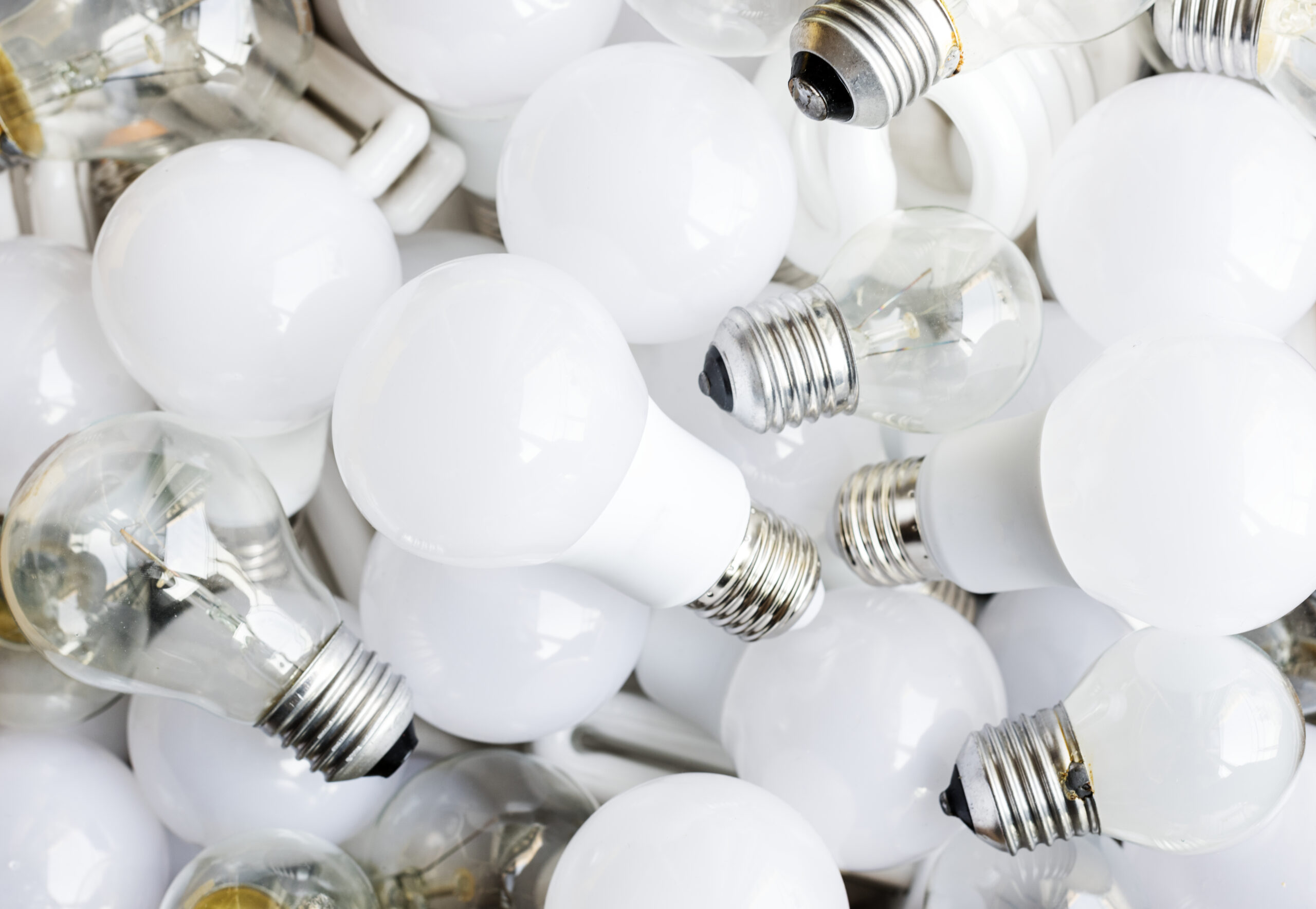
Lighting equipment businesses operate in a complex environment: multi-country sales, B2B and B2C transactions, fast product innovation cycles, project-based distribution, and increasingly strict environmental, product safety, and digital compliance requirements.
Lappa software helps lighting manufacturers, brands, and distributors stay compliant, automate reporting, and scale internationally without adding operational overhead.
Below are practical examples of how L’EPR, L’Invoice, L’Tax, and L’Authorize can be used in real lighting equipment industry scenarios.
L’EPR – Extended Producer Responsibility compliance for Lighting Equipment industry
Use case example : Lighting manufacturer selling across the EU
A lighting manufacturer sells LED luminaires, bulbs, smart lighting systems, and commercial fixtures online and through distributors in France, Germany, Italy, and the Netherlands. Under EU EPR and WEEE regulations, the company is responsible for waste management obligations related to:
- Electrical and electronic lighting equipment (WEEE categories)
- Packaging (cardboard boxes, plastic inserts, protective materials)
- Embedded electronic components and, in some cases, batteries
How L’EPR helps Lighting Equipment Industry :
- Registers the company with national WEEE and packaging EPR schemes
- Assigns products to correct lighting and WEEE categories per country
- Tracks quantities of lighting equipment and packaging placed on each market
- Submits periodic EPR reports automatically
- Centralizes multi-country EPR obligations in a single platform
Result:
The manufacturer avoids fines and manual reporting while ensuring full compliance with EU environmental regulations in every sales country. The easiest way to do this – use L’EPR
L’Tax – Sales Tax & VAT Automation for for Lighting Equipment industry
Use case example : Online lighting store selling internationally
An online retailer sells lighting fixtures, smart lamps, and accessories via its own webshop and marketplaces to customers in the EU, UK, and United States. Tax treatment varies depending on:
- Customer location
- B2B vs B2C transactions
- OSS / IOSS rules for EU cross-border sales
- Import VAT and customs considerations
- US state and local sales tax rules
How L’Tax helps:
- Automatically determines the correct VAT or sales tax rate per transaction
- Applies OSS and IOSS rules for EU cross-border e-commerce
- Handles complex US state and local sales tax calculations
- Tracks tax liabilities by country and US state
Generates tax reports ready for filing or advisor review
Result:
With broad global coverage and strong tax expertise, L’Tax ensures accurate tax calculation, reduces compliance risk, and supports scalable international lighting equipment sales.
L’Authorize – for GSPR compliance for Lighting Equipment industry
Use case example : Non-EU lighting manufacturer entering the EU market
A non-EU lighting manufacturer sells luminaires and electrical lighting products through EU-based distributors and online marketplaces.
To legally place lighting equipment on the EU market, the manufacturer must comply with:
- EU General Safety and Performance Requirements (GSPR)
- CE marking and electrical product safety requirements
Appointment of an EU Authorized Representative
How L’Authorize Helps
- Provides GSPR compliance support tailored to lighting equipment
- Reviews and maintains technical documentation and conformity files
- Acts as the official EU Authorized Representative
- Communicates directly with EU market surveillance authorities
Supports inspections, compliance inquiries, and corrective actions
Result
With L’Authorize, the manufacturer:
- Completes Authorized Representative setup within 24 hours
- Benefits from transparent pricing with no hidden fees
- Achieves faster and safer access to the EU market
- Reduces regulatory and enforcement risks
- Focuses on growth while Lappa manages compliance
L’Authorize enables seamless EU market access for lighting equipment manufacturers and sellers.
L’Invoice – E-Invoicing for Lighting Equipment industry
Use case example : Lighting wholesaler invoicing B2B customers in Italy
A lighting wholesaler supplies residential, commercial, and industrial lighting solutions to electricians, contractors, and retailers across Italy. Italian law requires mandatory B2B e-invoicing via the Sistema di Interscambio (SDI).
How L’Invoice helps Lighting Equipment Industry:
- Enables compliant e-invoicing within 24 hours
- Generates Italian-compliant FatturaPA XML invoices
- Validates VAT treatment and mandatory invoice fields
- Submits invoices directly to SDI
- Manages invoice lifecycle statuses (accepted, rejected, delivered)
- Archives invoices according to Italian legal retention rules
- Integrates with ERP, project billing, and order management systems
Get started fast with our pre-built integrations

Result:
Invoices are delivered without delays, rejection rates are minimized, and the wholesaler remains fully compliant with Italian e-invoicing regulations.
Why Lappa is a strong fit for the Lighting Equipment industry
Lighting equipment companies commonly face:
- WEEE and packaging EPR obligations across multiple countries
- Rapid product innovation and SKU changes
- Complex B2B project-based invoicing
- Cross-border tax complexity
- Increased product safety and market surveillance enforcement
Lappa’s modular compliance platform allows businesses to adopt exactly what they need—EPR, e-invoicing, tax automation, Authorized Representation, or a full compliance stack—without disrupting existing operations.
Summary
- L’EPR ensures compliance with EU WEEE and packaging regulations for lighting equipment
- L’Invoice simplifies mandatory e-invoicing for lighting B2B sales
- L’Tax automates VAT and sales tax for global lighting e-commerce
- L’Authorize enables compliant and secure access to the EU market
Together, Lappa software enables lighting equipment companies to scale internationally while staying fully compliant.
